London & Hertfordshire Free Site Visit
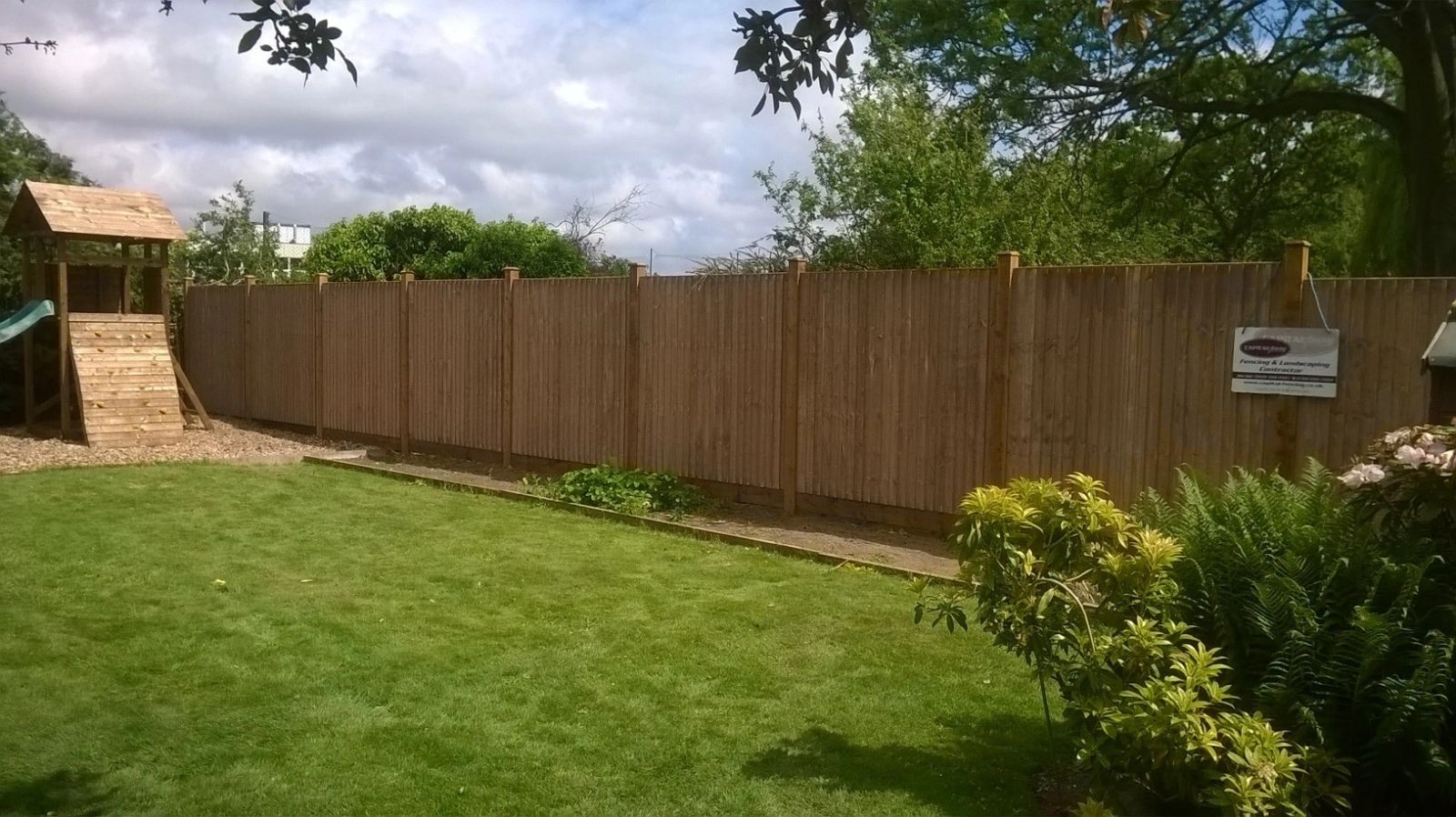
closeboard fence run installed by Capital Fencing in Enfield (EN1)
Enfield · EN1 / EN2 / EN3

New-Build Garden Fencing in Enfield (EN1)

Capital Fencing installs new-build boundary fencing across Enfield and out toward waltham cross and cheshunt. What separates a new-build boundary fencing job from a standard boundary is the detail: replacing developer 4ft overlap panels with 6ft closeboard on concrete posts. That's the work, not the marketing. Roads such as Carterhatch Lane and Baker Street are typical of the local layout. Forty Hall is a useful local reference point. Enfield Town Park and the wider Lee Valley Regional Park both fall within the borough.

Capital Fencing installs new-build boundary fencing across Enfield and out toward waltham cross and cheshunt. What separates a new-build boundary fencing job from a standard boundary is the detail: replacing developer 4ft overlap panels with 6ft closeboard on concrete posts. That's the work, not the marketing. Roads such as Carterhatch Lane and Baker Street are typical of the local layout. Forty Hall is a useful local reference point. Enfield Town Park and the wider Lee Valley Regional Park both fall within the borough.

Default spec

How we build new-build boundary fencing in Enfield

6ft closeboard on concrete posts, 150mm gravel boards, mid-rail capped — a genuine 15-year replacement for the developer's 4-year panel. On Enfield jobs we adjust for high winds funnelled down the lea valley regularly knock over weaker panel fences.

Property mix locally: interwar semis, 1960s estates and pockets of Georgian housing around Forty Hill. Typical gardens: medium-depth gardens that often back onto alleyways — access is the deciding factor. Postcodes we regularly service: EN1, EN2, EN3.

Why this spec, for buyers on modern estates upgrading the developer's minimum-spec boundary after handover

  • no more callouts every winter — the standard developer spec fails inside four years and we know exactly what fails
  • we work around plot-boundary pegs and drainage runs that new-build gardens hide badly
  • quotes broken down so you can see exactly where the money over the developer spec goes

Where new-build boundary fencing isn't the right answer

  • estates still inside a developer snagging period where the boundary is their liability to fix
  • estates with Section 106 covenants on boundary appearance — check the deeds first

Typical new-build boundary fencing briefs in Enfield

  • raising a shared boundary height with neighbour agreement, keeping to permitted development
  • adding trellis and gravel boards to lengthen the life of an otherwise usable developer fence

New-Build Garden Fencing FAQs — Enfield

Can you match my neighbour's post colour and spacing?

On new-build boundary fencing jobs in Enfield (EN1), our default answer is: 6ft closeboard on concrete posts, 150mm gravel boards, mid-rail capped — a genuine 15-year replacement for the developer's 4-year panel. For context: we work around plot-boundary pegs and drainage runs that new-build gardens hide badly. Measured, quoted and installed by the same small crew.

Do you handle the neighbour conversation on a shared boundary?

Across Enfield we spec around high winds funnelled down the lea valley regularly knock over weaker panel fences, so on new-build boundary fencing that usually means 6ft closeboard on concrete posts. We'll walk you through no more callouts every winter — the standard developer spec fails inside four years and we know exactly what fails on the site visit before you commit.

Why do developer fences fail so quickly?

Enfield coverage means we can survey most EN1 addresses inside a week — buyers on modern estates upgrading the developer's minimum-spec boundary after handover. For context: we work around plot-boundary pegs and drainage runs that new-build gardens hide badly. Measured, quoted and installed by the same small crew.

Do I need permission to raise a new-build boundary?

Practically: replacing developer 4ft overlap panels with 6ft closeboard on concrete posts. That's the Enfield version of this job, not a generic one. For context: we work around plot-boundary pegs and drainage runs that new-build gardens hide badly. Measured, quoted and installed by the same small crew.

What's the maximum height without planning on a new build?

On new-build boundary fencing jobs in Enfield (EN1), our default answer is: 6ft closeboard on concrete posts, 150mm gravel boards, mid-rail capped — a genuine 15-year replacement for the developer's 4-year panel. We'll walk you through no more callouts every winter — the standard developer spec fails inside four years and we know exactly what fails on the site visit before you commit.

Recent new-build garden fencing work
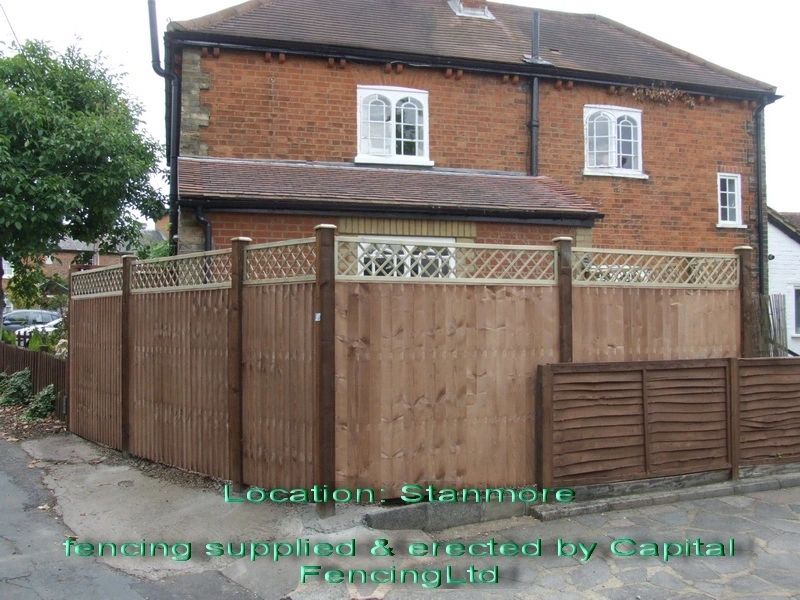
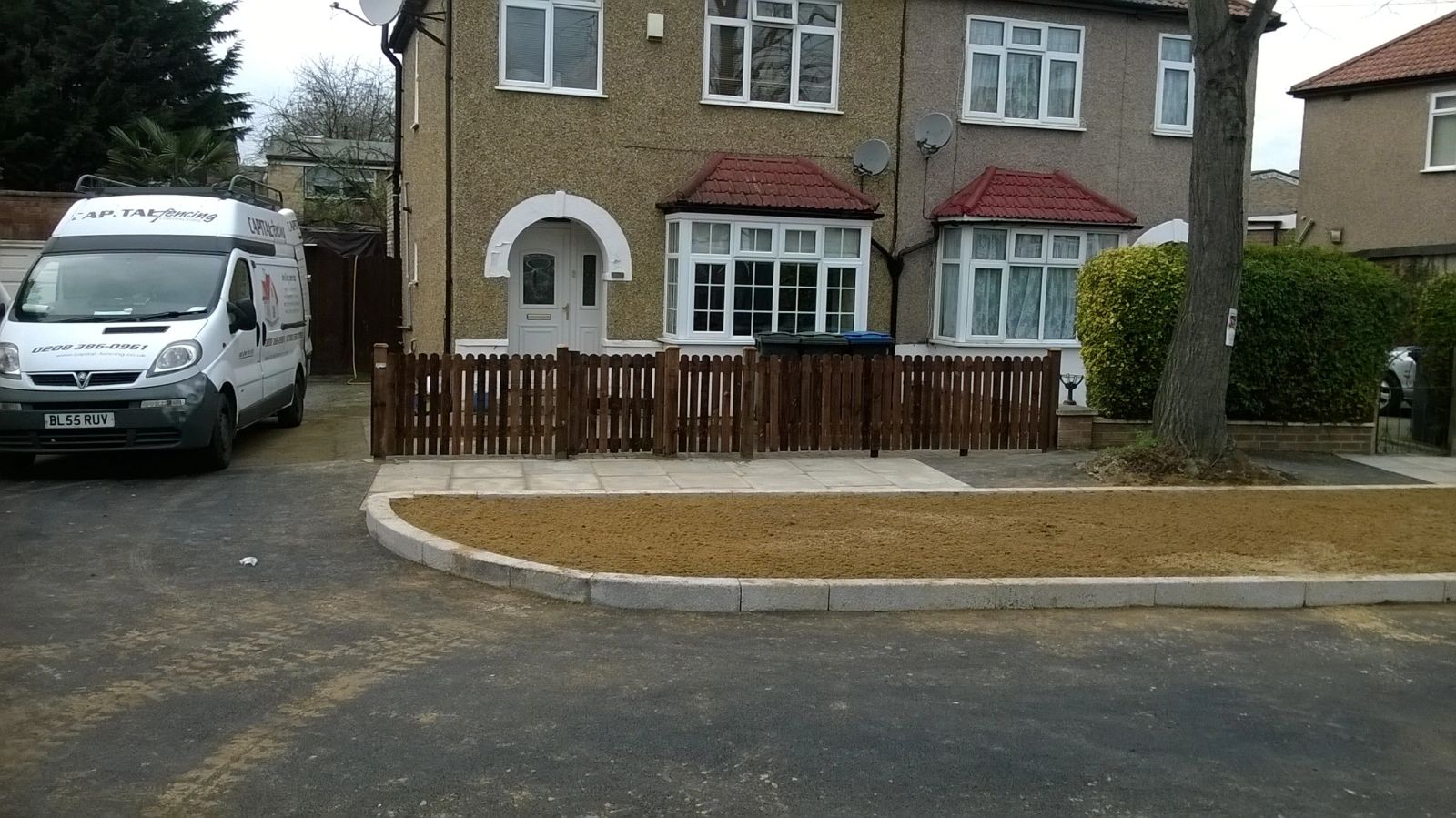
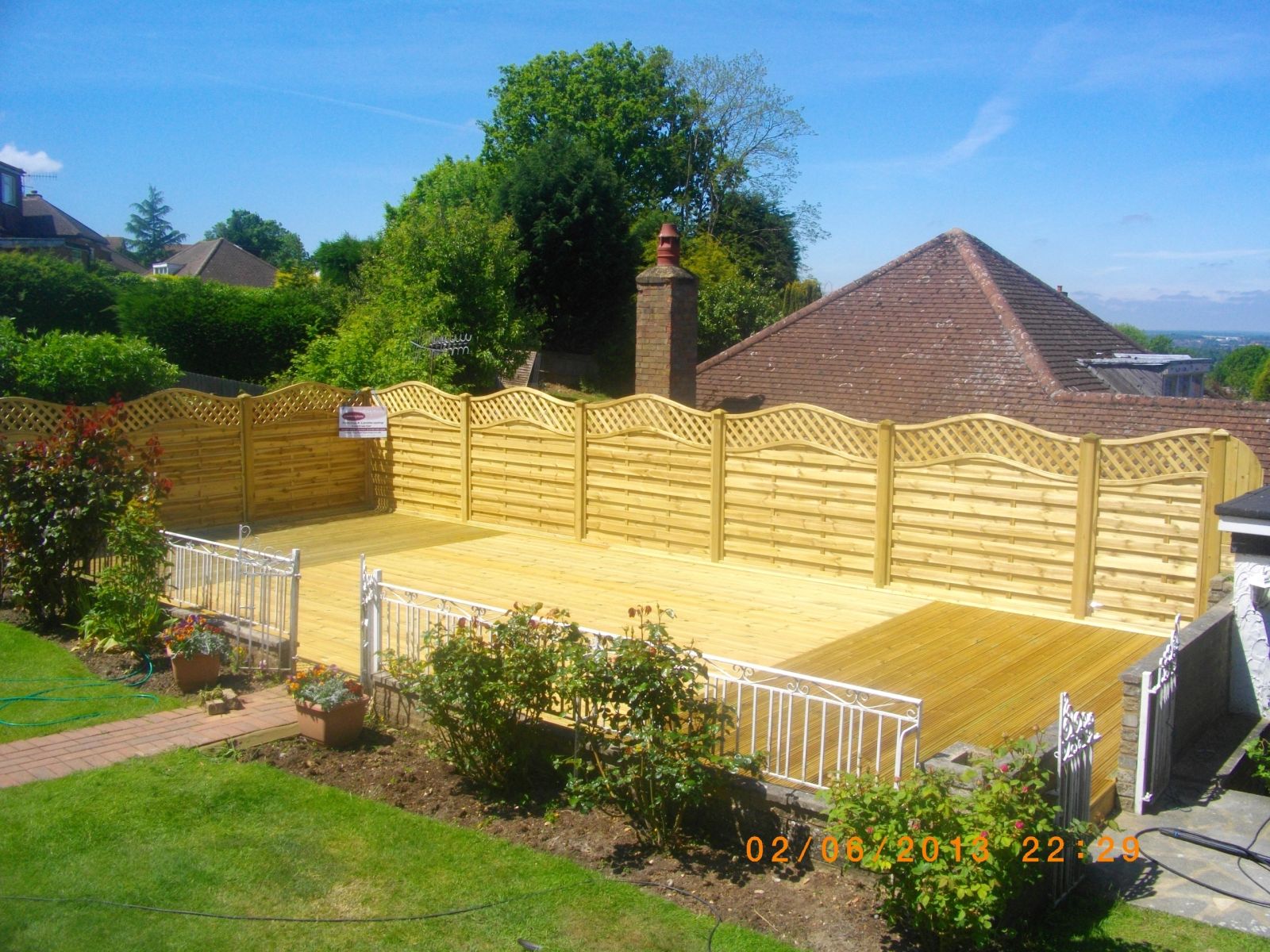
closeboard fence run installed by Capital Fencing in Enfield (EN1)panel fence install installed by Capital Fencing in Enfield (EN1)trellis-topped fence installed by Capital Fencing in Enfield (EN1)bespoke decorative fence installed by Capital Fencing in Enfield (EN1)

Local considerations across Enfield and waltham cross

Perimeter fencing around a car park

A car park perimeter combines security fencing with vehicle containment at points where a car could roll or be driven through the line, so kerbs, wheel stops or a heavier post spec are used at vulnerable edges rather than a uniform light-duty fence throughout.

Pedestrian gaps left for a footpath through the car park need their own gate or bollard treatment, since an open pedestrian route through an otherwise secure line is an easy way round the fence entirely.

Padlock and hasp standards

Padlocks are commonly rated to a recognised standard covering resistance to cutting, drilling and picking, and a high-security hasp is only as good as the padlock fitted to it — pairing a budget padlock with a heavy-duty hasp undermines the whole fitting.

A closed-shackle or shrouded hasp design protects the padlock body from bolt-croppers, which is the more common attack on an exposed gate than picking.

Pale spacing tolerance on a palisade run

Palisade pale gaps are set to a maximum spacing so a foot or hand can't find purchase between adjacent pales, and drift beyond that tolerance over a long run is usually a sign the pales were fixed by eye rather than gauged off a jig.

A gauge batten cut to the exact centre spacing keeps every bay consistent, which matters more on security runs than on a purely decorative fence because a single wider gap becomes the obvious point of attack.

Anti-lift hinge pins on a security gate

A standard hinge pin can be lifted out from outside a gate if the pin isn't captive, effectively removing the gate from its frame without touching the lock at all, which is a well-known weakness on older gates fitted with basic hinges.

An anti-lift hinge design, or a simple dowel welded to prevent the pin lifting clear, closes this gap cheaply and is worth checking for on any existing gate being assessed as part of a security upgrade.

Redwood versus whitewood softwood

Redwood, more accurately European or Baltic redwood pine, has a denser structure and a naturally more durable heartwood than whitewood, which is typically spruce and has almost no natural decay resistance.

Both take preservative treatment reasonably well, but whitewood's tighter, harder-to-penetrate structure is one of the species that benefits most from incising before treatment.

In practice most fencing softwood sold as generic 'treated timber' doesn't distinguish clearly between the two, so the preservative treatment does more of the durability work than the species itself.

Where the adopted highway boundary actually sits

The legal edge of an adopted public highway doesn't always match the visible edge of the tarmac or verge, and can extend further onto what looks like private land in some cases.

Erecting a fence, wall or gate on adopted highway land without authorisation is a separate issue from planning permission, and the highway authority can require its removal.

Where there's any doubt about the exact highway boundary, the local highway authority can usually confirm the extent of the adopted highway against its own records.

Matching paint or stain colour to an existing scheme

Replacing or refinishing a single gate on a property with an established fence or gate colour scheme needs the new finish matched as closely as possible, since a slightly different tone stands out far more on a single gate than it would across a whole run of fencing.

Weathering of the existing scheme also needs accounting for, since a colour matched to a faded existing finish can look mismatched again once the new work weathers at a different rate.

Why repaired sections sometimes weather differently

New timber fitted into an older run will weather at a different rate to the surrounding boards for the first year or two, simply because the existing timber has already taken its first few seasons of treatment and UV exposure.

This settles down over time and isn't a sign of a poor repair — we explain this at the point of quoting so it isn't a surprise later.

Good practice notifying a neighbour before work starts

There's no general legal requirement to notify a neighbour before replacing a fence that sits entirely on your own land, but doing so avoids most of the friction that boundary work can otherwise cause.

A short conversation or note covering timing, likely noise, and any need for brief access to their side goes a long way toward a smooth job.

Where the new fence will differ noticeably in height, style or colour from what's there now, flagging that in advance tends to head off objections that only surface once the work is finished.

Timber grading marks

Structural and treated timber is typically stamped with a grading mark showing the strength class, treatment use class, and sometimes the treatment company's code, which is the practical way to verify what was actually supplied rather than taking a description on trust.

For fencing, the marks that matter most day to day are the use class (confirming it's rated for the ground or above-ground exposure intended) and a visible batch or treatment date, useful if a defect needs tracing back to a supplier.

Unmarked or unstamped 'treated' timber from an unclear source is harder to verify and is one of the more common shortcuts on cut-price quotes.

Safeguarding considerations on school and nursery sites

Fencing and gate work on a school or nursery site typically has to be scheduled around supervised access, since contractors are usually required to sign in, wear visible identification, and avoid unsupervised contact with children during term time.

Perimeter security fencing for these sites is often specified with anti-climb profiles and minimum heights well above a typical domestic garden fence, reflecting safeguarding rather than purely boundary-marking needs.

Work is frequently timetabled for holidays or after hours specifically to avoid any overlap between contractors on site and children present, which affects programme length more than the fencing work itself.

Brace direction on a braced timber gate

A diagonal brace on a ledged-and-braced gate has to run from the bottom hinge corner up to the top latch corner to work in compression rather than tension, and a brace fitted the wrong way round does almost nothing to stop the frame dropping.

This is a common fault on older self-built gates, and correcting brace direction is sometimes enough to fix a sagging gate without replacing any timber.

Mesh tensioning on a chain-link or weld-mesh run

Mesh that's fitted slack sags between posts and can be pulled or climbed more easily, so a straining wire and turnbuckle at each end of a run tension the mesh evenly before it's clipped or tied to the line wires.

Re-tensioning is a routine maintenance task on an older mesh run, since posts settling slightly or ground movement over a season will slacken a mesh that was originally taut.

Curing time before hanging panels or gates

Post-fixing concrete reaches a usable strength within a day or two but continues gaining strength for weeks afterwards, which is why manufacturers usually specify a minimum wait — commonly around 24-48 hours in mild weather — before loading a post with a panel.

Hanging a heavy gate is a bigger test of an early-cured base than fixing a lightweight panel, since the gate applies a constant leverage on the post rather than a static side load, so gate posts generally want the longer end of any recommended cure window.

Cold weather slows the chemical reaction that hardens concrete significantly, so a cure time that's fine in summer may need extending in winter before it's safe to load the post.

Marker tape and underground cable protection during fencing works

Even where a cable route has been avoided by shifting post positions, a warning marker tape laid above the cable at a shallower depth than the cable itself gives a visual and physical warning to anyone digging near the line in future.

This is a low-cost addition worth doing whenever a post line runs close to a known service, since a fence contractor working carefully today doesn't guarantee the same care from whoever digs near that boundary years later.

Treatment standards and use classes for timber

British and European standards define timber 'use classes' according to exposure — Use Class 4 covers timber in ground contact, such as fence posts, and requires a deeper level of preservative treatment than Use Class 3 cladding or rails that are exposed to weather but not buried.

Specifying Use Class 3 timber for a post that goes into the ground is one of the most common causes of early rot failure, since the treatment simply isn't rated for sustained soil contact and moisture.

A reputable timber merchant should be able to confirm the use class and treatment certificate for structural components, and it's worth asking for it explicitly rather than assuming 'tanalised' automatically means suitable for ground contact.

Use classes for ground-contact timber

Treated timber is graded into use classes according to how much moisture and ground contact it's expected to face, and specifying the wrong class for the job is a common cause of premature rot that isn't obvious until years later.

Use Class 3 covers above-ground timber exposed to the weather, such as boards and rails; Use Class 4 covers timber in direct or near-permanent ground contact, which is what posts and gravel boards should be specified to, not Use Class 3 stock used because it's cheaper or more available.

A supplier's treatment certificate should state the use class achieved, and it's worth asking for it on any job where posts are the expensive, hard-to-replace component of the run.

Choosing a self-closing mechanism for pool or drive gates

A spring-loaded hinge, hydraulic closer, or gravity-hinge design (where the hinge itself is angled so the gate swings closed under its own weight) each achieve self-closing in a different way, with different maintenance needs and different feel in use.

Gravity hinges are mechanically simple and low-maintenance but rely on the gate post and hinge post staying accurately set, since any settling changes the closing behaviour.

Hydraulic or spring closers give a more consistent, adjustable close but are an additional mechanical component that itself needs occasional servicing or replacement over the gate's life.

School and nursery boundary rules

School and nursery boundaries are typically specified higher than a domestic fence and without footholds, finger-trap gaps or climbable rail patterns, because the boundary has to keep young children in as well as keep intruders out.

Gate self-closing and self-latching, non-climbable infill and a lockable-from-outside-only pedestrian gate are common requirements checked against the site's own policy rather than a general rule of thumb.

What a site survey covers

A proper site survey checks the boundary line against the deed plan where available, probes ground conditions at a few points along the run, and confirms access for both delivery vehicles and hand-carried materials.

It should also flag anything that changes cost before it becomes a surprise later — buried services, a shared boundary needing neighbour agreement, overhead cables limiting how tall equipment can be used, or a slope needing a stepped rather than level run.

A survey that skips any of these and goes straight to a headline price is the most common reason a quote changes significantly once work actually starts.

UV silvering rates by aspect and species

Untreated or lightly-treated softwood exposed to full sun typically silvers to a grey patina within twelve to eighteen months, while the same timber on a shaded north face can take several years to reach the same appearance.

Hardwoods like oak silver more evenly and hold their structural integrity through the process better than softwood, which is one reason clients choosing a natural weathered look often move toward hardwood despite the higher upfront cost.

Because silvering rate varies so much by aspect, a run that turns a corner from full sun to full shade can look like two different ages of fence within its first two years even though it was installed on the same day.

Douglas fir for structural fencing timber

Douglas fir is a stronger, stiffer softwood than typical whitewood or redwood, with a pronounced grain pattern and moderate natural durability in its heartwood, making it a common choice for structural posts and gate framing rather than boarding.

Its resin content is generally lower than pine, which reduces the risk of resin bleed showing through a painted or stained finish.

Because of its strength-to-weight ratio it's often specified for longer unsupported spans, such as wide gate frames, where a lighter section still needs to resist twisting under its own weight.

Buyers on modern estates upgrading the developer's minimum-spec boundary after handover — that's who this page is for. In Enfield and out to Enfield, we run the new-build boundary fencing spec that survives high winds funnelled down the lea valley regularly knock over weaker panel fences. Roads such as Carterhatch Lane and Hertford Road are typical of the local layout. Forty Hall is a useful local reference point. Enfield Town Park and the wider Lee Valley Regional Park both fall within the borough.

Get In Touch

Get My Free Quote — 24h Response

No callout fee · Free site visit · Friendly local team covering London & Hertfordshire.

Call us
07885907880
or 02036484746
Email
capital_fencing@yahoo.com
WhatsApp
Message us anytime
Area
London & Hertfordshire
Payment
Card payments accepted

Pay by debit or credit card, bank transfer or cash once the work and price are agreed. No deposit taken online.

Request a Free Quote

We'll get back to you within 24 hours.

Free Site Visit No Callout Fee
Call WhatsAppQuote