Matching a new gate to the existing boundary
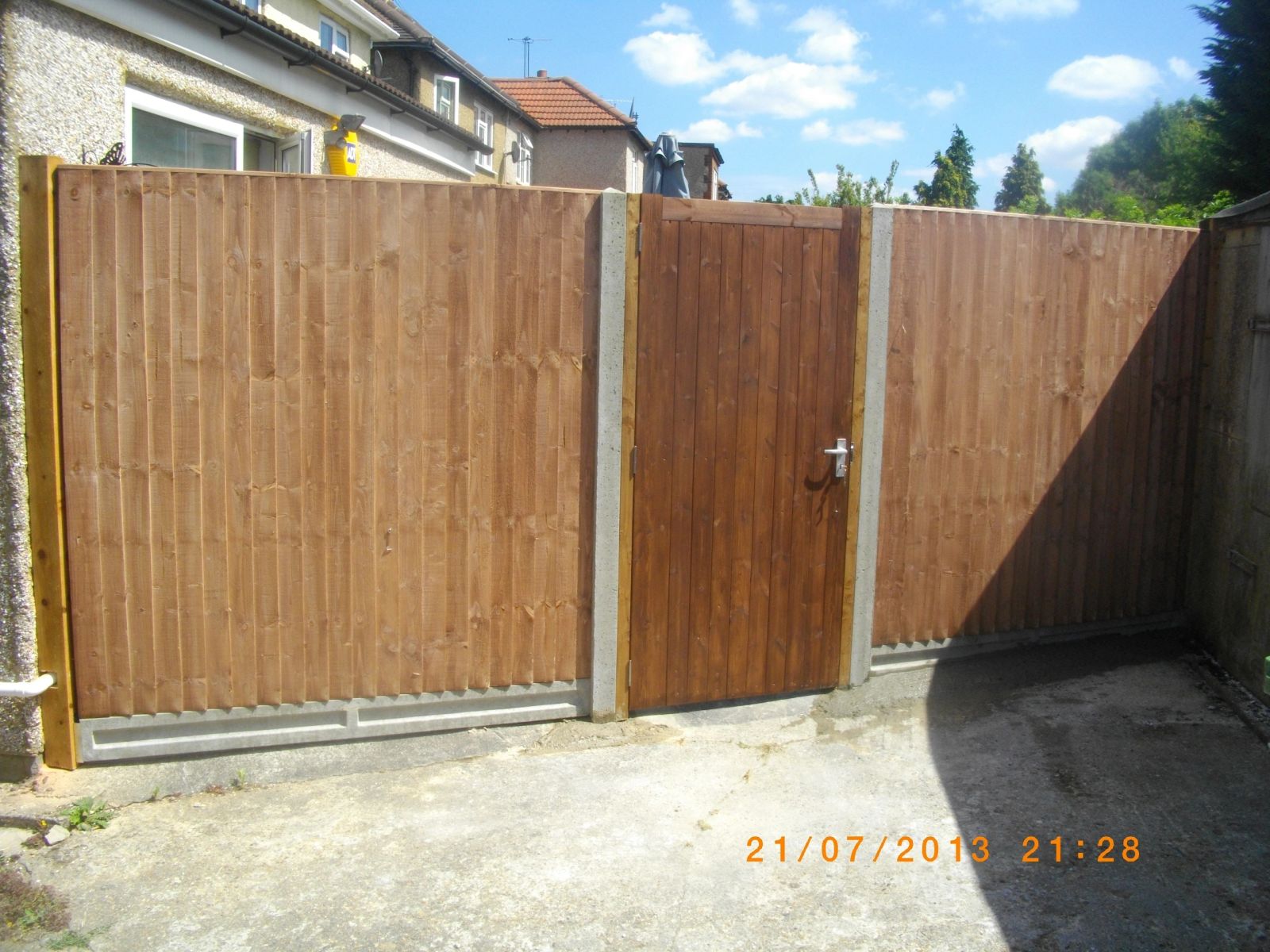
A replacement gate is sized and detailed to match the piers or posts either side of the opening rather than fitted as a stock size, since a gate that doesn't sit flush against its opening looks obviously replaced even when well built.
Where the surrounding fence has a specific profile or capping detail, the gate frame is matched to it.
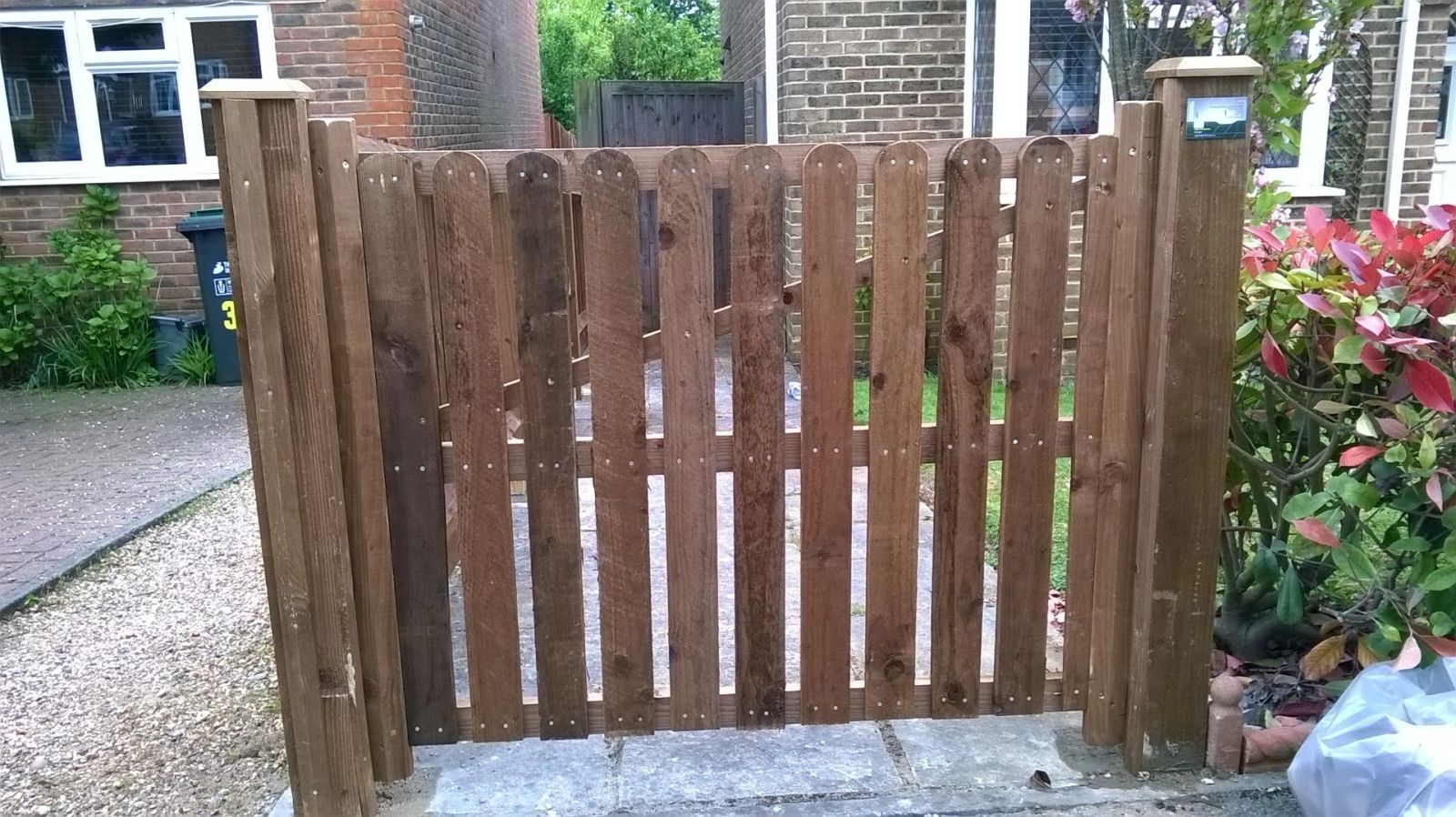
Post caps and their role beyond weatherproofing
A post cap sheds water off the end grain of a timber post or the open top of a hollow steel post, but on a security run it also removes a foothold or handhold that an open post top would otherwise offer.
Domed or sloped caps are harder to grip than a flat cap, which is worth specifying on posts near a gate or corner where climbing is most likely to be attempted.
Overhead cables and clearance for gate operation
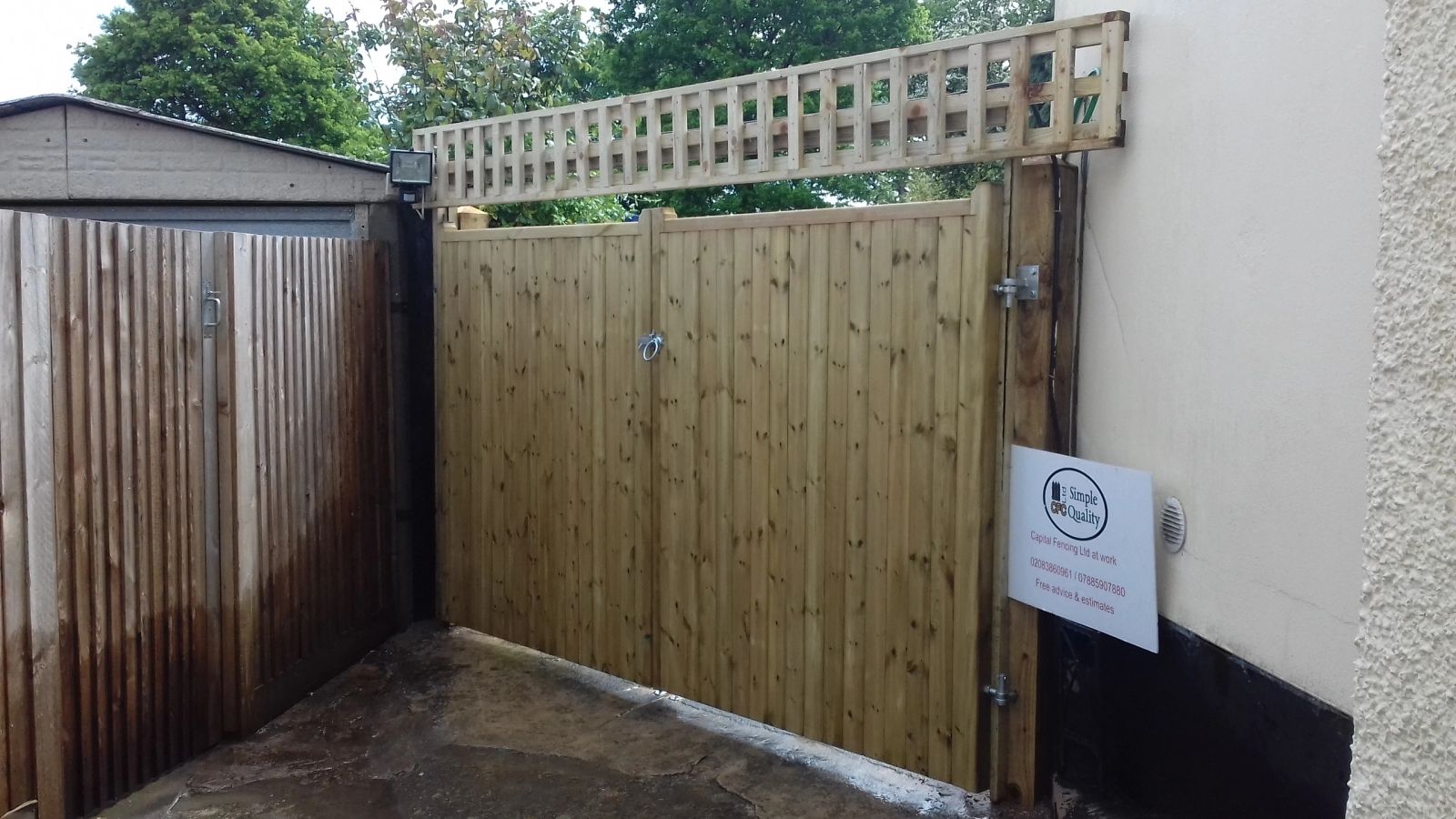
A gate installed beneath or near an overhead service cable needs its swing or opening path checked against that cable's height and any sag, particularly for a wider vehicle gate that might otherwise catch a low cable at its highest point of travel.
This is a straightforward site check to make before installation, since moving a gate's position after cables have been identified as a clearance problem is far more disruptive than checking beforehand.
Sistering a failed post
Sistering bolts a new length of timber alongside a post that's failed only in one section, leaving the sound parts of the original post carrying load alongside the new piece rather than removing it entirely.
It works best where the failure is localised and the panel fixings on the old post are still usable, and it's generally quicker than a full post swap on a run that can't easily be dismantled.
Hitting shallow services and CAT scanning
Electricity, gas and water connections into a house are often shallower than people expect, sometimes under 300mm in an older garden, well within reach of a hand auger let alone a mechanical one.
A cable avoidance tool (CAT scan) before digging a new post line is standard practice near any suspected service run, and is far cheaper than the cost and risk of striking a live cable or a gas pipe.
Where a scan can't rule out a service with confidence, hand-digging trial holes to confirm depth and position before committing to auger the rest of the line is the safer approach.
Preparing a weathered gate surface before refinishing
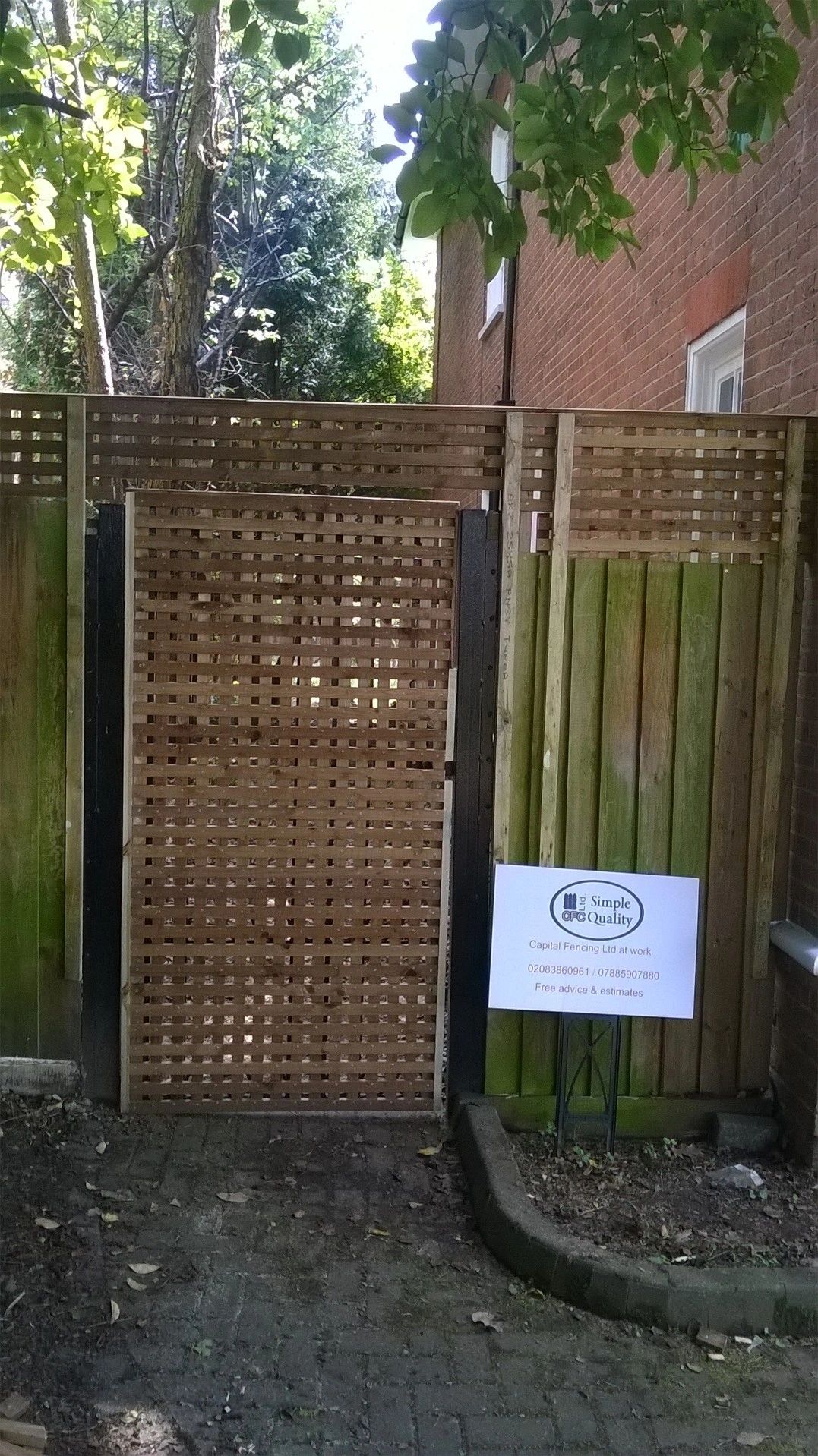
A timber gate that's greyed and roughened from UV and weather exposure needs its surface sanded back to sound wood before a new stain or paint is applied, since coating over a degraded surface fails much sooner than one applied to properly prepared timber.
Loose or flaking old paint in particular needs removing fully rather than painting over, as trapped moisture behind a failed coating accelerates rot underneath.
Breaking out old concrete footings
An old post base often left in the ground after a previous fence comes out will usually be a lump of concrete far bigger than the post it once held, and it rarely sits exactly where a new post needs to go.
Breaking it out with a hand tool or breaker takes real time compared with digging clean ground, and on a long run of old fencing there can be one buried lump per post rather than just an occasional obstruction.
Where a footing can't be fully removed without excessive disruption, offsetting the new post's position by a short distance is usually more practical than fighting the old base to keep exact spacing.
Striker plate and keep alignment
A latch that no longer catches is very often a striker or keep alignment problem rather than a broken latch, especially after a gate has dropped slightly or a post has moved seasonally.
Re-positioning the keep to match the gate's current resting position is usually quicker and cheaper than replacing the latch mechanism itself.
Checking a post is plumb in two planes
A post checked with a spirit level on only one face can still be leaning across the run even though it looks vertical along it, so plumb needs confirming on two adjacent faces at right angles before concrete goes in.
This matters most on corner and gate posts, where a lean invisible from the main run direction becomes obvious the moment a gate is hung and doesn't swing true.
Rechecking plumb again just before the concrete starts to go off catches any post nudged out of position while backfilling or bracing, since that's a common point for a post to drift slightly unnoticed.
Slide bolts and staple alignment
A slide bolt needs its guide staples and keep perfectly in line along the bolt's travel, since even a slight misalignment makes the bolt bind partway rather than sliding freely, which is often mistaken for a stiff or rusted bolt.
Re-aligning the staples after a gate has settled or a post has moved usually resolves this without needing to replace the bolt hardware itself.
Being clear about what a repair does and doesn't cover
A repair addresses the specific failure identified at survey, and it's worth being explicit with the client about what wasn't included, particularly where a run has other sections showing early signs of the same problem.
Setting that expectation at the point of agreeing the work avoids confusion later if an unrelated section of the same boundary fails independently.
Low-voltage lighting built into decking
Recessed low-voltage deck lights, usually built into the timber before boards are laid, extend a deck's usable hours into the evening without the trip hazard of surface-mounted fittings.
Cable routes need planning before the substructure is closed in, since retrofitting lighting into a finished deck usually means lifting boards rather than a simple add-on.
Outdoor low-voltage systems still need a transformer and cabling installed to the relevant electrical safety standard, even though the voltage itself is lower than mains.
Suspending a parking bay for a delivery
Where a residential street has marked parking bays, a resident or contractor may need to apply to the council to formally suspend a bay for the duration of a delivery or a working van.
Suspensions are usually charged per bay per day and typically need a few working days' notice, so they're worth arranging well ahead of a fencing or decking job rather than on the morning of delivery.
Parking in a suspended bay without paying the fee, or using a bay that hasn't been suspended at all, can result in a parking charge notice regardless of the reason for being there.
Timber grades and treatment
Pressure-treated softwood is graded by the treatment's intended service life — timber rated for ground contact (Use Class 4) should always be used for posts, while a lighter Use Class 3 treatment is normally sufficient for panels and boards that don't touch soil.
Tanalised or vacuum-pressure-treated stock takes preservative deeper into the timber than a surface-dipped batch, which matters most at cut ends, where the untreated core is exposed and should always be re-treated on site.
Hardwoods like oak or iroko don't need chemical preservative to the same degree but cost more upfront and behave differently as they season, so the choice is really about budget and maintenance appetite rather than one being simply 'better'.
Properties with no registered title at all
A small proportion of properties in England and Wales, usually those that haven't changed hands or been mortgaged for a very long time, still aren't registered with HM Land Registry at all.
In these cases, boundary questions rely entirely on the original paper deeds held by the owner, which can be less detailed or harder to interpret than a modern registered title plan.
First registration can be triggered voluntarily or by certain transactions, and often brings helpful clarity to boundary questions that were previously only defined by older paper deeds.
Flying freeholds and unusual boundary shapes
A flying freehold occurs where part of one property, such as a room, overhangs part of another below it, and can produce boundary arrangements in the garden that don't follow an obviously straight or logical line.
Properties with this kind of unusual legal history sometimes have correspondingly unusual title plan boundaries in the garden area, which are worth checking carefully rather than assumed from the visible layout.
Where a garden boundary looks like it doesn't match the physical shape of the buildings above, that's a sign worth investigating with the title documents before fencing work begins.
Frost pockets in low-lying garden corners
Cold air sinks and pools in the lowest part of a sloped garden or a corner enclosed by walls and fencing on more than one side, creating a frost pocket that experiences more frequent and harder frosts than the rest of the same garden.
Concrete post bases and fixings in these pockets go through more freeze-thaw cycles each winter than elsewhere on the same boundary, which can accelerate the same frost-related cracking seen on shallow footings generally.
It's a detail worth noting on a site visit to a garden with an obvious dip or an enclosed low corner, since it may justify a deeper or more robust base spec for just that section.
Diagnosing a fence problem before quoting
A repair quote starts with identifying which of the usual failure points is actually responsible — post, panel, gravel board or a full run — because pricing a full replacement for what's actually a single post repair costs the client far more than necessary.
We probe timber at ground level and check the whole run for related stress, not just the section that's obviously failed.
Balancing delivery scheduling with retail service yard security
A retail service yard often needs its security gate open for scheduled delivery windows through the day, which creates a predictable gap in the site's perimeter security that opportunist theft can exploit if the yard isn't otherwise supervised during those hours.
A visitor or delivery intercom paired with a smaller pedestrian gate lets staff manage vehicle access without leaving the main gate open for the full delivery window, reducing the time the yard is left unsecured.
Panel versus closeboard repair economics
A panel fence is repaired panel by panel, so a single damaged section is a straightforward swap, whereas a closeboard fence is repaired board by board, which suits a partial repair better but takes longer per linear metre.
Where storm damage has hit a wide section, a panel system is often quicker to put right; where only a handful of boards are affected, closeboard repair wastes far less sound material.
Security lighting and cameras near a shared boundary
Security lighting or CCTV cameras fitted to a boundary fence can raise both nuisance and, for cameras capturing a neighbour's property, data protection considerations under UK GDPR if used inappropriately.
Positioning cameras to minimise capturing a neighbour's garden or windows, and using shielded lighting that doesn't spill excessively onto adjoining land, generally avoids most disputes before they start.
Where a neighbour raises a specific concern about a camera or light on a shared boundary, addressing it directly is usually simpler than waiting for a formal complaint to the council or Information Commissioner's Office.
Party fence wall versus an ordinary boundary fence
A 'party fence wall' has a specific meaning under the Party Wall etc. Act 1996 — a structure that stands astride the boundary line, jointly used by both properties, which is distinct from a garden fence panel that simply happens to mark a boundary.
Most timber panel fencing sits on one owner's land and isn't a party structure in that legal sense, even where it visually marks the boundary line.
Genuine party wall situations are more likely with masonry garden walls straddling the line, and those can bring the Act's notice procedures into play, which is worth checking before work starts.