Drainage at the base of the run
Standing water at a post base is one of the fastest ways to undermine an otherwise sound fixing, whether that's a low spot that collects rainfall or a boundary that sits below the level of the garden either side.
Where drainage is poor we build in a fall away from the post or add a soakaway detail rather than setting concrete into water and hoping it clears.
Trading off fence height against site visibility from outside
Increasing a boundary's height improves resistance to climbing but also reduces visibility into the site from the street, which can work against security by giving an intruder who does get over the fence more concealment once inside.
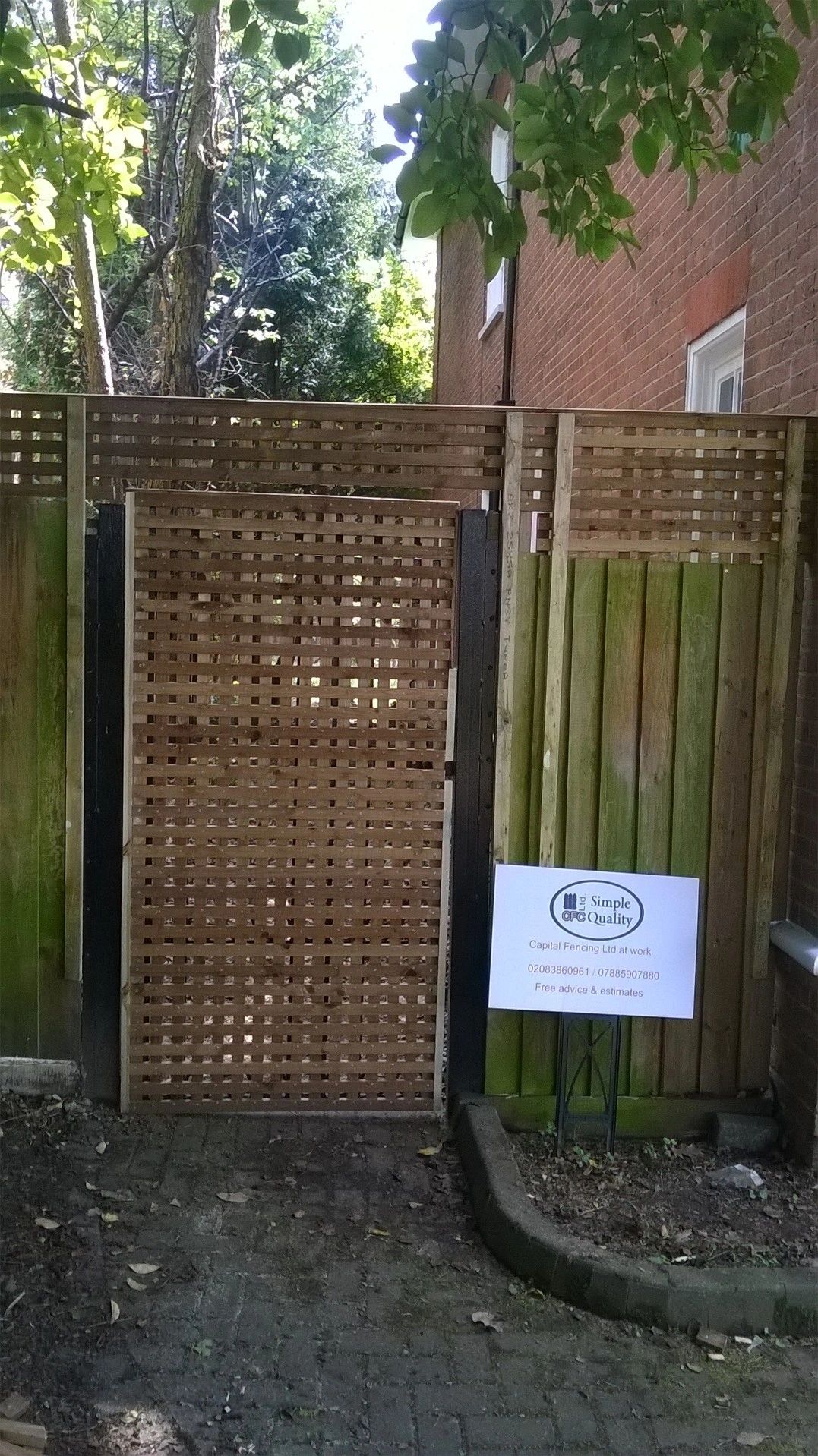
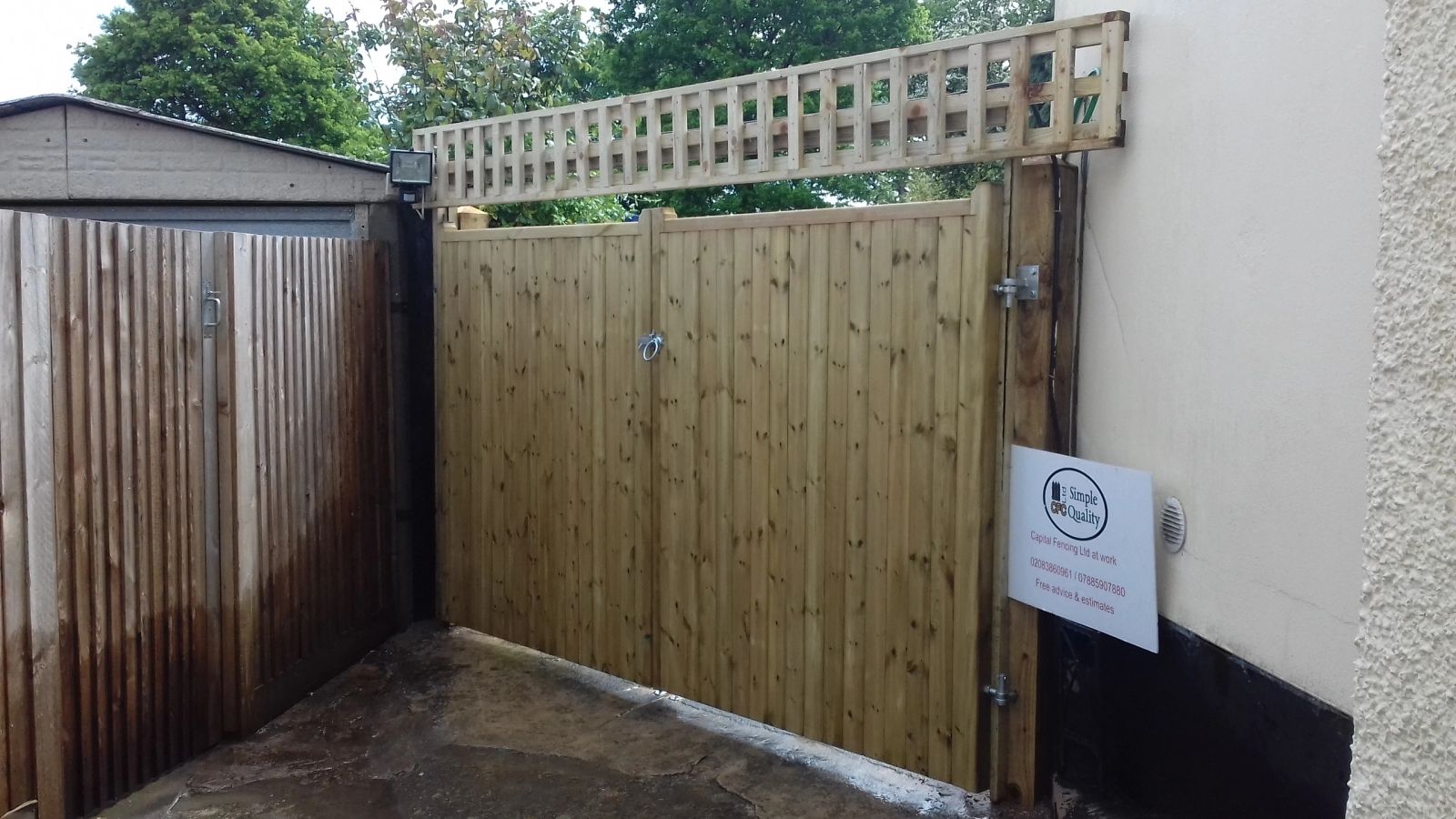
A part-solid, part-mesh design, or a solid lower section topped with an open mesh upper section, is one way to gain height without losing all visibility, balancing the climbing deterrent against the loss of natural surveillance from passers-by.
Coordinating a dropped kerb with a new vehicle security gate
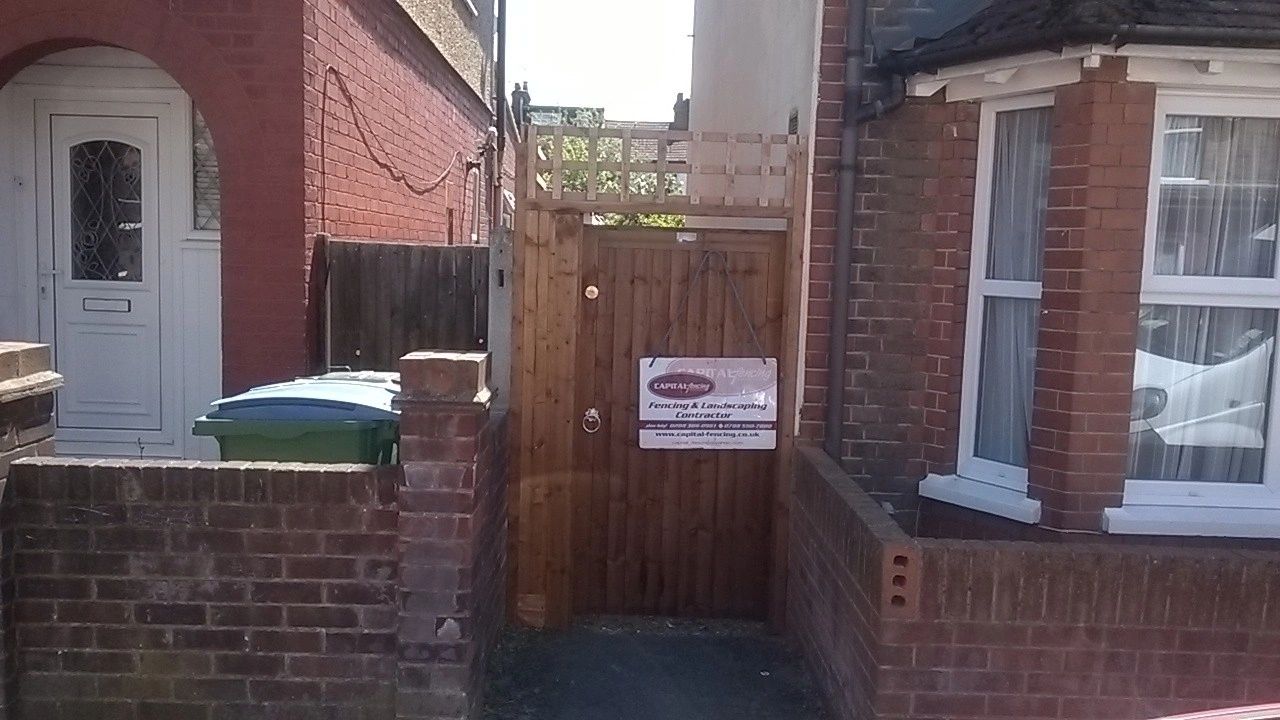
A new vehicle gate needs a dropped kerb or existing crossover in the right position before it's ordered, since a gate that opens onto a kerb face rather than a level crossover will scrape or jam on every use.
Where no dropped kerb exists, this is a highway authority matter separate from the fencing work itself and needs its own approval and lead time, which is worth flagging early so the gate installation isn't delayed waiting on it.
Decking board profiles and grooves
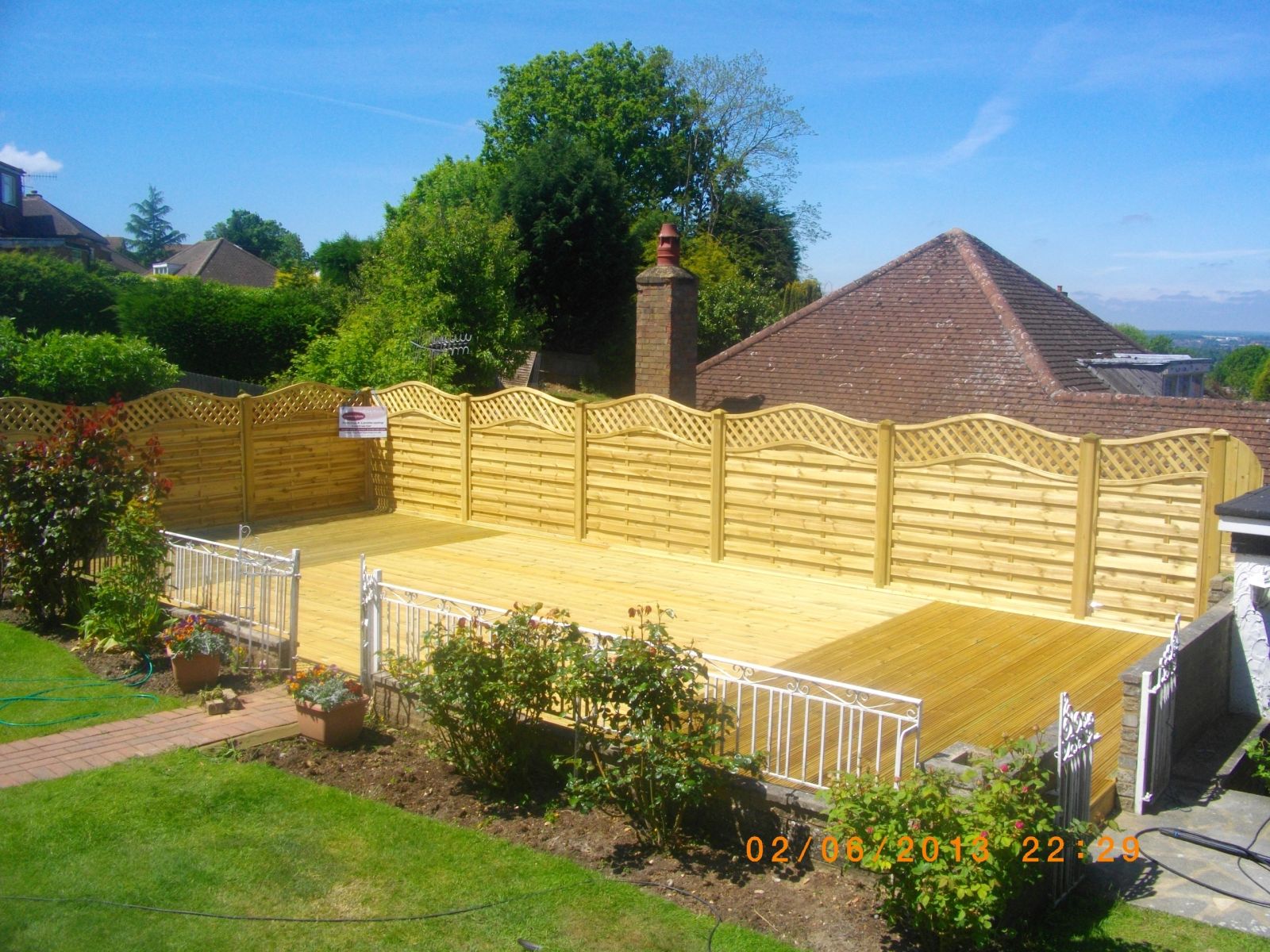
Timber decking boards commonly come grooved (ribbed) on the top face for grip, reversible to a smooth face for a more contemporary look, or with a rounded profile that sheds water more readily but offers less traction underfoot.
Grooved boards trap dirt and moisture in the channels more than a smooth or rounded profile, so they need more regular brushing or washing to avoid becoming slippery with algae, particularly in shaded, damp positions.
Composite boards are usually extruded with a fixed groove or embossed texture rather than milled, and the profile is generally part of a wider system with matching edge trims rather than a feature that can be mixed freely between board types.
Digging in summer-baked clay ground
Clay that's dried and cracked over a hot summer can be almost as hard as digging through soft rock in the top few hundred millimetres, even though the same ground would be workable a season later once it's rehydrated.
An auger struggles on baked clay in the same way it struggles on rubble, tending to bounce and judder rather than cut cleanly, so a pilot hole broken up with a bar first can make the auger's job easier.
Watering the dig point lightly the day before, where practical, softens the very top layer enough to ease the first stage of digging without turning the hole into a mud pit.
Allotment and paddock ground
Allotment and paddock boundaries are often on ground that's been cultivated, grazed or left rough for decades, with a topsoil layer that's deeper and looser than a typical garden lawn but can also conceal old cultivation debris, buried irrigation pipe or fencing stobs from previous boundaries.
Paddock ground grazed by livestock compacts unevenly, with poached, churned patches near gateways sitting very differently underfoot from the firmer ground a few metres away.
Post specifications on this kind of ground usually need to account for stock leaning or rubbing on the fence line, which is a different load case from a garden boundary that just needs to withstand weather and general wear.
Removing or working around hedges
A mature hedge along a boundary line often needs partial removal or heavy cutting back before a new fence can go in behind or in place of it, and stump and root removal is usually a bigger job than the hedge above ground suggests.
Where a hedge is being kept and a fence added behind it, root disturbance during digging needs the same care as any other established planting — cutting a major root to fit a post line can visibly stress or kill the hedge over the following season.
Some hedgerows, particularly older boundary hedgerows in a rural or semi-rural setting, are protected under separate hedgerow regulations, so it's worth checking before removing one entirely rather than just cutting it back.
Surface preparation before re-coating
Re-coating over an existing failed or flaking finish without preparation traps whatever is underneath — old paint fragments, algae, or degraded stain — and the new coat fails at the same points within a season.
A light sand or wire-brush pass to remove loose material, followed by a full dry-out period, gives a fresh coat something sound to key into rather than a film sitting over compromised timber.
Timing matters as much as preparation: coating damp timber traps moisture under the new film and is one of the most common reasons a re-coat fails faster than the original application.
Keeping post hole depth consistent along a run
A hole dug slightly shallower than its neighbours because the ground got harder partway down is an easy shortcut to take under time pressure, but it leaves that one post less securely founded than the rest of the run.
Marking a consistent depth on the digging tool itself, rather than judging depth by eye each time, keeps every hole to the same standard regardless of how the ground conditions vary along the run.
Where genuinely harder ground forces a shallower hole at one point, compensating with a wider hole and more concrete at that post is a better response than simply accepting reduced depth and hoping it holds.
Round post versus square-sawn post sections
A round, or half-round, post retains more of the log's original strength-giving fibre continuity around its circumference than a square-sawn post cut from the same log, since sawing removes material and can cut across some outer fibres.
Square-sawn posts are easier to fix panels and brackets to flush, since flat faces align with flat rail ends, whereas round posts often need a notched or curved bracket to seat components securely.
Round fencing stock is more common in agricultural post-and-rail and stock fencing where raw strength per log matters most, while square-sawn posts dominate garden and boundary fencing where flush fixing detail matters more.
Recoating a heavy acoustic facing
A timber-faced acoustic panel needs the same kind of periodic stain or paint maintenance as any exterior timber, but access can be more limited where a dense panel sits close to a boundary wall or a neighbour's property.
Planning recoating around that access constraint, and choosing a product suited to a less frequently reachable surface, avoids a situation where one face of the run is maintained less often than the other simply because it's harder to reach.