Timber, mesh and steel palisade compared
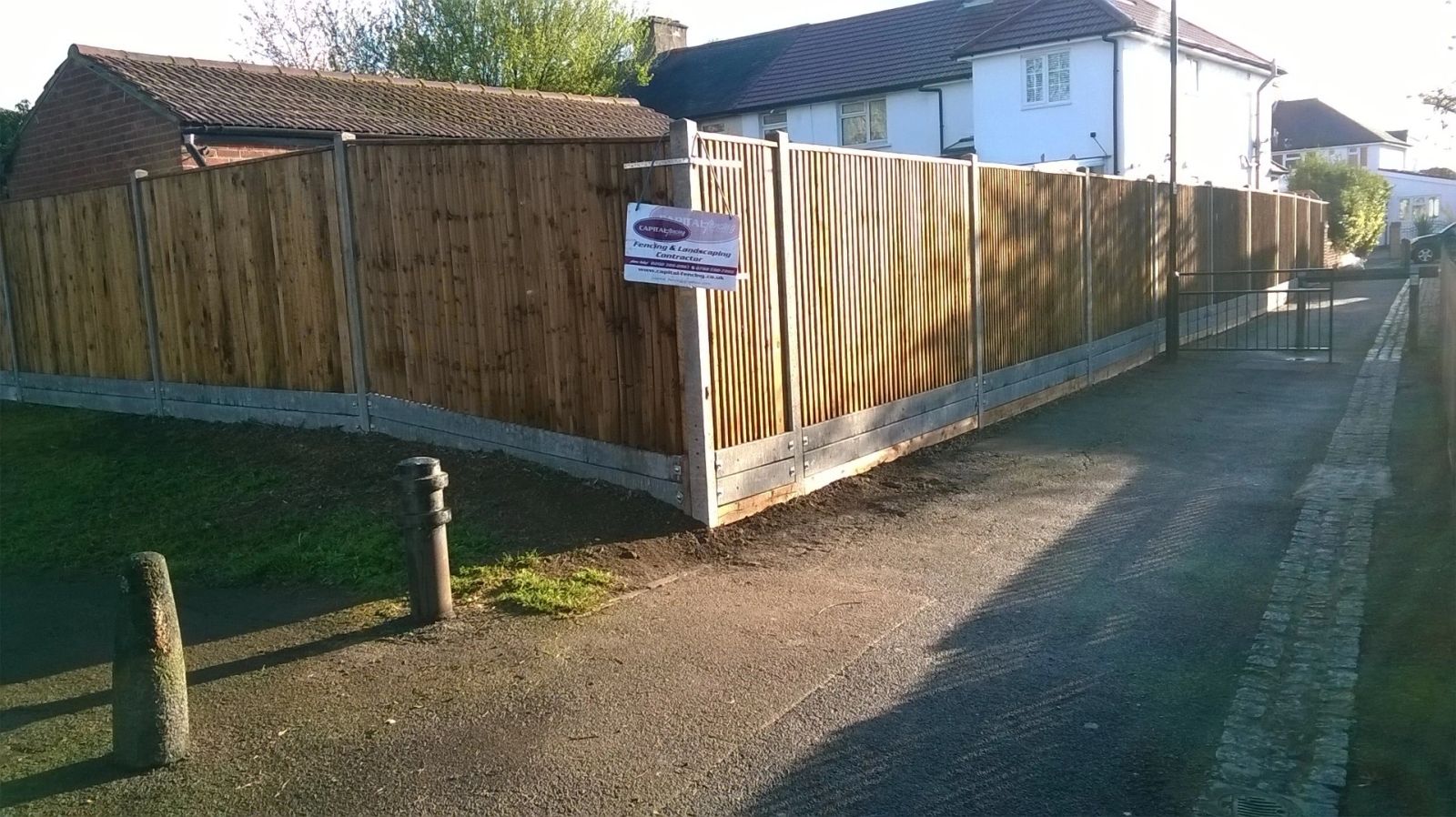
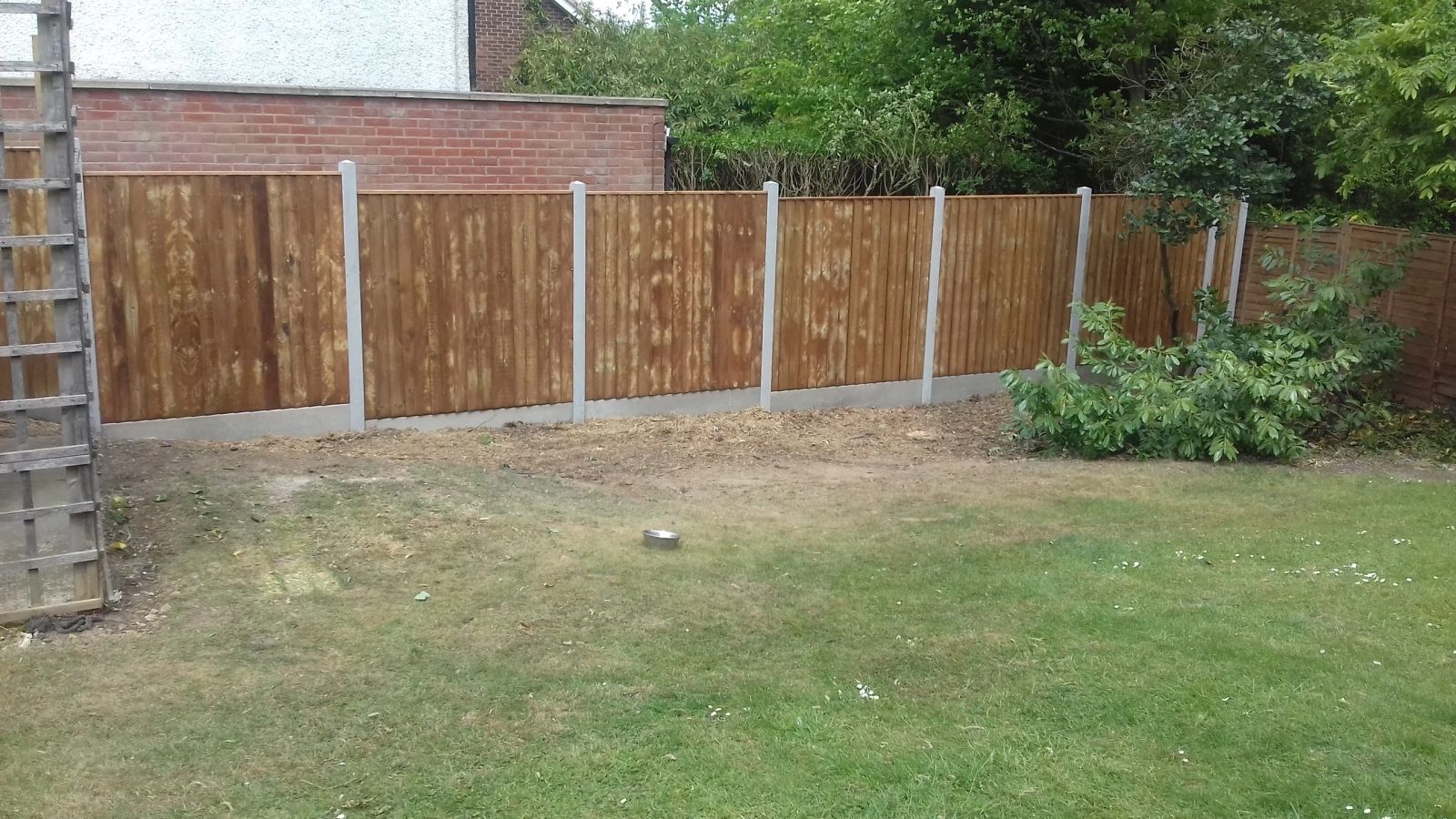
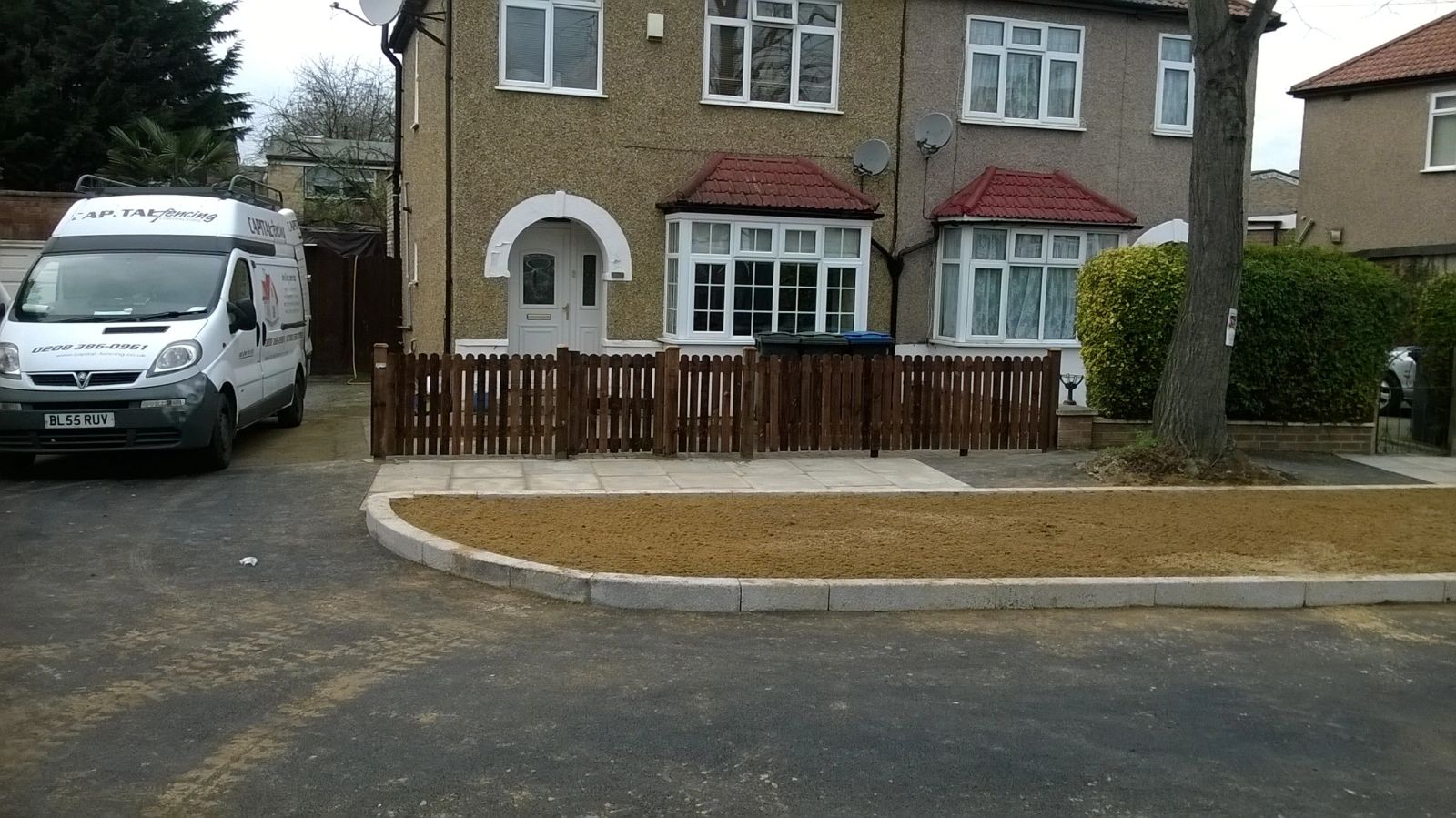
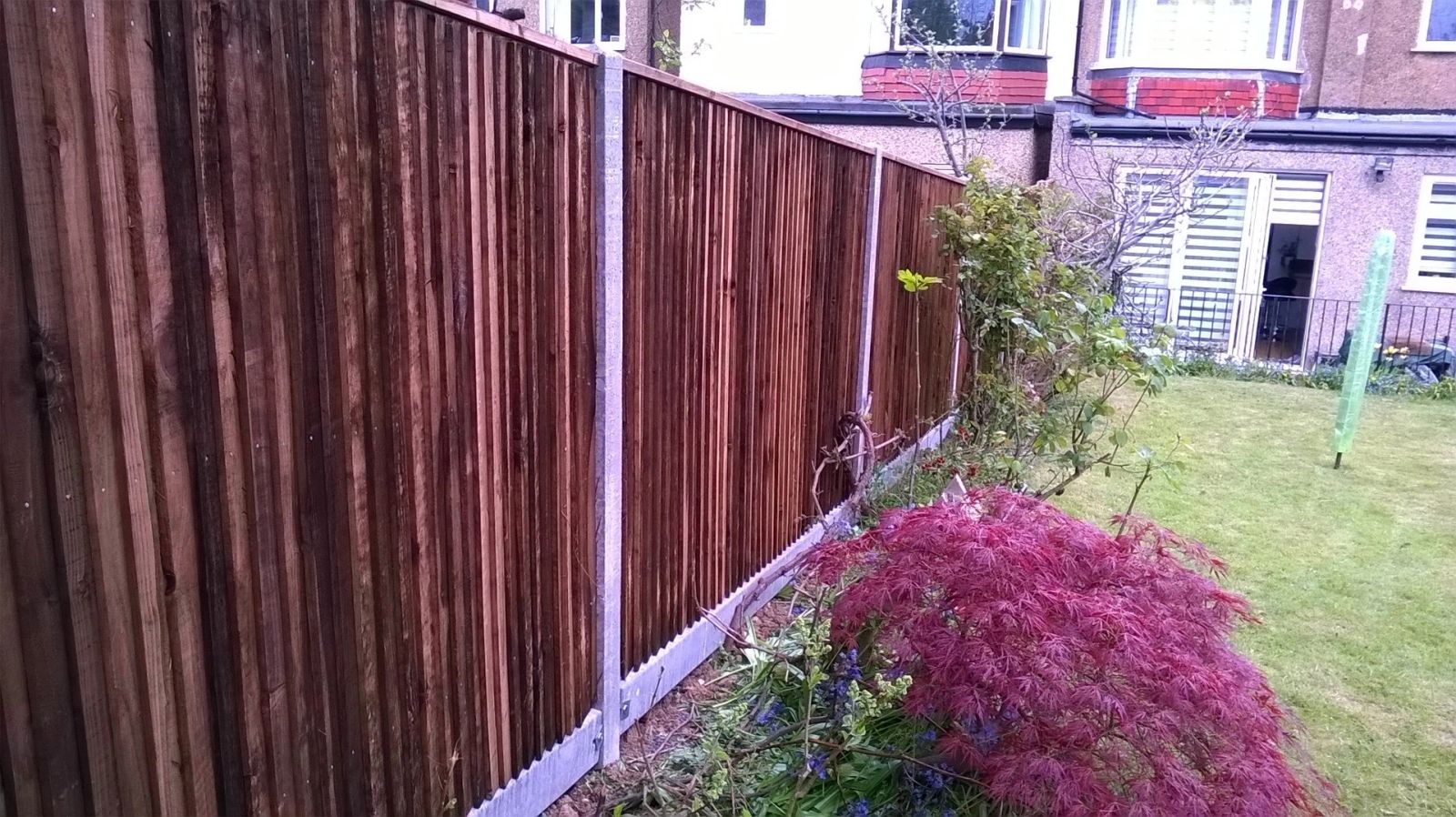
Timber gives a solid sightline and a domestic look but needs a heavier spec than a standard garden fence to hold a security brief; steel palisade and weld-mesh give a harder physical barrier with a more industrial appearance, which suits a yard better than a front garden.
Most briefs end up as a mix — a solid section where privacy matters and a mesh or railing return where an open sightline is more useful — rather than one material for the whole boundary.
Ground anchors on hardstanding
Where a post can't be dug into soil — a concrete yard, a roof terrace, or a surface that can't be broken — a mechanical or resin ground anchor bolted through a base plate provides the fixing instead.
Anchor capacity has to match the loading of the fence height and any expected impact, and manufacturer pull-out figures are checked against the specific slab thickness before anchors are relied on for a taller run.
Relocating a builders' compound fence as a project phases
A builders' compound fence is often installed in stages as a construction project progresses, with the secure line moving inward as completed areas are handed over and outward again if the site boundary expands into an adjoining phase.
Because compound fencing is frequently relocated, panel systems with reusable feet or block-based supports are generally favoured over concreted posts, even though a concreted post gives a more permanent fixing where the boundary line is fixed for the whole project.
Working within narrow plot access
Some plots simply don't have a route wide enough for a wheelbarrow, let alone a van, which means every post, board and bag of aggregate goes in by hand across a longer distance than usual.
That changes both the time a job takes and, sometimes, the choice of materials — favouring shorter, lighter sections that two people can carry over long single panels that need mechanical handling.
It's worth flagging access constraints at the quote stage rather than on the day, since they're one of the most common reasons a job takes longer than a straightforward driveway-access equivalent.
A practical corrosion inspection schedule for steel fencing
A basic inspection walk checks ground-line rust on posts, coating breakdown at cut edges and weld points, and any bare metal exposed by a scrape or impact, since these are the points corrosion establishes itself first rather than spreading evenly across a whole panel.
Catching surface rust early with a localised repair coating is far cheaper than replacing a section once corrosion has perforated the steel, and an annual check is usually enough to catch problems at that early stage on a well-galvanised run.
Brace direction on a braced timber gate
A diagonal brace on a ledged-and-braced gate has to run from the bottom hinge corner up to the top latch corner to work in compression rather than tension, and a brace fitted the wrong way round does almost nothing to stop the frame dropping.
This is a common fault on older self-built gates, and correcting brace direction is sometimes enough to fix a sagging gate without replacing any timber.
Use classes for ground-contact timber
Treated timber is graded into use classes according to how much moisture and ground contact it's expected to face, and specifying the wrong class for the job is a common cause of premature rot that isn't obvious until years later.
Use Class 3 covers above-ground timber exposed to the weather, such as boards and rails; Use Class 4 covers timber in direct or near-permanent ground contact, which is what posts and gravel boards should be specified to, not Use Class 3 stock used because it's cheaper or more available.
A supplier's treatment certificate should state the use class achieved, and it's worth asking for it on any job where posts are the expensive, hard-to-replace component of the run.
Decking board profiles and grooves
Timber decking boards commonly come grooved (ribbed) on the top face for grip, reversible to a smooth face for a more contemporary look, or with a rounded profile that sheds water more readily but offers less traction underfoot.
Grooved boards trap dirt and moisture in the channels more than a smooth or rounded profile, so they need more regular brushing or washing to avoid becoming slippery with algae, particularly in shaded, damp positions.
Composite boards are usually extruded with a fixed groove or embossed texture rather than milled, and the profile is generally part of a wider system with matching edge trims rather than a feature that can be mixed freely between board types.
Timber species and seasonal movement differences
Softwood gate frames move more with seasonal humidity changes than a hardwood equivalent, which is why a softwood gate that fitted well in summer can bind noticeably by winter, while a well-seasoned hardwood frame shows less variation.
Understanding which timber a gate is built from helps set realistic expectations for how much seasonal adjustment it will need rather than treating every gate the same way.
Choosing hand tools over power tools on sensitive sites
A petrol auger or breaker finishes a dig far faster than hand tools but brings noise, vibration and exhaust that matter more on a site with close neighbours, a nervous pet next door, or restricted working hours.
Hand tools also give more control in tight spots — close to a wall, a root, or a service — where a powered tool's speed becomes a liability rather than an advantage.
The practical approach on most jobs is powered tools for the bulk of straightforward digging and hand tools kept ready for the awkward sections, rather than committing to one method for an entire run.
Arris rail sheared clean at the mortice joint
The morticed pocket cut into a post to take an arris rail end is a weak point in the post itself, and a rail under sustained load can shear off flush at that joint rather than splitting along its own length.
Repair options are a surface-mounted rail bracket that bypasses the damaged mortice entirely, or in more serious cases a new post section, since re-cutting a fresh mortice into an already-weakened post rarely holds long.
Party Wall Act considerations for boundary fencing works
Fencing work itself rarely triggers the Party Wall Act, but where a security upgrade involves excavating close to a shared wall's foundation or building a new wall astride the boundary line, notice to the neighbouring owner may be required before work starts.
Checking whether proposed post positions or a new plinth wall fall within the Act's notice distance from a party structure is worth doing at design stage, since retrospective notice after work has begun causes more delay than checking first.
Boundary fencing for HMOs and multi-occupancy buildings
Houses in multiple occupation often have higher footfall through shared external areas than a single-family home, which points toward more durable gate hardware and fencing specified for frequent use rather than the lighter fittings suited to a quiet family garden.
Bin and cycle storage for several households sharing one plot needs more space and more robust screening than a single-household equivalent, and is worth planning at the same time as any boundary work.
Landlords managing several such properties often prefer a single consistent spec across their portfolio, both for cost predictability and so that future repairs use readily available standard parts.
Timber grading marks
Structural and treated timber is typically stamped with a grading mark showing the strength class, treatment use class, and sometimes the treatment company's code, which is the practical way to verify what was actually supplied rather than taking a description on trust.
For fencing, the marks that matter most day to day are the use class (confirming it's rated for the ground or above-ground exposure intended) and a visible batch or treatment date, useful if a defect needs tracing back to a supplier.
Unmarked or unstamped 'treated' timber from an unclear source is harder to verify and is one of the more common shortcuts on cut-price quotes.
Balancing ground clearance against security
A larger gap under a gate makes it less likely to bind as the ground moves seasonally, but too large a gap gives an easy route underneath for a determined intruder, a dog, or floodwater debris, so the clearance has to be judged against what the gate is actually being asked to keep out or in.
This trade-off is worth discussing explicitly rather than defaulting to either a very tight or very generous gap regardless of the site's purpose.
Thumb latch lever and bar wear
A thumb latch lifts an internal bar via a lever operated from one or both faces of the gate, and wear typically shows up as play at the pivot pin or a lever that no longer lifts the bar high enough to clear the keep.
Because the mechanism is simple, most thumb latch faults can be corrected by re-fixing the pivot or reshaping the bar's resting angle rather than replacing the whole latch.
Checking joist bearing sits level across uneven support pads
Deck support posts or pads set at even so-slightly different heights throw the whole joist run out of level, which shows on the finished deck as a barely perceptible but persistent lean across its width.
Checking each support with a long level laid across several posts at once, rather than checking each post in isolation, catches a gradual drift in height across the run that individual checks would miss.
Packing shims under a joist to correct a low support point is an acceptable fix for a small discrepancy, but it isn't a substitute for getting the support posts themselves right in the first place on a new build.
Subdividing a garden and creating a new boundary
Splitting part of a garden off for a new dwelling, annexe, or sale to a neighbour creates a brand new legal boundary that needs to be properly defined and registered with the Land Registry, not just marked with a fence.
A fence alone doesn't create or confirm legal ownership of subdivided land — the conveyancing and registration is what actually establishes the new boundary in law.
Anyone considering this kind of garden subdivision should involve a solicitor for the legal transfer before, rather than after, any physical fence goes in to mark the new line.
Recording an informal boundary agreement properly
Where neighbours agree a boundary line that differs slightly from, or clarifies, what the deeds show, that agreement carries far more weight if it's put in writing and signed by both parties rather than left as a verbal understanding.
A formal boundary agreement can, in some cases, be registered with HM Land Registry against both titles, which protects the arrangement for future owners of either property.
Even a simple written note with an agreed sketch, dated and signed by both neighbours, is worth far more later than relying on memory of a conversation years afterwards.
Safety edges and force limits on automated gates
Automated gates are expected to operate within recognised safety standards covering force limits and trapping-point protection, generally addressed through pressure-sensitive edges, photocells or a torque-limited motor rather than relying on the gate design alone.
This is specialist automation-engineer territory; on the gate itself, we make sure there are no obvious additional trapping points created by the leaf design before automation is fitted.
Reinforcing a hinge post weakened by gate movement
A gate hinge post takes repeated leverage every time the gate swings, which loosens its footing faster than a plain fence post nearby carrying no such load, and it's a common early failure point on a boundary that includes a gate.
Reinforcing usually means a larger post section, a deeper footing, or bracing back into the adjoining fence run, rather than simply resetting the same post size that already proved inadequate for the load.
Ivy and climber damage to fencing
Ivy and other vigorous climbers work their tendrils into joints and between boards, prising fixings apart gradually and trapping moisture against the timber underneath the growth.
Removing the growth as part of a repair often reveals damage that was hidden by the foliage, so the full extent of the repair sometimes isn't clear until the climber has been cut back.