London & Hertfordshire Free Site Visit
closeboard fence run installed by Capital Fencing in Cheshunt (EN7)
Cheshunt · EN7 / EN8

Corner Plot Fencing in Cheshunt (EN7)

Corner-plot fencing in Cheshunt is one of our regular briefs — houses on a corner with two road-facing boundaries — visibility, privacy and highway sight-lines all in play. On mid-century semis and bungalows with long flat gardens — many back onto the Lee Valley with high-water-table conditions, the failure mode we see most often is the one we design out first. Roads such as Crossbrook Street and Windmill Lane are typical of the local layout. Lee Valley Regional Park is a useful local reference point. Cheshunt sits on the Lea floodplain east of the A10, and ground conditions in the lower-lying areas mean surface water is a recognised local issue.

Corner-plot fencing in Cheshunt is one of our regular briefs — houses on a corner with two road-facing boundaries — visibility, privacy and highway sight-lines all in play. On mid-century semis and bungalows with long flat gardens — many back onto the Lee Valley with high-water-table conditions, the failure mode we see most often is the one we design out first. Roads such as Crossbrook Street and Windmill Lane are typical of the local layout. Lee Valley Regional Park is a useful local reference point. Cheshunt sits on the Lea floodplain east of the A10, and ground conditions in the lower-lying areas mean surface water is a recognised local issue.

What goes wrong

Common failure modes on corner-plot fencing

  • carrying a full 1.8m closeboard all the way to the pavement corner — councils issue removal notices for exactly this
  • under-sizing the corner post so the whole two-sided run leans within a year
Default spec

How we build corner-plot fencing in Cheshunt

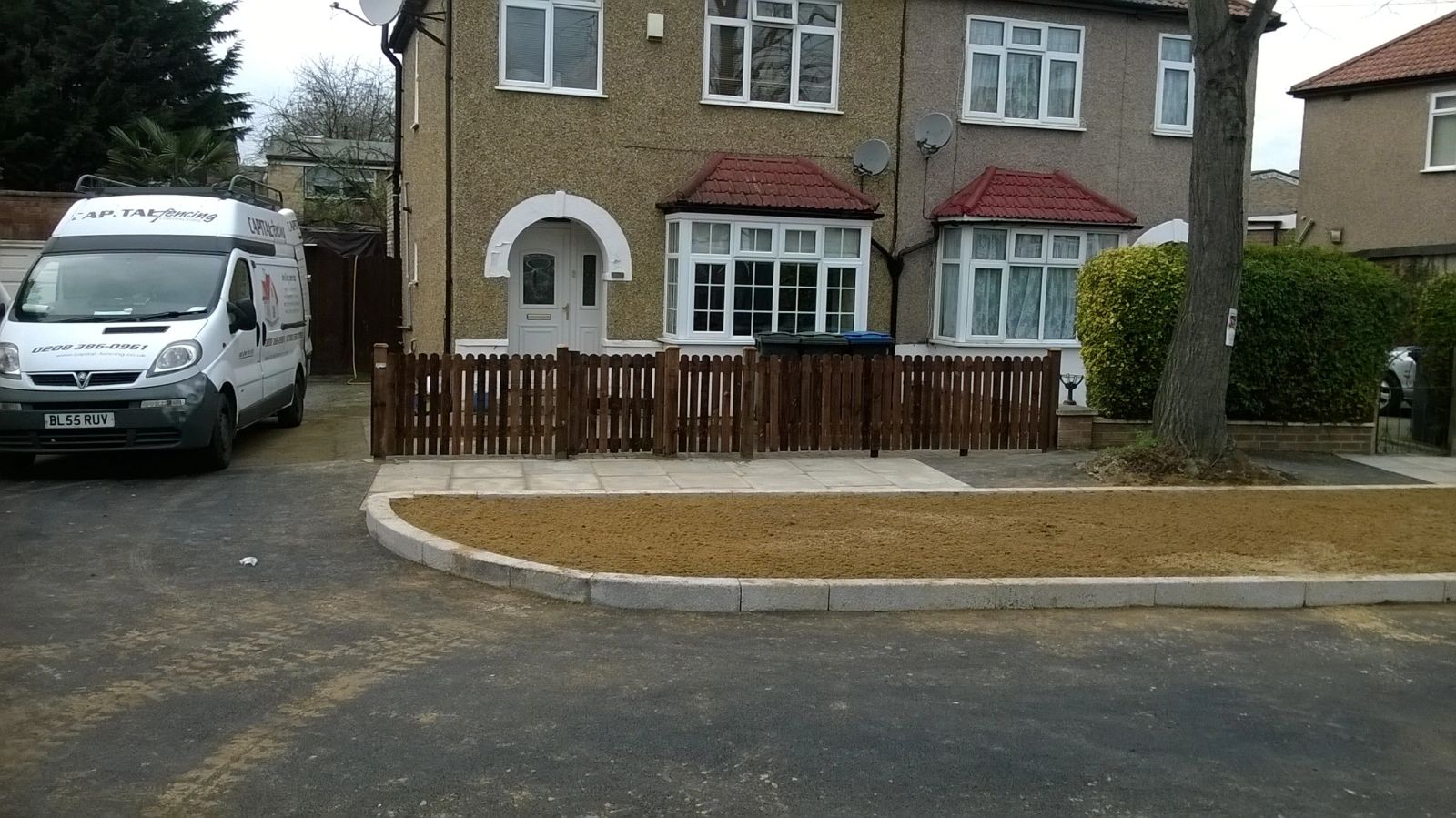
front boundary 900mm painted picket or bar-and-rail on the visibility splay, side boundary 1.8m closeboard beyond the sight-line. On Cheshunt jobs we adjust for ground water near the lee valley means post bases need extra care to prevent rot.

Property mix locally: mid-century semis and bungalows, plus newer riverside developments toward Goffs Oak. Typical gardens: long flat gardens — many back onto the Lee Valley with high-water-table conditions. Postcodes we regularly service: EN7, EN8.

Why this spec, for houses on a corner with two road-facing boundaries — visibility, privacy and highway sight-lines all in play

  • highway visibility standards handled properly — no council-notice rebuild six months in
  • clean junction between two boundary types instead of one tired fence run stopping at a wall
  • corner post carries loads from two directions — we upsize as standard, not as an add-on

Typical corner-plot fencing briefs in Cheshunt

  • front-and-side boundary run around a corner plot keeping highway sight-line to 900mm at the junction
  • matched picket to the front, closeboard to the side, single point of change at the corner post

Corner Plot Fencing FAQs — Cheshunt

What happens if my corner boundary blocks a driver's view?

On corner-plot fencing jobs in Cheshunt (EN7), our default answer is: front boundary 900mm painted picket or bar-and-rail on the visibility splay, side boundary 1.8m closeboard beyond the sight-line. We'll walk you through highway visibility standards handled properly — no council-notice rebuild six months in on the site visit before you commit.

How is the corner post different from a normal post?

Across Cheshunt we spec around ground water near the lee valley means post bases need extra care to prevent rot, so on corner-plot fencing that usually means picket or bar-and-rail on the sight-line splay. For context: clean junction between two boundary types instead of one tired fence run stopping at a wall. We handle the council conversation as part of the job, not as an after-thought.

Where does the highway sight-line splay actually start?

Broxbourne Borough coverage means we can survey most EN7 addresses inside a week — houses on a corner with two road-facing boundaries — visibility, privacy and highway sight-lines all in play. The honest trade-off is carrying a full 1.8m closeboard all the way to the pavement corner — councils issue removal notices for exactly this — which is exactly what our default spec designs out.

How high can a front boundary be on a corner plot?

Practically: front-and-side boundary run around a corner plot keeping highway sight-line to 900mm at the junction. That's the Cheshunt version of this job, not a generic one. We'll walk you through highway visibility standards handled properly — no council-notice rebuild six months in on the site visit before you commit.

Can two different fence types meet at a corner?

On corner-plot fencing jobs in Cheshunt (EN7), our default answer is: front boundary 900mm painted picket or bar-and-rail on the visibility splay, side boundary 1.8m closeboard beyond the sight-line. For context: clean junction between two boundary types instead of one tired fence run stopping at a wall. We handle the council conversation as part of the job, not as an after-thought.

Recent corner plot fencing work
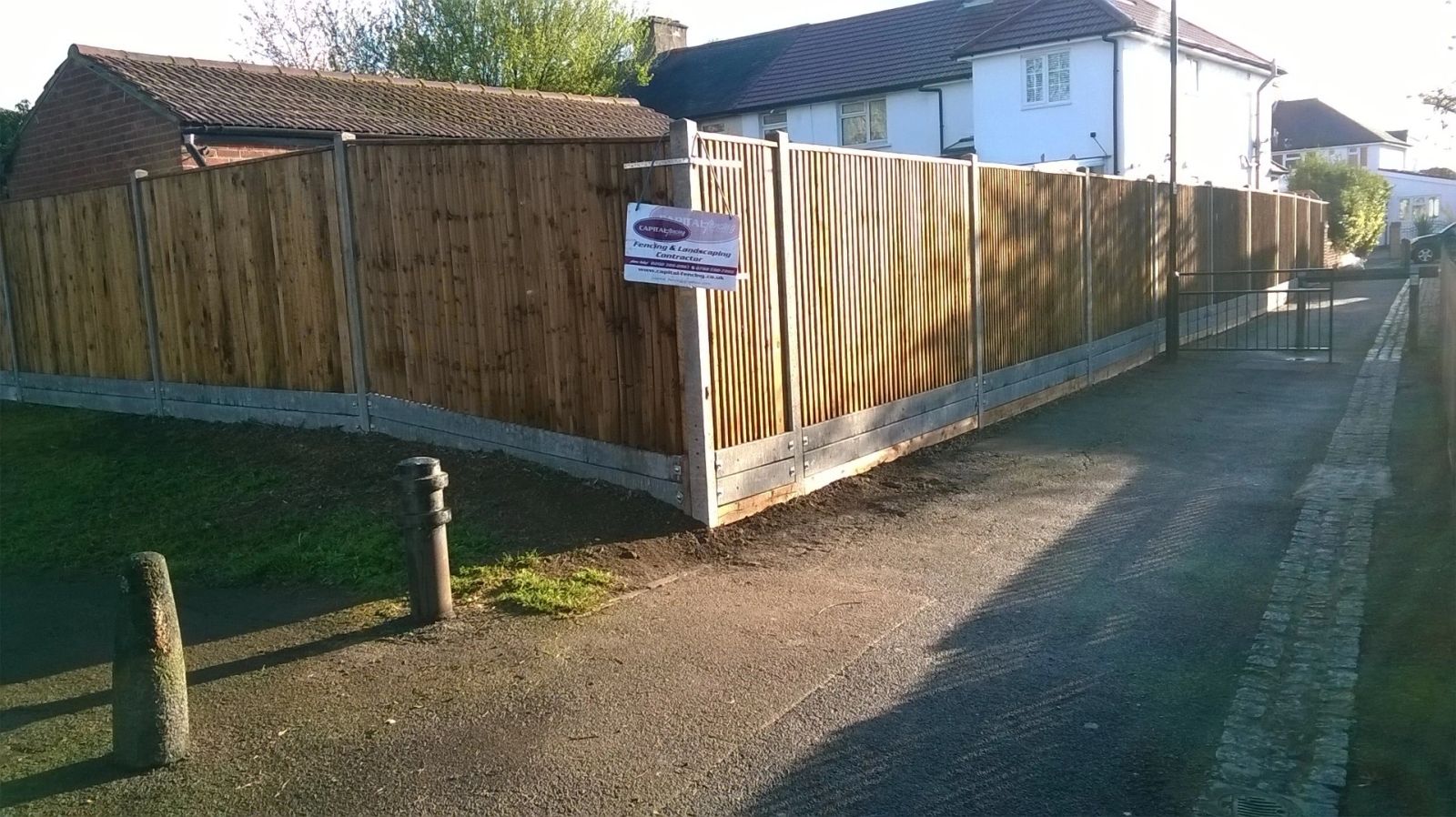
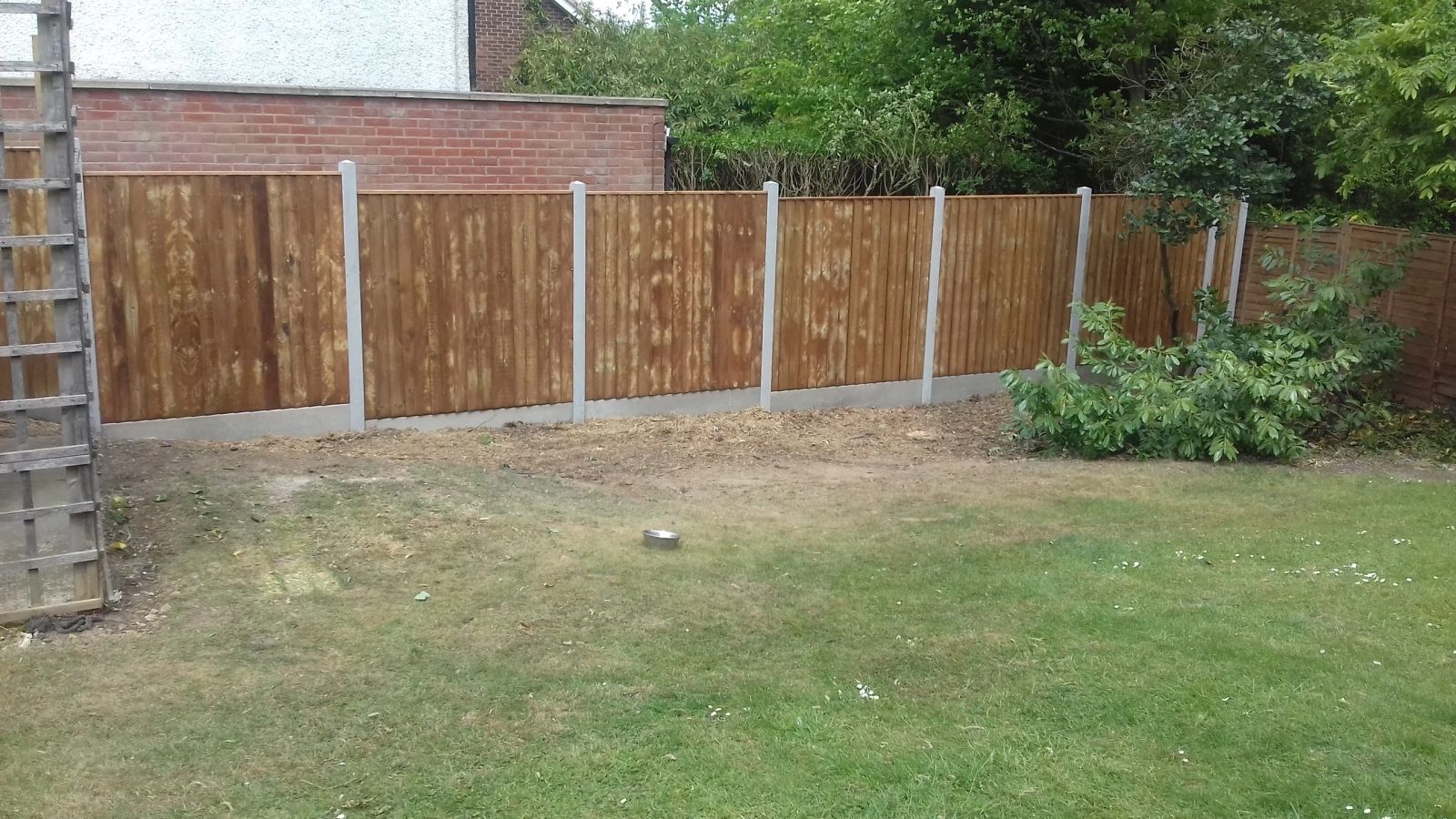
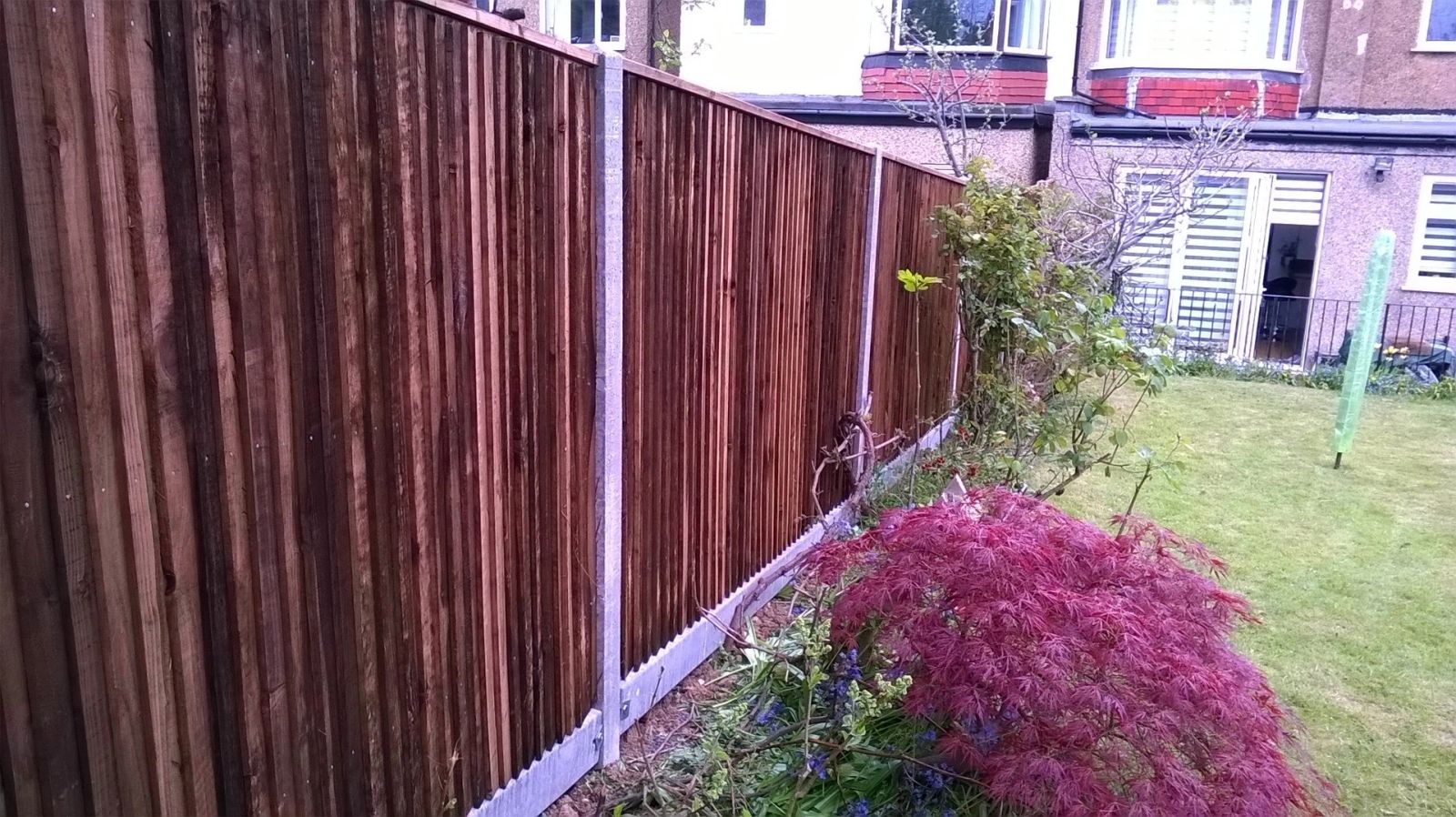
closeboard fence run installed by Capital Fencing in Cheshunt (EN7)panel fence install installed by Capital Fencing in Cheshunt (EN7)trellis-topped fence installed by Capital Fencing in Cheshunt (EN7)bespoke decorative fence installed by Capital Fencing in Cheshunt (EN7)

Site notes: corner plot fencing in EN7

Defensive planting alongside a security fence

Dense, thorny planting such as hawthorn or berberis along the inside or outside of a lower fence adds a deterrent layer without extra height, and is sometimes used where planning limits the fence itself.

Planting needs a maintained gap from the fence line so roots don't undermine posts and growth doesn't hide someone approaching the boundary — the deterrent only works if it's kept low enough to see over and dense enough not to push through.

Sleeper thresholds beneath field and driveway gates

A timber or concrete sleeper set into the ground beneath a wide field or driveway gate gives the gate's bottom edge a firm, level reference to close against, preventing the bottom rail from dropping into soft or rutted ground over time.

This detail is particularly useful on unsurfaced openings where the ground either side of the gate sees regular vehicle or livestock traffic and would otherwise rut unevenly.

Deadlocks fitted to timber gate doors

A deadlock fitted to a solid timber gate door needs a keep let into a post or frame that's substantial enough to resist forcing, since a deadlock is only as strong as the timber and keep it engages with.

Outdoor use also means the lock case and keep need weather protection or a corrosion-resistant finish that an equivalent internal door lock wouldn't require.

Rubber buffer pads at double-gate meeting stiles

A rubber buffer pad fitted where two gate leaves meet or where a gate meets its stop cushions the impact of closing, reducing wear on the timber or metal edge and quietening what would otherwise be a hard knock each time.

These pads perish with UV and weather exposure over time and need replacing periodically, since a hardened, cracked pad no longer cushions the impact it was fitted to absorb.

End-of-terrace properties and long return boundaries

An end-of-terrace plot typically carries a much longer exposed side boundary than its mid-terrace neighbours, often running the full depth of the garden along a side street or footpath rather than backing onto another private garden.

That length changes the practical spec: more posts see wind and impact loading from the public side, and a long uninterrupted run benefits from a support post or two extra to control any bow developing over time.

Because the boundary faces a public route, it's also the fence most likely to need a more robust anti-climb consideration than an equivalent internal party fence.

Handling a live boundary dispute discovered during a repair

Sometimes a repair call-out uncovers that neighbours actively disagree about where the boundary line sits, which is a different situation to simply not knowing who's responsible for maintenance, and it needs resolving before any post is reset rather than worked around.

In that situation the sensible step is pausing repair work on the disputed section until the neighbours have agreed the line, since resetting a post on a disputed line can itself become evidence in the dispute.

Hinge types found on garden gates

Band-and-gudgeon hinges, tee hinges, plain butt hinges and adjustable bolt-on hinges each suit a different gate weight and post material, and fitting the wrong type for the gate's weight is a common cause of early hinge failure.

A heavy timber gate needs a band-and-gudgeon or heavy-duty tee hinge rather than a light butt hinge sized for an internal door.

Comparative shrinkage rates across species

Different timber species shrink by noticeably different amounts for the same change in moisture content, with some tropical hardwoods moving comparatively little and some softwoods, particularly in the tangential direction, moving considerably more.

This matters when mixing species within the same structure, such as a hardwood gate frame with softwood infill boards, since the two materials can move at different rates and open gaps or induce stress at their junctions.

Manufacturers' technical data sheets for structural and decorative timber usually list expected shrinkage percentages, which is the more reliable way to anticipate this than relying on general species reputation alone.

When deeds don't say who owns a boundary

It's common for older title deeds to be entirely silent on which side owns a given boundary, especially on properties built before detailed conveyancing plans became standard practice.

In that situation there's no single automatic rule that applies in every case, and long-standing practical evidence — who has always maintained the fence, existing physical features — can carry real weight.

Where ownership genuinely isn't clear, we'd always suggest raising it with the neighbour and, if needed, a conveyancing solicitor, rather than assuming a default answer.

Play-safe detailing near a boundary

Where a fence runs alongside a play area, sharp pale tops, low horizontal rails that invite climbing, and gaps that could trap a limb are all avoided in favour of rounded caps and rail spacing that doesn't create a ladder.

This detailing sits alongside, rather than instead of, the security spec — a boundary can still be climb-resistant and impact-rated while removing the specific hazards that matter next to children.

Gust funnelling between semi-detached gaps

The narrow gap between two semi-detached or terraced houses can accelerate wind passing through it, in the same way air speeds up through a nozzle, so a fence sitting at the mouth of that gap sees higher gusts than the open garden either side.

This is easy to miss on a site visit if the wind isn't blowing that day, but it shows up over a few winters as one particular bay of panelling failing repeatedly while the rest of the run stays sound.

Reinforcing just that section with a heavier post or a part-slatted panel is usually enough, rather than upgrading the whole run.

Redwood versus whitewood softwood

Redwood, more accurately European or Baltic redwood pine, has a denser structure and a naturally more durable heartwood than whitewood, which is typically spruce and has almost no natural decay resistance.

Both take preservative treatment reasonably well, but whitewood's tighter, harder-to-penetrate structure is one of the species that benefits most from incising before treatment.

In practice most fencing softwood sold as generic 'treated timber' doesn't distinguish clearly between the two, so the preservative treatment does more of the durability work than the species itself.

Gating a shared driveway

A gate across a driveway shared by more than one property needs the agreement of everyone with a right to use it, since restricting access — even with a key provided to all parties — changes how that access can practically be used, especially for larger vehicles or emergency access.

Automated gates on a shared drive raise additional questions about who controls the opening mechanism, who pays for maintenance, and what happens if the power or motor fails, all of which are worth agreeing in writing before installation.

Where the shared drive is used by refuse collection or emergency services, checking minimum clear widths and turning circles with the council or fire service before fitting a gate avoids a structure that later has to be removed.

Internal caged units within a self-storage facility

Beyond the site's outer perimeter fencing, many self-storage facilities also fit individual mesh cages or partition walls between units, giving each customer's space its own lockable boundary independent of the main building's access control.

Mesh cage partitions are usually specified with a smaller aperture than the outer perimeter mesh, since the concern at that internal scale is preventing reach-through between adjoining units rather than resisting an external climb-over attempt.

Offsetting the string line to protect it during digging

A string line pulled exactly along the intended post centre line gets in the way of digging and is easily knocked or buried in spoil, so many installers set it slightly to one side and measure across to it rather than digging directly beneath it.

A fixed offset distance, checked and noted once at the start, lets every post position be measured consistently from the same reference without needing the string itself to survive undisturbed through a full day of digging.

Re-checking the offset periodically through the day catches the line if it's been nudged, since a small unnoticed shift partway through a run throws every subsequent post slightly off true.

Distinguishing frame twist from in-plane rack

A racked frame has gone out of square within its own plane, like a rectangle leaning into a parallelogram, while a twisted frame has warped out of flat so that one corner sits proud of the plane the other three corners define — the two look similar from a distance but need different corrections.

Sighting along the top rail from the hinge side is a quick way to spot twist that a simple diagonal measurement for racking won't reveal.

Movement joints in timber cladding

Timber cladding boards fixed edge to edge without any allowance for seasonal expansion can buckle or split as the boards swell in wet weather and have nowhere to expand into.

A small gap left between board ends, or a slightly loose fixing pattern that allows a board to expand slightly within its fixing slots, accommodates this movement without transferring stress into the board itself.

The required gap varies by species and board width, since wider boards and more moisture-reactive species move more in absolute terms than narrow boards of a stable species for the same change in humidity.

Protecting a shared alley during material delivery

A shared rear alley used by several households for bin access can't be blocked completely for a full day without agreement, so materials are often moved through in stages between other residents' access needs rather than left stacked across the full width.

Trailing cables, tools and offcuts left in a shared passage are a trip hazard for neighbours as well as the crew, so keeping the alley clear at the end of each working day matters even if the job isn't finished.

Any damage to the alley surface itself — cracked paving, a scraped wall corner from a wide panel — is worth flagging to the client immediately, since a shared area often has joint liability that's harder to unpick after the event.

Spirit level versus laser level for checking a run

A spirit level checks a single post is plumb and a single panel is level, but confirming that an entire run stays level or follows a consistent fall over 20 or 30 metres is far quicker and more reliable with a rotating laser level set at a fixed height.

On a stepped run, a laser also makes it straightforward to confirm each step drops by the same consistent amount rather than checking each post in isolation and hoping the cumulative effect looks even.

A basic spirit level remains the more practical tool for quick checks during a single post's installation, since setting up a laser for every individual post would slow the job without adding useful accuracy at that scale.

Safety standards for automated gates

Automated gates fall under machinery safety regulations, which means a force-limiting device or safety edge to stop the gate on contact with an obstruction, and photocells or other sensors to detect someone in the gate's path, aren't optional extras.

A risk assessment covering the specific installation — proximity to a public footpath, likely pedestrian use, manual override in a power cut — should be part of any automation job, not an afterthought once the gate's already built.

Annual servicing of the motor, safety sensors and mechanical stops keeps an automated gate compliant and catches wear before it becomes a safety issue rather than just an inconvenience.

Community Infrastructure Levy and larger boundary projects

The Community Infrastructure Levy is a charge some councils apply to larger new development, and while it rarely touches ordinary domestic fencing, larger boundary projects tied to bigger planning permissions can occasionally interact with it.

This is a specialist area mainly relevant to substantial developments rather than a single garden fence, but worth being aware of if boundary work forms part of a larger planning permission.

Anyone unsure whether a larger project's boundary elements might be affected should check with the council's planning or CIL team directly.

Conservation area consent for boundary works

Conservation area status doesn't ban fence or wall replacement outright, but it does mean the council can ask for materials and detailing that match the street's traditional character, and demolition of an existing wall over a certain height can itself need consent.

Removing or lowering a historic brick boundary wall is the case most likely to need permission, since unlike a simple fence swap it counts as demolition of a structure that contributes to the area's appearance.

The safest route on any period property is a short pre-application check with the conservation officer, since 'like for like' replacement is treated differently to a change of material or height.

Corner Plot Fencing across EN7, EN8 is a regular run for us. We'll quote honestly, tell you if corner-plot fencing isn't the right answer for your site, and book the job in within a week or two of a signed quote. we handle the council conversation as part of the job, not as an after-thought. Roads such as College Road and Turners Hill are typical of the local layout. Cedars Park is a useful local reference point. Cedars Park and the wider Lee Valley Regional Park both border the town.

Get In Touch

Get My Free Quote — 24h Response

No callout fee · Free site visit · Friendly local team covering London & Hertfordshire.

Call us
07885907880
or 02036484746
Email
capital_fencing@yahoo.com
WhatsApp
Message us anytime
Area
London & Hertfordshire
Payment
Card payments accepted

Pay by debit or credit card, bank transfer or cash once the work and price are agreed. No deposit taken online.

Request a Free Quote

We'll get back to you within 24 hours.

Free Site Visit No Callout Fee
Call WhatsAppQuote