London & Hertfordshire Free Site Visit
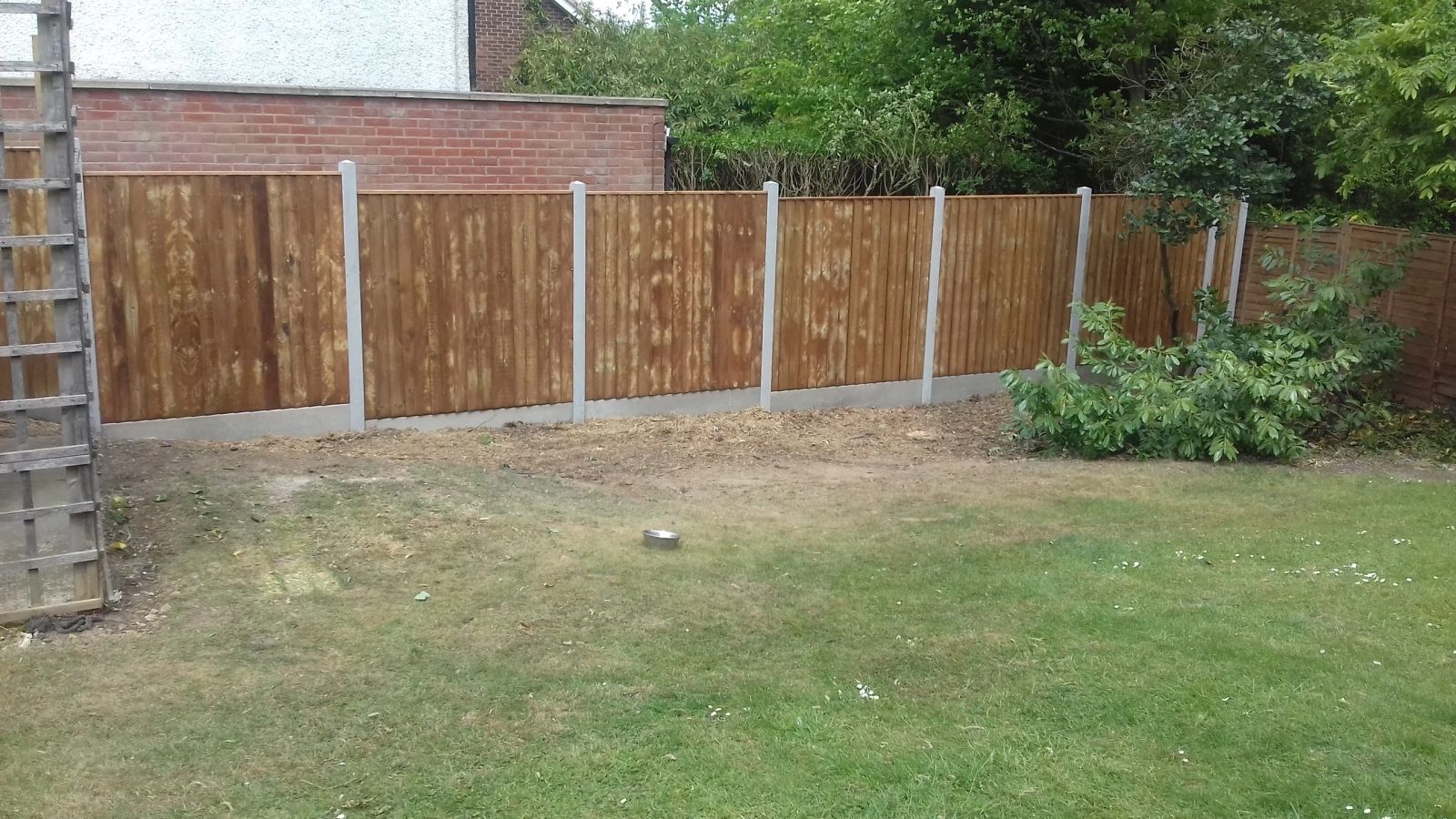
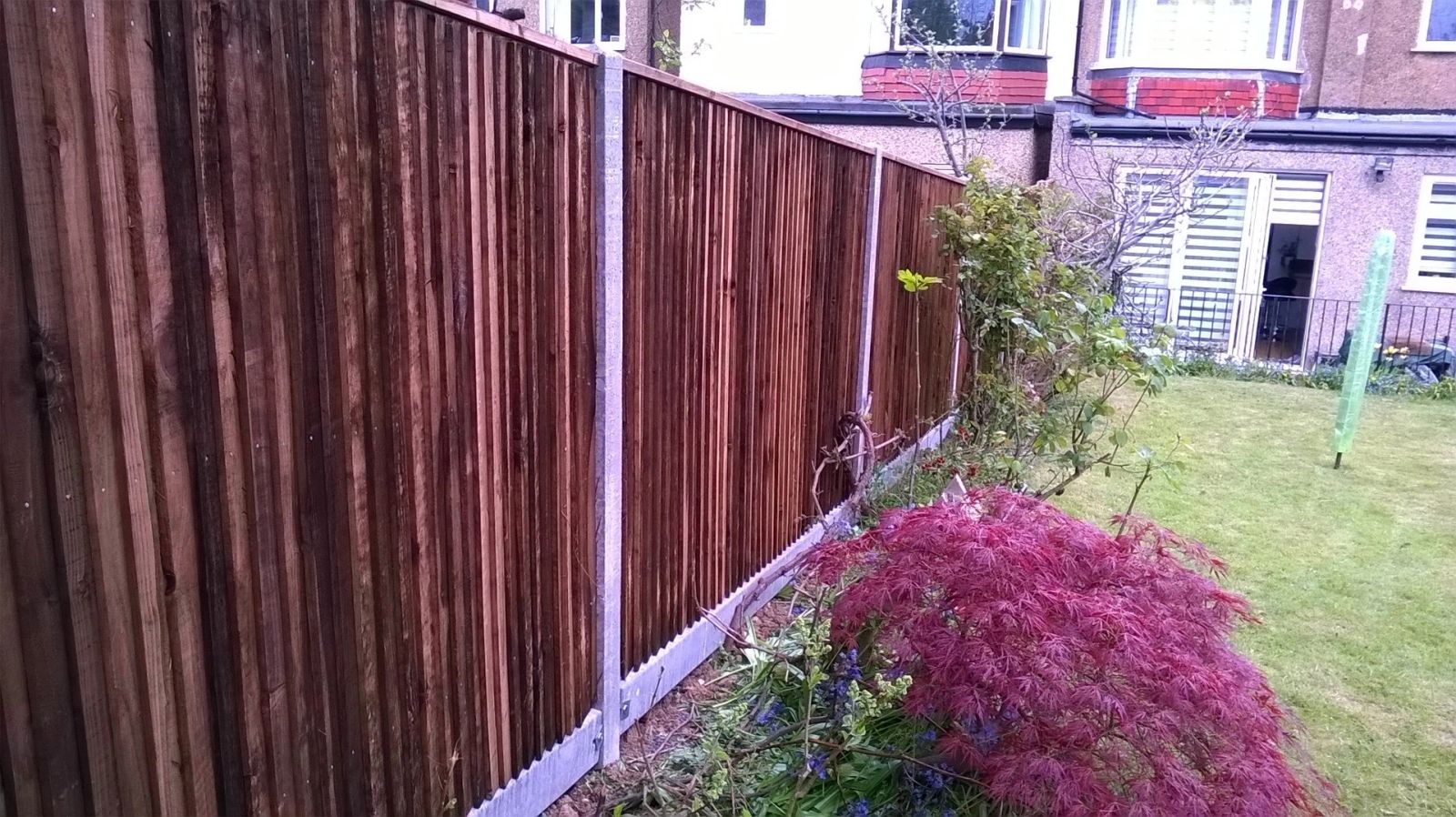
closeboard fence run installed by Capital Fencing in Cheshunt (EN7)
Cheshunt · EN7 / EN8

Sloping Garden Fencing in Cheshunt (EN7)

Sloping Garden Fencing in Cheshunt is a specific brief for us — homeowners with gardens that fall or rise across the boundary — stepped or racked builds. The default local answer isn't a stock catalogue drop: it's closeboard on 100×100 pressure-treated posts, stepped in 150mm gravel-board increments or racked where the slope is gentle enough. On Cheshunt sites we also spec around ground water near the lee valley means post bases need extra care to prevent rot, which is where a lot of sloping-garden fencing jobs quietly fail two years in. Roads such as Flamstead End Road and Turners Hill are typical of the local layout. Cedars Park is a useful local reference point. Goffs Oak, on higher ground to the west, has larger detached plots and a different topography from the valley floor.

Sloping Garden Fencing in Cheshunt is a specific brief for us — homeowners with gardens that fall or rise across the boundary — stepped or racked builds. The default local answer isn't a stock catalogue drop: it's closeboard on 100×100 pressure-treated posts, stepped in 150mm gravel-board increments or racked where the slope is gentle enough. On Cheshunt sites we also spec around ground water near the lee valley means post bases need extra care to prevent rot, which is where a lot of sloping-garden fencing jobs quietly fail two years in. Roads such as Flamstead End Road and Turners Hill are typical of the local layout. Cedars Park is a useful local reference point. Goffs Oak, on higher ground to the west, has larger detached plots and a different topography from the valley floor.

What goes wrong

Common failure modes on sloping-garden fencing

  • using panels on any slope over 300mm across the bay — the panel drops one end and rots at the sunken corner
  • not draining behind sleeper retainers — the ground pushes the fence out within two seasons
Default spec

How we build sloping-garden fencing in Cheshunt

closeboard on 100×100 pressure-treated posts, stepped in 150mm gravel-board increments or racked where the slope is gentle enough. On Cheshunt jobs we adjust for ground water near the lee valley means post bases need extra care to prevent rot.

Property mix locally: mid-century semis and bungalows, plus newer riverside developments toward Goffs Oak. Typical gardens: long flat gardens — many back onto the Lee Valley with high-water-table conditions. Postcodes we regularly service: EN7, EN8.

Why this spec, for homeowners with gardens that fall or rise across the boundary — stepped or racked builds

  • stepped builds keep the fence line legally correct even where the ground doesn't cooperate
  • closeboard suits stepping better than panel — no wasted panels cut to slope
  • sleeper-and-fence combined lines mean one contractor for what's usually two trades

Typical sloping-garden fencing briefs in Cheshunt

  • retaining sleepers under fencing to level a garden with a two-course drop to the neighbour
  • racked feather-edge run tracking a gentle slope without visible stagger

Sloping Garden Fencing FAQs — Cheshunt

Can you match a neighbour's stepped boundary starting point?

On sloping-garden fencing jobs in Cheshunt (EN7), our default answer is: closeboard on 100×100 pressure-treated posts, stepped in 150mm gravel-board increments or racked where the slope is gentle enough. We'll walk you through stepped builds keep the fence line legally correct even where the ground doesn't cooperate on the site visit before you commit.

Do I need retaining sleepers before the fence?

Across Cheshunt we spec around ground water near the lee valley means post bases need extra care to prevent rot, so on sloping-garden fencing that usually means closeboard on stepped gravel boards. We'll walk you through stepped builds keep the fence line legally correct even where the ground doesn't cooperate on the site visit before you commit.

Who is liable when the ground falls onto a neighbour's plot?

Broxbourne Borough coverage means we can survey most EN7 addresses inside a week — homeowners with gardens that fall or rise across the boundary — stepped or racked builds. For context: closeboard suits stepping better than panel — no wasted panels cut to slope. Structural spans and post depths calculated, not guessed.

How do you keep water off the low end of a stepped run?

Practically: stepped closeboard down a 900mm fall across a 15m rear boundary. That's the Cheshunt version of this job, not a generic one. The honest trade-off is using panels on any slope over 300mm across the bay — the panel drops one end and rots at the sunken corner — which is exactly what our default spec designs out.

Is panel fencing ever OK on a slope?

On sloping-garden fencing jobs in Cheshunt (EN7), our default answer is: closeboard on 100×100 pressure-treated posts, stepped in 150mm gravel-board increments or racked where the slope is gentle enough. The honest trade-off is using panels on any slope over 300mm across the bay — the panel drops one end and rots at the sunken corner — which is exactly what our default spec designs out.

Recent sloping garden fencing work
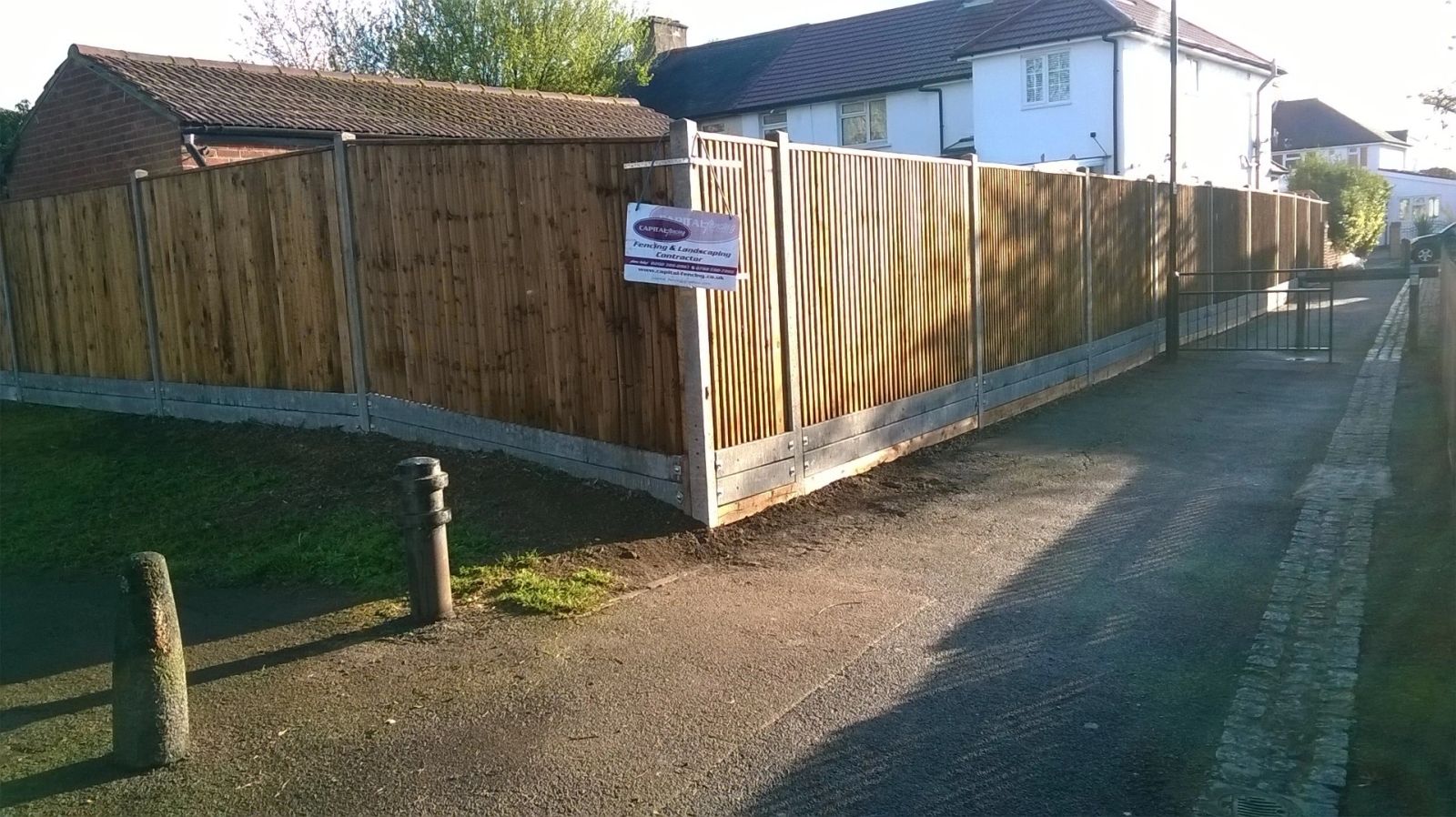
closeboard fence run installed by Capital Fencing in Cheshunt (EN7)panel fence install installed by Capital Fencing in Cheshunt (EN7)trellis-topped fence installed by Capital Fencing in Cheshunt (EN7)bespoke decorative fence installed by Capital Fencing in Cheshunt (EN7)

Local considerations across Cheshunt and waltham cross

Phasing a perimeter security upgrade

Replacing an entire perimeter in one go isn't always practical on an occupied commercial site, so work is often phased section by section, with each completed run left secure before the next section is opened up.

Phasing needs a sequence that never leaves the whole boundary compromised at once — usually working round from the least to most vulnerable elevation rather than a simple left-to-right order.

Simple maintenance that prevents gate failure

Checking hinge screws are still tight and that the gate still closes flush against the frame once or twice a year catches the early stages of sag before it becomes a full repair job.

A gate that's starting to catch on the ground is far cheaper to fix at that stage than after the frame has racked further out of square.

Insurance paperwork after storm damage

Most household policies distinguish between storm damage to a fence, which is often covered subject to policy wording and excess, and general wear or rot, which typically isn't, so insurers commonly ask for photographs of the damage and sometimes of the fence's prior condition.

A dated photo of the boundary from before the storm, even an incidental one, can materially help a claim where the insurer disputes whether failure was storm-related or simply due to age.

This is a general description of how these claims are typically assessed rather than a statement about any specific insurer's policy, and terms, excesses and definitions of 'storm' vary between providers and should be checked in the policy document.

Adjusting post heights when repairing a fence on sloping ground

A fence stepped down a slope has posts of varying heights above ground even though the panels themselves are a standard size, and a repaired post needs to match the stepped height of its neighbours rather than a single standard measurement.

Getting this wrong on a repair creates a visible kink in the top line of an otherwise consistent stepped run, so measuring the actual height of the posts either side of the repair matters more here than on a level run.

Setting the centre gap on double gates

The gap at the centre where two gate leaves meet needs to be tight enough to look intentional and resist being forced apart, but not so tight that seasonal swelling causes the two leaves to bind against each other in wet weather.

A drop bolt or cane bolt on one leaf, engaged before the other leaf is latched, helps keep this centre gap consistent over repeated use rather than relying on the latch alone.

Frost heave effects on shallow-set posts

Frost heave occurs when water in saturated soil freezes and expands, lifting the ground surface and any shallowly set post embedded in it, sometimes by several millimetres each freeze-thaw cycle over a winter.

Posts set below the typical frost penetration depth for the region are far less affected, since the freezing zone that drives heave rarely reaches that far down, which is one reason recommended minimum depths are deeper in areas with harder winters.

A post that's visibly risen slightly over a hard winter, without any sign of the concrete cracking, has often been affected by heave rather than a failed footing, and it can sometimes settle back as the ground thaws.

Overhanging branches and the right to prune

A landowner has the right to cut back branches or roots that cross the boundary from a neighbour's tree, up to the boundary line, without needing the tree owner's permission, but the cut material technically remains the tree owner's property and should be offered back.

That right doesn't extend to entering the neighbour's land to do the work without consent, and it's overridden where the tree is protected by a Tree Preservation Order or sits within a conservation area, in which case council notice is needed first.

Cutting back further than necessary to clear the boundary, or in a way that damages the tree's health, can itself expose the pruning party to a claim, so proportionate, boundary-line-only cutting is the safer approach.

Hedgerow removal and nesting-bird season

Removing or cutting back a hedge to install a new boundary fence is generally best avoided between March and August, the main bird nesting season, since disturbing an active nest is an offence under the Wildlife and Countryside Act regardless of intent.

Some countryside and agricultural hedgerows are also protected under the Hedgerow Regulations, which can require notifying the local authority before removal even outside a garden setting.

A pre-work check of the hedge for active nests, and scheduling removal for autumn or winter where the timeline allows, avoids both the legal risk and the delay of having to stop mid-job.

Community-wide hedgehog gap linking across multiple boundaries

A single hedgehog gap in one fence achieves little if the neighbouring boundaries along the same row of gardens remain solid, since the animal still can't move beyond the first connected garden.

Some local wildlife groups now coordinate gap positions across a terrace or street so that a continuous corridor is created through several gardens rather than isolated single gaps.

Where a client is enthusiastic about this, it's worth suggesting they mention it to neighbours early, since agreeing gap positions in advance avoids gaps that don't line up once each fence is finished.

Step riser heights on a raised deck

Steps down from a raised deck work best with consistent riser heights throughout the flight, since an irregular step height is a common trip hazard, particularly where the top or bottom step differs slightly from the others.

Building regulations guidance for steps in a domestic setting generally favours risers in the range of roughly 150-170mm with adequate going (tread depth), though garden steps have more flexibility than an internal staircase.

Where a deck sits at a height that doesn't divide evenly into consistent risers, it's better to adjust the deck height slightly at the design stage than to build one oddly-sized step to make up the difference.

Choosing post hole diameter for the post size

A hole cut too close to the post's own width leaves no room for concrete to fully surround it, which weakens the base and gives water a direct channel down alongside the timber rather than a solid seal.

A generally quoted rule is a hole roughly three times the post's width, so a 100mm post wants in the region of a 300mm diameter hole, adjusted upward on poor ground or for taller, more heavily loaded posts such as gate posts.

Oversized holes aren't free either — they use more concrete and take longer to backfill and haunch neatly, so the aim is the right diameter for the post and ground rather than simply digging as wide as convenient.

Through-fixing a hasp for padlock security

A hasp fixed only with screws from the accessible face can be forced or unscrewed relatively easily, whereas through-bolting it with fixings passing right through the gate frame to a backing plate resists that kind of attack far better.

This is a straightforward upgrade on an existing gate that already has a hasp fitted, without needing to replace the hasp itself.

Rubber buffer pads at double-gate meeting stiles

A rubber buffer pad fitted where two gate leaves meet or where a gate meets its stop cushions the impact of closing, reducing wear on the timber or metal edge and quietening what would otherwise be a hard knock each time.

These pads perish with UV and weather exposure over time and need replacing periodically, since a hardened, cracked pad no longer cushions the impact it was fitted to absorb.

Bracketing as a repair technique versus re-jointing

A galvanised steel bracket bridges a failed timber joint — rail to post, or post to base — without needing to cut fresh joinery into timber that may already be weakened, which makes it quicker and less invasive than re-jointing.

Bracketing is a good fit where the surrounding timber is still structurally sound but the original joint has failed; where the timber itself has degraded, a bracket bolted into softened wood won't hold regardless of how strong the bracket is.

Contaminated or capped land general caution

Land with a history of industrial, landfill or heavy commercial use can be capped with a clean soil or membrane layer over contaminated material below, installed specifically to prevent exposure, and breaking through that cap with a post hole risks disturbing what it was designed to contain.

Signs worth treating with caution include unusually dark or ashy soil, chemical odours, unexpected debris at shallow depth, or a site known to have had a previous industrial use even if long redeveloped for housing.

Where contamination is a realistic possibility, checking any available site history or environmental report before excavating is a sensible precaution, and hand-digging with careful observation of the spoil is safer than blind augering.

Gating a shared driveway

A gate across a driveway shared by more than one property needs the agreement of everyone with a right to use it, since restricting access — even with a key provided to all parties — changes how that access can practically be used, especially for larger vehicles or emergency access.

Automated gates on a shared drive raise additional questions about who controls the opening mechanism, who pays for maintenance, and what happens if the power or motor fails, all of which are worth agreeing in writing before installation.

Where the shared drive is used by refuse collection or emergency services, checking minimum clear widths and turning circles with the council or fire service before fitting a gate avoids a structure that later has to be removed.

Converted flats and shared bin storage

Houses converted into two or three flats often have a shared bin store or side passage boundary that wasn't part of the original single-dwelling fence layout, and responsibility for repair can be unclear where the freeholder retains the passage but individual flats use it daily.

A gate onto a shared bin store needs to be wide enough for wheelie bins to pass without lifting them over a threshold, and a self-closing latch is worth specifying so the gate isn't left open between collections.

Where flats were converted without formal division of the garden, it's worth clarifying in writing which flat is responsible for which section of boundary before starting any replacement work.

What a repair sign-off covers

Once a repair is complete we check the repaired section moves and sits correctly against the rest of the run, not just that the immediate damage is fixed, since a post reset slightly out of line can put uneven strain on the panels either side.

We also leave the client with a clear note of what was replaced and what, if anything, is worth watching over the next year or two.

Checking a post for twist before concreting

A post can be perfectly plumb on both faces yet still be twisted along its length, which only becomes apparent once a rail or panel is offered up and doesn't sit flush against the face it's meant to fix to.

Sighting down the length of a post before it's set, rather than only checking it once braced upright, catches a twist that's much harder to correct once concrete has gone off around the base.

Timber posts sawn from a slightly twisted length of stock are the usual cause, so it's worth setting aside a visibly twisted post for a less critical position, such as a short infill panel, rather than a gate post or corner.

Urban heat and timber movement

Fencing against south-facing brick walls, paved courtyards or close to parked vehicles in dense urban plots experiences more extreme daily temperature swings than the same timber in an open garden, due to heat absorbed and re-radiated by hard surfaces.

That repeated expansion and contraction can open joints in panels and loosen fixings faster than in a more moderate microclimate, particularly on darker-stained timber that absorbs more heat.

Stainless or coated fixings and slightly looser panel-to-post tolerances both help absorb this movement without splitting timber over successive summers.

Public liability considerations on a shared boundary

Work that takes place on or near a shared boundary inherently affects two properties, which is one reason contractors carry public liability insurance covering damage or injury arising from the works, generally quite separate from any specific job guarantee.

Clients are entitled to ask to see a contractor's current public liability certificate before work starts, and for jobs involving excavation near a neighbour's structure or a shared wall it's reasonable practice to confirm cover explicitly rather than assume it.

This is a generic industry consideration rather than a claim about any particular policy, and the details of cover, exclusions and limits vary between insurers and should be checked directly with the provider.

Temporary bracing while concrete cures

A freshly-concreted post has no strength to resist knocks or wind until the concrete has gone off, so it needs temporary raking struts or timber braces fixed to hold it plumb and in line while curing.

Braces are best left in place for at least the manufacturer's stated initial cure time, and longer in cold weather, rather than removed as soon as the concrete looks solid on the surface.

A post nudged out of true during this window is much harder to correct afterwards than one checked and adjusted while the mix is still workable, so the check-and-brace step is worth the extra few minutes per post.

On sloping-garden fencing in Cheshunt you get the same crew from first site visit to hand-over. That's the whole model — small team, engineered-to-load spec, written quote before we start. Roads such as College Road and Crossbrook Street are typical of the local layout. Lee Valley Regional Park is a useful local reference point. Cedars Park and the wider Lee Valley Regional Park both border the town.

Get In Touch

Get My Free Quote — 24h Response

No callout fee · Free site visit · Friendly local team covering London & Hertfordshire.

Call us
07885907880
or 02036484746
Email
capital_fencing@yahoo.com
WhatsApp
Message us anytime
Area
London & Hertfordshire
Payment
Card payments accepted

Pay by debit or credit card, bank transfer or cash once the work and price are agreed. No deposit taken online.

Request a Free Quote

We'll get back to you within 24 hours.

Free Site Visit No Callout Fee
Call WhatsAppQuote