London & Hertfordshire Free Site Visit
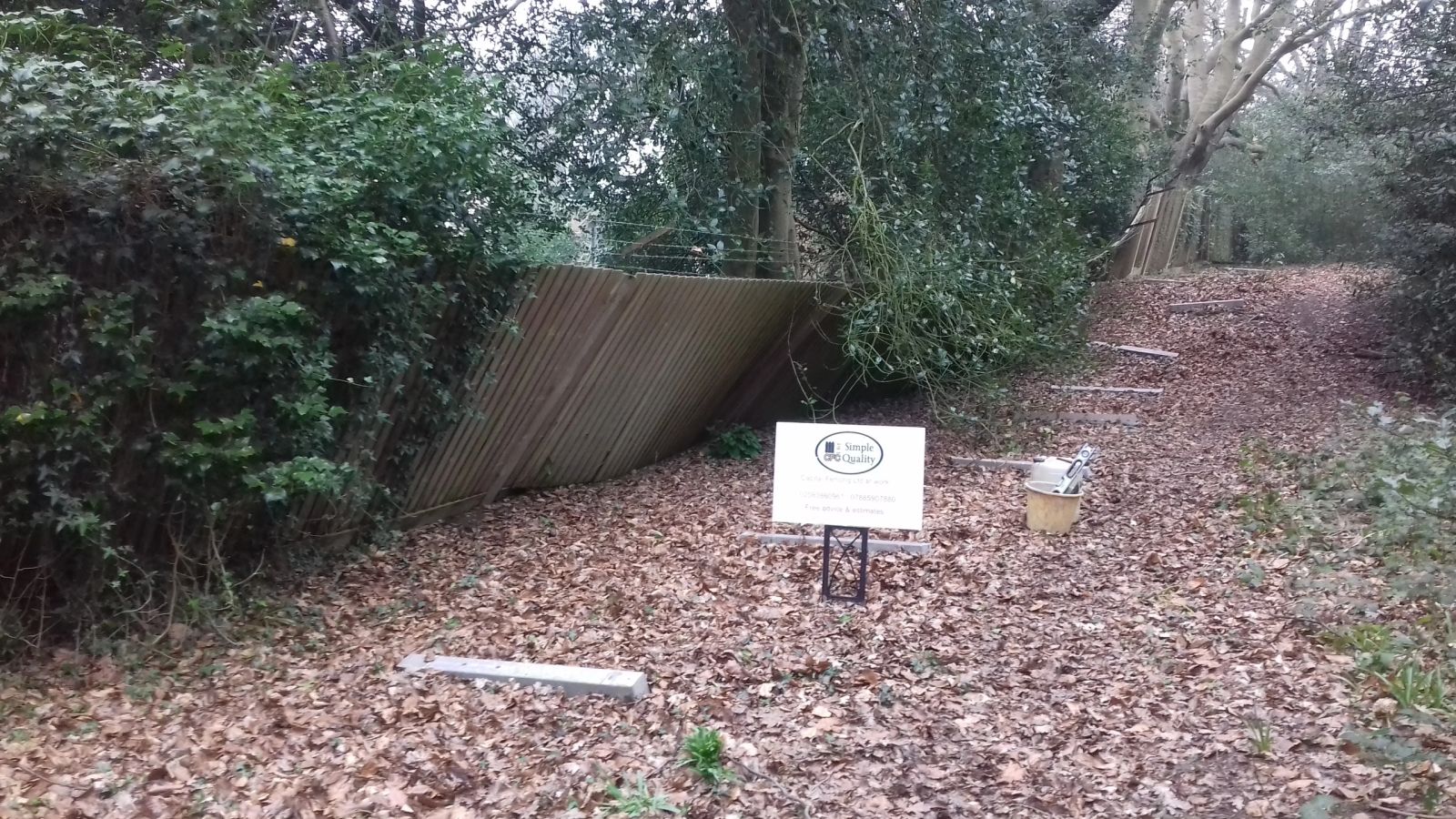
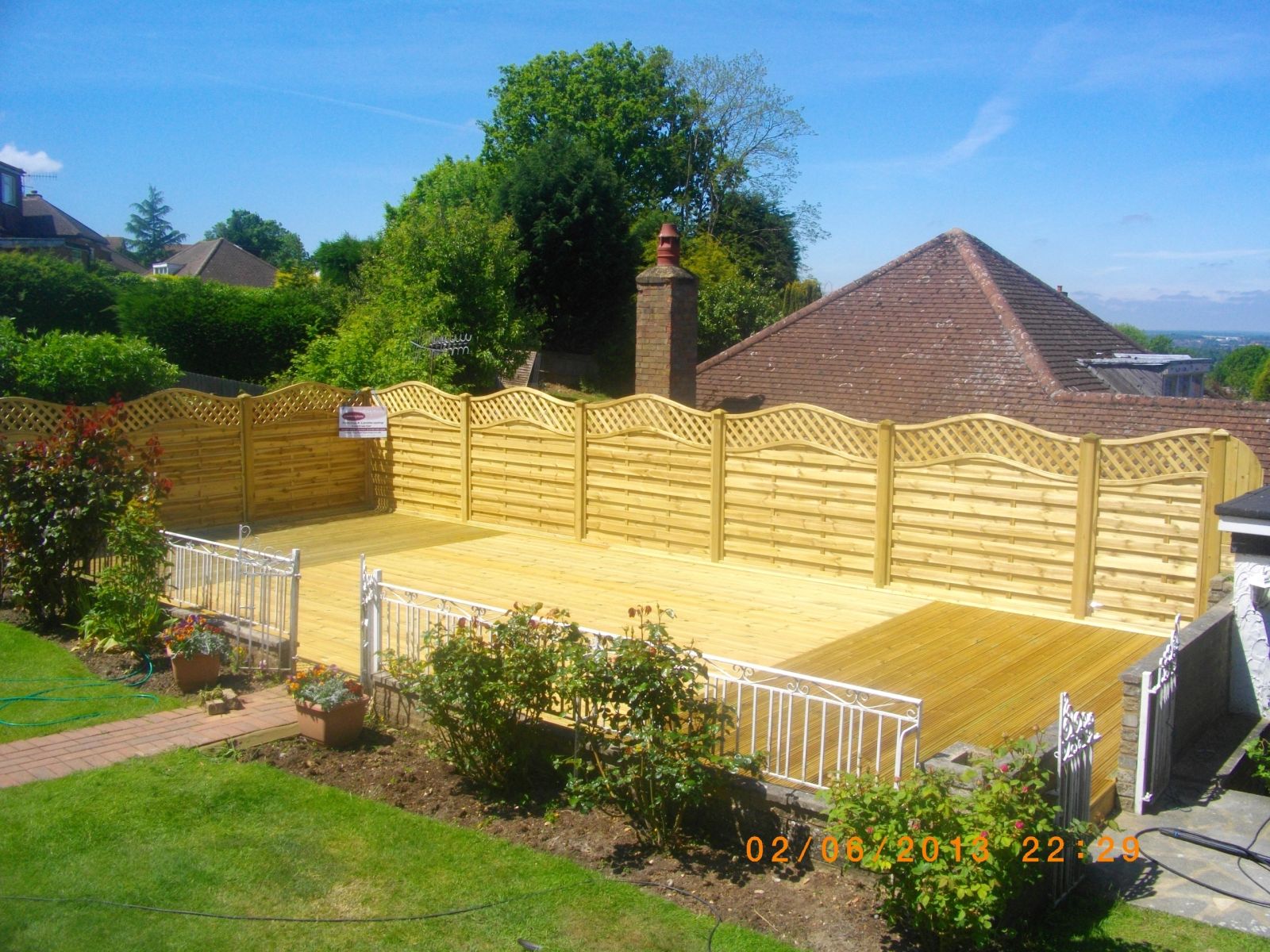
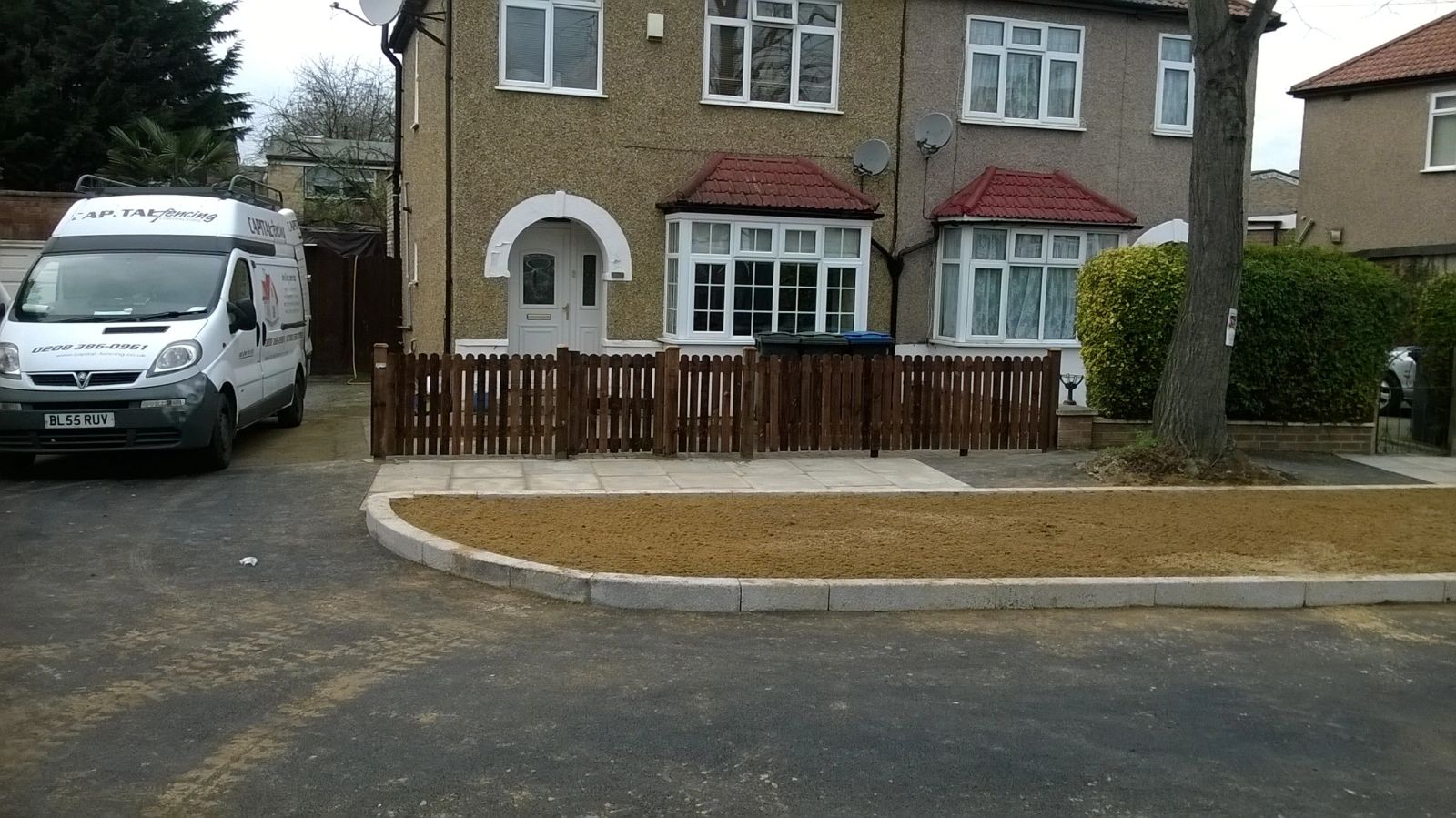
closeboard fence run installed by Capital Fencing in Hackney (E5)
Hackney · E5 / E8 / E9 / N1 / N16

Landlord fencing across Hackney — Hackney

If you're weighing landlord-grade fencing for a property in Hackney, the first thing that matters is tenancy turnaround windows and inventory sign-off — not the material choice. Once that's settled, pressure-treated closeboard on concrete posts is where most of our landlord-grade fencing work in E5 lands, with 6ft overlap panels with concrete posts and gravel boards as a considered alternative. Roads such as Mare Street and Broadway Market are typical of the local layout. Victoria Park (west edge) is a useful local reference point. Hackney's Victorian terraces, particularly in E8 and E5, tend to have shallower rear gardens than the borough's suburban neighbours.

If you're weighing landlord-grade fencing for a property in Hackney, the first thing that matters is tenancy turnaround windows and inventory sign-off — not the material choice. Once that's settled, pressure-treated closeboard on concrete posts is where most of our landlord-grade fencing work in E5 lands, with 6ft overlap panels with concrete posts and gravel boards as a considered alternative. Roads such as Mare Street and Broadway Market are typical of the local layout. Victoria Park (west edge) is a useful local reference point. Hackney's Victorian terraces, particularly in E8 and E5, tend to have shallower rear gardens than the borough's suburban neighbours.

What goes wrong

Common failure modes on landlord-grade fencing

  • cheapest lap panels racking in wind because posts were shallow — we always concrete to 600mm minimum on landlord work
  • using bare softwood posts on ground contact — three winters and they're gone
Default spec

How we build landlord-grade fencing in Hackney

6ft closeboard on concrete posts with gravel boards, mid-rail capped, softwood side gate with padlock hasp. On Hackney jobs we adjust for many boundaries are shared with three or four neighbours on victorian back-to-backs — clear ownership marks matter.

Property mix locally: Victorian terraces across Stoke Newington and De Beauvoir, plus post-war estates around Homerton and London Fields. Typical gardens: small rear gardens with mature planting; several plots border the Regent's Canal or Hackney Marshes. Postcodes we regularly service: E5, E8, E9, N1, N16.

we bill via one purchase order across a portfolio, provide before/after photos for the inventory clerk, and can be on and off site inside a tenancy void.

Why this spec, for buy-to-let owners and letting agents

  • individual boards or single panels can be swapped without touching the whole run
  • concrete posts and gravel boards keep the ground contact off the timber — that's where landlord fences usually fail
  • one crew, one price sheet across multiple properties — inventory-friendly for portfolio owners

Typical landlord-grade fencing briefs in Hackney

  • cheapest defensible spec that will still stand up to the next storm and inventory
  • boundary run replaced between two tenancies inside a single working week

Landlord Fencing FAQs — Hackney

Who owns the fence — landlord or neighbour — and does it matter to the quote?

On landlord-grade fencing jobs in Hackney (E5), our default answer is: 6ft closeboard on concrete posts with gravel boards, mid-rail capped, softwood side gate with padlock hasp. We bill via one purchase order across a portfolio, provide before/after photos for the inventory clerk, and can be on and off site inside a tenancy void.

Can you turn a rental boundary around between tenancies?

Across Hackney we spec around many boundaries are shared with three or four neighbours on victorian back-to-backs — clear ownership marks matter, so on landlord-grade fencing that usually means pressure-treated closeboard on concrete posts. We bill via one purchase order across a portfolio, provide before/after photos for the inventory clerk, and can be on and off site inside a tenancy void.

Do you invoice per property or per portfolio?

Hackney coverage means we can survey most E5 addresses inside a week — buy-to-let owners and letting agents needing durable boundaries between tenancies. The honest trade-off is cheapest lap panels racking in wind because posts were shallow — we always concrete to 600mm minimum on landlord work — which is exactly what our default spec designs out.

Do you handle the removal and skip for the old fence?

Practically: boundary run replaced between two tenancies inside a single working week. That's the Hackney version of this job, not a generic one. We bill via one purchase order across a portfolio, provide before/after photos for the inventory clerk, and can be on and off site inside a tenancy void.

What's the cheapest defensible spec you'd stand behind for a rental?

On landlord-grade fencing jobs in Hackney (E5), our default answer is: 6ft closeboard on concrete posts with gravel boards, mid-rail capped, softwood side gate with padlock hasp. The honest trade-off is cheapest lap panels racking in wind because posts were shallow — we always concrete to 600mm minimum on landlord work — which is exactly what our default spec designs out.

Recent landlord fencing work
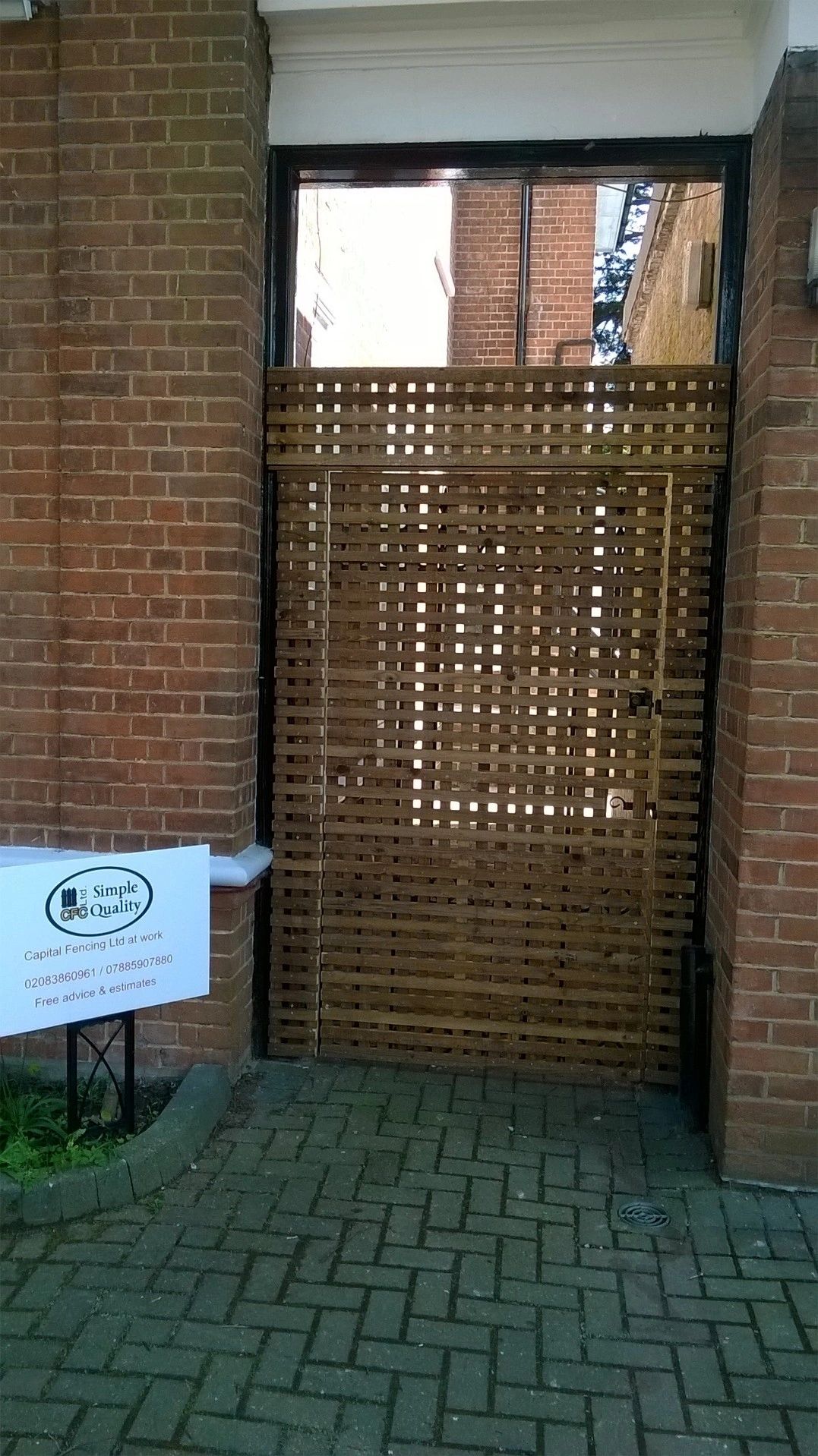
closeboard fence run installed by Capital Fencing in Hackney (E5)panel fence install installed by Capital Fencing in Hackney (E5)trellis-topped fence installed by Capital Fencing in Hackney (E5)bespoke decorative fence installed by Capital Fencing in Hackney (E5)

Landlord Fencing in Hackney: the practical detail

Closing gaps and finger-trap risk

A gap left between a closing gate and its post or an adjacent leaf can trap fingers, particularly at a height a child would reach, and this is worth checking on any gate serving a garden used by young children.

Closing plates or adjusted hinge geometry can reduce the gap without replacing the gate itself.

Line wire spacing on a chain-link run

Chain-link relies on horizontal line wires threaded through the mesh at intervals to stop it sagging or being pushed out of shape between posts; wider spacing saves wire but lets the mesh bow more under a leaning load.

A security-rated chain-link run typically tightens this spacing compared with a low-cost agricultural install, along with a straining wire top and bottom rather than just one line.

Maintenance intervals by material

Untreated or lightly treated softwood fencing generally needs a re-stain or re-oil every one to two years to keep its protective coating intact, while a well-detailed treated softwood fence left to weather naturally can go much longer between any active maintenance.

Composite and uPVC fencing need little more than an occasional wash down, since the material itself doesn't need a protective coating, though fixings and any timber sub-frame beneath it still age on their own separate schedule.

Metal railings and gates need their finish checked periodically for scratches or corrosion starting points, since a small breach in galvanising or powder coating left untreated will spread under the coating rather than staying contained.

Checking screw and bolt length matches the timber section

A fixing that's too short doesn't engage enough timber to hold under load, while one that's too long can punch through the far face of a rail or post, both of which are easy mistakes when reaching for whatever's in the tool bag rather than checking the actual section thickness first.

As a rough guide, a screw fixing generally wants to penetrate the receiving timber to a meaningful multiple of its own diameter to hold securely, which is worth checking against the actual post or rail dimensions being used on a given job rather than assumed from habit.

Where a through-bolt is used instead of a screw, matching the bolt length to the combined thickness of both pieces plus washer and nut avoids either an unsightly protruding stub or a bolt that can't be tightened properly.

Party Wall Act considerations for boundary fencing works

Fencing work itself rarely triggers the Party Wall Act, but where a security upgrade involves excavating close to a shared wall's foundation or building a new wall astride the boundary line, notice to the neighbouring owner may be required before work starts.

Checking whether proposed post positions or a new plinth wall fall within the Act's notice distance from a party structure is worth doing at design stage, since retrospective notice after work has begun causes more delay than checking first.

Chalk ground in south Hertfordshire

South Hertfordshire sits over Chiltern chalk in places, ground that's generally stable and free-draining but can be extremely hard and slow to auger once you're through a thin topsoil layer.

Chalk doesn't shrink and swell the way clay does, so posts set in it are less prone to seasonal loosening, though a shattered or fractured chalk band can still leave voids that need packing rather than assuming solid bearing.

Where chalk is close to the surface, hand tools or a breaker attachment are sometimes quicker than persisting with a standard auger.

Timber choice for permanently shaded gardens

A garden shaded for most of the day by tall buildings, mature trees or a north-facing aspect keeps timber damp for longer after rain, favouring naturally durable species or a higher treatment class over a standard specification that would be adequate in a sunnier plot.

Composite decking or fencing boards perform more predictably in permanent shade than timber, since they don't rely on drying out between wet spells to avoid fungal decay.

Where timber is preferred for appearance in a shaded garden, more frequent inspection and re-treatment intervals should be built into the maintenance plan from the outset rather than applied reactively once problems appear.

Right to light and boundary structures

A right to light is a legal easement that can be acquired after twenty years of uninterrupted light through a defined window, and it protects a level of illumination to that window rather than an open view or unobstructed garden outlook.

An ordinary garden fence or low wall almost never generates a right to light issue, but a tall close-boarded fence, high wall or dense screening structure built close to a window that has enjoyed light for decades in principle could, particularly in dense urban plots.

In practice this rarely affects standard fencing height, but it's a different legal question from planning permission and worth being aware of on unusually tall or solid boundary structures near windows.

When a boundary camera becomes part of a wider dispute

Boundary and fencing disagreements sometimes escalate to include complaints about cameras, lighting or noise, which can broaden a straightforward property dispute into several overlapping issues at once.

Keeping these strands separate in any correspondence — addressing the boundary question and any camera or nuisance concern individually — tends to keep discussions more focused and productive.

Where a dispute has genuinely broadened like this, a mediator or solicitor experienced in neighbour disputes more generally, rather than boundary-only expertise, may be the more useful next step.

Fixing new fencing to existing walls and piers

Bolting a new fence panel or post bracket to an existing wall or brick pier depends on the wall's own condition — a soft or unstable pier can't safely take the lateral load a fence puts on a fixing point.

Where a wall is sound, resin-fixed bolts into brick or masonry give a secure end point without a new post footing; where it isn't, a freestanding post just inside the wall line is the safer option.

Choosing ironmongery for a repaired gate

Galvanised heavy-duty hinges and latches cost little more than the light-duty fittings often supplied as standard, and they last considerably longer under repeated use, which makes an ironmongery upgrade one of the better-value additions at repair time.

Where a gate has electric automation, we handle the timber or metal gate itself and refer motor, control-board or sensor faults to a specialist automation engineer.

Softwood species used in fencing

Most UK fencing timber is a European redwood or whitewood softwood, chosen for cost and workability rather than natural durability, which is why it's almost always sold pressure-treated rather than untreated.

Redwood (Scots pine) takes preservative more readily than whitewood (spruce) because of its structure, which is part of why it's the more common species specified for treated fencing components.

Species alone isn't a durability guarantee — the treatment class and detailing (post caps, gravel boards, drainage at the base) generally matter more to service life than which softwood was used underneath it.

Splicing a new post section onto a sound base

Splicing joins a new length of post timber onto the sound lower section of an existing post using a scarfed or halved joint reinforced with bolts or a metal splice plate, used where the base and footing are solid but the post has failed higher up.

It suits posts damaged by impact or by a snapped rail rather than posts failed by rot, since a spliced joint relies on both pieces being genuinely sound timber to hold load reliably.

Child safety at gaps and low openings

Gaps between vertical balusters or slatted infill wide enough to trap a small child's head are a recognised hazard, and the common guidance used for balustrades and railings — keeping gaps under 100mm — is a sensible benchmark for garden fencing near play areas too.

Horizontal rails on an otherwise vertical fence design can also create an unintentional climbing frame for a young child trying to get over a boundary, which is worth considering near a pool, driveway or road-facing frontage.

These details matter most on fences separating a garden from open water, a road, or a shared driveway, where the consequence of a small gap or easy foothold is more serious than on an internal garden division.

Play-safe detailing near a boundary

Where a fence runs alongside a play area, sharp pale tops, low horizontal rails that invite climbing, and gaps that could trap a limb are all avoided in favour of rounded caps and rail spacing that doesn't create a ladder.

This detailing sits alongside, rather than instead of, the security spec — a boundary can still be climb-resistant and impact-rated while removing the specific hazards that matter next to children.

Snagging checklist items on a completed security run

A snagging check on a finished security boundary covers gate alignment and latch engagement, gap sizes at ground level and junctions, fixing torque on any tamper-proof bolts, and that capping or gravel boards sit flush along the whole run.

Any item that's marginal on day one — a slightly sticking latch, a small ground gap — is worth fixing immediately rather than left as a wear item, since these are exactly the points a determined attempt will test first.

Wire supports for climbing plants on a fence

Climbers like clematis or trained fruit need their own tensioned wire or trellis support rather than relying on the fence panel itself, since the twisting and clinging growth habit can distort thin battens over time.

Vine eyes and straining wire fixed into posts, not into panel infill, spreads the load onto the structural timber rather than the part of the fence most likely to need replacing first.

Planning wire runs at the time a fence is built, rather than drilling into finished posts later, avoids weakening a post at exactly the point that already carries the most load.

Spectator segregation fencing at a sports ground boundary

Beyond the outer perimeter, many sports grounds use internal segregation fencing to separate spectator areas, and this internal fencing is usually a different specification to the outer boundary, prioritising crowd safety and sightlines over anti-intrusion detailing.

Any internal fencing used for crowd control needs to allow rapid emergency evacuation, so gate positions and opening widths are checked against relevant safety guidance rather than set purely by the site's security brief.

Repairing a fence near a tree protected by a Tree Preservation Order

Digging a new post hole or footing close to a protected tree's root zone can be restricted even where the fence itself needs no permission, since the restriction is about protecting the tree's roots rather than the fence.

Where root heave from a nearby tree has caused the damage being repaired, it's worth checking whether the tree is protected before digging anywhere near it, since hand-digging around roots or repositioning the post slightly may be required instead of a standard footing.

Glue lines and re-gluing a loose frame joint

A joint that's opened up slightly but hasn't rotted can often be cleaned out, re-glued with an exterior-grade adhesive and clamped rather than remade from new timber, provided the wood itself is still sound.

Old animal-glue or PVA joints on older gates fail well before the timber does, which is why a loose but dry corner is worth checking before assuming a full rebuild is needed.

Bin store enclosure security detailing

A bin store enclosure needs a lockable gate wide enough for collection crews to manoeuvre bins, balanced against keeping the enclosure secure between collections so it isn't used as a step-up point over an adjoining fence.

Louvred or slatted screening around a bin store gives ventilation while still blocking a direct climb line, and the roof of the store itself is worth capping or sloping so it can't be stood on.

High water table and drainage

Gardens near a river, floodplain or low-lying valley bottom can have a water table close enough to the surface that a normal post hole fills with water before the concrete goes in.

The practical answer is a free-draining aggregate base rather than a solid concrete plug, so ground water can move past the post instead of sitting against it and accelerating rot in untreated timber.

On repeat-flood plots we'd also flag gravel boards set slightly proud of ground level, so the panel itself sits above the usual high-water mark even if the boards need replacing more often.

Landlord Fencing across E5, E8, E9, N1, N16 is a regular run for us. We'll quote honestly, tell you if landlord-grade fencing isn't the right answer for your site, and book the job in within a week or two of a signed quote. one crew, one price sheet, before-and-after photos as standard. Roads such as Kingsland Road and Lower Clapton Road are typical of the local layout. Victoria Park (west edge) is a useful local reference point. The Regent's Canal and the River Lea both run through the borough, with Hackney Marshes forming a large area of open land on the eastern edge.

Get In Touch

Get My Free Quote — 24h Response

No callout fee · Free site visit · Friendly local team covering London & Hertfordshire.

Call us
07885907880
or 02036484746
Email
capital_fencing@yahoo.com
WhatsApp
Message us anytime
Area
London & Hertfordshire
Payment
Card payments accepted

Pay by debit or credit card, bank transfer or cash once the work and price are agreed. No deposit taken online.

Request a Free Quote

We'll get back to you within 24 hours.

Free Site Visit No Callout Fee
Call WhatsAppQuote