London & Hertfordshire Free Site Visit
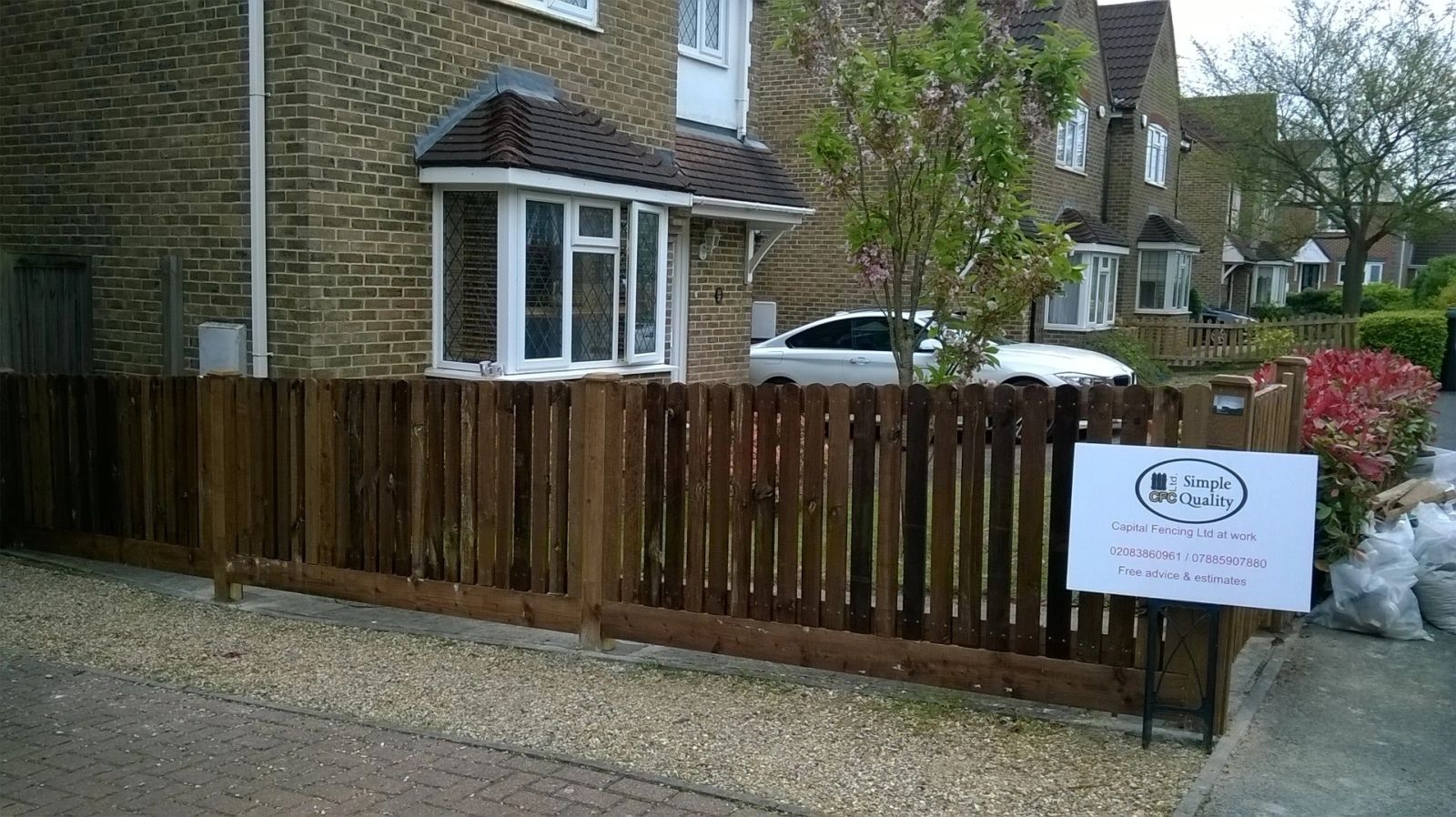
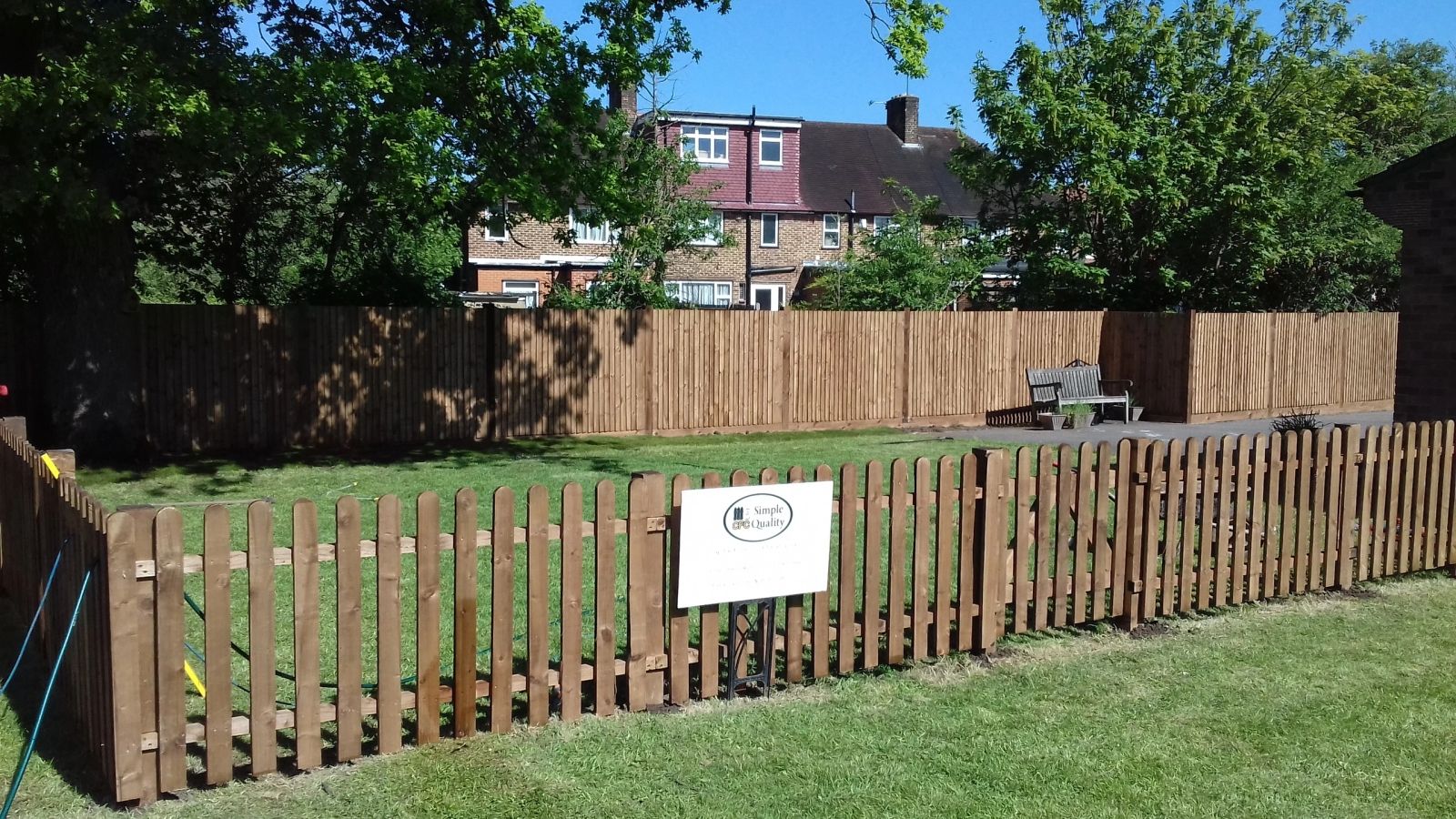
closeboard fence run installed by Capital Fencing in Hertford (SG13)
Hertford · SG13 / SG14

Corner Plot Fencing in Hertford (SG13)

If you're weighing corner-plot fencing for a property in Hertford, the first thing that matters is conservation guidance, sight-line splays and permitted-development limits — not the material choice. Once that's settled, picket or bar-and-rail on the sight-line splay is where most of our corner-plot fencing work in SG13 lands, with closeboard behind the building line for privacy as a considered alternative. Roads such as Bengeo Street and Ware Road are typical of the local layout. Hertford Castle grounds is a useful local reference point. Hertford's old town sits in a bowl where the River Lea and River Beane meet, on ground that lies close to the water table on the streets nearest Mead Lane.

If you're weighing corner-plot fencing for a property in Hertford, the first thing that matters is conservation guidance, sight-line splays and permitted-development limits — not the material choice. Once that's settled, picket or bar-and-rail on the sight-line splay is where most of our corner-plot fencing work in SG13 lands, with closeboard behind the building line for privacy as a considered alternative. Roads such as Bengeo Street and Ware Road are typical of the local layout. Hertford Castle grounds is a useful local reference point. Hertford's old town sits in a bowl where the River Lea and River Beane meet, on ground that lies close to the water table on the streets nearest Mead Lane.

Typical corner-plot fencing briefs in Hertford

  • front-and-side boundary run around a corner plot keeping highway sight-line to 900mm at the junction
  • brick pier and metal railing frontage kept lower on the splay so parked cars can pull out safely

Why this spec, for houses on a corner with two road-facing boundaries — visibility, privacy and highway sight-lines all in play

  • highway visibility standards handled properly — no council-notice rebuild six months in
  • clean junction between two boundary types instead of one tired fence run stopping at a wall
  • corner post carries loads from two directions — we upsize as standard, not as an add-on
Default spec

How we build corner-plot fencing in Hertford

front boundary 900mm painted picket or bar-and-rail on the visibility splay, side boundary 1.8m closeboard beyond the sight-line. On Hertford jobs we adjust for conservation areas and listed buildings around the castle restrict heights and finishes.

Property mix locally: Georgian and Victorian townhouses in the centre, with newer estates on the Bengeo and Sele Farm sides. Typical gardens: long, sloping plots dropping toward the River Lea — terracing and retaining work are often part of the job. Postcodes we regularly service: SG13, SG14.

Where corner-plot fencing isn't the right answer

  • highways-adopted verge situations where any change needs a Section 184 licence — different job, different route
  • corner conservation frontages where only period railings are compliant

Corner Plot Fencing FAQs — Hertford

Where does the highway sight-line splay actually start?

On corner-plot fencing jobs in Hertford (SG13), our default answer is: front boundary 900mm painted picket or bar-and-rail on the visibility splay, side boundary 1.8m closeboard beyond the sight-line. The honest trade-off is carrying a full 1.8m closeboard all the way to the pavement corner — councils issue removal notices for exactly this — which is exactly what our default spec designs out.

Can I have full-height fencing on the side road?

Across Hertford we spec around conservation areas and listed buildings around the castle restrict heights and finishes, so on corner-plot fencing that usually means picket or bar-and-rail on the sight-line splay. For context: clean junction between two boundary types instead of one tired fence run stopping at a wall. We handle the council conversation as part of the job, not as an after-thought.

Do I need council permission for a corner plot boundary?

East Hertfordshire District coverage means we can survey most SG13 addresses inside a week — houses on a corner with two road-facing boundaries — visibility, privacy and highway sight-lines all in play. We'll walk you through highway visibility standards handled properly — no council-notice rebuild six months in on the site visit before you commit.

How is the corner post different from a normal post?

Practically: front-and-side boundary run around a corner plot keeping highway sight-line to 900mm at the junction. That's the Hertford version of this job, not a generic one. For context: clean junction between two boundary types instead of one tired fence run stopping at a wall. We handle the council conversation as part of the job, not as an after-thought.

What happens if my corner boundary blocks a driver's view?

On corner-plot fencing jobs in Hertford (SG13), our default answer is: front boundary 900mm painted picket or bar-and-rail on the visibility splay, side boundary 1.8m closeboard beyond the sight-line. The honest trade-off is carrying a full 1.8m closeboard all the way to the pavement corner — councils issue removal notices for exactly this — which is exactly what our default spec designs out.

Recent corner plot fencing work
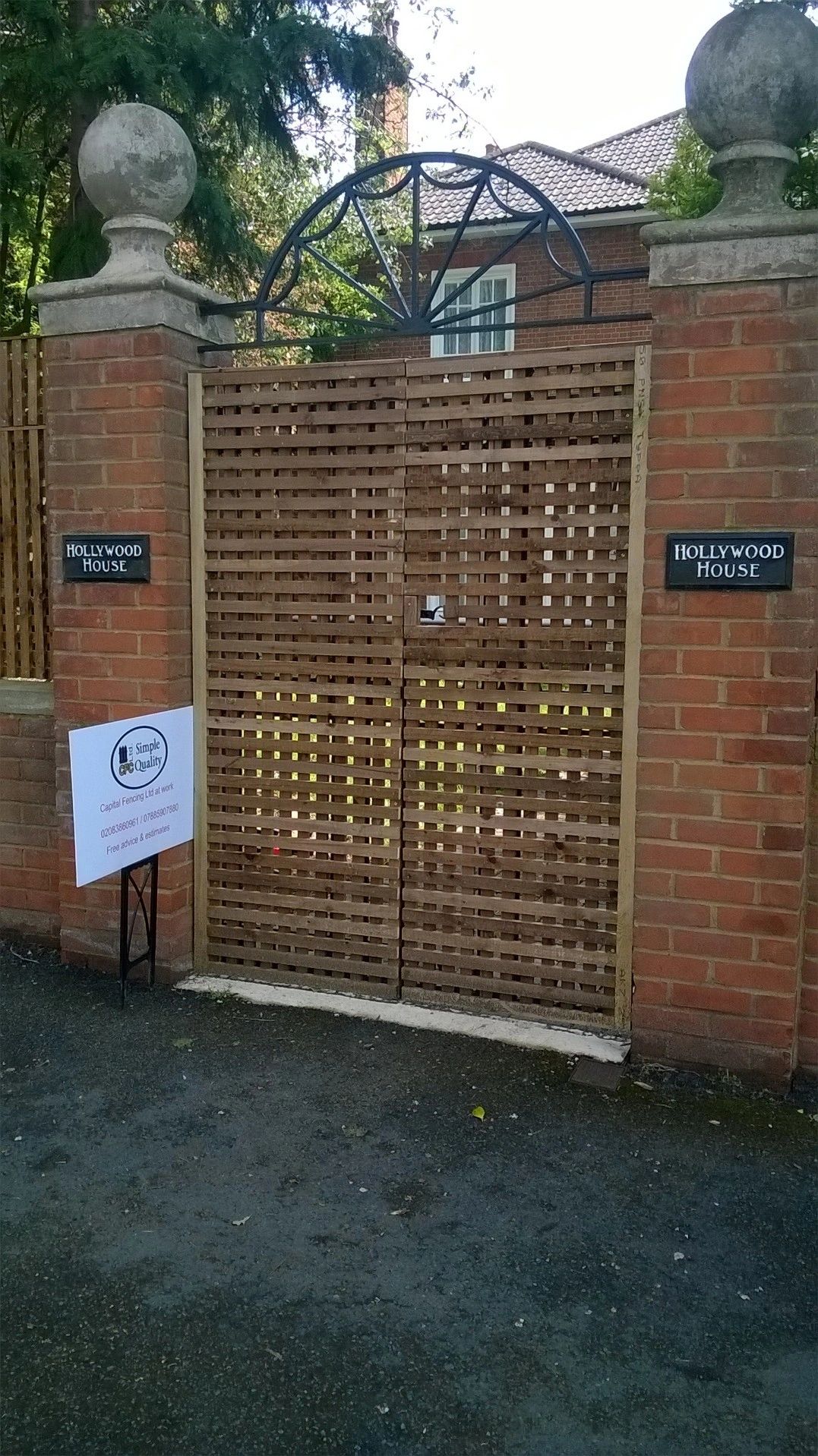
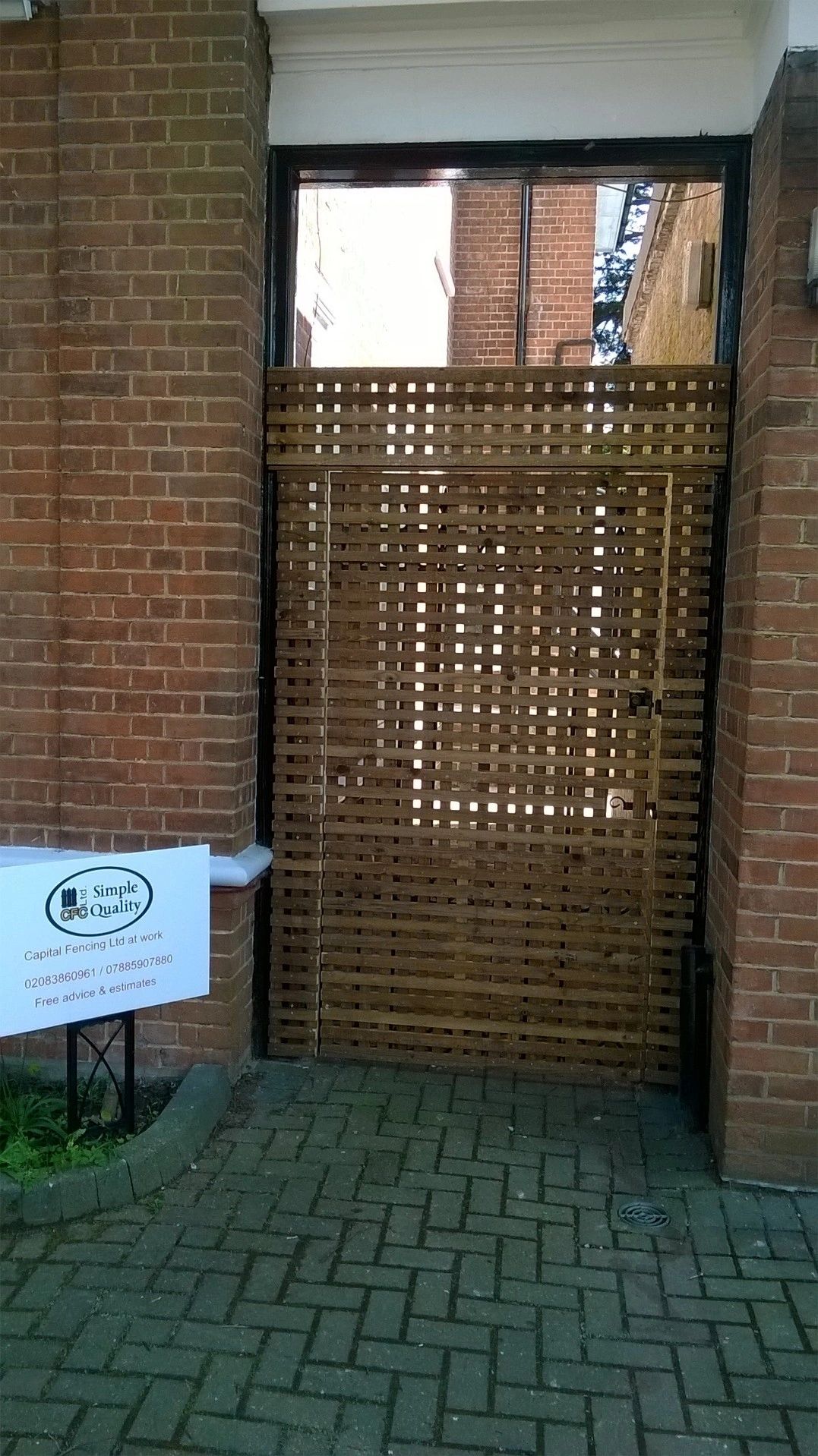
closeboard fence run installed by Capital Fencing in Hertford (SG13)panel fence install installed by Capital Fencing in Hertford (SG13)trellis-topped fence installed by Capital Fencing in Hertford (SG13)bespoke decorative fence installed by Capital Fencing in Hertford (SG13)

How we approach corner plot fencing on Hertford properties

Trees, roots and protected planting near a secure line

Mature trees on or near a boundary change post positions more than most clients expect — a protected tree's root protection area can rule out a straight post line altogether, and we offset posts around roots rather than cutting through them.

Where a tree is covered by a preservation order, work near it is checked against that restriction before any post hole is dug.

How a security job is sequenced

Work generally runs boundary-first — posts and the main line go in before gates, so gate openings are set against a fixed, already-concreted frame rather than guessed at in advance.

On a longer commercial perimeter the line is broken into manageable sections so part of the site can stay secure while another part is being worked on.

Repair-versus-replace where the original fence style is discontinued

Where a damaged section uses a panel style, board profile or post section that's no longer manufactured, a close match might be achievable for a small repair, but a larger area of damage can tip the balance toward replacing the whole run in a current style rather than chasing an increasingly poor match.

This is a judgement client conversation as much as a technical one, since some clients prioritise keeping the existing look even with a visible join, while others would rather have a uniform new run.

Working around a soil vent pipe on the boundary

A soil vent pipe running up close to a boundary wall or fence line needs clearance to stay serviceable and to avoid trapping odours or condensation against the timber.

Where a fence panel would otherwise sit directly against the pipe, a narrow gap or a purpose-cut notch in the panel or gravel board keeps the pipe accessible without leaving a large unsightly space either side.

Fixing a post too close to a vent pipe can also make future pipe repairs or clearance rodding awkward, so the post position is usually set slightly back from the pipe run rather than tight against it.

Laminated engineered timber posts

Laminated posts are built up from several thinner timber sections glued face to face under pressure, which can even out natural defects like knots across the section and produce a straighter, more dimensionally stable post than a single sawn piece of the same size.

Because the lamination process distributes any given defect across a smaller proportion of the overall section, a laminated post is generally less likely to fail suddenly at a single knot or grain irregularity than solid sawn timber.

The adhesive bond line itself becomes a potential weak point if it's exposed to sustained moisture without an appropriate exterior-rated glue, so laminated posts intended for outdoor use need adhesives specifically rated for damp exposure rather than interior-grade bonding.

Staple and clout corrosion

Wire staples and clout nails used to fix wire mesh or thin capping are among the first fixings to corrode, since their small cross-section and shallow galvanising thickness give them less protection than a heavier fixing.

A repair that replaces the mesh or board but reuses corroded staples is only a partial fix, since the corroded fixings will fail again well before the new material does.

Boards splitting along the line of the fixing nail

A board that splits at a nail has usually been fixed too close to its edge or fixed with the nail driven into an existing check in the grain, and the split then runs further with each wet-dry cycle until the board finally lets go.

Repair is either refixing with screws set further from the edge and pre-drilled to avoid a repeat split, or replacing the board outright where the split has already reached the board's full width.

Boundaries against a watercourse and riparian basics

A property boundary running along a stream, brook or ditch usually carries riparian responsibilities regardless of who technically owns the fence, including keeping the watercourse clear of obstruction and not doing anything that would worsen flood risk downstream.

Fence posts set close to a watercourse bank should avoid undermining or destabilising the bank itself, and in many cases installing anything within a set distance of the top of the bank needs consent from the relevant flood or drainage authority.

Ground immediately alongside a watercourse is also more likely to be periodically saturated or subject to erosion, which should factor into post depth and material choice on that section.

Ongoing access rights reserved under a utility wayleave

A recorded wayleave or easement for utility apparatus usually reserves an ongoing right for the utility company to access and maintain their equipment, which can mean a fence built across the strip needs a lockable gate or removable section.

Building an entirely fixed fence over an area subject to this kind of reserved access can lead to the utility company needing to remove part of it later at the owner's inconvenience.

Checking the title register for any registered wayleave before finalising a fence design avoids this kind of retrofit.

Timing a repair around summer timber shrinkage

Timber fitted during a dry summer spell shrinks slightly as it settles to ambient moisture content, which can leave newly fixed boards or rails with small gaps that weren't visible at the point of fitting.

This is a normal part of timber behaviour rather than a fault in the repair, and it's worth explaining at the time so a client isn't surprised to see gaps open up slightly over the following weeks.

Drainage easements running under a fence line

Some boundaries have a formal drainage easement recorded against the title, protecting a buried pipe or watercourse that a neighbouring property has the right to maintain access to.

Fence posts set directly over or immediately alongside a protected drainage run can technically breach the terms of the easement even if the pipe itself isn't damaged during installation.

Checking the title register, and asking the water company to confirm any known drainage records, is sensible before digging post holes on an older plot with an unclear drainage history.

Checking whether an existing post can be reused

A post that looks sound above ground can still have rotted through at the point where it meets the concrete, so a proper check means levering the post gently and looking for movement at the base, not just inspecting the visible timber.

Concrete posts rarely rot but can develop hairline cracks from impact or corroding internal reinforcement, which shows up as rust staining bleeding through the surface before the crack itself is obvious.

Reusing a post that fails a proper check to save a day's digging usually costs more later, since replacing one post in an otherwise finished run means disturbing the panels either side of it.

Spectator segregation fencing at a sports ground boundary

Beyond the outer perimeter, many sports grounds use internal segregation fencing to separate spectator areas, and this internal fencing is usually a different specification to the outer boundary, prioritising crowd safety and sightlines over anti-intrusion detailing.

Any internal fencing used for crowd control needs to allow rapid emergency evacuation, so gate positions and opening widths are checked against relevant safety guidance rather than set purely by the site's security brief.

Gravel boards and dig-under prevention

A gravel board closes the gap between ground and fence face that would otherwise let someone lift the bottom of a panel or dig a shallow scrape underneath on soft ground.

On a security-rated run, a concrete gravel board set into the ground line resists both rot and digging better than a timber board sitting on the surface, and it's the standard choice where dig-under is a realistic risk.

The highway 1m rule in practice

The 1m permitted development limit applies to any boundary that fronts a highway used by vehicular traffic, which in practice includes most adopted roads and many unadopted estate roads that carry regular car use, not just classified A and B roads.

A footpath-only right of way at the front of a plot doesn't trigger the lower limit on its own, but councils interpret 'used by vehicles' broadly, so a shared driveway serving several houses usually counts.

Where it's unclear, checking with the local planning authority before building is cheaper than a retrospective application after a 1.8m fence goes up on what turns out to be a vehicular frontage.

Timber grading marks

Structural and treated timber is typically stamped with a grading mark showing the strength class, treatment use class, and sometimes the treatment company's code, which is the practical way to verify what was actually supplied rather than taking a description on trust.

For fencing, the marks that matter most day to day are the use class (confirming it's rated for the ground or above-ground exposure intended) and a visible batch or treatment date, useful if a defect needs tracing back to a supplier.

Unmarked or unstamped 'treated' timber from an unclear source is harder to verify and is one of the more common shortcuts on cut-price quotes.

Working over septic or drainage runs

Properties without mains drainage, more common on the rural fringes of Hertfordshire, often have a septic tank or soakaway drainage field with pipework running across the garden that a fence line can unknowingly cross.

A collapsed or compressed drainage pipe under a post base is a common cause of a fence settling unevenly a season or two after installation.

Where a septic system's layout isn't documented, a damp or lush strip of grass running away from the tank is often the visible sign of a soakaway field that needs avoiding when setting posts.

Highways not yet adopted on newer estates

On newer housing estates, roads and footways can remain unadopted by the council for a period after construction, sometimes maintained instead under a bond by the developer.

This can affect whether the 1m road-facing fence height limit strictly applies yet in the same way, since the technical definition of a highway used by vehicles depends partly on adoption status.

Checking with the council whether a specific new estate's roads have been formally adopted is worth doing before assuming which height limit applies to a road-facing boundary.

Who maintains a grass verge next to a boundary

A grass verge between a garden boundary and the road is often owned and maintained by the local council as part of the adopted highway, rather than by the adjoining property owner.

This affects where a fence can legally be positioned, since building onto highway land, even a seemingly unused verge, generally needs authorisation.

Where the extent of a verge and its ownership isn't obvious, the local highway authority can usually confirm it against their adopted highway records.

Decking fixings visible versus hidden

Face-fixed decking is screwed directly down through the board top, which is simple, cheap and easy to replace a single board on, but leaves visible screw heads that can work slightly proud over time as the timber moves.

Hidden fixing clip systems fit into the board's grooved edge and screw down into the joist from the side, giving an unbroken top surface, but they generally cost more per board and make it harder to lift a single damaged board without disturbing its neighbours.

Composite boards are more often specified with hidden clip systems since the clean, screw-free look is part of the appeal that justifies the material's higher cost.

Securing a rear alley boundary behind terraced housing

A rear alley boundary sees different pressure to a front garden fence, because it's typically unwatched, runs the full length of several properties, and is the route used to approach a back door or shed unseen from the street.

Consistent height and topping along the whole alley matters more here than on an individual plot, since a single weaker section among several stronger ones simply redirects the attempt rather than stopping it.

Fixing a post that has rotated in its concrete base

A post can twist within a slightly oversized or cracked footing without leaning, so the panels either side pull out of square even though the post still stands upright, which is easy to miss on a quick visual check.

Repair means breaking out enough concrete to free the post, resetting it square to the run, and packing and re-pouring rather than trying to twist it back while still gripped by the old footing.

Whether the brief is front-and-side boundary run around a corner plot keeping highway sight-line to 900mm at the junction or matched picket to the front, closeboard to the side, single point of change at the corner post, we quote it from a site visit, not a photo. Hertford is inside our core working patch and most jobs are booked in inside a fortnight. Roads such as Hagsdell Road and Ware Road are typical of the local layout. Hertford East station goods yard is a useful local reference point. The Sele Farm and Foxholes estates were built over land reclaimed from the historic brewery works, and parking on the narrow streets around SG14 is limited.

Get In Touch

Get My Free Quote — 24h Response

No callout fee · Free site visit · Friendly local team covering London & Hertfordshire.

Call us
07885907880
or 02036484746
Email
capital_fencing@yahoo.com
WhatsApp
Message us anytime
Area
London & Hertfordshire
Payment
Card payments accepted

Pay by debit or credit card, bank transfer or cash once the work and price are agreed. No deposit taken online.

Request a Free Quote

We'll get back to you within 24 hours.

Free Site Visit No Callout Fee
Call WhatsAppQuote