London & Hertfordshire Free Site Visit
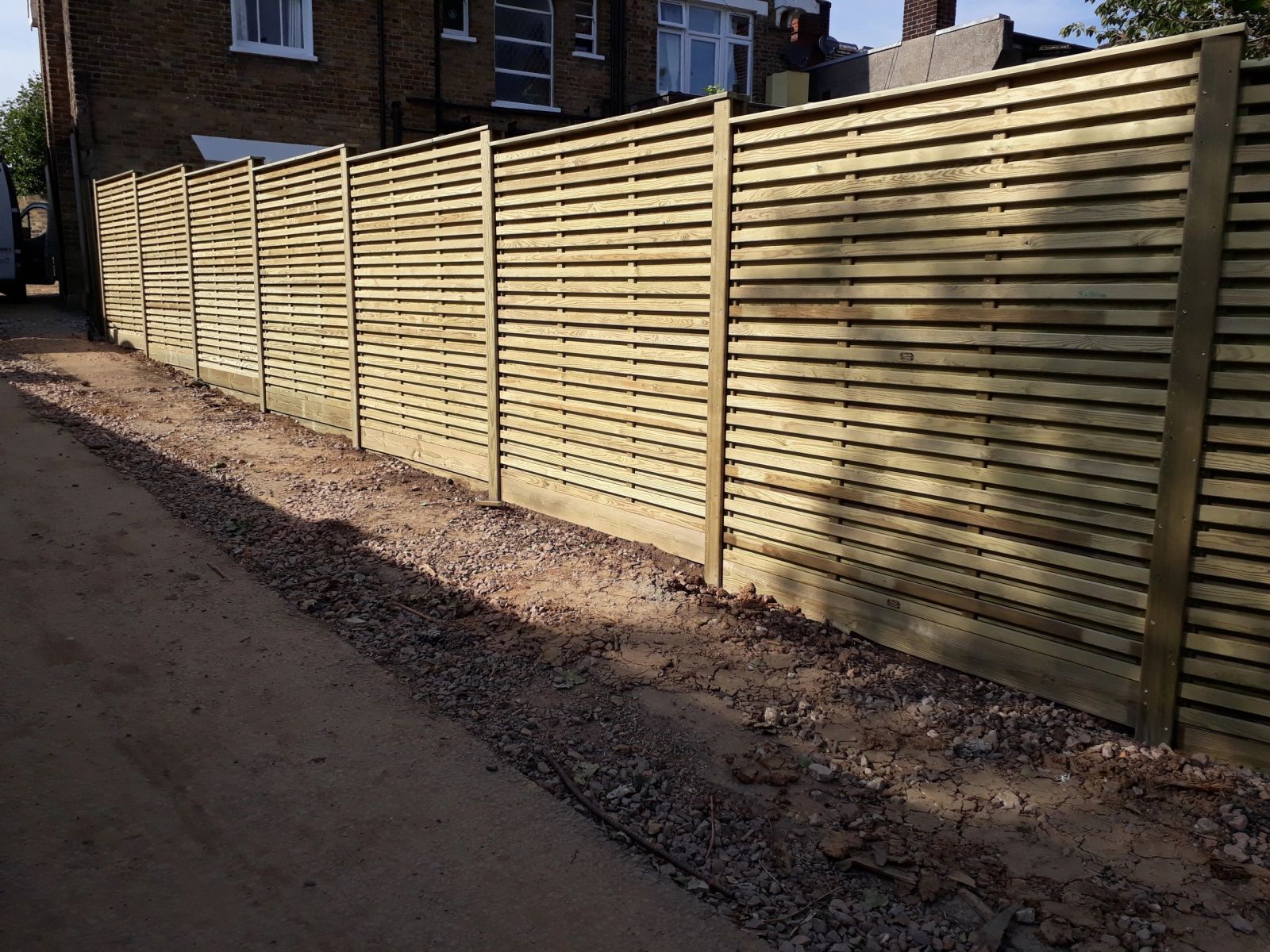
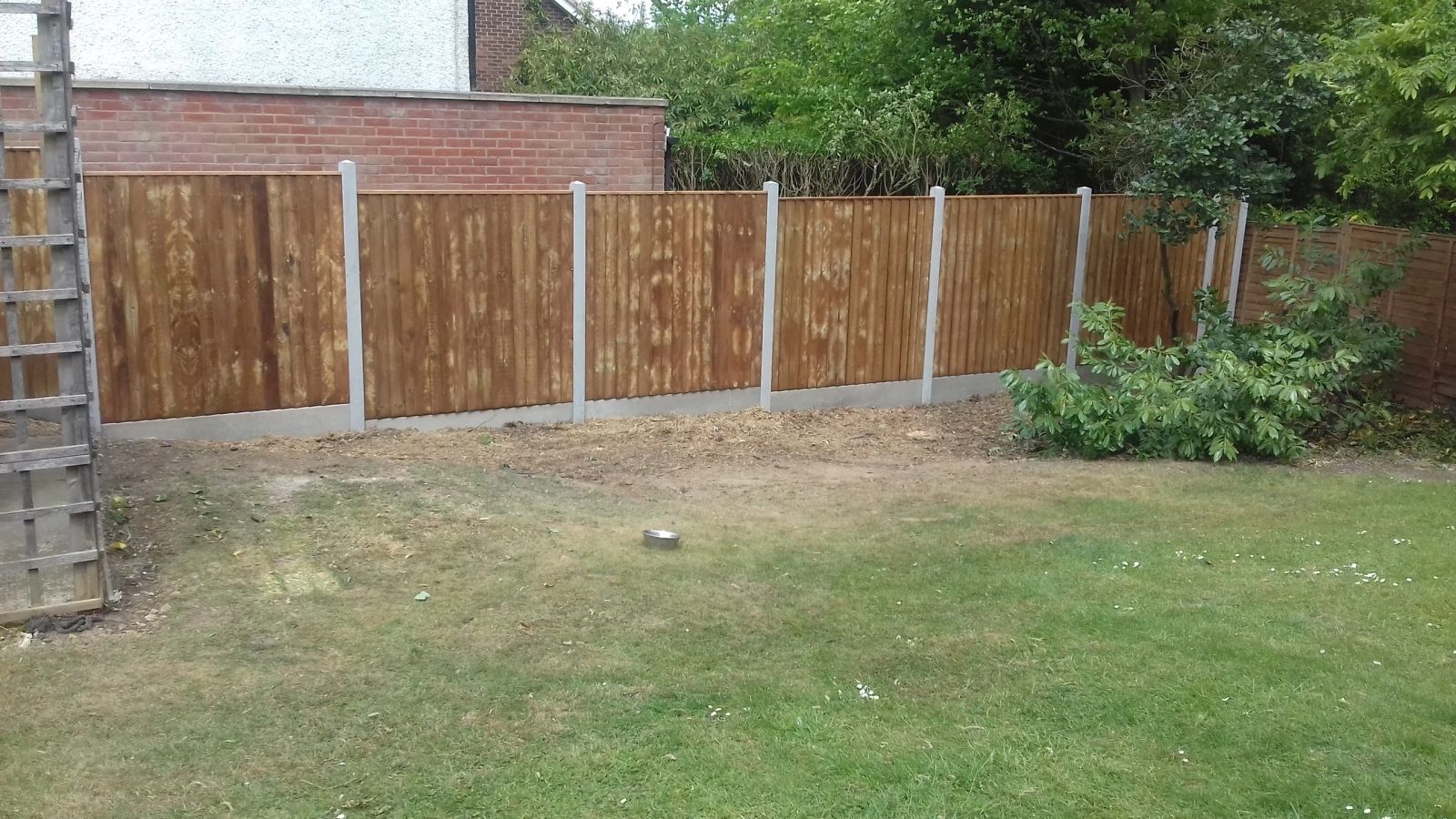
closeboard fence run installed by Capital Fencing in Hitchin (SG4)
Hitchin · SG4 / SG5

Composite Fencing in Hitchin: What Works on varied — small courtyards in the centre

Expansion is the thing installers get wrong with composite. Boards move along their length in summer, so gaps at the post channels are deliberate, not sloppy. On Hitchin gardens we set out runs to land on full boards where we can, because a cut composite end never looks like a factory one. Capital Fencing installs composite fencing across Hitchin and out to letchworth and stevenage. North Hertfordshire District coverage plus proximity to A1(M) J8 / J9 means most quotes are on your inbox within 48 hours of a site visit. Recent work on Tilehouse Street and Highbury Road. We orient jobs off Butts Close.

Expansion is the thing installers get wrong with composite. Boards move along their length in summer, so gaps at the post channels are deliberate, not sloppy. On Hitchin gardens we set out runs to land on full boards where we can, because a cut composite end never looks like a factory one. Capital Fencing installs composite fencing across Hitchin and out to letchworth and stevenage. North Hertfordshire District coverage plus proximity to A1(M) J8 / J9 means most quotes are on your inbox within 48 hours of a site visit. Recent work on Tilehouse Street and Highbury Road. We orient jobs off Butts Close.

Typical spec

How we build composite fencing in Hitchin

Wood-polymer composite boards on aluminium or steel posts. Standard build: 6ft × 6ft panels, 2.4m aluminium posts on 700mm concrete bases. On Hitchin jobs we adjust for hitchin's conservation areas mean the planning team checks anything visible from the street.

Property mix locally: market-town centre with Tudor and Georgian buildings, Victorian terraces on the Walsworth side, and 1930s semis to the west. Typical gardens: varied — small courtyards in the centre, deep rear gardens in Walsworth, sloping plots toward Walsworth Common. Postcodes we regularly service: SG4, SG5.

Why composite fencing works here

  • no annual staining or oiling
  • colour-through boards don't fade to grey the way pressure-treated timber does
  • aluminium post system won't rot at ground level, which is where 90% of timber fences fail

Common Hitchin briefs

  • commercial forecourts where painted timber looks tired within a season
  • long rear boundaries where zero maintenance matters more than up-front cost

Composite Fencing FAQs — Hitchin

Do composite panels handle high wind loads?

Composite is heavier than lap panels, so access along varied — small courtyards in the centre is checked on the visit before we commit to a date. For market-town centre with tudor and georgian buildings in SG4, that is where the cost sits. Worth weighing no annual staining or oiling against up-front cost is roughly double a lap-panel fence before you commit.

Is composite fencing worth the extra cost?

Composite is heavier than lap panels, so access along varied — small courtyards in the centre is checked on the visit before we commit to a date. We allow for varied — small courtyards in the centre when setting out in Hitchin. Worth weighing no annual staining or oiling against up-front cost is roughly double a lap-panel fence before you commit.

Can composite panels drop into existing concrete posts?

Composite is heavier than lap panels, so access along varied — small courtyards in the centre is checked on the visit before we commit to a date. Survey slots across SG4 are usually inside a week. In short: no annual staining or oiling, though up-front cost is roughly double a lap-panel fence.

How is composite fencing recycled at end of life?

Post fixing matters more than the boards here: aluminium posts get concrete-set, because a composite run has no give to hide a leaning post in Hitchin. We work this patch weekly, from Wilbury Way industrial estate out toward letchworth. Worth weighing no annual staining or oiling against up-front cost is roughly double a lap-panel fence before you commit.

How long does composite fencing last compared to timber?

Composite is heavier than lap panels, so access along varied — small courtyards in the centre is checked on the visit before we commit to a date. For market-town centre with tudor and georgian buildings in SG4, that is where the cost sits. Worth weighing no annual staining or oiling against up-front cost is roughly double a lap-panel fence before you commit.

Recent composite fencing work
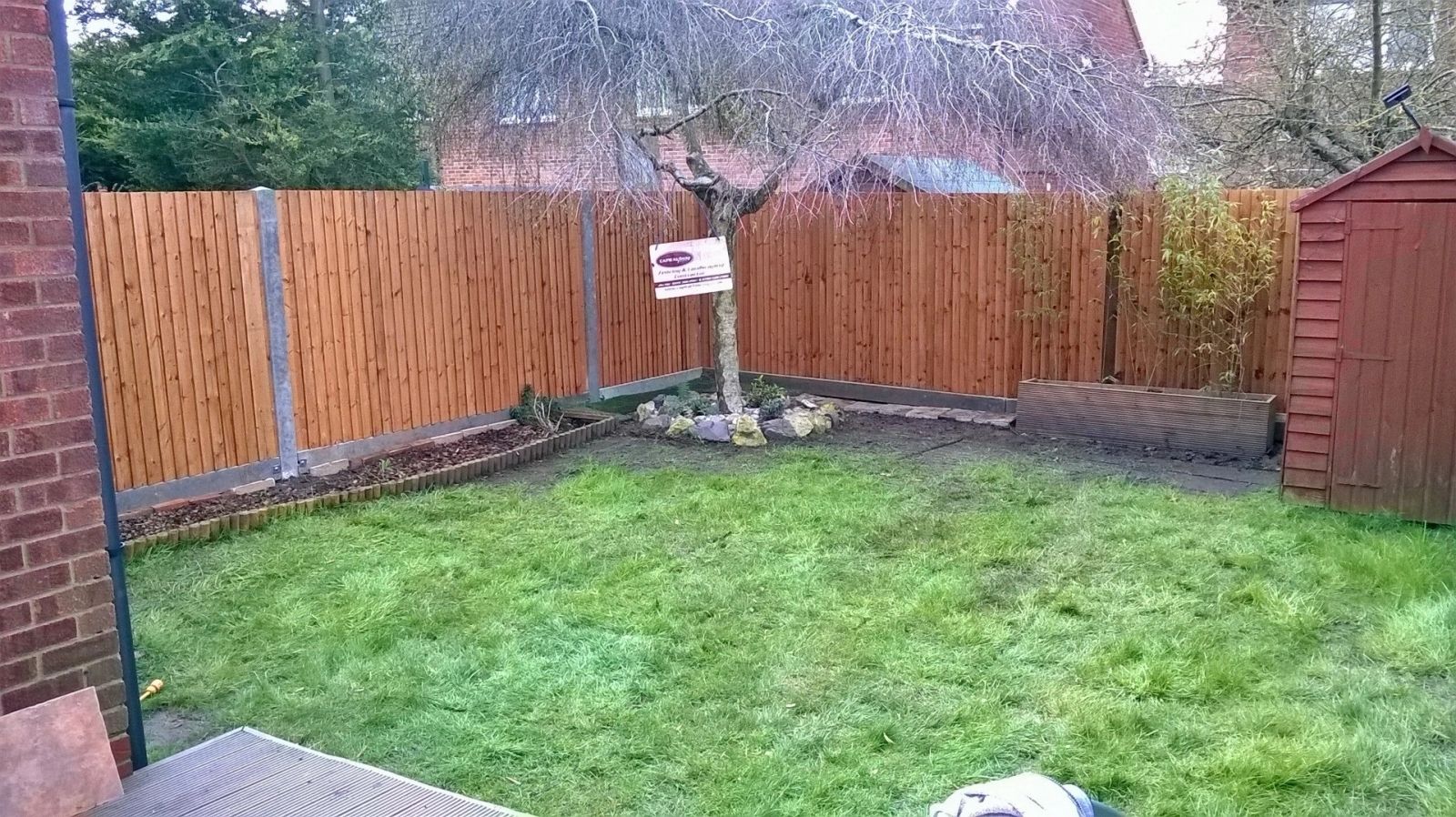
closeboard fence run installed by Capital Fencing in Hitchin (SG4)panel fence install installed by Capital Fencing in Hitchin (SG4)trellis-topped fence installed by Capital Fencing in Hitchin (SG4)bespoke decorative fence installed by Capital Fencing in Hitchin (SG4)

Site notes: composite fencing in SG4

Retaining a slope under a heavy barrier

A sloped site under a heavy acoustic panel run may need a low retaining detail to keep post foundations level and consistent, rather than following the slope with a raked panel that would open a gap at the low end.

Retained ground behind the barrier also needs drainage considered, since trapped water against a retaining detail adds load and risks undermining the foundation over time.

Reflected noise onto neighbours

A solid barrier on one boundary can reflect noise across a garden onto a neighbour's property or an opposite building rather than simply removing it, particularly where two hard, reflective boundaries face each other.

This is worth considering on a narrow plot with barriers on both sides, since an absorptive facing on one side can reduce that bounce rather than trading one neighbour's noise problem for another's.

Reading a title plan's boundary responsibility marks

Land Registry title plans sometimes show a T-mark against a boundary line, indicating which owner is responsible for maintaining that section — though many properties, especially older ones, have no such marks and the deeds are simply silent.

Where marks exist they're a strong steer but not always conclusive, and where they're absent, ownership defaults to being agreed between neighbours or, in a genuine dispute, determined by a boundary surveyor.

Getting a copy of the title plan before quoting a replacement fence is a five-minute step that avoids rebuilding a boundary neither party is formally responsible for.

Aligning hinges before final gate fixing

Hinges fixed slightly out of vertical alignment with each other make a gate bind or swing shut under its own weight rather than staying wherever it's left, even if each hinge individually looks correctly fitted.

Propping the gate at the intended finished height and checking the gap is even top and bottom before final fixing catches most alignment problems while they're still easy to adjust.

Loosely fitting the top hinge first, checking swing and clearance, and only then fully fixing both hinges is a more forgiving sequence than fully fixing both at once and finding the gate doesn't swing cleanly.

Slip resistance and board grooving

Grooved decking boards are often assumed to be more slip-resistant than a smooth reeded board, but grooves can actually hold water, algae and leaf debris that make the surface more slippery if it isn't cleaned regularly, rather than less.

A smooth board kept clean and free of algae, or a textured composite surface designed specifically for grip, often performs better in practice than a grooved timber board left unmaintained.

Orientation of grooves relative to the main walking direction, and a regular cleaning routine, matter more to actual slip performance than the board profile alone.

Listed building curtilage and garden structures

Listed building protection doesn't stop at the walls of the house — structures within its curtilage that were there at the date of listing, including some garden walls, gate piers and railings, can be treated as part of the listing itself.

That means a wall or gate that looks like an ordinary garden feature can technically need listed building consent for repair or replacement, and unauthorised work is a criminal offence rather than a simple planning breach.

Where a period boundary feature might be curtilage-listed, it's worth confirming with the council's conservation team before any demolition, since consent (or confirmation that it's not required) can usually be obtained in parallel with getting quotes.

Thermal cracking in concrete post caps

Concrete post caps and copings can develop fine cracks from repeated freeze-thaw cycling, where water absorbed into small surface pores expands as it freezes and gradually widens existing microcracks.

A denser, lower-porosity concrete mix, or one finished with a sealant, absorbs less water in the first place and is correspondingly more resistant to this kind of frost damage than a porous, untreated finish.

Once a crack has formed, it tends to widen faster in subsequent winters, since the enlarged crack itself now holds more water than the original surface pores did, which is why early repair matters more than it might first appear.

Licences for scaffold or skip on the highway

Placing a skip, scaffold or hoarding on the public highway, including the pavement outside a property, needs a licence from the council's highways team, arranged before the item arrives rather than after a complaint.

Licences typically specify lighting, cones or barriers around the obstruction overnight, a maximum duration, and sometimes a requirement for the skip to be removed or covered at weekends, with conditions varying between boroughs.

Unlicensed obstructions can result in a fixed penalty or a requirement to remove the item at short notice, so on any job needing highway space for materials or waste it's worth building the licence lead time into the programme.

The general boundaries rule explained

Land Registry title plans in England and Wales normally show only the 'general boundary' of a property, meaning the line on the plan is indicative rather than a precise, surveyed measurement to the centimetre.

That's why a title plan alone rarely settles an argument about whether a fence sits a few inches one way or the other.

For most domestic fencing this doesn't matter, but where a dispute is brewing it's worth knowing the plan wasn't drawn to resolve exactly that kind of question.

Keeping vegetation clear of a sealed panel face

Climbing plants or dense shrub growth pressed against an acoustic panel face can trap moisture against the timber, accelerating rot exactly at the sealed joints where damage is hardest to spot early.

Keeping a small clearance between planting and the panel face, and cutting back growth that does make contact, protects the sealing details without requiring the planting to be removed altogether.

Curing time before hanging panels or gates

Post-fixing concrete reaches a usable strength within a day or two but continues gaining strength for weeks afterwards, which is why manufacturers usually specify a minimum wait — commonly around 24-48 hours in mild weather — before loading a post with a panel.

Hanging a heavy gate is a bigger test of an early-cured base than fixing a lightweight panel, since the gate applies a constant leverage on the post rather than a static side load, so gate posts generally want the longer end of any recommended cure window.

Cold weather slows the chemical reaction that hardens concrete significantly, so a cure time that's fine in summer may need extending in winter before it's safe to load the post.

Post caps and end-grain protection

A timber post's end grain sits at the top, cut across the fibres, and that exposed grain draws in water far faster than the treated face of the post, which is why an unprotected post top is often the first place rot takes hold.

A weathered or pyramid-cut post cap sheds water off the end grain instead of letting it pool, and a cap that oversails the post slightly also keeps water from tracking down the sides at the joint.

It's a small, low-cost detail that's frequently skipped on budget jobs, and its absence is a reliable way to predict which posts in an older fence will need replacing first.

Timber versus concrete gravel boards

A gravel board sits at the base of a fence panel to keep the panel itself clear of standing water and direct ground contact, which is where rot usually starts on an otherwise sound fence.

Timber gravel boards are cheaper and easier to match to a timber fence's finish, but need replacing more often than concrete boards, which resist rot indefinitely but can crack under impact and don't take a stain or paint finish as readily.

On a plot with poor drainage or a known damp problem, concrete gravel boards are usually the more economical long-term choice despite the higher initial cost.

Boundary agreements where more than one property is affected

Corner plots and properties on an L-shaped or irregular boundary sometimes have more than one neighbouring owner whose land touches a single fence run, each with potentially different views on style or cost sharing.

Getting agreement from all affected neighbours before work starts, even where only one side has requested the fence, avoids a situation where one owner later objects to a fence built partly on a boundary they share.

Keeping a simple written record of who agreed to what, particularly on more complex multi-boundary plots, is worth the small extra effort.

If you want the boundary to look the same in ten years as it does on handover, composite is the answer. We fit it across SG4, SG5 with aluminium posts, and we hand over the board reference so a future replacement panel matches. Composite Fencing across SG4, SG5 is one of our regular runs. We'll quote honestly, tell you if composite fencing isn't the right answer for your garden, and book the job in within a week or two of a signed quote. Recent work on Bancroft and Westmill Lane. We orient jobs off Hitchin Market Square.

Get In Touch

Get My Free Quote — 24h Response

No callout fee · Free site visit · Friendly local team covering London & Hertfordshire.

Call us
07885907880
or 02036484746
Email
capital_fencing@yahoo.com
WhatsApp
Message us anytime
Area
London & Hertfordshire
Payment
Card payments accepted

Pay by debit or credit card, bank transfer or cash once the work and price are agreed. No deposit taken online.

Request a Free Quote

We'll get back to you within 24 hours.

Free Site Visit No Callout Fee
Call WhatsAppQuote