London & Hertfordshire Free Site Visit
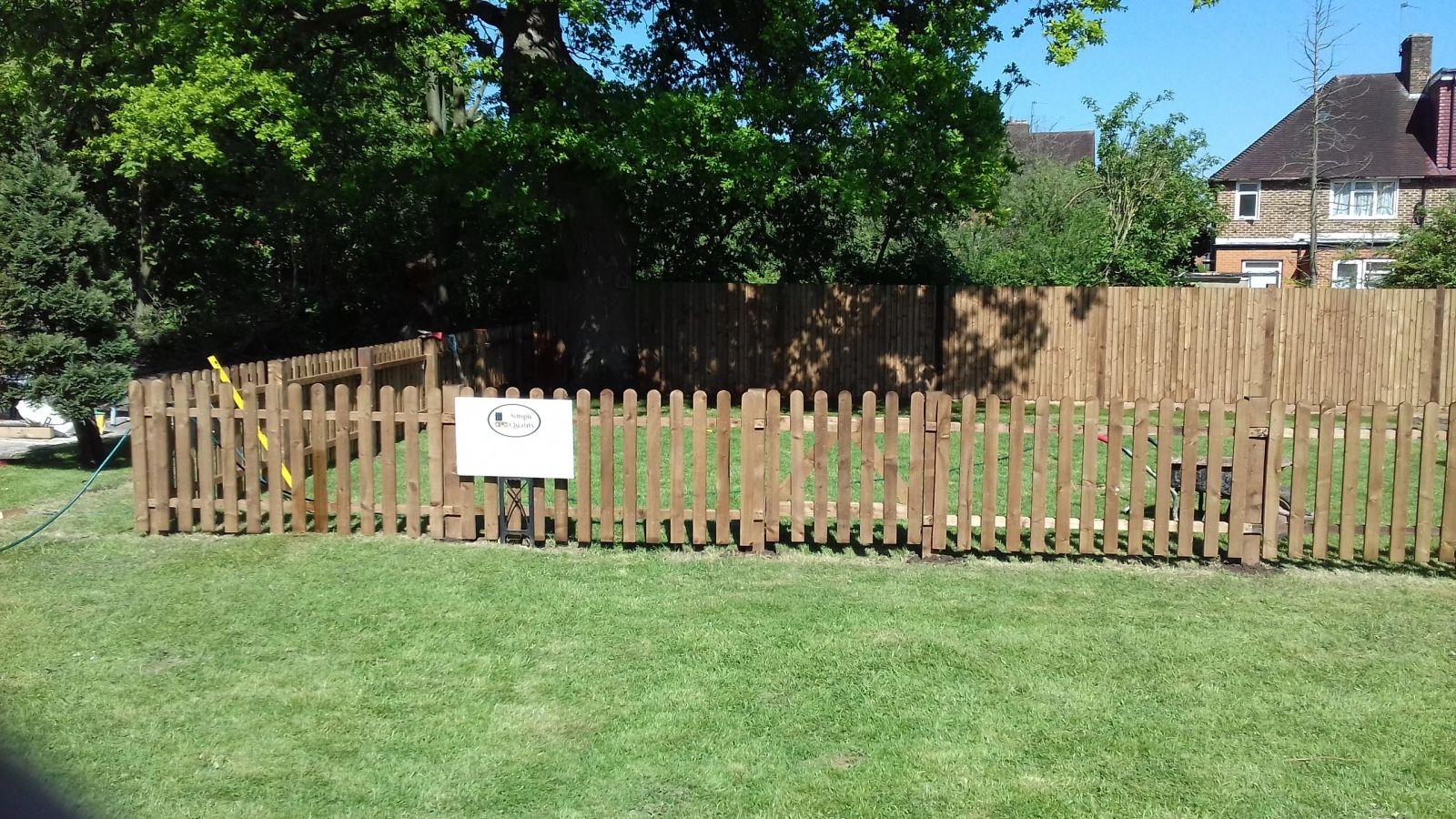
closeboard fence run installed by Capital Fencing in Welwyn Garden City (AL7)
Welwyn Garden City · AL7 / AL8

Composite Fencing in Welwyn Garden City (AL7)

Expansion is the thing installers get wrong with composite. Boards move along their length in summer, so gaps at the post channels are deliberate, not sloppy. On Welwyn Garden City gardens we set out runs to land on full boards where we can, because a cut composite end never looks like a factory one. We're a small, time-served composite fencing crew working out of London and Herts, and Welwyn Garden City is a regular week for us. Most briefs here come down to long rear boundaries where zero maintenance matters more than up-front cost — and honestly, whether composite fencing is the right answer at all before we quote. Recent work on Applecroft Road and Pentley Park. We orient jobs off Campus West.

Expansion is the thing installers get wrong with composite. Boards move along their length in summer, so gaps at the post channels are deliberate, not sloppy. On Welwyn Garden City gardens we set out runs to land on full boards where we can, because a cut composite end never looks like a factory one. We're a small, time-served composite fencing crew working out of London and Herts, and Welwyn Garden City is a regular week for us. Most briefs here come down to long rear boundaries where zero maintenance matters more than up-front cost — and honestly, whether composite fencing is the right answer at all before we quote. Recent work on Applecroft Road and Pentley Park. We orient jobs off Campus West.

Common Welwyn Garden City briefs

  • commercial forecourts where painted timber looks tired within a season
  • long rear boundaries where zero maintenance matters more than up-front cost

Why composite fencing works here

  • no annual staining or oiling
  • colour-through boards don't fade to grey the way pressure-treated timber does
  • aluminium post system won't rot at ground level, which is where 90% of timber fences fail
Typical spec

How we build composite fencing in Welwyn Garden City

Wood-polymer composite boards on aluminium or steel posts. Standard build: 6ft × 6ft panels, 2.4m aluminium posts on 700mm concrete bases. On Welwyn Garden City jobs we adjust for welwyn garden city has design covenants — front fences typically restricted in height and style.

Property mix locally: the original Garden City Movement housing — neo-Georgian semis and short terraces with consistent frontages. Typical gardens: rear gardens hidden behind tall established hedgerows; many properties sit on the original 1920s grid. Postcodes we regularly service: AL7, AL8.

Composite Fencing FAQs — Welwyn Garden City

Is composite fencing worth the extra cost?

We keep colour batches together on a single run, so a Welwyn Garden City boundary reads as one boundary rather than two deliveries. For the original garden city movement housing — neo-georgian semis and short terraces with consistent frontages in AL7, that is where the cost sits. In short: no annual staining or oiling, though up-front cost is roughly double a lap-panel fence.

How long does composite fencing last compared to timber?

Composite is heavier than lap panels, so access along rear gardens hidden behind tall established hedgerows; many properties sit on the original 1920s grid is checked on the visit before we commit to a date. We allow for rear gardens hidden behind tall established hedgerows; many properties sit on the original 1920s grid when setting out in Welwyn Garden City. Worth weighing no annual staining or oiling against up-front cost is roughly double a lap-panel fence before you commit.

Do composite panels handle high wind loads?

Post fixing matters more than the boards here: aluminium posts get concrete-set, because a composite run has no give to hide a leaning post in Welwyn Garden City. Survey slots across AL7 are usually inside a week. Practically, that means colour-through boards don't fade to grey the way pressure-treated timber does — and we're upfront that boards can dent under a football or garden strimmer edge.

Can composite panels drop into existing concrete posts?

Composite is heavier than lap panels, so access along rear gardens hidden behind tall established hedgerows; many properties sit on the original 1920s grid is checked on the visit before we commit to a date. We work this patch weekly, from Broadwater Road out toward hatfield. Worth weighing no annual staining or oiling against up-front cost is roughly double a lap-panel fence before you commit.

Can you match a neighbour's existing composite colour?

We keep colour batches together on a single run, so a Welwyn Garden City boundary reads as one boundary rather than two deliveries. For the original garden city movement housing — neo-georgian semis and short terraces with consistent frontages in AL7, that is where the cost sits. Worth weighing no annual staining or oiling against up-front cost is roughly double a lap-panel fence before you commit.

Recent composite fencing work
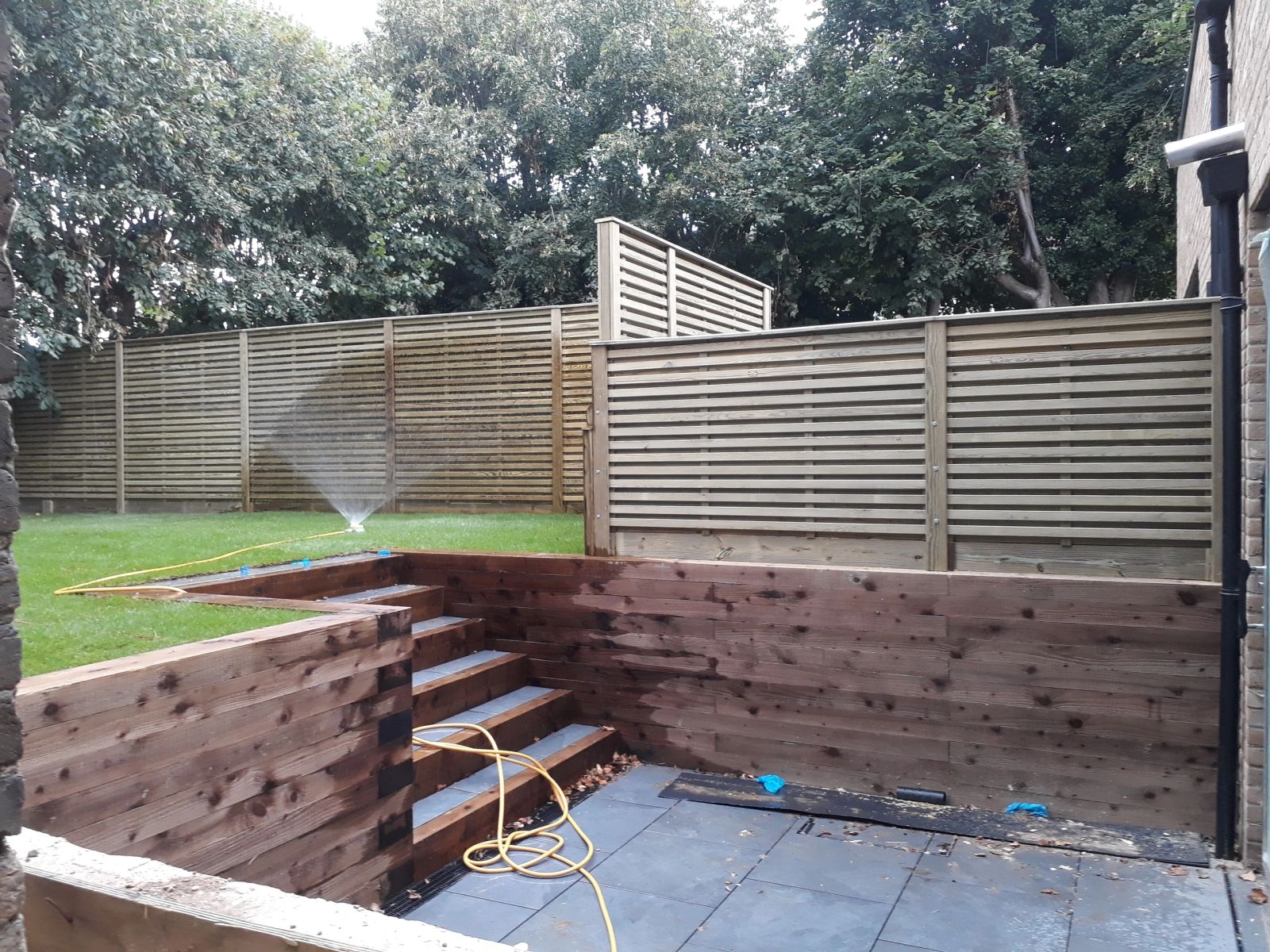
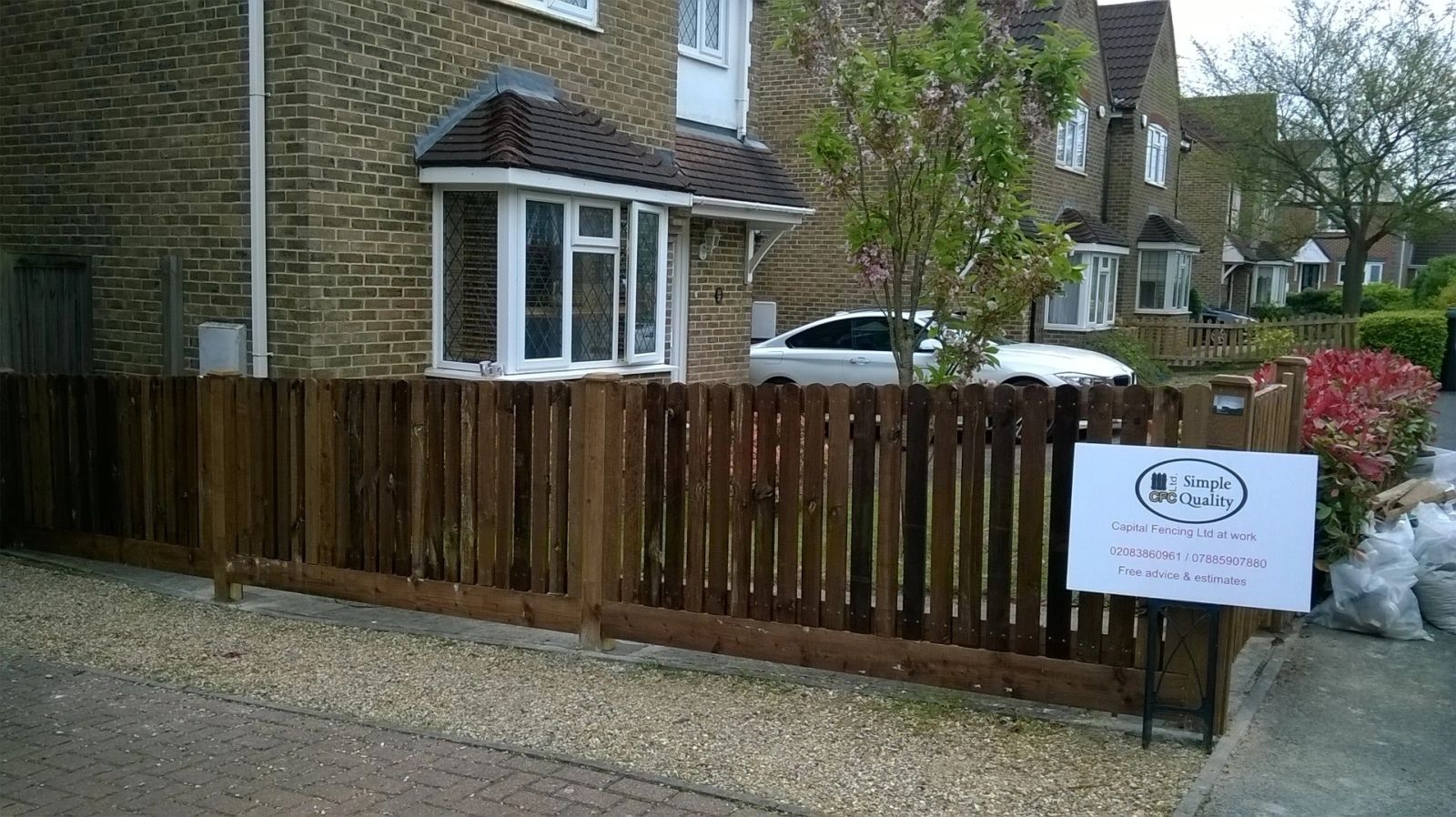
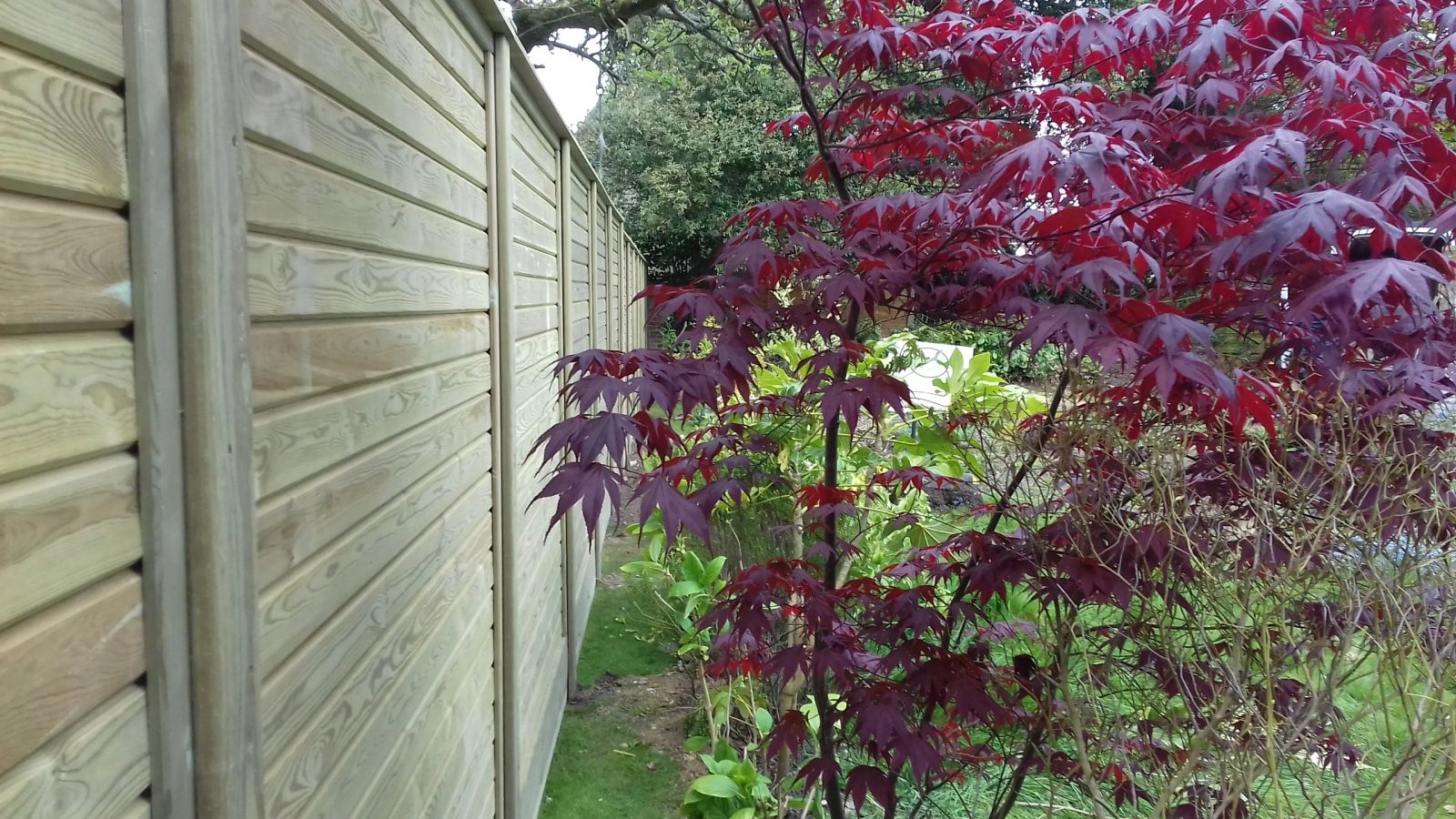
closeboard fence run installed by Capital Fencing in Welwyn Garden City (AL7)panel fence install installed by Capital Fencing in Welwyn Garden City (AL7)trellis-topped fence installed by Capital Fencing in Welwyn Garden City (AL7)bespoke decorative fence installed by Capital Fencing in Welwyn Garden City (AL7)

What actually matters for composite fencing around Welwyn Garden City

Fixing to an existing wall to add mass

Where an existing wall already forms part of the boundary but doesn't give enough height or mass for the noise involved, extending it upward or fixing an acoustic panel section to the top can add the extra performance needed without rebuilding the whole boundary.

The wall's structural condition and the fixing method both need checking first, since an old wall may not be able to safely carry the extra height or weight without additional support.

Hardwood options for gates

Gates take more racking stress than a fixed fence panel, opening and closing on a single edge, which is why hardwoods such as oak or iroko are often specified for gates even where the adjoining fence is softwood.

Oak's natural durability means it can be left untreated and will weather to silver-grey, but it also moves seasonally and can stain surrounding masonry with tannin run-off in wet weather, which is worth flagging before it's fitted next to a pale render or paving.

Hardwood gate frames are usually built with mortice-and-tenon joints rather than the simple nailed or bracketed joints acceptable on a softwood panel, since the joint has to resist years of racking without loosening.

Terraced housing and rear access

Victorian and Edwardian terraces were rarely built with side access, which means materials for a rear garden fence often have to go through the house, over a shared side return, or down a narrow rear alley shared with several other properties.

That access constraint changes the practical choice of materials — full concrete gravel boards and long panels are harder to move through a narrow hallway than shorter timber sections carried in and built up on site.

It's also why timing matters on these jobs: a delivery that blocks a shared alley for half a day needs agreeing with neighbours in advance, not discovering on the morning of the job.

Measuring existing noise levels and why a survey helps

A basic noise survey — even an informal one comparing levels at different points and times of day — helps establish what's actually reaching the garden before deciding on barrier height and specification.

Where noise varies significantly by time of day, such as rush-hour traffic or a school's start and finish times, a survey that captures those peaks gives a more realistic basis for the design than a single spot reading.

Protecting a shared alley during material delivery

A shared rear alley used by several households for bin access can't be blocked completely for a full day without agreement, so materials are often moved through in stages between other residents' access needs rather than left stacked across the full width.

Trailing cables, tools and offcuts left in a shared passage are a trip hazard for neighbours as well as the crew, so keeping the alley clear at the end of each working day matters even if the job isn't finished.

Any damage to the alley surface itself — cracked paving, a scraped wall corner from a wide panel — is worth flagging to the client immediately, since a shared area often has joint liability that's harder to unpick after the event.

Heat pump and AC unit enclosures

An acoustic enclosure around a heat pump or air conditioning condenser needs solid, gap-free sides and enough clearance to avoid restricting the unit's airflow, since blocking intake or exhaust can cause the unit to run harder and louder.

Manufacturer clearance distances are checked before an enclosure is built, and a removable or hinged section is normally included for servicing access.

Algae growth on north-facing panels

A boundary that faces north, or sits in the permanent shade of a tall building or dense hedge, stays damp for far longer after rain than a south-facing run, which is exactly the condition green algae needs to establish.

Algae on timber is mostly cosmetic in the early stages but makes the surface noticeably slippery, which matters where a fence line doubles as an informal foothold near steps or a sloped path.

A dilute biocidal wash applied before restaining is more effective long-term than staining directly over algae, which simply seals damp organic growth beneath the new coating.

Asbestos awareness near older garage flanks

Older garages, outbuildings and some boundary walls built before the 1999 asbestos ban can incorporate asbestos-containing materials in flank panels, corrugated roofing or old fence panel infill, particularly on properties from the mid-20th century.

Disturbing suspected asbestos material isn't something to tackle as part of routine fence replacement — it needs a competent assessment and, if confirmed, removal by a licensed contractor in line with HSE guidance.

Where an older boundary structure looks like it might contain asbestos sheeting, the sensible step is to leave it undisturbed and get it checked before any adjacent groundworks begin.

Pressure treatment and incising

Pressure treatment (vacuum-pressure impregnation) forces preservative into the timber under pressure rather than just coating the surface, which is why treated softwood outperforms a surface-brushed equivalent even though both can look similar when new.

Denser softwoods such as redwood resist deep penetration, so posts and other high-risk sections are often incised first — small slits cut into the surface — to let preservative reach further into the timber than it otherwise would.

Incising leaves a visible pattern of shallow cuts on the timber face, which is a normal sign of proper treatment rather than a defect, though it's more noticeable on posts than on finish-grade boards.

Noise build-up in an enclosed courtyard

An enclosed courtyard surrounded by hard walls on several sides can trap and reflect noise between those surfaces, sometimes making an internal noise source feel louder than it would in an open garden of the same size.

Introducing an absorptive surface on one or more of those walls, rather than adding more barrier height, is often the more effective response in a courtyard where the noise is already largely contained by the surrounding structure.

Boundary fencing between garden and agricultural land

Where a residential garden backs onto agricultural land, stock-proof fencing standards relevant to livestock containment may be a factor the adjoining farmer expects, separate from purely decorative garden fencing considerations.

Responsibility for maintaining this kind of boundary can be split differently to a typical suburban arrangement, sometimes reflecting historic agricultural tenancy agreements rather than standard residential conveyancing norms.

Checking with the adjoining landowner and the title documents together gives a fuller picture than assuming the same rules apply as between two ordinary garden neighbours.

Checking cumulative ground level change along a long boundary

A gentle, barely perceptible slope checked only between adjacent posts can still add up to a substantial total fall over a long boundary, which is easy to miss without measuring from a single fixed datum along the whole run.

Taking level readings from one datum point at both ends and at intervals along the run, rather than only comparing each post to its immediate neighbour, reveals the true overall fall before panel and post heights are finalised.

This matters most for ordering materials in advance, since a run that turns out to need more steps or a longer rake than first estimated can mean extra cut panels or capping that weren't in the original take-off.

Boundaries adjoining registered common land

Land registered as common land under the Commons Registration Act carries specific legal protections, and fencing along a boundary with it can require consent from the Planning Inspectorate under separate legislation.

This is a different and more specialist process than an ordinary planning application, reflecting the protected status of common land itself.

Anyone with a boundary adjoining registered common land should check its status carefully before assuming a straightforward fence replacement is all that's needed.

Protecting known cable and pipe runs during digging

Where a service run is known — marked by the utility company, visible from a meter or duct cover, or noted on a site plan — a physical marker or hand-dug trial pit at that point before general digging starts confirms its exact depth and route.

Once a service is located, leaving a visible marker such as a cane or spray line on the surface stops it being forgotten by whoever digs the next hole along the run, particularly on a multi-day job with different people digging on different days.

Ducted services are generally easier to work around than direct-buried cables since the duct itself gives some protection, but the duct can still be damaged by an auger or breaker if its depth isn't confirmed first.

Composite is a specification job rather than a supply job: post centres, base depth, drainage gaps and trim details all get set out before boards are ordered for a Welwyn Garden City garden. We keep the composite fencing process simple for Welwyn Garden City clients: site visit, written quote, agreed start date, then in and out cleanly. No subcontracted labour, no chasing for an invoice at the end. Recent work on Longcroft Lane and Handside Lane. We orient jobs off Parkway central beeches.

Get In Touch

Get My Free Quote — 24h Response

No callout fee · Free site visit · Friendly local team covering London & Hertfordshire.

Call us
07885907880
or 02036484746
Email
capital_fencing@yahoo.com
WhatsApp
Message us anytime
Area
London & Hertfordshire
Payment
Card payments accepted

Pay by debit or credit card, bank transfer or cash once the work and price are agreed. No deposit taken online.

Request a Free Quote

We'll get back to you within 24 hours.

Free Site Visit No Callout Fee
Call WhatsAppQuote