Gospel Oak is part of our Camden coverage under Camden Council, with its own property mix and its own recurring brief.
Streets we regularly work on here: Oak Village, Lisburne Road, Savernake Road, Mansfield Road. Local anchors: Hampstead Heath (South End Green), Gospel Oak Overground, Lismore Circus.
Gospel Oak includes both council-built post-war estate blocks around Mansfield Road and privately-owned Victorian terraces around Oak Village and Lisburne Road. Hampstead Heath's South End Green lies on the neighbourhood's northern edge, and streets closest to the Heath fall under tree preservation controls. Gospel Oak Overground station serves the area.
Practical points for boundary work in Gospel Oak
What a site survey covers
A proper site survey checks the boundary line against the deed plan where available, probes ground conditions at a few points along the run, and confirms access for both delivery vehicles and hand-carried materials.
It should also flag anything that changes cost before it becomes a surprise later — buried services, a shared boundary needing neighbour agreement, overhead cables limiting how tall equipment can be used, or a slope needing a stepped rather than level run.
A survey that skips any of these and goes straight to a headline price is the most common reason a quote changes significantly once work actually starts.
Knot loosening in structural timber
Knots are the base of a branch embedded in the trunk, and as timber dries the knot itself shrinks less than the surrounding wood, which can leave it loose or eventually cause it to drop out and leave a hole.
A live knot, still bonded to the surrounding fibres, is far less of a concern than a dead knot with a dark ring around it, which indicates the branch had already died before the tree grew over it and bonds poorly.
On load-bearing sections like arris rails, a cluster of large or dead knots near a fixing point is worth avoiding, since it reduces the effective cross-section carrying the load at that point.
Acoustic fencing compared with planting-based screening
Dense planting alone reduces perceived noise mostly by psychological and visual screening rather than genuine sound-blocking, since a hedge thin enough to see through offers little real acoustic mass.
A solid acoustic fence combined with planting in front of it gets the best of both — genuine sound reduction from the solid barrier, softened by greenery that also helps with dust and visual softening.
Where space is tight, prioritising the solid barrier over depth of planting usually gives a better acoustic result than a wide but thin screen of shrubs.
Non-slip decking finishes
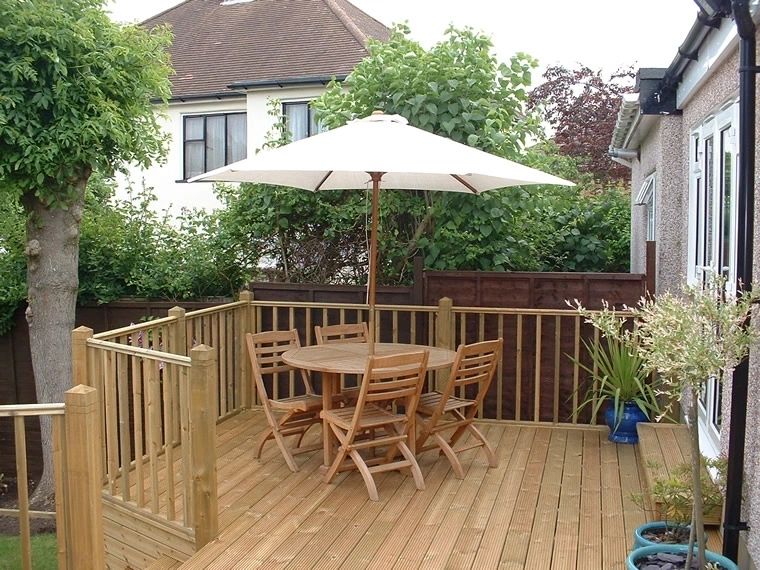
A grooved board profile gives some grip when dry but can still become slippery once algae builds up in a shaded or north-facing spot, which is a maintenance issue rather than something a profile alone solves permanently.
Anti-slip decking strips or grit-impregnated coatings can be added to steps and high-traffic areas as a supplementary measure, and are worth specifying on steps or ramps even where the main deck area doesn't need them.
Some composite ranges are manufactured with a textured or embossed surface aimed specifically at slip resistance, which is worth checking against a wet-slip rating rather than assuming all composite boards perform the same underfoot.
Levelling ground before building a decking substructure
A decking frame built over uneven ground without first levelling or terracing the site ends up with support posts of wildly inconsistent length, which is harder to get right and more prone to individual post settlement than a site graded roughly level first.
Removing turf and topsoil under the deck footprint rather than building over it also reduces the organic material that would otherwise decompose and settle unevenly under the structure.
Where the ground has a genuine and significant fall, working out whether to terrace the ground itself or simply vary support post heights is a decision made before any joists are cut, since it changes the whole substructure design.
Wind load: solid panels versus slatted screens
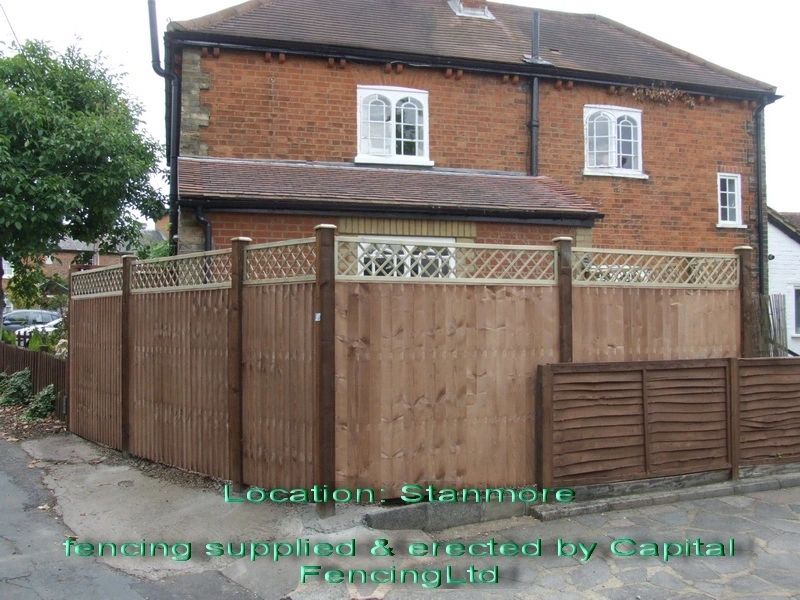
A solid close-boarded panel presents its whole face to the wind, so on an exposed run the load transferred into the post is far higher than the same height in a slatted or louvred screen with even small gaps between boards.
Manufacturers' span tables for solid panels assume a sheltered suburban garden; on an open plot the safe bay width between posts often needs reducing rather than relying on the standard 1.8m centre.
Where the client wants privacy rather than a windbreak, a slatted design with a close-boarded section lower down still cuts load noticeably while keeping most of the screening effect.