London & Hertfordshire Free Site Visit

Kentish Town: Fencing & Decking Within Camden

Kentish Town, part of camden and covered by Camden Council, is known for victorian terraces and georgian townhouses, plus post-war estates with gardens small walled courtyards behind period houses. Most site visits in this patch come back to one thing: conservation-area consent needed for most front-boundary changes. Keeping new-build estates consistent: Uniform estates built to a single developer specification often have an unwritten (or sometimes written, via estate covenant) expectation that boundary fencing matches the original height, colour and panel style across the whole street. Departing from that pattern on a single plot — a taller fence, a different stain colour, an unusual gate style — tends to stand out more starkly on a visually consistent estate than it would on a street of individually built houses. Post top crown-cutting for water shedding: A crown cut, a shallow diagonal saw cut across the top of a fence post, sheds rainwater to one side rather than letting it pool flat on the post's exposed end grain.

Talk through your Kentish Town brief

We know Camden's planning rules and this patch's ground conditions — call and we'll talk it through.

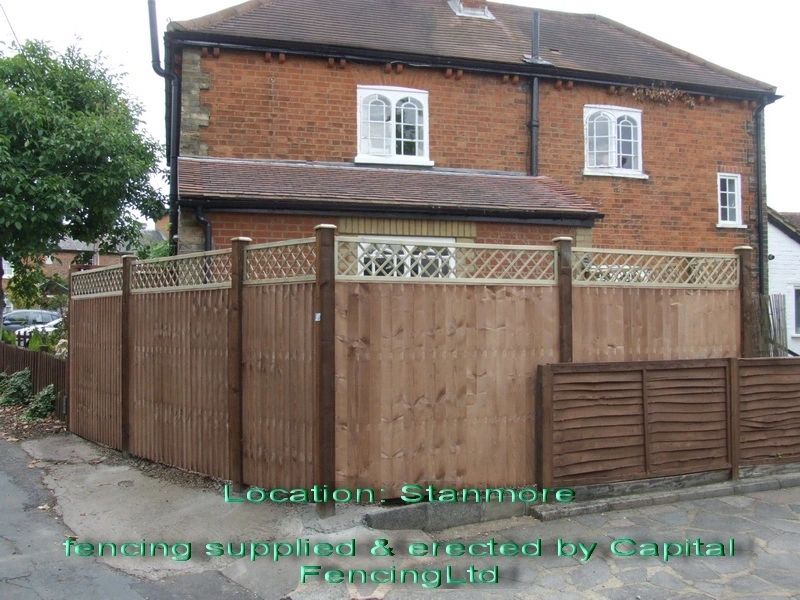
Capital Fencing project in Kentish Town, NW5Capital Fencing project in Kentish Town, NW5Capital Fencing project in Kentish Town, NW5
NW5

Kentish Town is part of our Camden coverage under Camden Council, with its own property mix and its own recurring brief.

Property & garden in Kentish Town

Property: Victorian terraces and Georgian townhouses, plus post-war estates

Gardens: small walled courtyards behind period houses

conservation-area consent needed for most front-boundary changes

Nearest arterial: A400 Kentish Town Road, A406 (15 min). Served from Kentish Town (Northern / Thameslink). Nearby commercial anchors: Kentish Town Road, Fortess Road.

Practical points for boundary work in Kentish Town

Keeping new-build estates consistent

Uniform estates built to a single developer specification often have an unwritten (or sometimes written, via estate covenant) expectation that boundary fencing matches the original height, colour and panel style across the whole street.

Departing from that pattern on a single plot — a taller fence, a different stain colour, an unusual gate style — tends to stand out more starkly on a visually consistent estate than it would on a street of individually built houses.

Where a management company or residents' association enforces an estate covenant, it's worth checking the permitted specification before ordering materials, since a non-compliant fence can sometimes have to be replaced at the owner's cost.

Post top crown-cutting for water shedding

A crown cut, a shallow diagonal saw cut across the top of a fence post, sheds rainwater to one side rather than letting it pool flat on the post's exposed end grain.

It's a lower-cost alternative to fitting a separate post cap and can be combined with an end-grain preservative treatment applied to the freshly cut surface for extra protection.

A flat-topped post left uncapped and uncut is the most exposed detail on an otherwise well-treated post, since the end grain there absorbs water directly with nothing to divert it.

Distinguishing checking from structural splitting

Surface checking, fine drying cracks confined to the outer face of a timber section, is cosmetic and doesn't usually run deep enough to compromise a post or rail's strength.

A structural split runs further into or along the timber, sometimes right through a section, and can significantly reduce the effective load-bearing area at that point, particularly if it passes through a fixing or joint.

The practical test is depth and location: a shallow surface check away from any fixing is rarely a concern, while any split intersecting a bolt hole, mortice or bearing point is worth assessing before continued use.

Metal panel systems as an alternative on very exposed sites

On sites where timber panel failure from wind loading is a recurring problem despite heavier posts and shorter bays, a powder-coated steel or aluminium panel system offers a genuinely different approach, since the material doesn't flex, crack or delaminate the way a timber panel eventually does under repeated wind load.

These systems cost more than timber upfront and have a different aesthetic that not every client wants, but on a genuinely difficult exposed boundary they remove the recurring panel-replacement cycle entirely.

It's worth presenting as an option specifically where a client has already replaced timber panels on the same exposed run more than once, rather than as a default first suggestion.

Deciding between stepping and raking a panel run

Stepped panels stay level themselves and drop in increments post to post, leaving a small triangular gap under each panel that grows towards the low end of a run; raked panels are cut at an angle so the top edge follows the slope continuously with no gap.

Stock panels can be stepped without alteration, but raking almost always means cutting a panel's top rail and infill to an angle on site, which only works with materials that can be cut and re-fixed cleanly, such as featheredge or slatted boards.

A steep, uneven slope generally favours stepping for speed and future repairability; a long, gentle and even gradient often looks better raked, since the steps would otherwise be very shallow and visually fussy.

Screw pull-out values in timber

A screw's resistance to being pulled straight out of timber depends on thread depth, shank diameter and the density of the timber it's driven into, with denser hardwoods offering significantly higher pull-out resistance than softwoods for the same screw.

Coarse-thread screws designed for softwood construction generally have deeper, wider-spaced threads than fine-thread screws intended for hardwood or metal, since softwood's lower density needs more thread engagement to achieve comparable grip.

Pre-drilling a pilot hole reduces the risk of splitting dense or knotty timber but also slightly reduces ultimate pull-out resistance compared with a screw self-tapping fully into undrilled timber, which is a trade-off worth balancing against the specific timber and screw.

Services in Kentish Town

Kentish Town — frequently asked

What areas of Kentish Town do you cover?

We cover all of Kentish Town (NW5), under Camden Council.

Does screw pull-out values in timber come up much on jobs around Kentish Town?

Coarse-thread screws designed for softwood construction generally have deeper, wider-spaced threads than fine-thread screws intended for hardwood or metal, since softwood's lower density needs more thread engagement to achieve comparable grip. Pre-drilling a pilot hole reduces the risk of splitting dense or knotty timber but also slightly reduces ultimate pull-out resistance compared with a screw self-tapping fully into undrilled timber, which is a trade-off worth balancing against the specific timber and screw. A screw's resistance to being pulled straight out of timber depends on thread depth, shank diameter and the density of the timber it's driven into, with denser hardwoods offering significantly higher pull-out resistance than softwoods for the same screw.

What should I know about deciding between stepping and raking a panel run in Kentish Town?

A steep, uneven slope generally favours stepping for speed and future repairability; a long, gentle and even gradient often looks better raked, since the steps would otherwise be very shallow and visually fussy. Stepped panels stay level themselves and drop in increments post to post, leaving a small triangular gap under each panel that grows towards the low end of a run; raked panels are cut at an angle so the top edge follows the slope continuously with no gap. Stock panels can be stepped without alteration, but raking almost always means cutting a panel's top rail and infill to an angle on site, which only works with materials that can be cut and re-fixed cleanly, such as featheredge or slatted boards.

Metal panel systems as an alternative on very exposed sites — what does that mean for a job in Kentish Town?

These systems cost more than timber upfront and have a different aesthetic that not every client wants, but on a genuinely difficult exposed boundary they remove the recurring panel-replacement cycle entirely. It's worth presenting as an option specifically where a client has already replaced timber panels on the same exposed run more than once, rather than as a default first suggestion. On sites where timber panel failure from wind loading is a recurring problem despite heavier posts and shorter bays, a powder-coated steel or aluminium panel system offers a genuinely different approach, since the material doesn't flex, crack or delaminate the way a timber panel eventually does under repeated wind load.

Distinguishing checking from structural splitting — what does that mean for a job in Kentish Town?

Surface checking, fine drying cracks confined to the outer face of a timber section, is cosmetic and doesn't usually run deep enough to compromise a post or rail's strength. A structural split runs further into or along the timber, sometimes right through a section, and can significantly reduce the effective load-bearing area at that point, particularly if it passes through a fixing or joint. The practical test is depth and location: a shallow surface check away from any fixing is rarely a concern, while any split intersecting a bolt hole, mortice or bearing point is worth assessing before continued use.

Is Kentish Town within your standard travel area?

Yes — Kentish Town is served from Kentish Town (Northern / Thameslink), off A400 Kentish Town Road, and is inside our regular working patch.

Access is via A400 Kentish Town Road, with Kentish Town (Northern / Thameslink) close by. Distinguishing checking from structural splitting: Surface checking, fine drying cracks confined to the outer face of a timber section, is cosmetic and doesn't usually run deep enough to compromise a post or rail's strength. A structural split runs further into or along the timber, sometimes right through a section, and can significantly reduce the effective load-bearing area at that point, particularly if it passes through a fixing or joint. Metal panel systems as an alternative on very exposed sites: On sites where timber panel failure from wind loading is a recurring problem despite heavier posts and shorter bays, a powder-coated steel or aluminium panel system offers a genuinely different approach, since the material doesn't flex, crack or delaminate the way a timber panel eventually does under repeated wind load.

Get In Touch

Get My Free Quote — 24h Response

No callout fee · Free site visit · Friendly local team covering London & Hertfordshire.

Request a Free Quote

We'll get back to you within 24 hours.

Free Site Visit No Callout Fee
Call WhatsAppQuote