St Albans falls under St Albans City and District Council, covering AL1, AL2, AL3, AL4 — property here runs to victorian terraces, edwardian villas in marshalswick, and tudor / georgian properties near the cathedral, with gardens typically mature gardens, often with established hedging that needs lifting before fencing goes in. The recurring factor on jobs here is extensive conservation areas mean fence heights and materials need to match the streetscape. Handling large panels safely in windy conditions: A solid fence panel acts like a sail once it's lifted clear of the ground, and a moderate gust can catch an unsupported panel and pull it out of a single person's control, particularly on an elevated or exposed plot. Two people carrying and positioning a panel, with one steadying it against the wind while the other fixes it, is safer than one person trying to hold and fix simultaneously on a breezy day. Wind loading on exposed runs: A fence on an open, elevated or unsheltered boundary — a plateau, a field edge, or a long unbroken run with no buildings breaking the wind — takes a real structural load that a sheltered suburban garden never sees.
Local knowledge
What shapes a St Albans job
Property: Victorian terraces, Edwardian villas in Marshalswick, and Tudor / Georgian properties near the cathedral
Gardens: mature gardens, often with established hedging that needs lifting before fencing goes in
extensive conservation areas mean fence heights and materials need to match the streetscape
Under St Albans City and District Council, covering AL1, AL2, AL3, AL4. Nearest arterial: A1081 / A414, M25 J21A / M1 J6. Served from St Albans City (Thameslink). Local commercial anchors: Porters Wood, Sutton Road industrial area.
Streets we regularly work on: Folly Lane, Sandpit Lane, London Road, Hatfield Road. Local anchors: St Albans City station, St Albans Cathedral, Verulamium Park.
St Albans has multiple conservation areas, including Fishpool Street and Romeland, which constrain front-boundary materials on the historic streets running toward the cathedral. Verulamium Park preserves the site of the Roman city of Verulamium, one of the largest Roman sites in Britain. Marshalswick and Jersey Farm, on the town's outer edge, sit outside the conservation areas and were developed as twentieth-century suburbs with more standard plot layouts.
Practical points for boundary work in St Albans
Handling large panels safely in windy conditions
A solid fence panel acts like a sail once it's lifted clear of the ground, and a moderate gust can catch an unsupported panel and pull it out of a single person's control, particularly on an elevated or exposed plot.
Two people carrying and positioning a panel, with one steadying it against the wind while the other fixes it, is safer than one person trying to hold and fix simultaneously on a breezy day.
Where wind makes handling large solid panels genuinely unsafe, postponing that stage while continuing with digging or post-setting is usually more sensible than pressing on and risking a dropped or wind-caught panel.
Wind loading on exposed runs
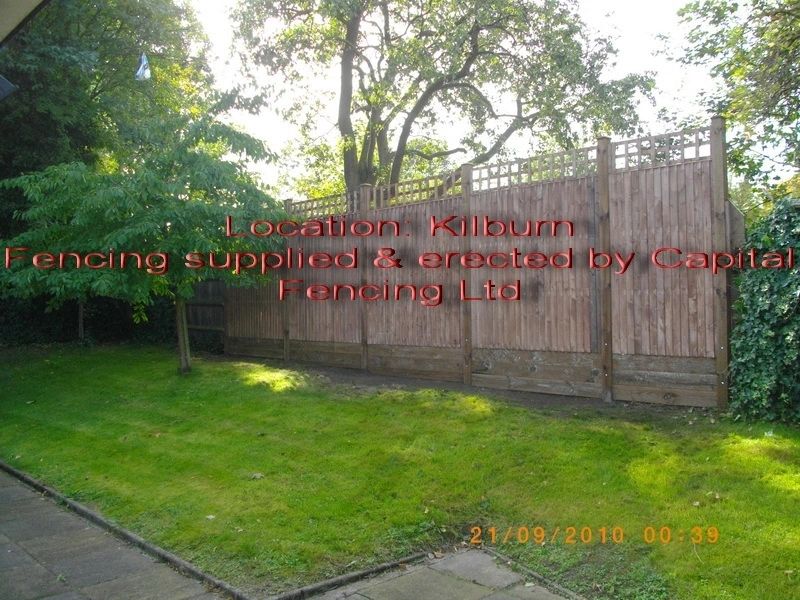
A fence on an open, elevated or unsheltered boundary — a plateau, a field edge, or a long unbroken run with no buildings breaking the wind — takes a real structural load that a sheltered suburban garden never sees.
Standard 75x75mm posts and full-height solid panels are the combination most likely to fail here; heavier posts, shorter bays between them, and a slatted or louvred profile that lets some wind through all reduce the load rather than fighting it head-on.
It's a specification decision made at quote stage, not something to retrofit after the first panel goes over in a storm.
Galvanised versus painted metal fixings in exposed conditions
Hot-dip galvanising bonds a genuine zinc coating into the surface of steel and continues protecting even where the surface is scratched, since the surrounding zinc sacrificially corrodes before the underlying steel does.
A painted finish over mild steel only protects where the paint film remains intact, and once scratched or chipped the exposed steel corrodes at that point with nothing to slow it down.
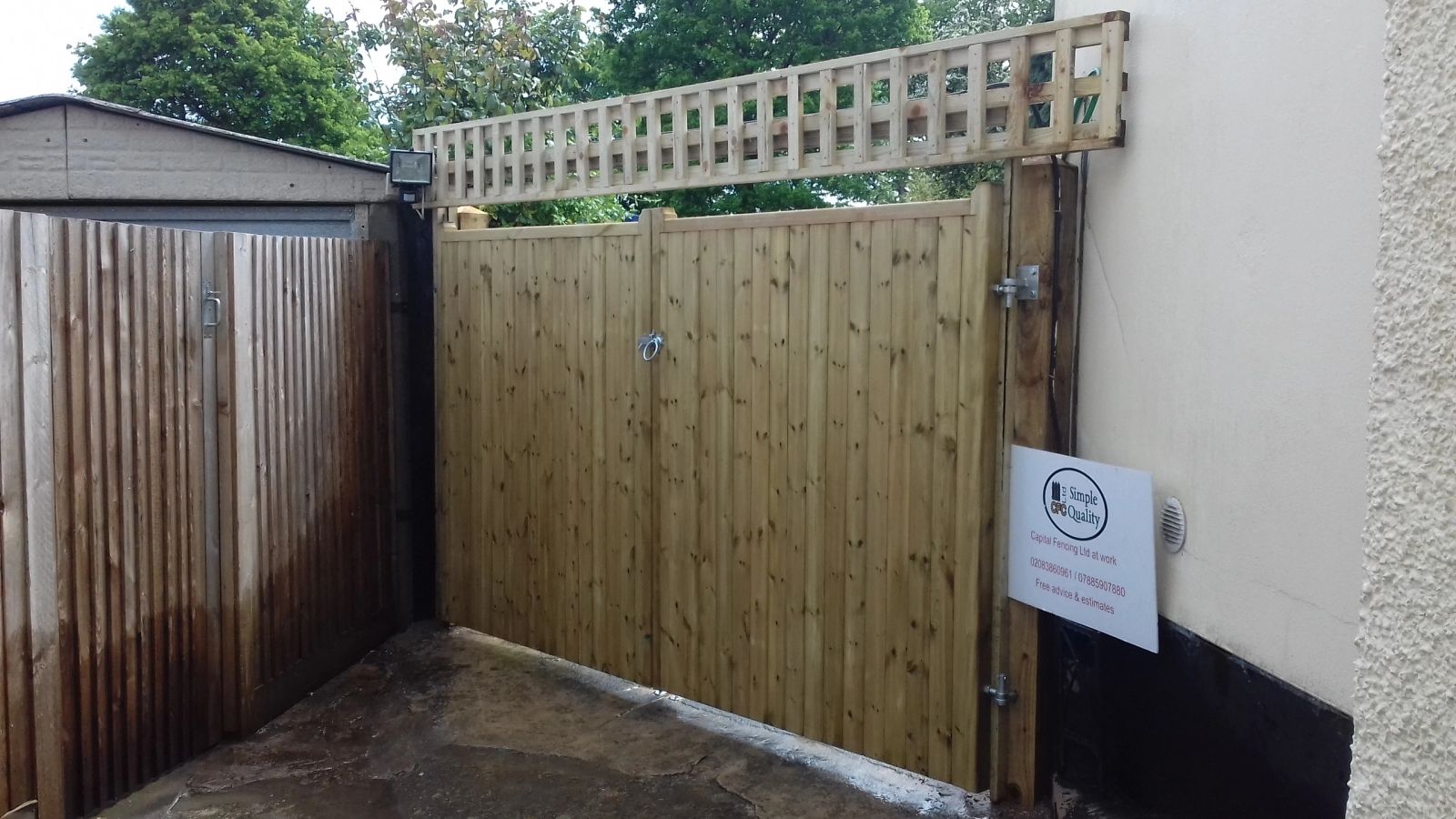
For fixings, brackets and gate hardware in a genuinely exposed or coastal-influenced location, galvanised (or better, galvanised-and-painted) components noticeably outlast a plain painted finish.
Timber versus concrete gravel boards
A gravel board sits at the base of a fence panel to keep the panel itself clear of standing water and direct ground contact, which is where rot usually starts on an otherwise sound fence.
Timber gravel boards are cheaper and easier to match to a timber fence's finish, but need replacing more often than concrete boards, which resist rot indefinitely but can crack under impact and don't take a stain or paint finish as readily.
On a plot with poor drainage or a known damp problem, concrete gravel boards are usually the more economical long-term choice despite the higher initial cost.
Concrete post reinforcement
Precast concrete fence posts are reinforced internally with steel rods or mesh running the post's length, which gives the otherwise brittle concrete the tensile strength to resist bending loads from wind pressure on the panels it holds.
The reinforcement needs adequate concrete cover on all sides to stop moisture reaching the steel and causing it to rust and expand, a process that can crack the post from the inside out over time, known as spalling.
A concrete post with reinforcement bar visible or rust-staining at the surface has usually already lost some of its cover and is worth replacing before the cracking spreads further along its length.
Party wall notices and communication
The Party Wall etc. Act 1996 covers work to a shared wall or excavation near a neighbour's foundations, and while an ordinary timber fence on a boundary line usually falls outside it, a new masonry boundary wall built astride the line, or deep post holes close to a neighbour's foundations, can bring it into play.
Where the Act applies, formal written notice is required before work starts, giving the neighbour a defined period to consent or dissent, and proceeding without notice risks an injunction even on otherwise straightforward work.
Even where the Act doesn't strictly apply, a simple letter or conversation confirming line, height and access before work starts avoids most of the disputes that end up needing formal resolution.
Does galvanised versus painted metal fixings in exposed conditions come up much on jobs around St Albans?
A painted finish over mild steel only protects where the paint film remains intact, and once scratched or chipped the exposed steel corrodes at that point with nothing to slow it down. For fixings, brackets and gate hardware in a genuinely exposed or coastal-influenced location, galvanised (or better, galvanised-and-painted) components noticeably outlast a plain painted finish. Hot-dip galvanising bonds a genuine zinc coating into the surface of steel and continues protecting even where the surface is scratched, since the surrounding zinc sacrificially corrodes before the underlying steel does.
Does concrete post reinforcement come up much on jobs around St Albans?
Precast concrete fence posts are reinforced internally with steel rods or mesh running the post's length, which gives the otherwise brittle concrete the tensile strength to resist bending loads from wind pressure on the panels it holds. The reinforcement needs adequate concrete cover on all sides to stop moisture reaching the steel and causing it to rust and expand, a process that can crack the post from the inside out over time, known as spalling. A concrete post with reinforcement bar visible or rust-staining at the surface has usually already lost some of its cover and is worth replacing before the cracking spreads further along its length.
Do you cover neighbourhoods near St Albans?
Yes — see our full coverage map for neighbourhoods near St Albans.
Does timber versus concrete gravel boards come up much on jobs around St Albans?
Timber gravel boards are cheaper and easier to match to a timber fence's finish, but need replacing more often than concrete boards, which resist rot indefinitely but can crack under impact and don't take a stain or paint finish as readily. On a plot with poor drainage or a known damp problem, concrete gravel boards are usually the more economical long-term choice despite the higher initial cost. A gravel board sits at the base of a fence panel to keep the panel itself clear of standing water and direct ground contact, which is where rot usually starts on an otherwise sound fence.
Is party wall notices and communication something you plan for in St Albans?
The Party Wall etc. Act 1996 covers work to a shared wall or excavation near a neighbour's foundations, and while an ordinary timber fence on a boundary line usually falls outside it, a new masonry boundary wall built astride the line, or deep post holes close to a neighbour's foundations, can bring it into play. Where the Act applies, formal written notice is required before work starts, giving the neighbour a defined period to consent or dissent, and proceeding without notice risks an injunction even on otherwise straightforward work. Even where the Act doesn't strictly apply, a simple letter or conversation confirming line, height and access before work starts avoids most of the disputes that end up needing formal resolution.
Is St Albans within your standard travel area?
Yes — St Albans is served from St Albans City (Thameslink), off A1081 / A414, and is inside our regular working patch.
Coverage runs off A1081 / A414, near M25 J21A / M1 J6, served from St Albans City (Thameslink). Galvanised versus painted metal fixings in exposed conditions: Hot-dip galvanising bonds a genuine zinc coating into the surface of steel and continues protecting even where the surface is scratched, since the surrounding zinc sacrificially corrodes before the underlying steel does. A painted finish over mild steel only protects where the paint film remains intact, and once scratched or chipped the exposed steel corrodes at that point with nothing to slow it down. Timber versus concrete gravel boards: A gravel board sits at the base of a fence panel to keep the panel itself clear of standing water and direct ground contact, which is where rot usually starts on an otherwise sound fence.
Get In Touch
Get My Free Quote — 24h Response
No callout fee · Free site visit · Friendly local team covering London & Hertfordshire.