London & Hertfordshire Free Site Visit
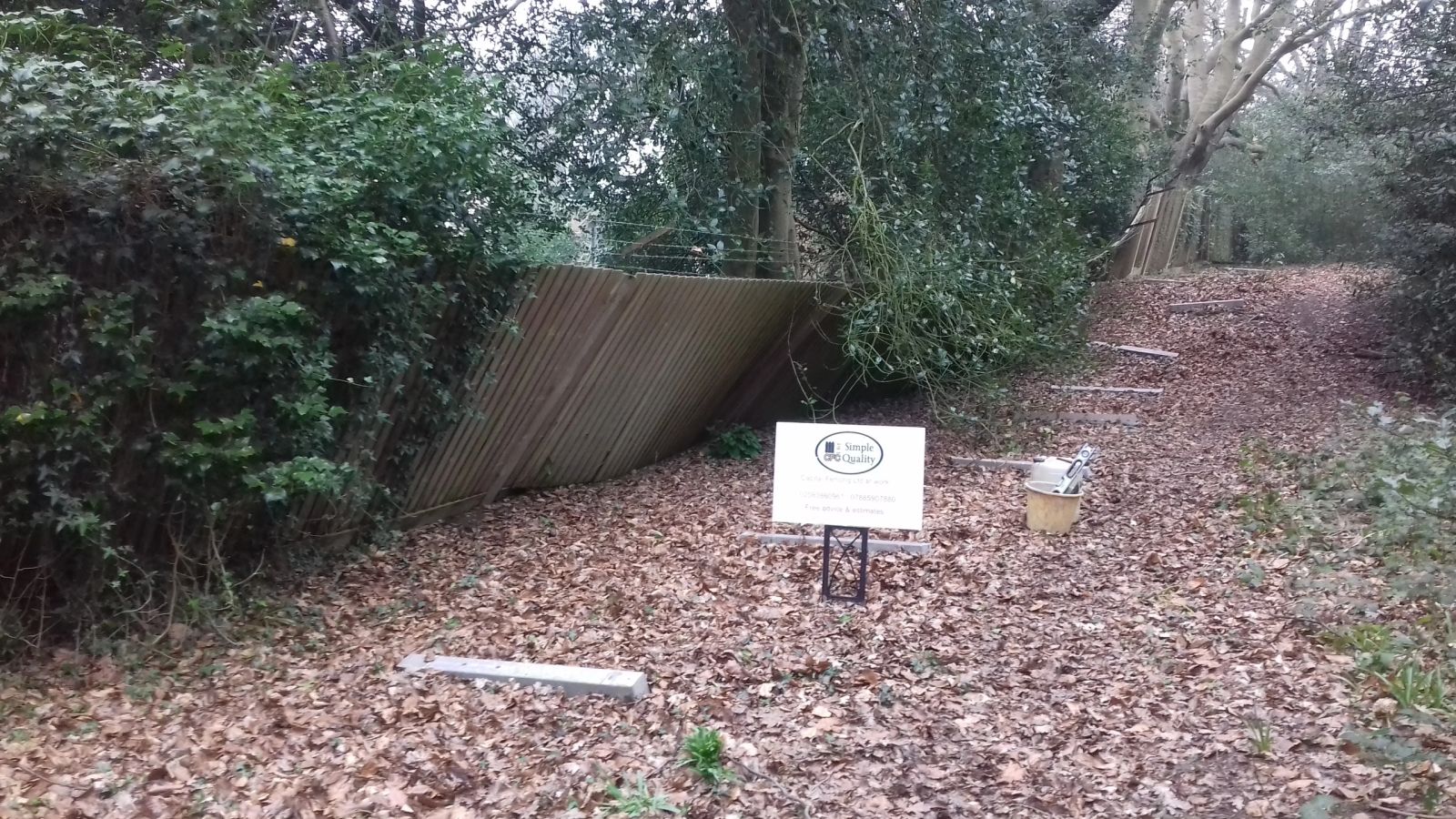
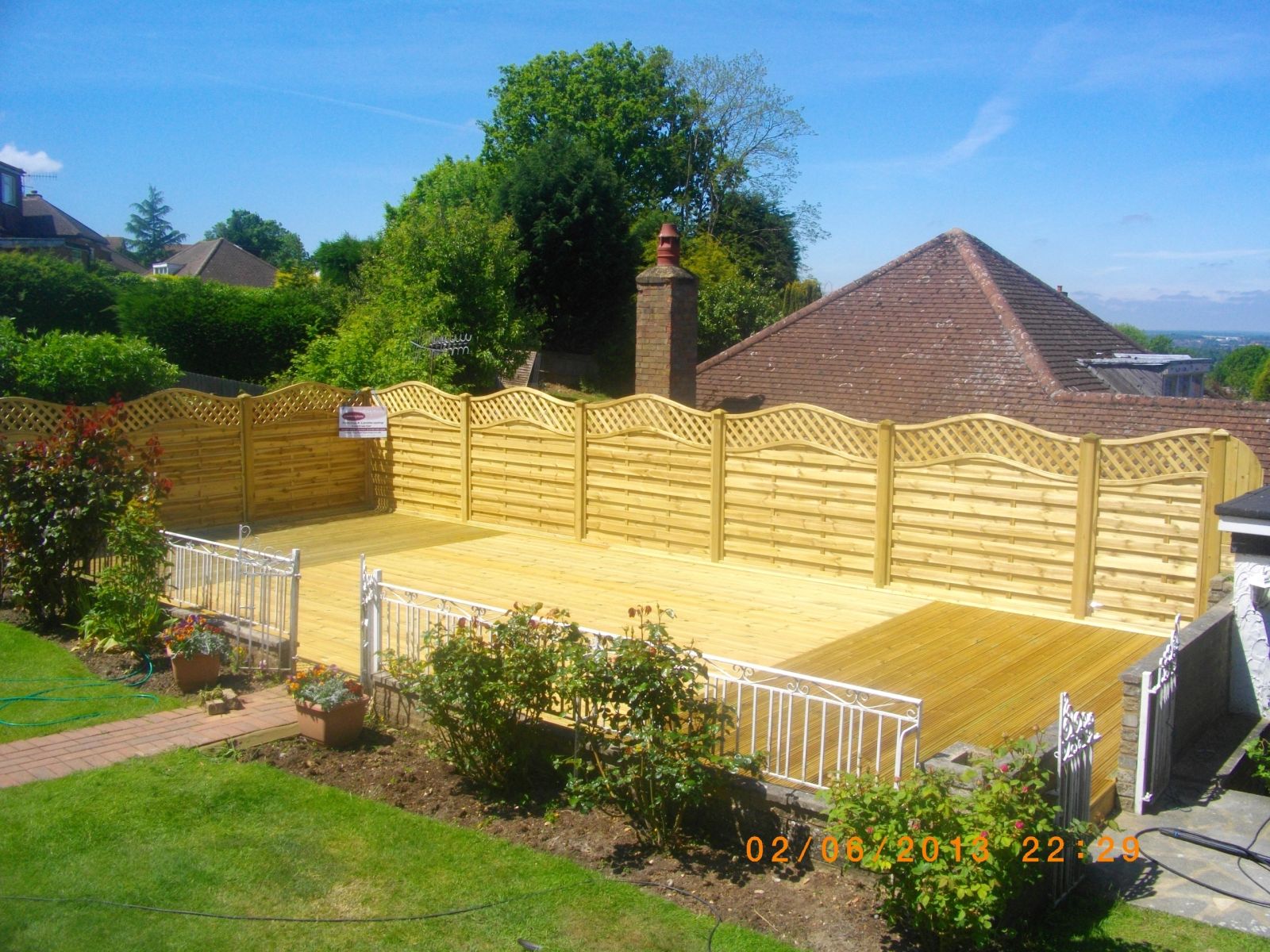
closeboard fence run installed by Capital Fencing in Hackney (E5)
Hackney · E5 / E8 / E9 / N1 / N16

Commercial Yard Fencing in Hackney — Built for daily cycle counts, vehicle turning circles and CCTV integration

Commercial yard fencing in Hackney is one of our regular briefs — trade yards, self-storage sites, workshops and small industrial units. On victorian terraces across stoke newington and de beauvoir with small rear gardens with mature planting; several plots border the Regent's Canal or Hackney Marshes, the failure mode we see most often is the one we design out first. Roads such as Lower Clapton Road and Broadway Market are typical of the local layout. Regent's Canal (Kingsland basin) is a useful local reference point. The Regent's Canal and the River Lea both run through the borough, with Hackney Marshes forming a large area of open land on the eastern edge.

Commercial yard fencing in Hackney is one of our regular briefs — trade yards, self-storage sites, workshops and small industrial units. On victorian terraces across stoke newington and de beauvoir with small rear gardens with mature planting; several plots border the Regent's Canal or Hackney Marshes, the failure mode we see most often is the one we design out first. Roads such as Lower Clapton Road and Broadway Market are typical of the local layout. Regent's Canal (Kingsland basin) is a useful local reference point. The Regent's Canal and the River Lea both run through the borough, with Hackney Marshes forming a large area of open land on the eastern edge.

Why this spec, for trade yards, self-storage sites, workshops and small industrial units

  • hot-dip galvanised then powder-coated finishes carry a 25-year service life on a working yard
  • gate posts sized for daily commercial cycle counts rather than domestic once-a-day operation
  • we co-ordinate with the alarm and CCTV installer so cabling routes through the posts, not around them

Typical commercial yard fencing briefs in Hackney

  • 358 weld-mesh perimeter with CCTV pole mounts integrated into the line posts
  • hoop-top mesh around a client-visitor forecourt where palisade would look wrong
Default spec

How we build commercial yard fencing in Hackney

2.4m palisade or 358 weld-mesh, hot-dip galvanised then RAL-coded powder-coat, concrete-set 100SHS or 76CHS line posts. On Hackney jobs we adjust for many boundaries are shared with three or four neighbours on victorian back-to-backs — clear ownership marks matter.

Property mix locally: Victorian terraces across Stoke Newington and De Beauvoir, plus post-war estates around Homerton and London Fields. Typical gardens: small rear gardens with mature planting; several plots border the Regent's Canal or Hackney Marshes. Postcodes we regularly service: E5, E8, E9, N1, N16.

What goes wrong

Common failure modes on commercial yard fencing

  • specifying domestic-grade hinges on a gate opening 40 times a day — six-month failure
  • not accounting for the fork-lift or delivery vehicle turning circle — the corner post gets clipped in month one

Commercial Yard Fencing FAQs — Hackney

Do you carry public liability suitable for occupied commercial sites?

On commercial yard fencing jobs in Hackney (E5), our default answer is: 2.4m palisade or 358 weld-mesh, hot-dip galvanised then RAL-coded powder-coat, concrete-set 100SHS or 76CHS line posts. For context: gate posts sized for daily commercial cycle counts rather than domestic once-a-day operation. Hot-dip galvanised, RAL-coded and installed to a 25-year service life.

Can you integrate CCTV poles into the fence line?

Across Hackney we spec around many boundaries are shared with three or four neighbours on victorian back-to-backs — clear ownership marks matter, so on commercial yard fencing that usually means palisade for hard perimeter security. For context: gate posts sized for daily commercial cycle counts rather than domestic once-a-day operation. Hot-dip galvanised, RAL-coded and installed to a 25-year service life.

What's the lead time on made-to-measure commercial gates?

Hackney coverage means we can survey most E5 addresses inside a week — trade yards, self-storage sites, workshops and small industrial units. We'll walk you through hot-dip galvanised then powder-coated finishes carry a 25-year service life on a working yard on the site visit before you commit.

Do you provide out-of-hours install for occupied sites?

Practically: 2.4m palisade perimeter with anti-climb spike and matching double vehicle gates. That's the Hackney version of this job, not a generic one. We'll walk you through hot-dip galvanised then powder-coated finishes carry a 25-year service life on a working yard on the site visit before you commit.

Palisade or weld-mesh — which fits my site?

On commercial yard fencing jobs in Hackney (E5), our default answer is: 2.4m palisade or 358 weld-mesh, hot-dip galvanised then RAL-coded powder-coat, concrete-set 100SHS or 76CHS line posts. For context: gate posts sized for daily commercial cycle counts rather than domestic once-a-day operation. Hot-dip galvanised, RAL-coded and installed to a 25-year service life.

Recent commercial yard fencing work
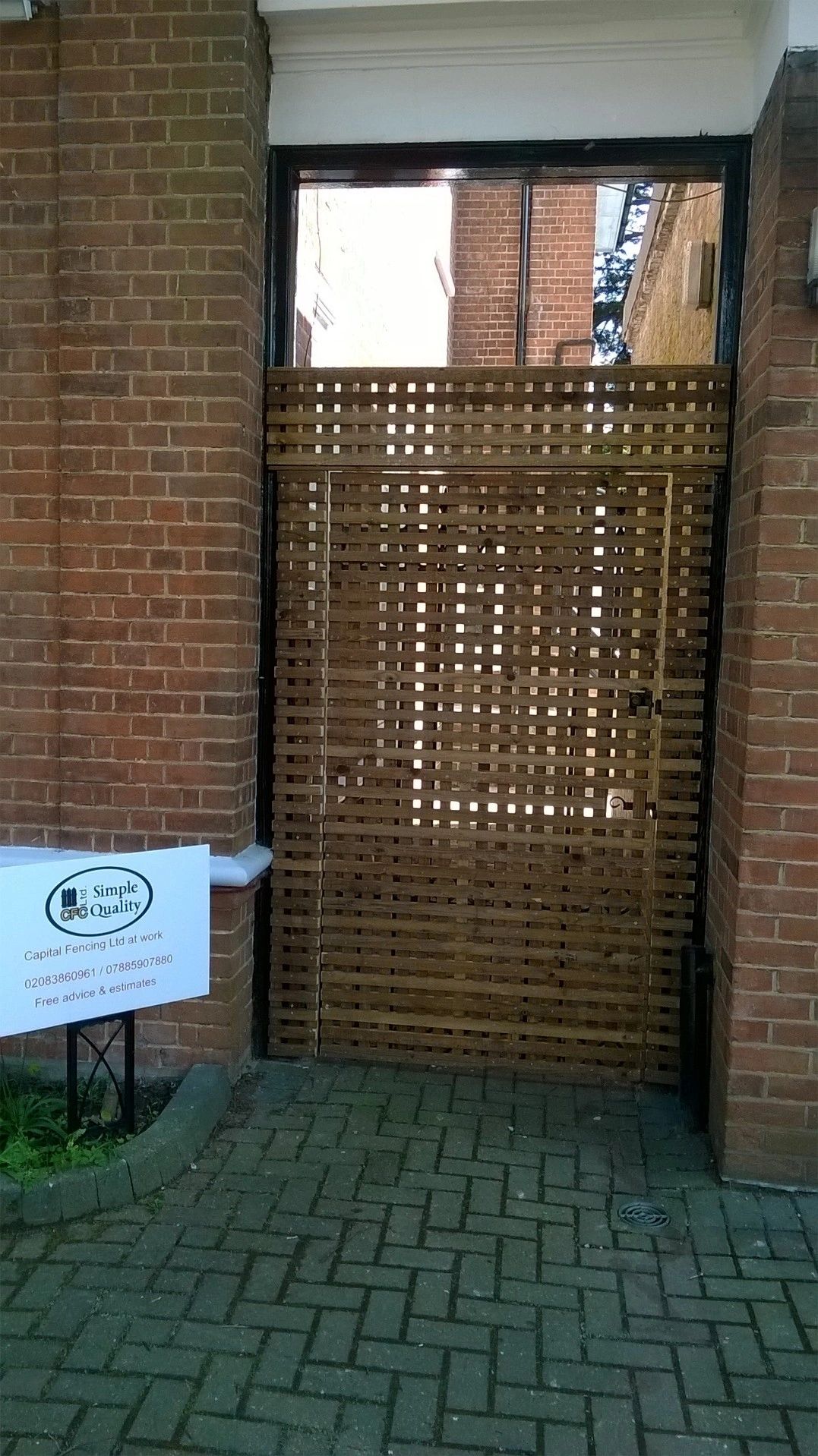
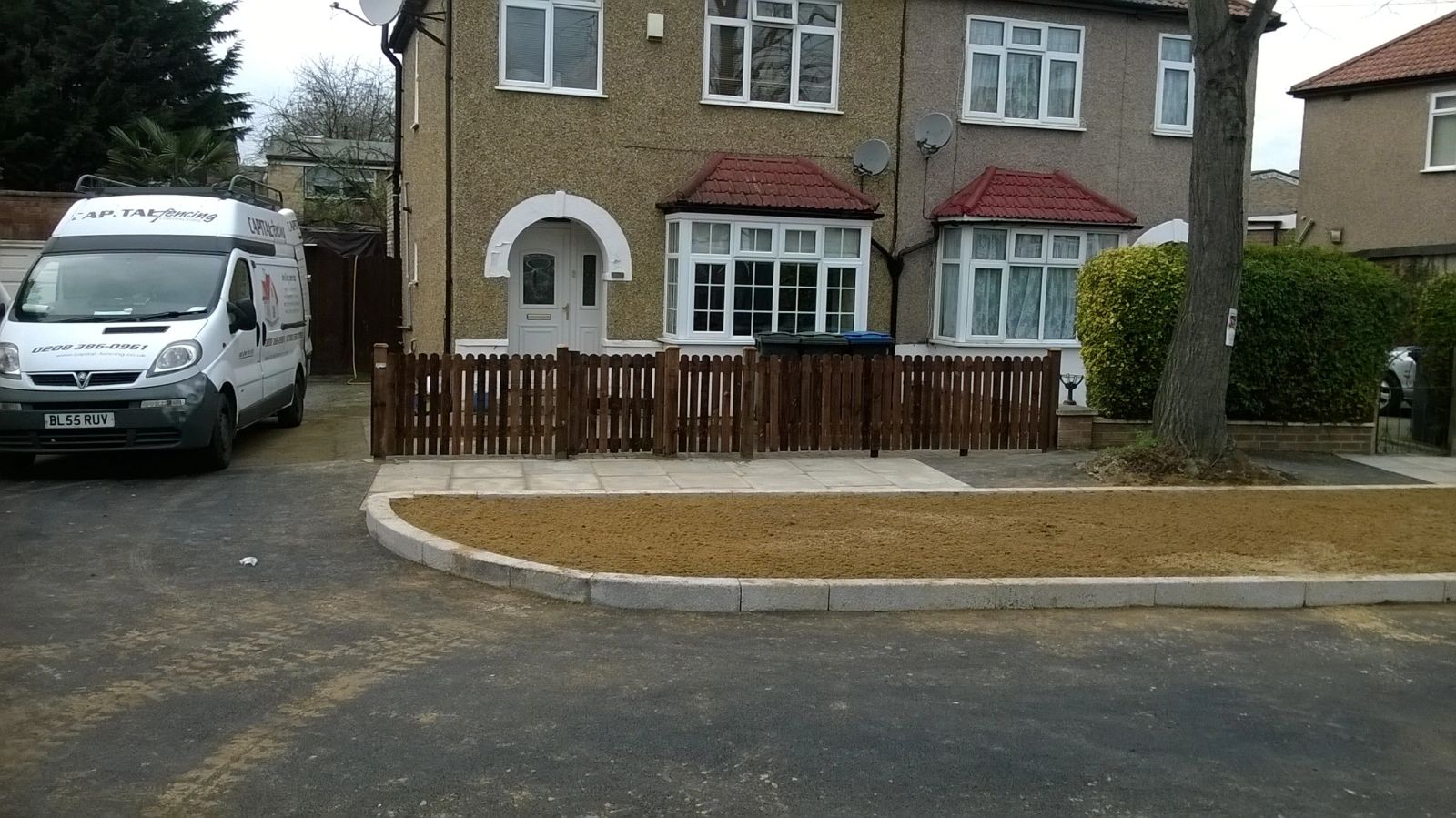
closeboard fence run installed by Capital Fencing in Hackney (E5)panel fence install installed by Capital Fencing in Hackney (E5)trellis-topped fence installed by Capital Fencing in Hackney (E5)bespoke decorative fence installed by Capital Fencing in Hackney (E5)

Local considerations across Hackney and islington

Who's responsible for a shared gate

A gate on a shared access lane or a party boundary can raise the same ownership questions as a fence, and it's worth confirming responsibility with a neighbour before paying for a repair or replacement on a gate that isn't solely on your own property.

This comes up often on older estates with shared rear access lanes serving several gardens.

Boundary ownership when a fence needs repair

A failing fence is a common trigger for a dormant boundary dispute, since neither neighbour has had reason to check who's actually responsible until something needs fixing. Where ownership isn't clear from the deeds, we recommend confirming it and notifying the neighbour in writing before repair work starts.

On a shared rear boundary between terraced gardens this is worth doing even for a straightforward panel swap.

Refitting a panel blown clear of its post clips

Slotted-post clip systems let a panel lift straight up and out under strong gusts once the clip lip has worn or bent slightly, which is a common failure on exposed corner bays rather than a sign the panel itself is faulty.

Refitting usually needs the clips checked for wear and sometimes replaced with a deeper or reinforced pattern before the same panel or a new one is dropped back in, since refitting into a worn clip just repeats the failure.

Rail configurations on a palisade or railing run

A two-rail configuration (top and bottom) suits lower runs, while anything above around 2.4m generally takes a third, mid-height rail to stop the pales flexing independently under a push or climb attempt.

Rail spacing is set so a gap doesn't become a foothold; on a taller run the middle rail is positioned deliberately off-centre rather than dead-centre, to avoid creating an even climbing ladder.

Fencing compared with a boundary wall

A masonry boundary wall generally costs more and takes longer to build than an equivalent length of timber fencing, but needs far less routine maintenance over its lifetime and can outlast several generations of fence replacement.

Walls also carry their own structural considerations — foundation depth, movement joints on longer runs, and retaining requirements on a sloping plot — that a fence largely avoids.

Mixing the two, a low wall topped with railings or a timber panel, is a common way to get some of a wall's permanence and kerb appeal without the full cost of a wall along an entire boundary.

Pressure treatment and incising

Pressure treatment (vacuum-pressure impregnation) forces preservative into the timber under pressure rather than just coating the surface, which is why treated softwood outperforms a surface-brushed equivalent even though both can look similar when new.

Denser softwoods such as redwood resist deep penetration, so posts and other high-risk sections are often incised first — small slits cut into the surface — to let preservative reach further into the timber than it otherwise would.

Incising leaves a visible pattern of shallow cuts on the timber face, which is a normal sign of proper treatment rather than a defect, though it's more noticeable on posts than on finish-grade boards.

Segregating timber and concrete waste

Treated timber, plain untreated offcuts and broken concrete are usually classed and processed differently at a waste facility, so keeping them in separate piles or skip compartments on site can reduce disposal cost and avoid a mixed load being rejected.

Old concrete post bases and gravel boards are inert waste and can sometimes be crushed and reused as hardcore rather than sent to landfill, which is worth checking with the waste carrier before assuming it all goes in one load.

Metal fittings — old hinges, bolts, wire ties — pulled out during a strip-down are usually worth separating too, since scrap metal is handled through a different route to general construction waste.

Galvanised versus painted metal fixings in exposed conditions

Hot-dip galvanising bonds a genuine zinc coating into the surface of steel and continues protecting even where the surface is scratched, since the surrounding zinc sacrificially corrodes before the underlying steel does.

A painted finish over mild steel only protects where the paint film remains intact, and once scratched or chipped the exposed steel corrodes at that point with nothing to slow it down.

For fixings, brackets and gate hardware in a genuinely exposed or coastal-influenced location, galvanised (or better, galvanised-and-painted) components noticeably outlast a plain painted finish.

Terraced gardens and stepped runs

A garden cut into level terraces, common on steeper plots across the Chilterns fringe, usually means the fence has to step down at each change of level rather than run as one continuous raked line.

Each stepped section needs its own post pair set level within that section, with the horizontal joint between sections finished cleanly rather than leaving an open triangular gap under the lower panel.

Where the terraces are formed by retaining walls rather than simple grading, the fence posts typically sit on top of the wall structure and need fixings suited to masonry rather than a standard earth-set post.

Checking joist bearing sits level across uneven support pads

Deck support posts or pads set at even so-slightly different heights throw the whole joist run out of level, which shows on the finished deck as a barely perceptible but persistent lean across its width.

Checking each support with a long level laid across several posts at once, rather than checking each post in isolation, catches a gradual drift in height across the run that individual checks would miss.

Packing shims under a joist to correct a low support point is an acceptable fix for a small discrepancy, but it isn't a substitute for getting the support posts themselves right in the first place on a new build.

Trellis toppers for extra height and privacy

Adding a trellis topper to an existing or new fence is a common way to gain extra height for climbing plants or additional privacy without exceeding permitted development limits for a solid boundary.

Because trellis is inherently more open than solid panel, it doesn't usually count the same way toward the 2m height rule in every case, but it's still worth checking with the local authority since interpretations vary.

A trellis topper needs its own bracing where it's more than a token height, since a tall panel of trellis catching wind behaves more like a sail than most people expect.

Licences for scaffold or skip on the highway

Placing a skip, scaffold or hoarding on the public highway, including the pavement outside a property, needs a licence from the council's highways team, arranged before the item arrives rather than after a complaint.

Licences typically specify lighting, cones or barriers around the obstruction overnight, a maximum duration, and sometimes a requirement for the skip to be removed or covered at weekends, with conditions varying between boroughs.

Unlicensed obstructions can result in a fixed penalty or a requirement to remove the item at short notice, so on any job needing highway space for materials or waste it's worth building the licence lead time into the programme.

Buried rubble and old foundations

Gardens that once held an outbuilding, air-raid shelter or earlier boundary wall often still have its foundation strip sitting just below turf level, invisible until an auger or spade hits it.

A shallow concrete strip footing crossing the fence line usually needs breaking out locally rather than working around it, since a post can't be reliably set on top of a narrow buried footing.

Where old foundations run the length of a boundary, it's worth probing the full run before quoting rather than assuming one trial hole represents the whole job.

Feather-edge board overlap

Feather-edge boards are sawn to a tapered profile, thick along one edge and thin along the other, and are hung vertically with each board overlapping the thin edge of its neighbour by a consistent margin, typically 15-20mm.

Getting that overlap consistent matters more than it looks, since too little overlap opens sightlines and lets wind-driven rain through as the boards shrink, while too much wastes timber and adds unnecessary weight to the rails.

Because the boards taper, the overlap measurement is usually taken at the board's face rather than assumed from its nominal width, and a badly calibrated first board throws off the spacing for the rest of the run.

Why a night-time visual check adds value to a security survey

A daytime survey shows the fence's physical condition but not how it actually performs after dark, when most intrusion attempts happen, so a short evening visit to check lighting coverage, shadow lines and visibility from the street can reveal gaps a daytime walk-round misses entirely.

This isn't always practical for every job, but it's worth offering on a higher-value commercial site where lighting and fencing are both being reviewed together.

Handling a live boundary dispute discovered during a repair

Sometimes a repair call-out uncovers that neighbours actively disagree about where the boundary line sits, which is a different situation to simply not knowing who's responsible for maintenance, and it needs resolving before any post is reset rather than worked around.

In that situation the sensible step is pausing repair work on the disputed section until the neighbours have agreed the line, since resetting a post on a disputed line can itself become evidence in the dispute.

School and nursery boundary needs

Boundaries around schools, nurseries and other settings used by children are usually specified with child safety in mind first — no horizontal rails that could be used to climb, gaps too narrow to trap a small limb, and self-closing gates with child-safe latches on any pedestrian access.

Height matters both for containment and sightlines: too high and staff lose visibility into a play area from a building; too low and it's not a meaningful boundary at all.

Any work on an occupied site with children present also has practical scheduling implications — most of this work happens outside term time or during holiday closures to avoid disruption.

Levelling ground before building a decking substructure

A decking frame built over uneven ground without first levelling or terracing the site ends up with support posts of wildly inconsistent length, which is harder to get right and more prone to individual post settlement than a site graded roughly level first.

Removing turf and topsoil under the deck footprint rather than building over it also reduces the organic material that would otherwise decompose and settle unevenly under the structure.

Where the ground has a genuine and significant fall, working out whether to terrace the ground itself or simply vary support post heights is a decision made before any joists are cut, since it changes the whole substructure design.

Schedules of condition before nearby works

A schedule of condition is a dated record, often with photographs, of a boundary structure's state before nearby building work begins, used to settle any later dispute about damage caused during that work.

Where a neighbour is undertaking significant building work close to a shared boundary, requesting this kind of record beforehand is reasonable and protects both parties.

This is distinct from a full party wall agreement but is often produced as part of the wider party wall process where one applies.

Tamper-evident caps over external fixing bolts

A plastic or metal tamper-evident cap fitted over an external bolt head shows visible signs of damage if someone has attempted to remove it, giving a maintenance team an early visual signal that a section of fence has been interfered with even where nothing has actually come loose.

This is a low-cost addition on a run where fixings are otherwise exposed, and it's most useful on a boundary that isn't checked in person every day, where interference could otherwise go unnoticed for some time.

Green belt and stock-proof boundaries

Plots backing onto green belt land, paddocks or working farmland often need a genuinely stock-proof boundary rather than a decorative garden fence, particularly where livestock graze the adjoining field.

Post-and-rail with stock netting, or a taller close-boarded run where privacy also matters, both do the job, but a standard panel fence with gaps at the base is routinely pushed through or under by sheep and larger dogs.

Any new boundary on green belt land should also be checked against local planning policy, since green belt designation adds another layer of restriction on top of the usual permitted development rules.

Protecting known cable and pipe runs during digging

Where a service run is known — marked by the utility company, visible from a meter or duct cover, or noted on a site plan — a physical marker or hand-dug trial pit at that point before general digging starts confirms its exact depth and route.

Once a service is located, leaving a visible marker such as a cane or spray line on the surface stops it being forgotten by whoever digs the next hole along the run, particularly on a multi-day job with different people digging on different days.

Ducted services are generally easier to work around than direct-buried cables since the duct itself gives some protection, but the duct can still be damaged by an auger or breaker if its depth isn't confirmed first.

On commercial yard fencing in Hackney you get the same crew from first site visit to hand-over. That's the whole model — small team, operational-grade spec, written quote before we start. Roads such as Broadway Market and Lower Clapton Road are typical of the local layout. Regent's Canal (Kingsland basin) is a useful local reference point. Hackney's Victorian terraces, particularly in E8 and E5, tend to have shallower rear gardens than the borough's suburban neighbours.

Get In Touch

Get My Free Quote — 24h Response

No callout fee · Free site visit · Friendly local team covering London & Hertfordshire.

Call us
07885907880
or 02036484746
Email
capital_fencing@yahoo.com
WhatsApp
Message us anytime
Area
London & Hertfordshire
Payment
Card payments accepted

Pay by debit or credit card, bank transfer or cash once the work and price are agreed. No deposit taken online.

Request a Free Quote

We'll get back to you within 24 hours.

Free Site Visit No Callout Fee
Call WhatsAppQuote