London & Hertfordshire Free Site Visit
closeboard fence run installed by Capital Fencing in Islington (N1)
Islington · N1 / N5 / N7 / N19 / EC1

Local commercial yard fencing specialist covering Islington & camden

Commercial yard fencing in Islington is one of our regular briefs — trade yards, self-storage sites, workshops and small industrial units. On georgian terraces around barnsbury and canonbury with compact walled rear gardens with rear-mews access on parts of Barnsbury and De Beauvoir, the failure mode we see most often is the one we design out first. Roads such as Offord Road and Barnsbury Street are typical of the local layout. Islington Green is a useful local reference point. Islington is largely built up with Georgian and Victorian terraced housing, much of it within conservation areas covering streets such as Barnsbury and Canonbury.

Commercial yard fencing in Islington is one of our regular briefs — trade yards, self-storage sites, workshops and small industrial units. On georgian terraces around barnsbury and canonbury with compact walled rear gardens with rear-mews access on parts of Barnsbury and De Beauvoir, the failure mode we see most often is the one we design out first. Roads such as Offord Road and Barnsbury Street are typical of the local layout. Islington Green is a useful local reference point. Islington is largely built up with Georgian and Victorian terraced housing, much of it within conservation areas covering streets such as Barnsbury and Canonbury.

Why this spec, for trade yards, self-storage sites, workshops and small industrial units

  • hot-dip galvanised then powder-coated finishes carry a 25-year service life on a working yard
  • gate posts sized for daily commercial cycle counts rather than domestic once-a-day operation
  • we co-ordinate with the alarm and CCTV installer so cabling routes through the posts, not around them

Typical commercial yard fencing briefs in Islington

  • hoop-top mesh around a client-visitor forecourt where palisade would look wrong
  • 2.4m palisade perimeter with anti-climb spike and matching double vehicle gates
Default spec

How we build commercial yard fencing in Islington

2.4m palisade or 358 weld-mesh, hot-dip galvanised then RAL-coded powder-coat, concrete-set 100SHS or 76CHS line posts. On Islington jobs we adjust for conservation-area consent plus tight rear-mews access makes bespoke gate and boundary work the norm.

Property mix locally: Georgian terraces around Barnsbury and Canonbury, Victorian streets in Highbury, and dense mansion blocks. Typical gardens: compact walled rear gardens with rear-mews access on parts of Barnsbury and De Beauvoir. Postcodes we regularly service: N1, N5, N7, N19, EC1.

What goes wrong

Common failure modes on commercial yard fencing

  • specifying domestic-grade hinges on a gate opening 40 times a day — six-month failure
  • not accounting for the fork-lift or delivery vehicle turning circle — the corner post gets clipped in month one

Commercial Yard Fencing FAQs — Islington

Can you integrate CCTV poles into the fence line?

On commercial yard fencing jobs in Islington (N1), our default answer is: 2.4m palisade or 358 weld-mesh, hot-dip galvanised then RAL-coded powder-coat, concrete-set 100SHS or 76CHS line posts. The honest trade-off is specifying domestic-grade hinges on a gate opening 40 times a day — six-month failure — which is exactly what our default spec designs out.

What's the lead time on made-to-measure commercial gates?

Across Islington we spec around conservation-area consent plus tight rear-mews access makes bespoke gate and boundary work the norm, so on commercial yard fencing that usually means palisade for hard perimeter security. For context: gate posts sized for daily commercial cycle counts rather than domestic once-a-day operation. Hot-dip galvanised, RAL-coded and installed to a 25-year service life.

Do you carry public liability suitable for occupied commercial sites?

Islington coverage means we can survey most N1 addresses inside a week — trade yards, self-storage sites, workshops and small industrial units. The honest trade-off is specifying domestic-grade hinges on a gate opening 40 times a day — six-month failure — which is exactly what our default spec designs out.

Do you provide out-of-hours install for occupied sites?

Practically: 2.4m palisade perimeter with anti-climb spike and matching double vehicle gates. That's the Islington version of this job, not a generic one. The honest trade-off is specifying domestic-grade hinges on a gate opening 40 times a day — six-month failure — which is exactly what our default spec designs out.

Palisade or weld-mesh — which fits my site?

On commercial yard fencing jobs in Islington (N1), our default answer is: 2.4m palisade or 358 weld-mesh, hot-dip galvanised then RAL-coded powder-coat, concrete-set 100SHS or 76CHS line posts. The honest trade-off is specifying domestic-grade hinges on a gate opening 40 times a day — six-month failure — which is exactly what our default spec designs out.

Recent commercial yard fencing work
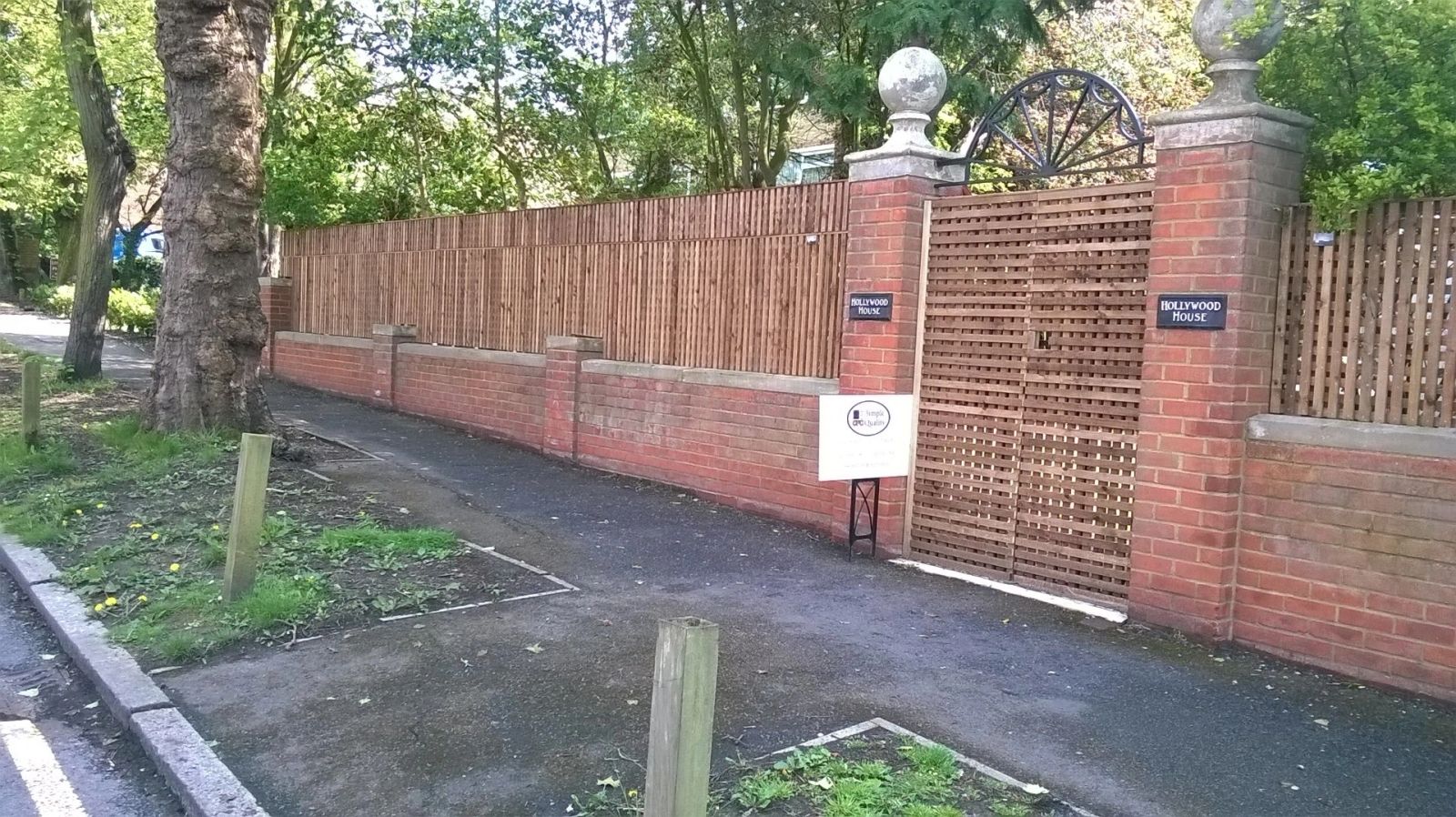
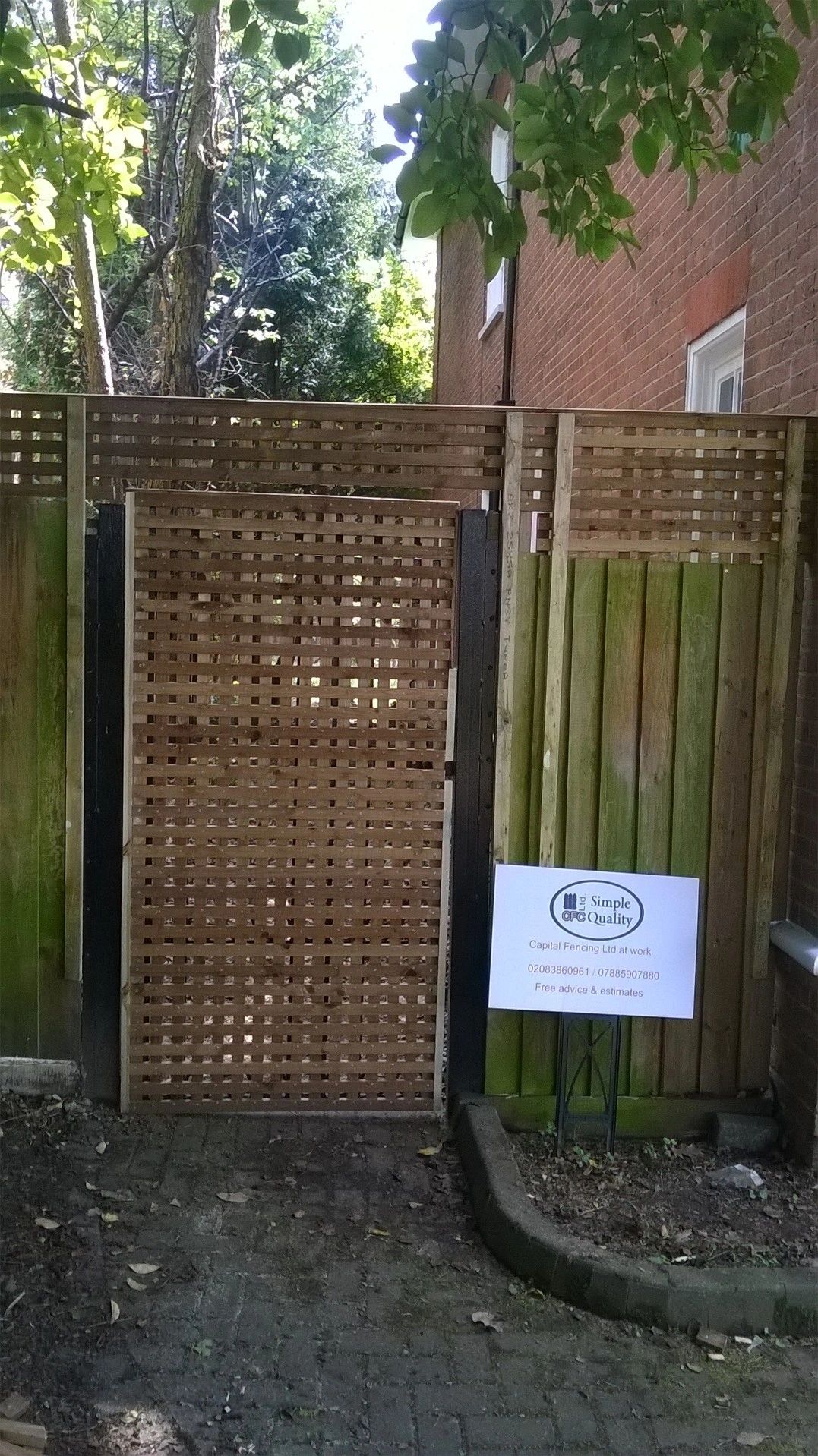
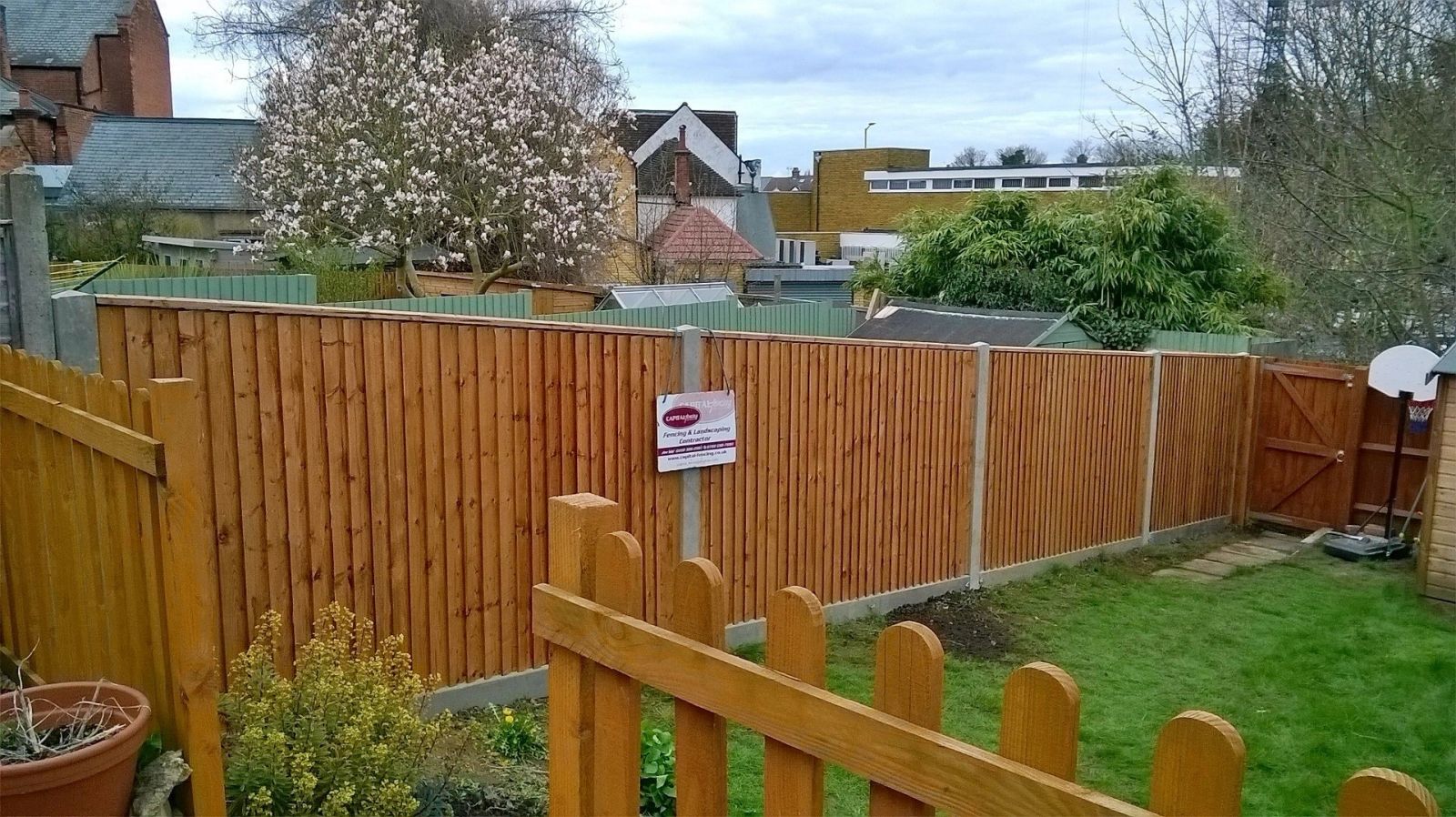
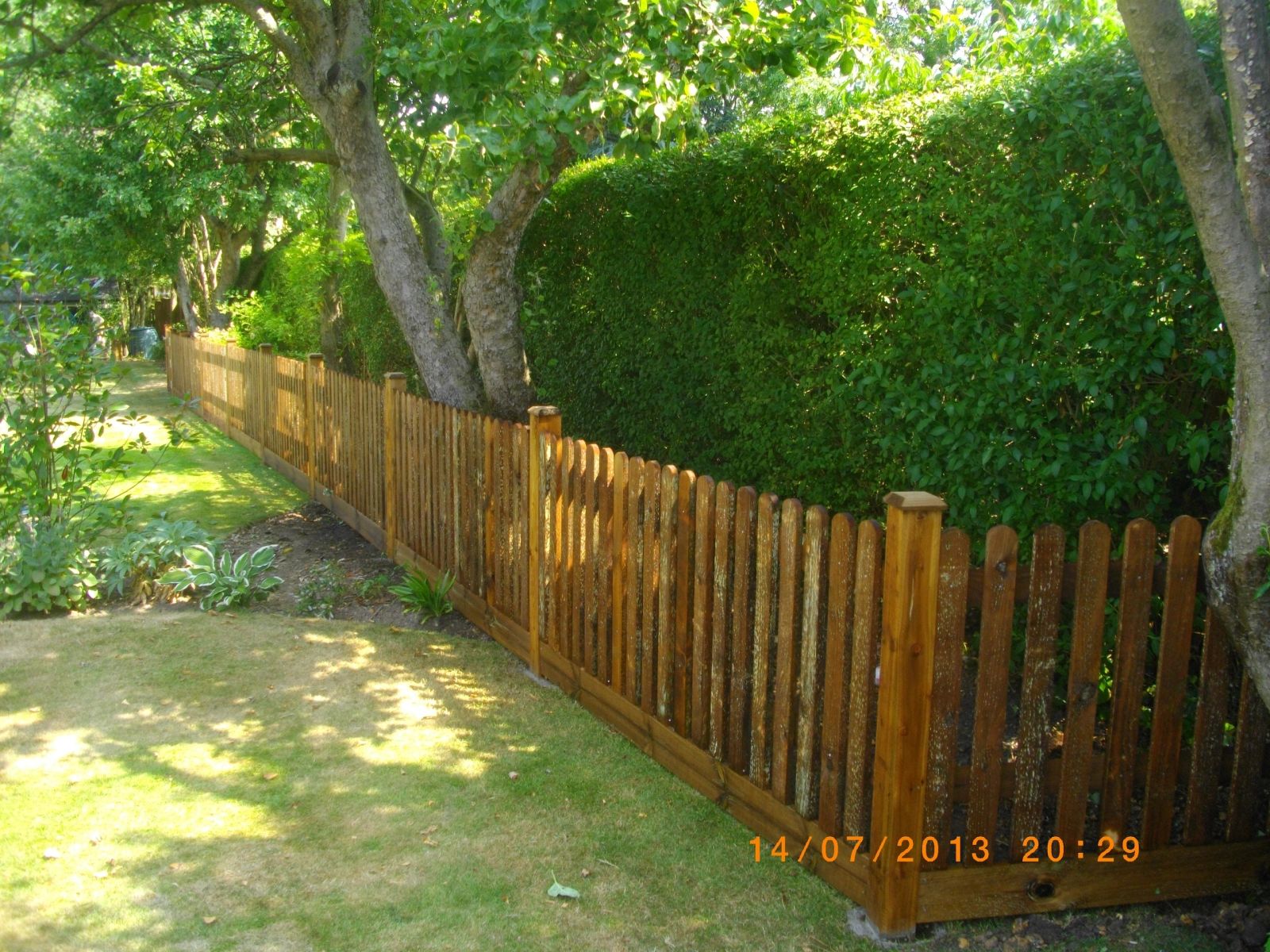
closeboard fence run installed by Capital Fencing in Islington (N1)panel fence install installed by Capital Fencing in Islington (N1)trellis-topped fence installed by Capital Fencing in Islington (N1)bespoke decorative fence installed by Capital Fencing in Islington (N1)

Before you book commercial yard fencing in Islington

Closing gaps and finger-trap risk

A gap left between a closing gate and its post or an adjacent leaf can trap fingers, particularly at a height a child would reach, and this is worth checking on any gate serving a garden used by young children.

Closing plates or adjusted hinge geometry can reduce the gap without replacing the gate itself.

Resetting versus replacing a post

A post repair is either a reset in fresh concrete where the timber itself is sound, a concrete spur bolted above a rotten section where enough good timber remains, or a full replacement where rot has reached the panel fixings.

We test each post on site with a probe at ground level rather than deciding from a visual check alone, since a post can look fine above ground and be rotten just below it.

Maintenance intervals by material

Untreated or lightly treated softwood fencing generally needs a re-stain or re-oil every one to two years to keep its protective coating intact, while a well-detailed treated softwood fence left to weather naturally can go much longer between any active maintenance.

Composite and uPVC fencing need little more than an occasional wash down, since the material itself doesn't need a protective coating, though fixings and any timber sub-frame beneath it still age on their own separate schedule.

Metal railings and gates need their finish checked periodically for scratches or corrosion starting points, since a small breach in galvanising or powder coating left untreated will spread under the coating rather than staying contained.

Corner and end-post bracing on a compound

Corner and terminal posts on a compound run carry the full tension of the mesh or panel pulling from one direction only, so they're braced with a raking strut or set in a larger concrete base than the intermediate line posts.

Skipping this bracing is a common cause of a corner leaning inward over time, well before the straight runs either side show any movement.

Working hours restrictions set by councils

Most councils set standard permitted working hours for construction noise, commonly something like 8am to 6pm on weekdays and a shorter window on Saturdays, with no noisy work at all on Sundays and bank holidays, though the exact hours vary by borough.

These restrictions apply regardless of whether formal planning permission was needed for the work itself, and are usually enforced under separate environmental health powers rather than the planning system.

On a site with a specific planning condition attached, hours can be tighter still, so it's worth checking any condition notice as well as the general council policy before committing to a start time.

Post-support metal spikes and why they loosen

A drive-in metal spike relies entirely on ground compaction around the socket for stability, so any repeated wind loading or ground softening after heavy rain gradually works the socket wider and the post starts to rock.

Once a spike has loosened it rarely re-tightens on its own; the usual fix is a larger spike bedded in fresh concrete or a switch to a concreted timber post if the ground repeatedly won't hold a spike.

Rising damp at the gravel board

A timber gravel board sitting flush against damp soil draws moisture upward by capillary action in the same way a wall can suffer rising damp, and it is usually the first component to fail on an otherwise sound fence.

Concrete gravel boards avoid this entirely and are now the standard base for that reason, but where timber boards are kept for appearance, setting them a few millimetres proud of finished ground level makes a real difference.

Backfilling right up against a timber board with topsoil or mulch defeats the point, since it holds moisture directly against the face that most needs to stay dry.

Why replacement panels sometimes need different post spacing to the originals

Panel sizing has changed slightly over past decades, and a fence originally built to an older standard width may not have a modern replacement panel that fits the existing post spacing exactly.

This becomes relevant on a partial repair where only some panels are being replaced and the remaining posts are staying in place, since a small mismatch can mean trimming a new panel down or accepting a slightly wider or narrower final bay.

It's worth measuring the actual existing post-to-post distance rather than assuming a 'standard' width will match, particularly on an older fence being partially rather than fully replaced.

Converted flats and shared bin storage

Houses converted into two or three flats often have a shared bin store or side passage boundary that wasn't part of the original single-dwelling fence layout, and responsibility for repair can be unclear where the freeholder retains the passage but individual flats use it daily.

A gate onto a shared bin store needs to be wide enough for wheelie bins to pass without lifting them over a threshold, and a self-closing latch is worth specifying so the gate isn't left open between collections.

Where flats were converted without formal division of the garden, it's worth clarifying in writing which flat is responsible for which section of boundary before starting any replacement work.

Acoustic fencing near busy roads or railways

Taller acoustic fencing intended to reduce traffic or railway noise is still subject to the same general permitted development height limits as any other boundary structure, unless it forms part of a formally consented scheme.

Some acoustic fencing along significant infrastructure is installed by the highway or rail authority itself under separate statutory powers, which is different from a homeowner adding their own noise barrier.

A homeowner wanting extra height for noise reasons alone would generally still need to apply for planning permission above the normal limit, the same as for any other reason.

Preventing warp in a gate leaf during storage before fitting

A gate leaf left leaning against a wall or stacked flat on damp ground before fitting can pick up an uneven moisture gradient across its faces, encouraging warp before it's even hung.

Storing a gate flat, supported evenly and off the ground, with both faces exposed to similar conditions, reduces the risk of a leaf arriving on site already slightly twisted.

Bracketing as a repair technique versus re-jointing

A galvanised steel bracket bridges a failed timber joint — rail to post, or post to base — without needing to cut fresh joinery into timber that may already be weakened, which makes it quicker and less invasive than re-jointing.

Bracketing is a good fit where the surrounding timber is still structurally sound but the original joint has failed; where the timber itself has degraded, a bracket bolted into softened wood won't hold regardless of how strong the bracket is.

Sanding and re-treating a timber gate

A timber gate that's greying or losing its finish benefits from a light sand back to bare or sound timber before re-treating, since coating over a failed or flaking existing finish traps moisture underneath rather than sealing it out.

This is worth doing every few years depending on exposure, well before the timber itself starts to soften or split.

Vertical picket infill on top of a mesh security panel

Adding a row of vertical steel pickets above a mesh panel gives extra height without the wind loading of a full-height solid mesh extension, and the picket spacing is kept tight enough that it doesn't create a new set of usable footholds.

This detail is common where a boundary needs to reach a taller overall height for a later phase of a site's security review without replacing the mesh panels already installed at the lower level.

Choosing hand tools over power tools on sensitive sites

A petrol auger or breaker finishes a dig far faster than hand tools but brings noise, vibration and exhaust that matter more on a site with close neighbours, a nervous pet next door, or restricted working hours.

Hand tools also give more control in tight spots — close to a wall, a root, or a service — where a powered tool's speed becomes a liability rather than an advantage.

The practical approach on most jobs is powered tools for the bulk of straightforward digging and hand tools kept ready for the awkward sections, rather than committing to one method for an entire run.

Board spacing and decking drainage

Decking boards need a consistent gap between them, usually a few millimetres, to let rainwater drain through rather than pool on the surface and accelerate algae growth or rot.

Timber that's fitted too tightly when green will open up gaps as it dries, while composite boards expand and contract with temperature and need the gap specified by the manufacturer, not guessed on site.

A deck built without a fall or slight pitch away from the house risks water sitting against the property's damp-proof course, which is a bigger problem than a slippery deck surface.

Deck board gapping to allow seasonal movement

Timber deck boards expand slightly when they absorb moisture and contract as they dry, so boards laid without a small gap between them can cup, bow or push against each other as conditions change through the year.

The correct gap depends on the moisture content of the timber at the time of laying — kiln-dried boards laid tight in winter may need a slightly wider gap than the same boards laid already at a higher moisture content in summer.

Composite boards move with temperature rather than moisture and have their own manufacturer-specified gap and expansion allowance, particularly at butt joints and against fixed edging.

Moisture at the base of a gate frame

The bottom rail of a gate frame traps moisture longer than any other part of the gate, which is why frame rot almost always starts there first — a gate hung close to ground level with poor drainage underneath will rot faster than one with a clear run-off gap.

Where a repair addresses bottom-rail rot, improving drainage at that point is usually worth doing at the same time.

Relocating a builders' compound fence as a project phases

A builders' compound fence is often installed in stages as a construction project progresses, with the secure line moving inward as completed areas are handed over and outward again if the site boundary expands into an adjoining phase.

Because compound fencing is frequently relocated, panel systems with reusable feet or block-based supports are generally favoured over concreted posts, even though a concreted post gives a more permanent fixing where the boundary line is fixed for the whole project.

Contaminated or capped land general caution

Land with a history of industrial, landfill or heavy commercial use can be capped with a clean soil or membrane layer over contaminated material below, installed specifically to prevent exposure, and breaking through that cap with a post hole risks disturbing what it was designed to contain.

Signs worth treating with caution include unusually dark or ashy soil, chemical odours, unexpected debris at shallow depth, or a site known to have had a previous industrial use even if long redeveloped for housing.

Where contamination is a realistic possibility, checking any available site history or environmental report before excavating is a sensible precaution, and hand-digging with careful observation of the spoil is safer than blind augering.

Using packers to correct a slightly out-of-true panel fit

A small gap between a panel edge and a post face, caused by a minor inconsistency in post spacing rather than a genuine error, can often be taken up with a thin timber packer rather than re-digging and resetting the post.

Packers need fixing securely rather than simply wedged in, since a loose packer left to rattle under wind load will eventually work its way out and leave the original gap again.

Repeated packing along a run is a sign the underlying setting-out was slightly off rather than a one-off issue, and it's worth checking overall spacing again if more than an occasional panel needs correcting this way.

Reading a scrape mark on the ground or paving

A worn arc or scrape mark on paving beneath a gate's swing shows exactly where the gate is currently dragging, and its position — near the hinge end, the latch end, or evenly across the arc — indicates whether the fault is a dropped hinge, a racked frame, or a ground level change.

This kind of visual evidence is often more reliable than the gate owner's description of when the problem started, since gradual drops are easy to underestimate.

Trade yards, self-storage sites, workshops and small industrial units — that's who this page is for. In Islington and out to Islington, we run the commercial yard fencing spec that survives conservation-area consent plus tight rear-mews access makes bespoke gate and boundary work the norm. Roads such as Barnsbury Street and Offord Road are typical of the local layout. Highbury Fields is a useful local reference point. Islington is largely built up with Georgian and Victorian terraced housing, much of it within conservation areas covering streets such as Barnsbury and Canonbury.

Get In Touch

Get My Free Quote — 24h Response

No callout fee · Free site visit · Friendly local team covering London & Hertfordshire.

Call us
07885907880
or 02036484746
Email
capital_fencing@yahoo.com
WhatsApp
Message us anytime
Area
London & Hertfordshire
Payment
Card payments accepted

Pay by debit or credit card, bank transfer or cash once the work and price are agreed. No deposit taken online.

Request a Free Quote

We'll get back to you within 24 hours.

Free Site Visit No Callout Fee
Call WhatsAppQuote