London & Hertfordshire Free Site Visit
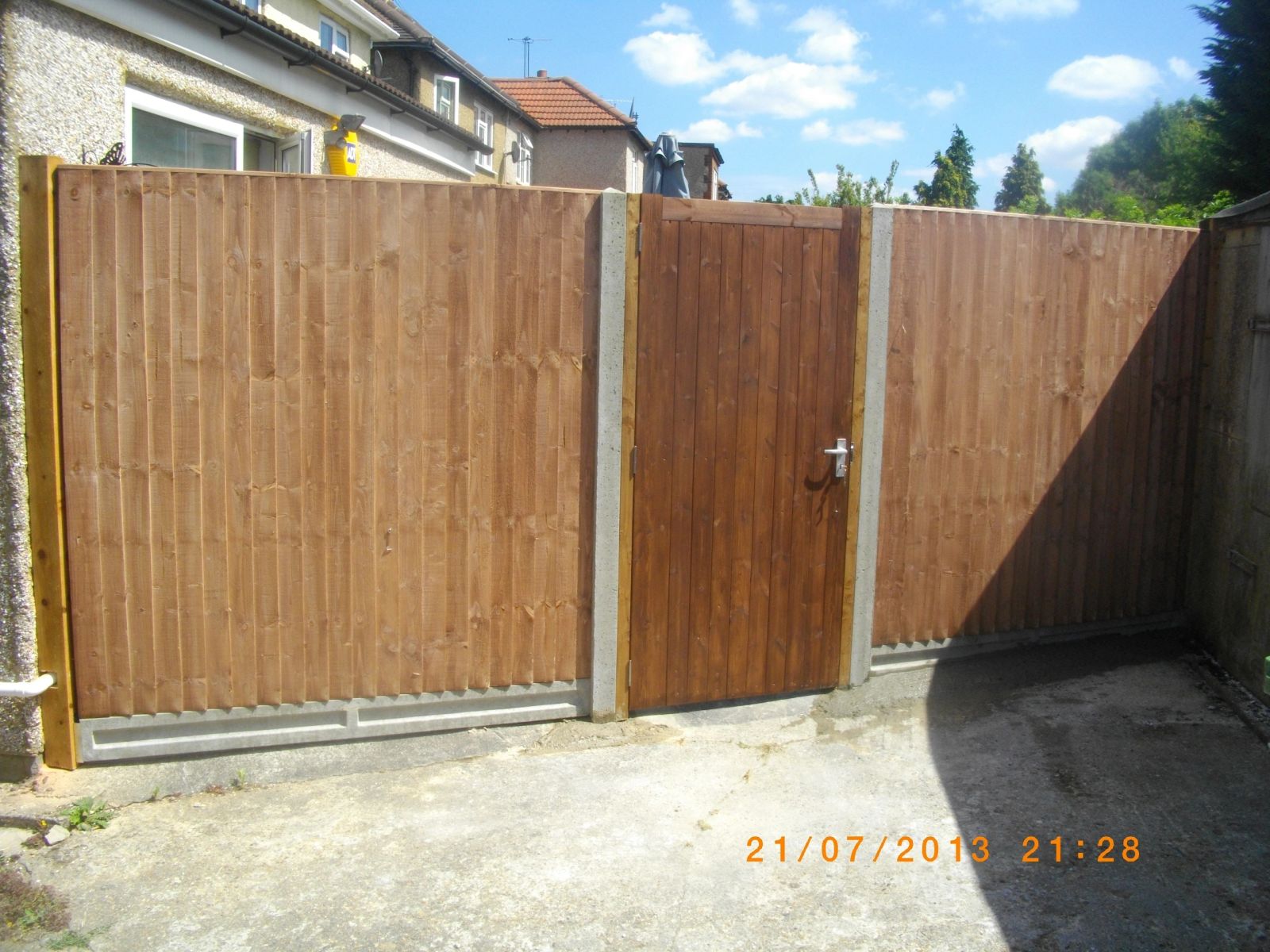
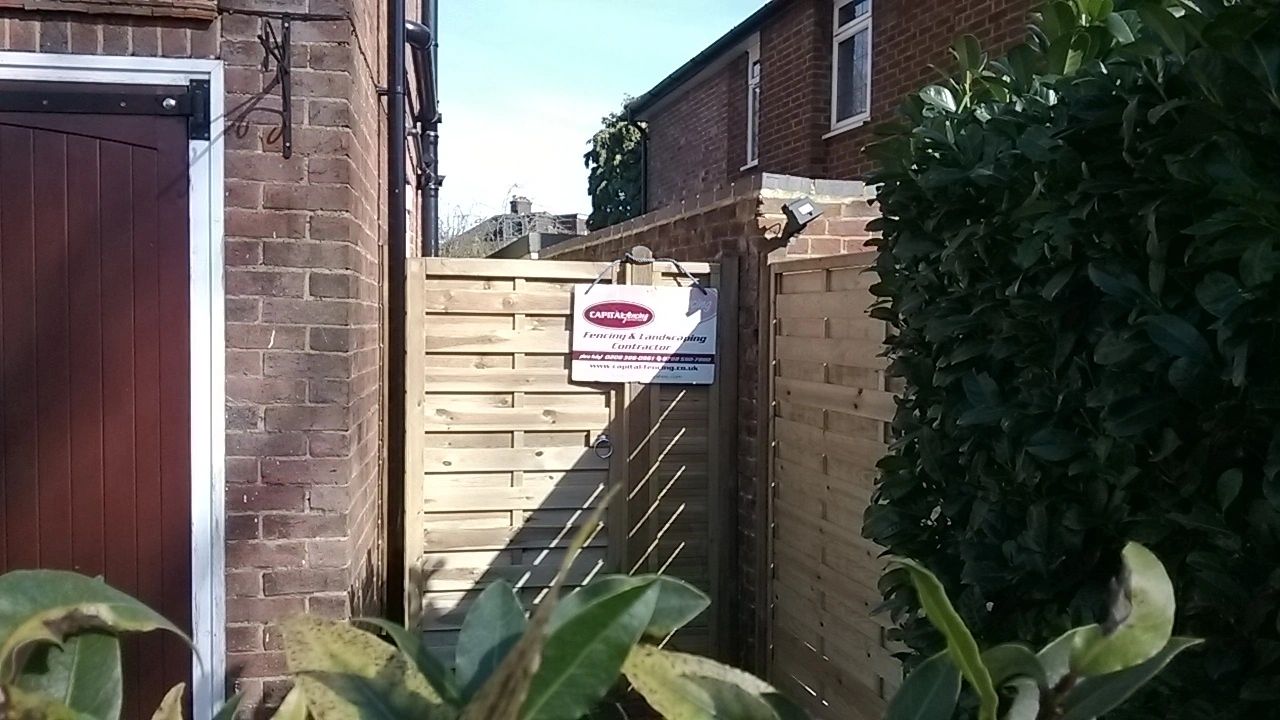
bespoke wooden gate installed by Capital Fencing in Enfield (EN1)
Enfield · EN1 / EN2 / EN3

Pedestrian Side Gates in Enfield (EN1)

Pedestrian Side Gates in Enfield is a specific brief for us — single-leaf pedestrian gates matched into existing fencing runs. The default local answer isn't a stock catalogue drop: it's single leaf on ball-race hinges, thumb-latch and dead-locking hardware, closing stop and drop-bolt where security is a priority. On Enfield sites we also spec around high winds funnelled down the lea valley regularly knock over weaker panel fences, which is where a lot of pedestrian side gates jobs quietly fail two years in. Roads such as Baker Street and Lancaster Road are typical of the local layout. Enfield Town Park is a useful local reference point. Enfield spans a wide area from the Victorian terraces of EN1 town centre through the mature suburbs of EN2 to the industrial estates near Brimsdown in EN3, close to the Lee Valley.

Pedestrian Side Gates in Enfield is a specific brief for us — single-leaf pedestrian gates matched into existing fencing runs. The default local answer isn't a stock catalogue drop: it's single leaf on ball-race hinges, thumb-latch and dead-locking hardware, closing stop and drop-bolt where security is a priority. On Enfield sites we also spec around high winds funnelled down the lea valley regularly knock over weaker panel fences, which is where a lot of pedestrian side gates jobs quietly fail two years in. Roads such as Baker Street and Lancaster Road are typical of the local layout. Enfield Town Park is a useful local reference point. Enfield spans a wide area from the Victorian terraces of EN1 town centre through the mature suburbs of EN2 to the industrial estates near Brimsdown in EN3, close to the Lee Valley.

Default spec

How we build pedestrian side gates in Enfield

single leaf on ball-race hinges, thumb-latch and dead-locking hardware, closing stop and drop-bolt where security is a priority. On Enfield jobs we adjust for high winds funnelled down the lea valley regularly knock over weaker panel fences.

Property mix locally: interwar semis, 1960s estates and pockets of Georgian housing around Forty Hill. Typical gardens: medium-depth gardens that often back onto alleyways — access is the deciding factor. Postcodes we regularly service: EN1, EN2, EN3.

Why this spec, for single-leaf pedestrian gates matched into existing fencing runs

  • carried in as a like-for-like match to what's already there — no visible new post
  • hinge and latch geometry sized for daily use rather than as a one-off decorative piece
  • installed with the closing stop and latch in one visit so nothing has to be revisited

Where pedestrian side gates isn't the right answer

  • openings needing regulated safeguarding hardware — that's the school-and-nursery spec
  • wall openings where the masonry isn't sound enough to carry the load — brick repair goes first

Typical pedestrian side gates briefs in Enfield

  • single 900mm pedestrian gate cut into an existing closeboard run
  • matched picket gate into a painted picket frontage

Pedestrian Side Gates FAQs — Enfield

Can a pedestrian gate go through a brick wall opening?

On pedestrian side gates jobs in Enfield (EN1), our default answer is: single leaf on ball-race hinges, thumb-latch and dead-locking hardware, closing stop and drop-bolt where security is a priority. We'll walk you through carried in as a like-for-like match to what's already there — no visible new post on the site visit before you commit.

Can you match a new pedestrian gate into my existing fence?

Across Enfield we spec around high winds funnelled down the lea valley regularly knock over weaker panel fences, so on pedestrian side gates that usually means closeboard-matched softwood for behind-the-house lines. We'll walk you through carried in as a like-for-like match to what's already there — no visible new post on the site visit before you commit.

Do you fit the latch and any hardware on the same visit?

Enfield coverage means we can survey most EN1 addresses inside a week — single-leaf pedestrian gates matched into existing fencing runs. The honest trade-off is hinging off the last post of an old fence run — the post moves and the gate stops closing within weeks — which is exactly what our default spec designs out.

What hinges do you use so the gate doesn't drop?

Practically: single 900mm pedestrian gate cut into an existing closeboard run. That's the Enfield version of this job, not a generic one. For context: hinge and latch geometry sized for daily use rather than as a one-off decorative piece. Measured, quoted and installed by the same small crew.

Can the gate be sized to an unusual opening?

On pedestrian side gates jobs in Enfield (EN1), our default answer is: single leaf on ball-race hinges, thumb-latch and dead-locking hardware, closing stop and drop-bolt where security is a priority. For context: hinge and latch geometry sized for daily use rather than as a one-off decorative piece. Measured, quoted and installed by the same small crew.

Recent pedestrian side gates work
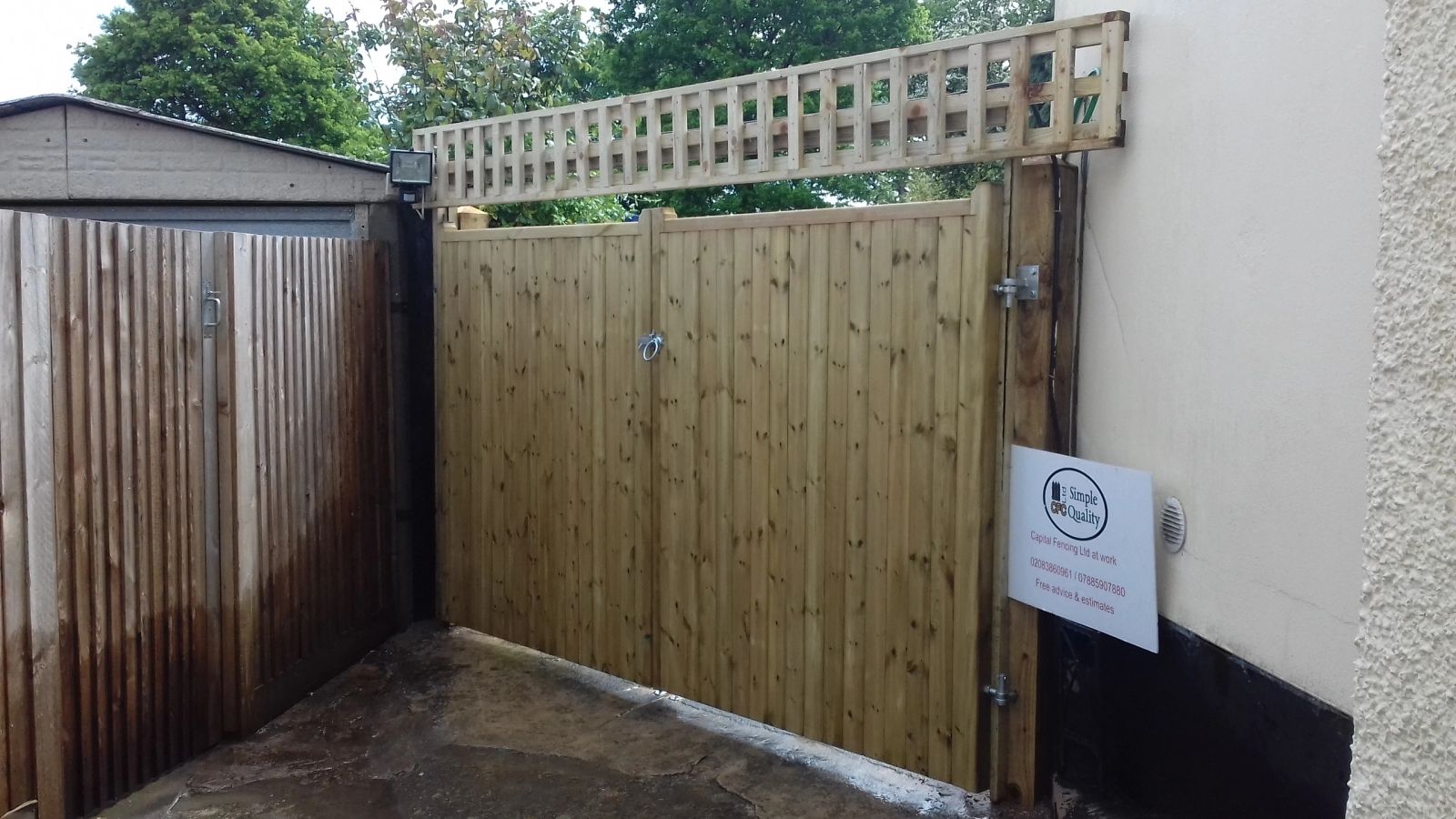
bespoke wooden gate installed by Capital Fencing in Enfield (EN1)double driveway gates installed by Capital Fencing in Enfield (EN1)hardwood side gate installed by Capital Fencing in Enfield (EN1)metal entrance gate installed by Capital Fencing in Enfield (EN1)

Before you book pedestrian side gates in Enfield

Padlock and hasp standards

Padlocks are commonly rated to a recognised standard covering resistance to cutting, drilling and picking, and a high-security hasp is only as good as the padlock fitted to it — pairing a budget padlock with a heavy-duty hasp undermines the whole fitting.

A closed-shackle or shrouded hasp design protects the padlock body from bolt-croppers, which is the more common attack on an exposed gate than picking.

Gate design on exposed, high-wind sites

A gate on an exposed hilltop or coastal-facing plot experiences far higher wind loading than an equivalent gate in a sheltered urban garden, and a solid-boarded gate in particular acts like a sail under those conditions, putting extra strain on hinges and latch.

Specifying heavier-duty hinges, a lower solid-to-open ratio in the infill, or additional bracing are all ways to address this on a site known to be exposed.

Positioning posts relative to existing paving slabs

A post position that lands directly on or straddling an existing paving slab or patio edge either means lifting and relaying that slab, or nudging the post along the line to land in a joint or open ground instead.

Where lifting a slab is unavoidable, checking what's bedded underneath — a solid mortar base rather than loose sand — before committing to reinstating it in the same spot avoids an unpleasant surprise partway through.

On a patio the client wants kept intact, agreeing acceptable post positions against the actual slab layout at the survey stage avoids a decision being made on the day between two imperfect options.

Snow load and drifting against capping

Snow rarely loads a vertical fence face directly, but it drifts and settles along the top of a run, especially against capping or trellis toppers that catch and hold it rather than shedding it.

A sustained thaw-freeze cycle on wet capping timber is a common cause of splitting, since water trapped in the grain expands as it freezes and opens up hairline cracks that widen each winter.

A capping profile with a slight fall to shed water, rather than a flat top, reduces how much moisture sits there in the first place.

Managing noise during a security fence installation

Post-hole augering, breaking out old concrete footings and cutting steel palisade to length all generate noise that's worth flagging to neighbours or site occupants in advance, particularly on a compound or commercial job with fixed working hours nearby.

Where a site has noise-sensitive neighbours, sequencing louder tasks earlier in the working day and confining cutting to one area reduces the disruption without slowing the job significantly.

Reading a scrape mark on the ground or paving

A worn arc or scrape mark on paving beneath a gate's swing shows exactly where the gate is currently dragging, and its position — near the hinge end, the latch end, or evenly across the arc — indicates whether the fault is a dropped hinge, a racked frame, or a ground level change.

This kind of visual evidence is often more reliable than the gate owner's description of when the problem started, since gradual drops are easy to underestimate.

Softwood species used in fencing

Most UK fencing timber is a European redwood or whitewood softwood, chosen for cost and workability rather than natural durability, which is why it's almost always sold pressure-treated rather than untreated.

Redwood (Scots pine) takes preservative more readily than whitewood (spruce) because of its structure, which is part of why it's the more common species specified for treated fencing components.

Species alone isn't a durability guarantee — the treatment class and detailing (post caps, gravel boards, drainage at the base) generally matter more to service life than which softwood was used underneath it.

Mesh infill security gates

A mesh security gate uses a welded steel mesh panel within a frame rather than solid boarding, giving visibility through the gate while still resisting climbing, and the mesh-to-frame weld or clip fixing is the usual point of failure rather than the frame itself.

A mesh panel that's come loose from its frame at one corner will often rattle before it fully detaches, which is worth catching early.

Striker plate material and post protection

A metal striker plate let into the post protects the timber from repeated latch impact and gives the latch bolt a hard, true surface to engage with, rather than relying on the post timber itself to take that wear.

A post without a striker plate develops a worn, rounded hole around the latch opening over time, which eventually stops the latch holding securely even if realigned.

Decking board profiles and grooves

Timber decking boards commonly come grooved (ribbed) on the top face for grip, reversible to a smooth face for a more contemporary look, or with a rounded profile that sheds water more readily but offers less traction underfoot.

Grooved boards trap dirt and moisture in the channels more than a smooth or rounded profile, so they need more regular brushing or washing to avoid becoming slippery with algae, particularly in shaded, damp positions.

Composite boards are usually extruded with a fixed groove or embossed texture rather than milled, and the profile is generally part of a wider system with matching edge trims rather than a feature that can be mixed freely between board types.

Opening size tolerance for a new gate

A new gate needs to be built slightly narrower than the measured opening to allow clearance for hinges, swing and seasonal timber movement, and getting this tolerance wrong either leaves a gate that binds in wet weather or one with an unacceptably large gap either side.

The right tolerance also depends on the hinge type specified, since a hinge that sits proud of the post face takes up more of that clearance than a flush-fitting type.

Garden levels raised by decking or patios

A raised deck or built-up patio on one side of a boundary can leave the finished surface level noticeably higher than the fence's original ground-level reference, sometimes reducing the effective fence height as seen from that side.

Where a neighbour raises their ground level after a fence is already installed, drainage that previously ran away from the fence can be redirected toward it, so it's worth checking finished levels on both sides before agreeing a new fence height or base detail.

A fence installed at the same time as a client's own raised patio should account for the new level from the outset, rather than being set to the pre-existing grade and later needing extension.

Matching a discontinued panel style

Panel profiles and slat widths change between manufacturers and over time, so a boundary installed a decade or more ago may use a profile that's no longer produced.

Where an exact match isn't available, the closest equivalent height and style is used and the mismatch is pointed out honestly rather than presented as an exact replacement.

Dust and noise control in a tight garden

Cutting timber, breaking out old concrete bases or using a petrol auger all generate noise and dust that carries further in a small enclosed garden between close-set houses than on an open plot.

Local authorities can restrict noisy work hours under the Control of Pollution Act, and even where no formal restriction applies, starting before a reasonable hour or working into the evening is one of the fastest ways to draw a neighbour complaint.

Sheeting off concrete-cutting dust and keeping cut ends away from a neighbour's washing line or open windows is a small step that avoids most of the friction on a shared boundary job.

Temporary propping and making safe

Where a full repair can't happen immediately, a leaning panel or post can be temporarily propped or strapped to stop it falling further, which reduces risk without committing to the final repair method on the spot.

Temporary propping is treated as exactly that — a stopgap — since a prop left in place over a wet season can itself start to sink or shift in soft ground.

Salvaging reusable timber during a repair

Not every board or rail on a damaged run needs replacing — sound timber from a section being taken down for other reasons can sometimes be reused elsewhere on the same boundary.

Reused timber is checked for rot and fixing damage before refitting, since timber that looks sound from one face can be split or split-prone where an old fixing has been removed.

Disposing of rotten timber and green waste from a repair

Rotten fence timber is general waste rather than green waste, and larger quantities from a full-run repair usually need a licensed waste carrier or a permitted tip run rather than a domestic green bin, which only takes garden material.

Treated timber in particular shouldn't be burned on site, since older treatments can contain preservatives that produce harmful smoke, so timber waste from a repair should be taken away rather than disposed of on the plot.

Planed versus sawn timber faces

Sawn timber retains the rough, slightly fibrous surface left by the mill saw, which holds paint and stain better initially but can also hold moisture and dirt in the surface fibres for longer after rain.

Planed, or PAR (planed all round), timber has a smooth, machined finish that looks tidier and is more pleasant to handle, but its closed surface can mean stain sits on top rather than soaking in, needing more frequent reapplication.

Fencing components are commonly specified as sawn for structural parts like posts and rails and planed for visible features like capping, reflecting the balance between weathering performance and finished appearance.

How garden slope affects water shedding along a fence base

On a sloped garden, water naturally runs along the base of a fence line toward the lowest point, which means the downhill end of a run often sits in wetter ground than the uphill end even though both were built to the same specification.

This uneven exposure is a common reason why one end of an otherwise uniform fence needs gravel board replacement years before the rest.

A shallow cross-fall drainage channel or a slightly raised gravel board at the low point can intercept some of this flow before it pools against the timber.

Sequencing work when more than one person is digging

On a longer run with more than one person digging simultaneously, working from both ends toward the middle rather than each person working independently along the same stretch reduces the risk of small setting-out errors compounding in the middle of the run.

Whoever sets out the string line and corner points needs to communicate any adjustment immediately to everyone digging, since a post dug to an outdated mark before a correction is passed on means redoing that hole.

Checking in at the midpoint, where the two ends meet, catches any accumulated drift before panels are ordered or cut to a spacing that assumed the line stayed perfectly true throughout.

Repair-versus-replace where the original fence style is discontinued

Where a damaged section uses a panel style, board profile or post section that's no longer manufactured, a close match might be achievable for a small repair, but a larger area of damage can tip the balance toward replacing the whole run in a current style rather than chasing an increasingly poor match.

This is a judgement client conversation as much as a technical one, since some clients prioritise keeping the existing look even with a visible join, while others would rather have a uniform new run.

Public liability considerations on a shared boundary

Work that takes place on or near a shared boundary inherently affects two properties, which is one reason contractors carry public liability insurance covering damage or injury arising from the works, generally quite separate from any specific job guarantee.

Clients are entitled to ask to see a contractor's current public liability certificate before work starts, and for jobs involving excavation near a neighbour's structure or a shared wall it's reasonable practice to confirm cover explicitly rather than assume it.

This is a generic industry consideration rather than a claim about any particular policy, and the details of cover, exclusions and limits vary between insurers and should be checked directly with the provider.

Single-leaf pedestrian gates matched into existing fencing runs — that's who this page is for. In Enfield and out to Enfield, we run the pedestrian side gates spec that survives high winds funnelled down the lea valley regularly knock over weaker panel fences. Roads such as Hertford Road and Silver Street are typical of the local layout. Lee Valley Park is a useful local reference point. Forty Hall, a Grade I listed Jacobean mansion, sits within its own historic parkland on the town's northern edge.

Get In Touch

Get My Free Quote — 24h Response

No callout fee · Free site visit · Friendly local team covering London & Hertfordshire.

Call us
07885907880
or 02036484746
Email
capital_fencing@yahoo.com
WhatsApp
Message us anytime
Area
London & Hertfordshire
Payment
Card payments accepted

Pay by debit or credit card, bank transfer or cash once the work and price are agreed. No deposit taken online.

Request a Free Quote

We'll get back to you within 24 hours.

Free Site Visit No Callout Fee
Call WhatsAppQuote