London & Hertfordshire Free Site Visit
bespoke wooden gate installed by Capital Fencing in St Albans (AL1)
St Albans · AL1 / AL2 / AL3 / AL4

Local pedestrian side gates specialist covering St Albans & hatfield

Pedestrian Side Gates in St Albans is a specific brief for us — single-leaf pedestrian gates matched into existing fencing runs. The default local answer isn't a stock catalogue drop: it's single leaf on ball-race hinges, thumb-latch and dead-locking hardware, closing stop and drop-bolt where security is a priority. On St Albans sites we also spec around extensive conservation areas mean fence heights and materials need to match the streetscape, which is where a lot of pedestrian side gates jobs quietly fail two years in. Roads such as Beaconsfield Road and Hatfield Road are typical of the local layout. St Albans Cathedral is a useful local reference point. Marshalswick and Jersey Farm, on the town's outer edge, sit outside the conservation areas and were developed as twentieth-century suburbs with more standard plot layouts.

Pedestrian Side Gates in St Albans is a specific brief for us — single-leaf pedestrian gates matched into existing fencing runs. The default local answer isn't a stock catalogue drop: it's single leaf on ball-race hinges, thumb-latch and dead-locking hardware, closing stop and drop-bolt where security is a priority. On St Albans sites we also spec around extensive conservation areas mean fence heights and materials need to match the streetscape, which is where a lot of pedestrian side gates jobs quietly fail two years in. Roads such as Beaconsfield Road and Hatfield Road are typical of the local layout. St Albans Cathedral is a useful local reference point. Marshalswick and Jersey Farm, on the town's outer edge, sit outside the conservation areas and were developed as twentieth-century suburbs with more standard plot layouts.

What goes wrong

Common failure modes on pedestrian side gates

  • hinging off the last post of an old fence run — the post moves and the gate stops closing within weeks
  • specifying a decorative latch not rated for daily use — hardware fatigue inside a year
Default spec

How we build pedestrian side gates in St Albans

single leaf on ball-race hinges, thumb-latch and dead-locking hardware, closing stop and drop-bolt where security is a priority. On St Albans jobs we adjust for extensive conservation areas mean fence heights and materials need to match the streetscape.

Property mix locally: Victorian terraces, Edwardian villas in Marshalswick, and Tudor / Georgian properties near the cathedral. Typical gardens: mature gardens, often with established hedging that needs lifting before fencing goes in. Postcodes we regularly service: AL1, AL2, AL3, AL4.

Why this spec, for single-leaf pedestrian gates matched into existing fencing runs

  • carried in as a like-for-like match to what's already there — no visible new post
  • hinge and latch geometry sized for daily use rather than as a one-off decorative piece
  • installed with the closing stop and latch in one visit so nothing has to be revisited

Typical pedestrian side gates briefs in St Albans

  • hardwood pedestrian gate through a brick garden wall opening
  • single 900mm pedestrian gate cut into an existing closeboard run

Pedestrian Side Gates FAQs — St Albans

Do you fit the latch and any hardware on the same visit?

On pedestrian side gates jobs in St Albans (AL1), our default answer is: single leaf on ball-race hinges, thumb-latch and dead-locking hardware, closing stop and drop-bolt where security is a priority. The honest trade-off is hinging off the last post of an old fence run — the post moves and the gate stops closing within weeks — which is exactly what our default spec designs out.

Can the gate be sized to an unusual opening?

Across St Albans we spec around extensive conservation areas mean fence heights and materials need to match the streetscape, so on pedestrian side gates that usually means closeboard-matched softwood for behind-the-house lines. The honest trade-off is hinging off the last post of an old fence run — the post moves and the gate stops closing within weeks — which is exactly what our default spec designs out.

What hinges do you use so the gate doesn't drop?

St Albans City and District coverage means we can survey most AL1 addresses inside a week — single-leaf pedestrian gates matched into existing fencing runs. The honest trade-off is hinging off the last post of an old fence run — the post moves and the gate stops closing within weeks — which is exactly what our default spec designs out.

How do I keep the gate closed without a spring hinge?

Practically: single 900mm pedestrian gate cut into an existing closeboard run. That's the St Albans version of this job, not a generic one. The honest trade-off is hinging off the last post of an old fence run — the post moves and the gate stops closing within weeks — which is exactly what our default spec designs out.

Can you match a new pedestrian gate into my existing fence?

On pedestrian side gates jobs in St Albans (AL1), our default answer is: single leaf on ball-race hinges, thumb-latch and dead-locking hardware, closing stop and drop-bolt where security is a priority. The honest trade-off is hinging off the last post of an old fence run — the post moves and the gate stops closing within weeks — which is exactly what our default spec designs out.

Recent pedestrian side gates work
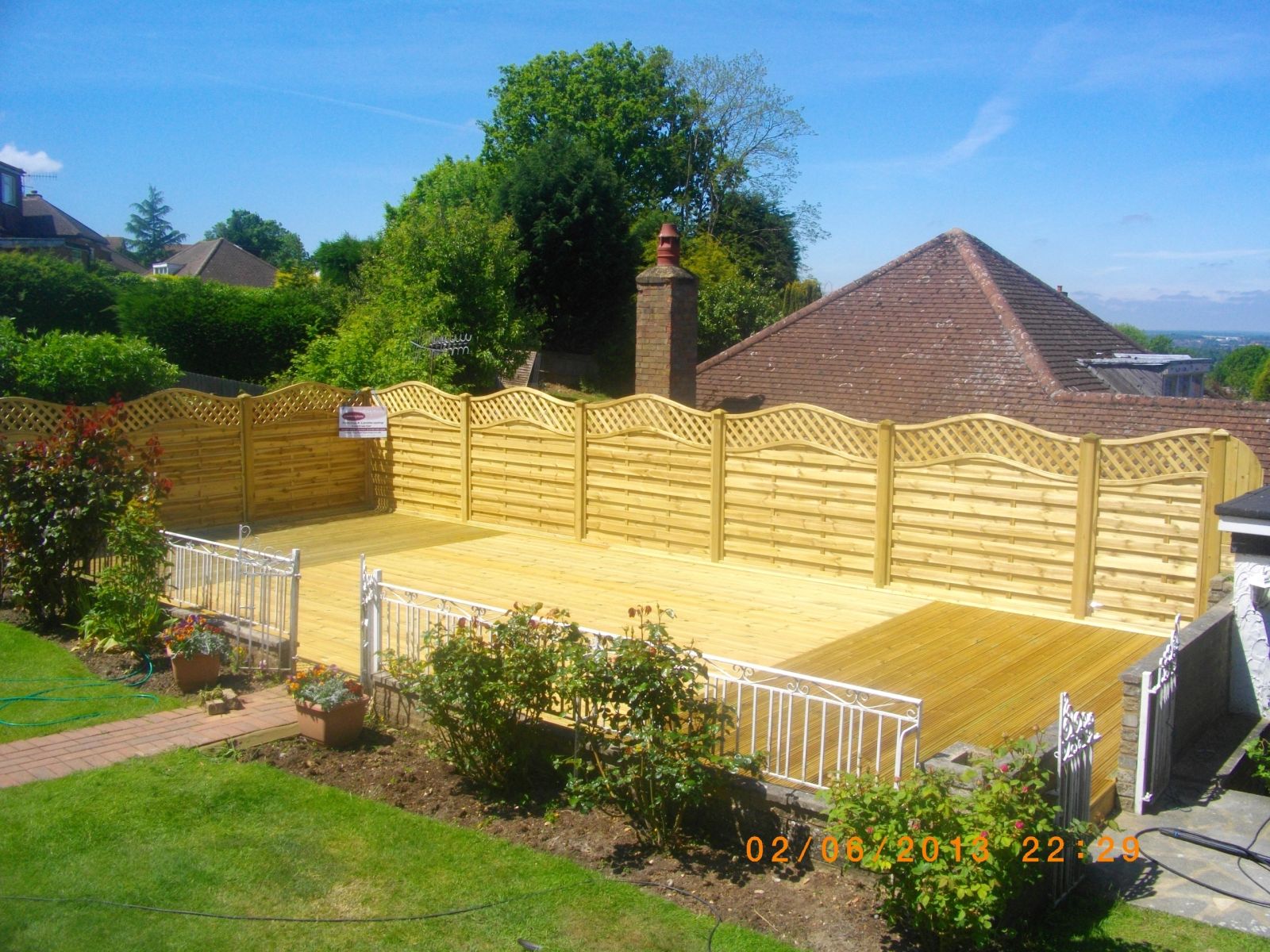
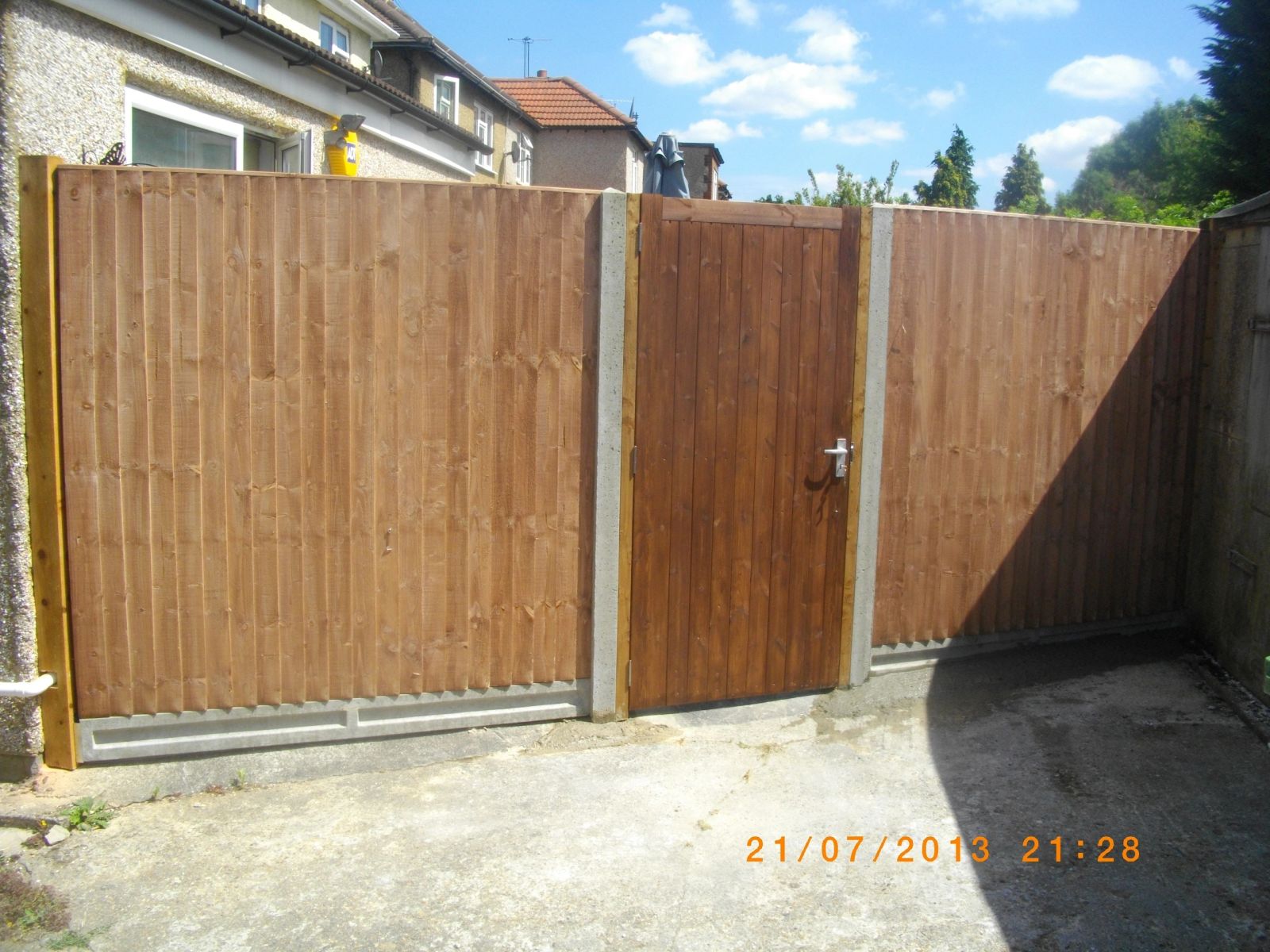
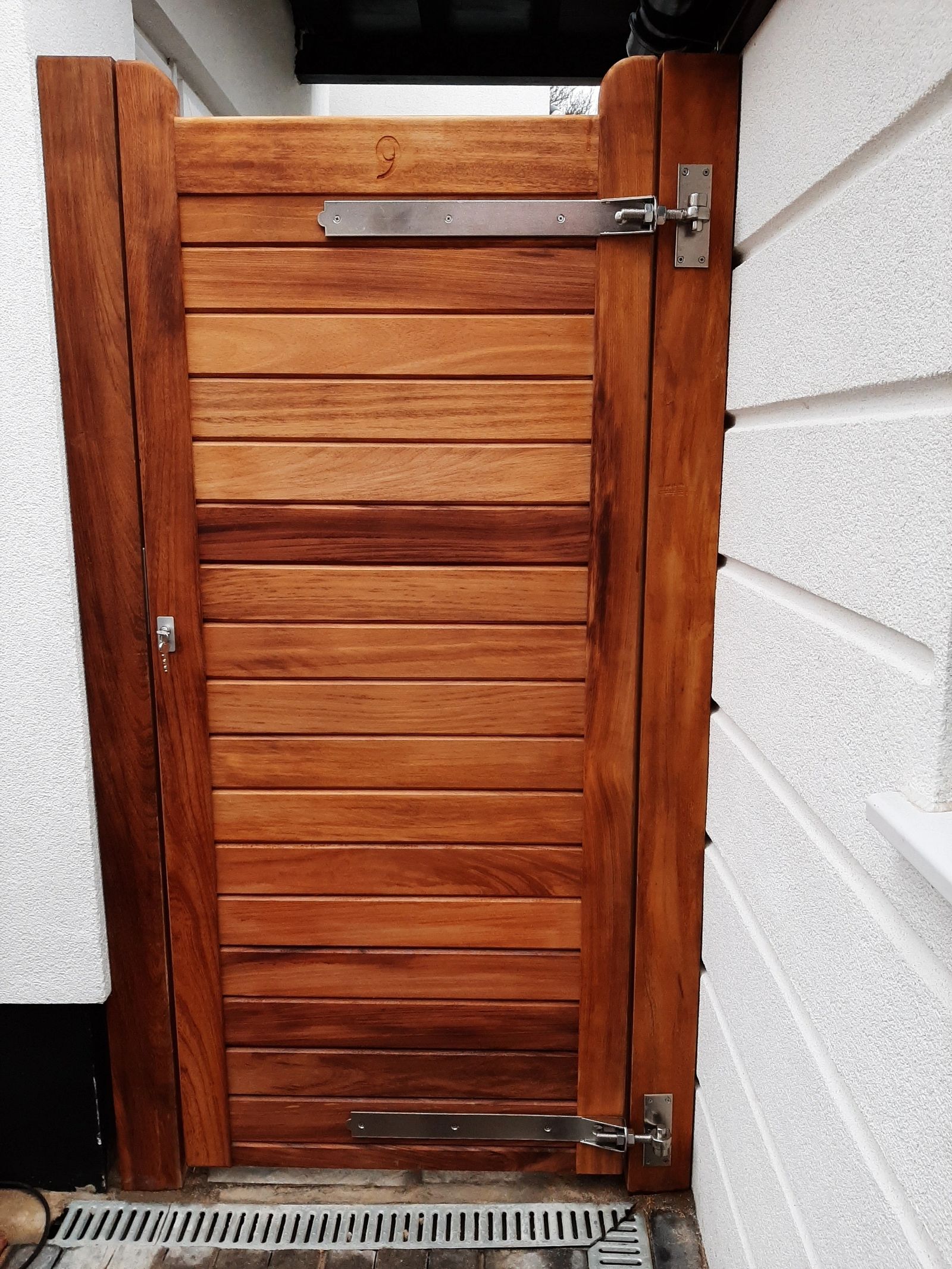
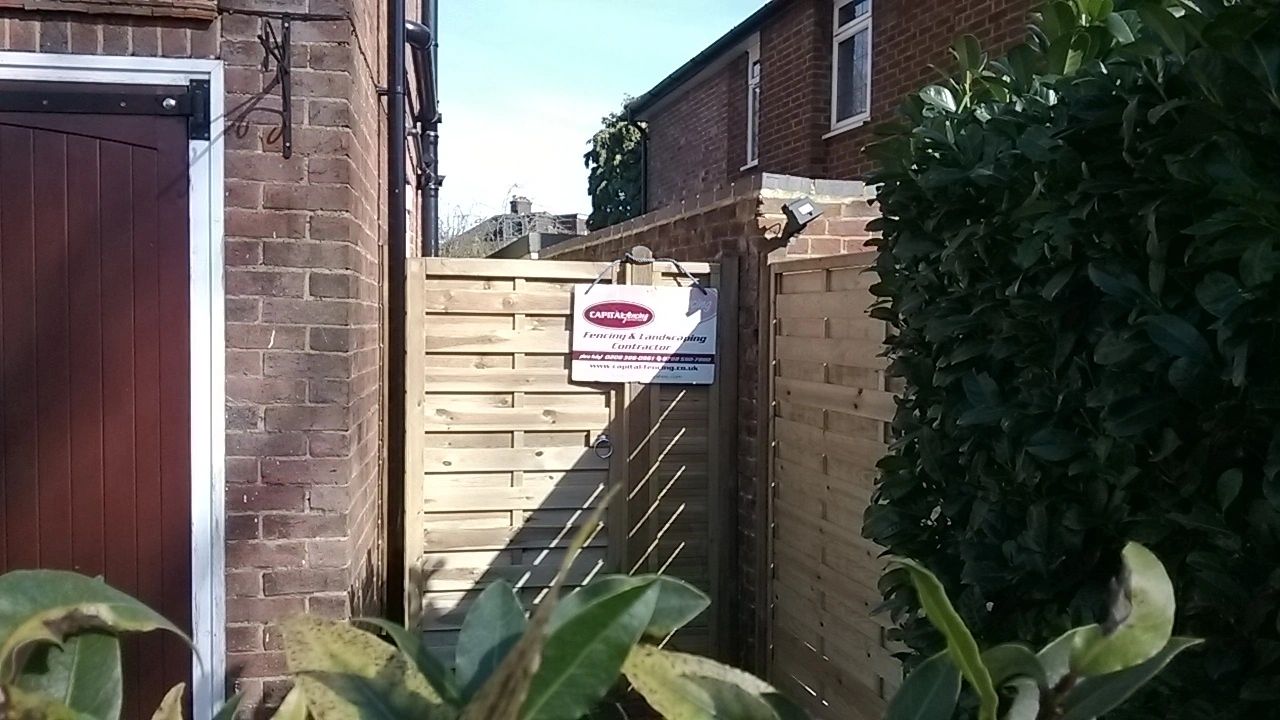
bespoke wooden gate installed by Capital Fencing in St Albans (AL1)double driveway gates installed by Capital Fencing in St Albans (AL1)hardwood side gate installed by Capital Fencing in St Albans (AL1)metal entrance gate installed by Capital Fencing in St Albans (AL1)

Before you book pedestrian side gates in St Albans

Side-return gates and narrow access

A gate across a narrow side return between two properties often has very little clearance either side, which limits hinge type and swing direction and can rule out a wide double gate in favour of a single leaf.

We measure the full return width and any obstructions along the swing arc before recommending a hinge position on this kind of opening.

Phasing a perimeter security upgrade

Replacing an entire perimeter in one go isn't always practical on an occupied commercial site, so work is often phased section by section, with each completed run left secure before the next section is opened up.

Phasing needs a sequence that never leaves the whole boundary compromised at once — usually working round from the least to most vulnerable elevation rather than a simple left-to-right order.

Timber grading and treatment for a security spec

Where timber is used on a security run, a denser, higher-grade section holds up to sustained pressure at gate junctions and pedestrian pinch points better than a standard fence-grade board, and pressure treatment needs to penetrate fully rather than sit on the surface.

We spec the grade to the load the section will actually see, not a single grade across the whole job.

What a site survey covers

A proper site survey checks the boundary line against the deed plan where available, probes ground conditions at a few points along the run, and confirms access for both delivery vehicles and hand-carried materials.

It should also flag anything that changes cost before it becomes a surprise later — buried services, a shared boundary needing neighbour agreement, overhead cables limiting how tall equipment can be used, or a slope needing a stepped rather than level run.

A survey that skips any of these and goes straight to a headline price is the most common reason a quote changes significantly once work actually starts.

Cutting a panel down for a short bay

A lap or closeboard panel can usually be cut down in width by removing boards from one edge and refixing the cut edge to the panel's own frame, provided there's still a batten or rail to fix into once the cut is made.

Concrete panels generally can't be cut at all, which is one of the practical reasons timber is chosen over concrete gravel-board-and-panel systems on an irregular boundary with several odd-width bays.

Whatever is cut, the new edge needs its own vertical support — either an extra batten screwed to the frame or, for a wider cut-down section, a slip post — so the panel doesn't flex or drop at the trimmed end.

Quick-set post mix versus mixed concrete

A quick-set post concrete cures within a few hours and is convenient for a single-post repair where the fence needs to take load again quickly, but a standard mixed concrete generally gives a denser, longer-lasting footing for a larger job.

For a repair affecting several posts along a run, mixed concrete is usually the more durable choice even though it takes longer to reach working strength.

Allotments and community gardens

Allotment sites are typically let by the local authority or an allotment association under a tenancy agreement that sets rules on plot boundary fencing, often restricting height and material to keep sightlines open across the site.

Individual plot fencing usually needs to stop short of shared paths and communal water points, and materials have to be carried in by hand or barrow since most allotment sites don't allow vehicle access beyond a car park at the entrance.

Community garden boundaries also often need a design that keeps the plot secure from casual access out of hours while remaining welcoming during open sessions, which is a different brief from a private garden fence.

Setting corner posts before intermediate posts

Corner and end posts are normally set first and their positions checked and finalised before any intermediate post along the run, since every other post's position is measured relative to those fixed points.

Setting intermediate posts first and corners last risks a corner ending up slightly off the true line established by the string, which then means either accepting a visible kink or redoing intermediate posts to correct it.

This sequence matters even more on a run with two changes of direction, where getting one corner wrong compounds the error along the whole of the next leg.

Removing or working around hedges

A mature hedge along a boundary line often needs partial removal or heavy cutting back before a new fence can go in behind or in place of it, and stump and root removal is usually a bigger job than the hedge above ground suggests.

Where a hedge is being kept and a fence added behind it, root disturbance during digging needs the same care as any other established planting — cutting a major root to fit a post line can visibly stress or kill the hedge over the following season.

Some hedgerows, particularly older boundary hedgerows in a rural or semi-rural setting, are protected under separate hedgerow regulations, so it's worth checking before removing one entirely rather than just cutting it back.

Wind loading on exposed runs

A fence on an open, elevated or unsheltered boundary — a plateau, a field edge, or a long unbroken run with no buildings breaking the wind — takes a real structural load that a sheltered suburban garden never sees.

Standard 75x75mm posts and full-height solid panels are the combination most likely to fail here; heavier posts, shorter bays between them, and a slatted or louvred profile that lets some wind through all reduce the load rather than fighting it head-on.

It's a specification decision made at quote stage, not something to retrofit after the first panel goes over in a storm.

Inspecting welded joints on mesh panel frames

A welded mesh panel's frame corners are a common early failure point under repeated wind loading or impact, since a poor weld can crack internally while still looking intact from the outside until the joint finally gives way.

A visual check for hairline cracking, rust bleeding from a joint, or slight movement when the frame corner is pushed by hand can catch a failing weld before the panel actually comes loose from its post.

Using a post hole auger effectively

A petrol or manual auger clears loose, stone-free ground far faster than hand-digging, but it works by shearing soil rather than levering it, so it struggles the moment it meets a root, a buried stone or compacted rubble.

Lifting the auger clear and clearing spoil from the flutes every 150-200mm of depth keeps it cutting efficiently; forcing it deeper without clearing spoil just packs the hole and stalls the motor.

On heavy clay an auger can also polish and seal the hole's sides, which reduces drainage around the base — a quick scoring of the sides with a spade before concreting helps break that glazed surface.

Iroko and tropical hardwood density

Iroko is a dense West African hardwood sometimes used as a substitute for teak in gates and structural fencing components, valued for a natural durability that doesn't rely on chemical treatment.

Its density makes it heavier to handle and slower to work than softwood equivalents, and it typically needs pre-drilling for screws to avoid splitting.

Because it's naturally oily, some finishes and glues bond to it poorly unless the surface is wiped down with a solvent first, which is a detail that's easy to miss when substituting it into a softwood-designed detail.

Estate gates hung from masonry piers

An estate-style gate is often hung from brick or stone piers rather than timber posts, which changes the repair approach entirely since a loose hinge fixing means re-drilling or resin-fixing into masonry rather than replacing a post.

Pier movement itself, from ground settlement or frost heave, can throw two gates out of alignment with each other even when both gates and their hinges are otherwise sound.

Keeping post positions clear of drainage gulleys and channels

A surface drainage channel or gulley running near the boundary needs to stay clear and functioning, so a post landing directly over or immediately beside one can block flow or make future clearing of the channel awkward.

Where the fence line has to cross a channel, spanning it with a slightly wider gap under the gravel board, rather than boxing the channel in completely, keeps it accessible for clearing leaves and debris.

It's worth running water through the channel before finishing the job, where practical, to confirm the new fence hasn't inadvertently altered how it drains.

Sequencing a multi-bay repair

On a repair spanning several bays, work generally runs from the soundest end toward the most damaged, so the newly fixed sections provide a stable reference line for the rest of the work rather than starting from the worst-affected point.

Where a repair is linked to an insurance claim, documentation is completed at each stage rather than only at the end.

Discontinued panel styles

Panel fencing ranges get discontinued or reformulated by manufacturers more often than solid boarded fencing components, since panels are a proprietary product rather than built from generic stock timber sizes.

A ten- or fifteen-year-old panel range is often simply no longer made, which means a single damaged panel in an otherwise sound run may need the whole run replaced, or a mismatched panel accepted as a compromise.

Closeboard and picket fencing, built from standard boards, rails and posts rather than a proprietary panel, are generally easier to repair piecemeal decades later precisely because the components aren't tied to one manufacturer's product cycle.

Post spacing on a run that doesn't divide evenly

Standard panels are usually 1.83m (6ft) wide, but very few boundary runs measure out as an exact multiple of that, so the layout has to absorb the remainder somewhere rather than pretend it isn't there.

The common approach is to split the shortfall across the two end bays so both are cut slightly narrower and roughly matched, rather than leaving one full-width bay and one very narrow offcut at a single end.

Where a fixed feature — a gate opening, a manhole, an existing post that must stay — sits partway along the run, setting out works outward from that fixed point in both directions rather than from one end only.

Threading a fence run past a rainwater downpipe

A downpipe discharging near the boundary means the fence has to either step around it with a short jog in the line, or leave a gap in the panel run rather than fixing directly over the pipe and its gulley.

Fixing a post immediately behind a downpipe risks trapping water splashing off it against the post base, so a small offset gives both the pipe and the post room without altering the overall run length much.

Where the downpipe discharges to a gulley set into a path or patio, the gravel board also needs enough clearance to avoid sitting in standing water every time it rains.

Ledged-and-braced gate construction

A ledged-and-braced gate is built from vertical boards fixed to horizontal ledges with a diagonal brace between them, rather than a mortice-jointed frame, which makes it cheaper to build but more dependent on the brace alone to resist racking.

Repairs on this type usually focus on the brace and its fixings rather than joints, since there's no mortice-and-tenon corner to come loose.

Hinge pin wear and greasing

A band-and-gudgeon or heavy tee hinge relies on a pin bearing surface that wears over years of use, and a worn pin lets the gate drop slightly at that hinge even when the fixings into the post are still sound.

Greasing the pin periodically slows this wear considerably, and on an older gate that's started to drop, checking pin wear before assuming a post or fixing fault saves an unnecessary repair.

Rights of way and access easements

An easement giving a neighbour or utility a right of way across part of a garden — commonly a rear access strip or shared side passage — survives a change of ownership and restricts what can be built across it, including fences and gates.

A gate across an easement is sometimes acceptable if it's left unlocked or a key is provided to the dominant owner, but a solid fence that blocks the route entirely is a breach even if the current beneficiary rarely uses it.

The Land Registry title register will usually record a formal easement, so it's worth checking before fencing off any access strip that looks unused, since 'unused' and 'extinguished' are legally different things.

Single-leaf pedestrian gates matched into existing fencing runs — that's who this page is for. In St Albans and out to St Albans City and District, we run the pedestrian side gates spec that survives extensive conservation areas mean fence heights and materials need to match the streetscape. Roads such as Folly Lane and London Road are typical of the local layout. St Albans City station is a useful local reference point. Verulamium Park preserves the site of the Roman city of Verulamium, one of the largest Roman sites in Britain.

Get In Touch

Get My Free Quote — 24h Response

No callout fee · Free site visit · Friendly local team covering London & Hertfordshire.

Call us
07885907880
or 02036484746
Email
capital_fencing@yahoo.com
WhatsApp
Message us anytime
Area
London & Hertfordshire
Payment
Card payments accepted

Pay by debit or credit card, bank transfer or cash once the work and price are agreed. No deposit taken online.

Request a Free Quote

We'll get back to you within 24 hours.

Free Site Visit No Callout Fee
Call WhatsAppQuote