London & Hertfordshire Free Site Visit
bespoke wooden gate installed by Capital Fencing in St Albans (AL1)
St Albans · AL1 / AL2 / AL3 / AL4

Driveway Double Gates, St Albans: engineered-to-load spec for Victorian terraces

Driveway double gates in St Albans is one of our regular briefs — homes with off-street parking wanting matched double vehicle gates, manual or automated. On victorian terraces with mature gardens, the failure mode we see most often is the one we design out first. Roads such as Hatfield Road and Sandpit Lane are typical of the local layout. St Albans City station is a useful local reference point. Marshalswick and Jersey Farm, on the town's outer edge, sit outside the conservation areas and were developed as twentieth-century suburbs with more standard plot layouts.

Driveway double gates in St Albans is one of our regular briefs — homes with off-street parking wanting matched double vehicle gates, manual or automated. On victorian terraces with mature gardens, the failure mode we see most often is the one we design out first. Roads such as Hatfield Road and Sandpit Lane are typical of the local layout. St Albans City station is a useful local reference point. Marshalswick and Jersey Farm, on the town's outer edge, sit outside the conservation areas and were developed as twentieth-century suburbs with more standard plot layouts.

What goes wrong

Common failure modes on driveway double gates

  • not levelling the closing point — one leaf drags on the drive within a year
  • under-sized posts or brickwork — automation loads pull them out of plumb inside a season
Default spec

How we build driveway double gates in St Albans

44mm framed, tongue-and-groove or composite infill, hot-dip galvanised or stainless ironmongery, sized to the actual masonry opening not the drawing. On St Albans jobs we adjust for extensive conservation areas mean fence heights and materials need to match the streetscape.

Property mix locally: Victorian terraces, Edwardian villas in Marshalswick, and Tudor / Georgian properties near the cathedral. Typical gardens: mature gardens, often with established hedging that needs lifting before fencing goes in. Postcodes we regularly service: AL1, AL2, AL3, AL4.

Why this spec, for homes with off-street parking wanting matched double vehicle gates, manual or automated

  • measured on site off the actual brick piers, not a builder's plan set
  • prepared for future automation even when you're not fitting it yet — cabling ducts under the drive, hinges rated for it
  • matched pedestrian gate carried in the same visit so alignment and finish are identical

Typical driveway double gates briefs in St Albans

  • 3.0m opening hardwood double gates on ball-race hinges with drop bolt and top slide bolt
  • matched pedestrian gate alongside 3.6m double vehicle gates on a corner-plot driveway

Driveway Double Gates FAQs — St Albans

How much clearance do you leave under a driveway gate?

On driveway double gates jobs in St Albans (AL1), our default answer is: 44mm framed, tongue-and-groove or composite infill, hot-dip galvanised or stainless ironmongery, sized to the actual masonry opening not the drawing. We'll walk you through measured on site off the actual brick piers, not a builder's plan set on the site visit before you commit.

Can wooden driveway gates be automated later?

Across St Albans we spec around extensive conservation areas mean fence heights and materials need to match the streetscape, so on driveway double gates that usually means iroko hardwood on galvanised ironmongery. For context: prepared for future automation even when you're not fitting it yet — cabling ducts under the drive, hinges rated for it. Structural spans and post depths calculated, not guessed.

Can pedestrian and vehicle gates share the same finish and ironmongery?

St Albans City and District coverage means we can survey most AL1 addresses inside a week — homes with off-street parking wanting matched double vehicle gates, manual or automated. The honest trade-off is not levelling the closing point — one leaf drags on the drive within a year — which is exactly what our default spec designs out.

What's the widest span before double gates need a wheel or cantilever?

Practically: 3.0m opening hardwood double gates on ball-race hinges with drop bolt and top slide bolt. That's the St Albans version of this job, not a generic one. The honest trade-off is not levelling the closing point — one leaf drags on the drive within a year — which is exactly what our default spec designs out.

How do you stop a heavy gate dropping on the closing point?

On driveway double gates jobs in St Albans (AL1), our default answer is: 44mm framed, tongue-and-groove or composite infill, hot-dip galvanised or stainless ironmongery, sized to the actual masonry opening not the drawing. The honest trade-off is not levelling the closing point — one leaf drags on the drive within a year — which is exactly what our default spec designs out.

Recent driveway double gates work
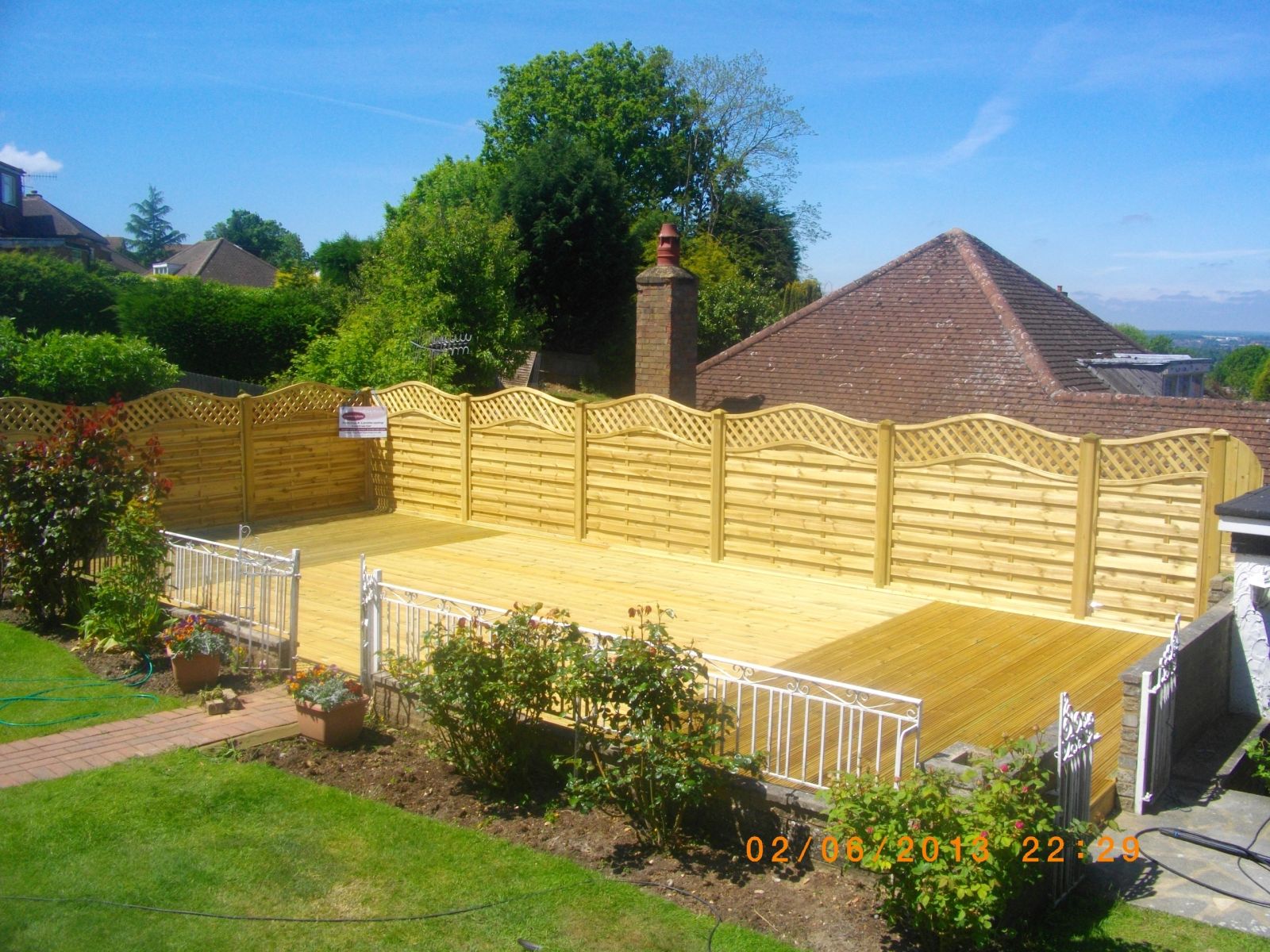
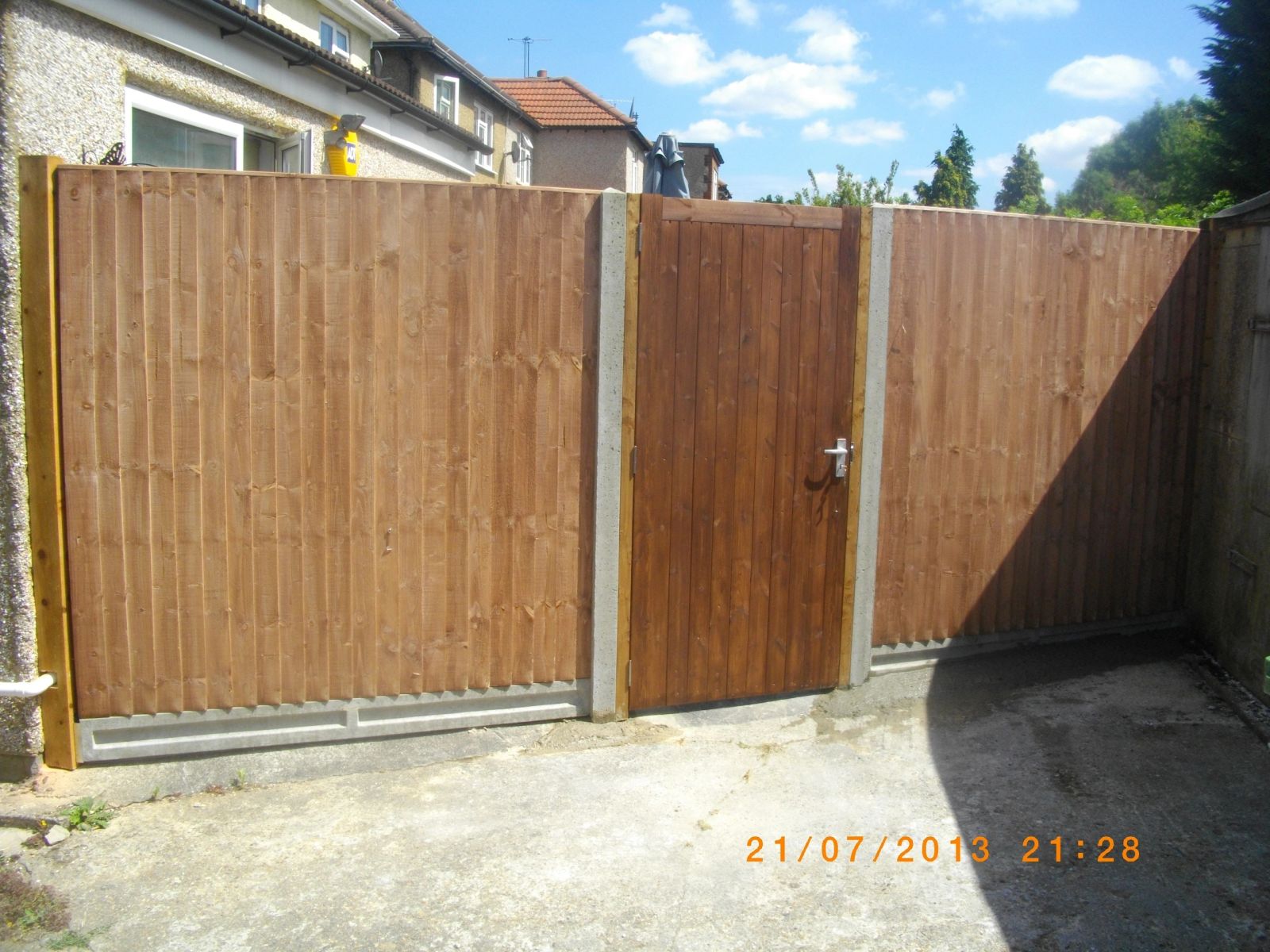
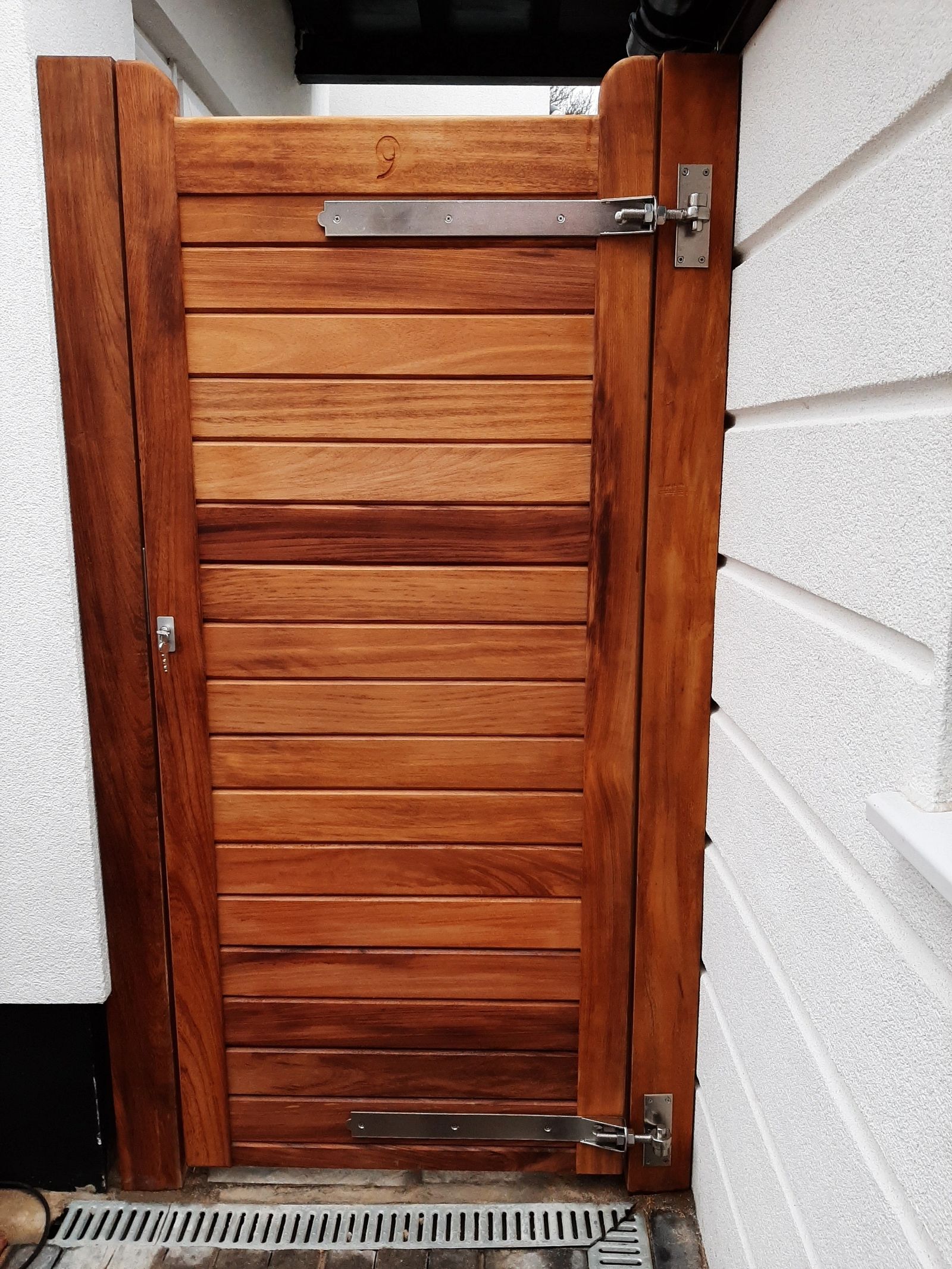
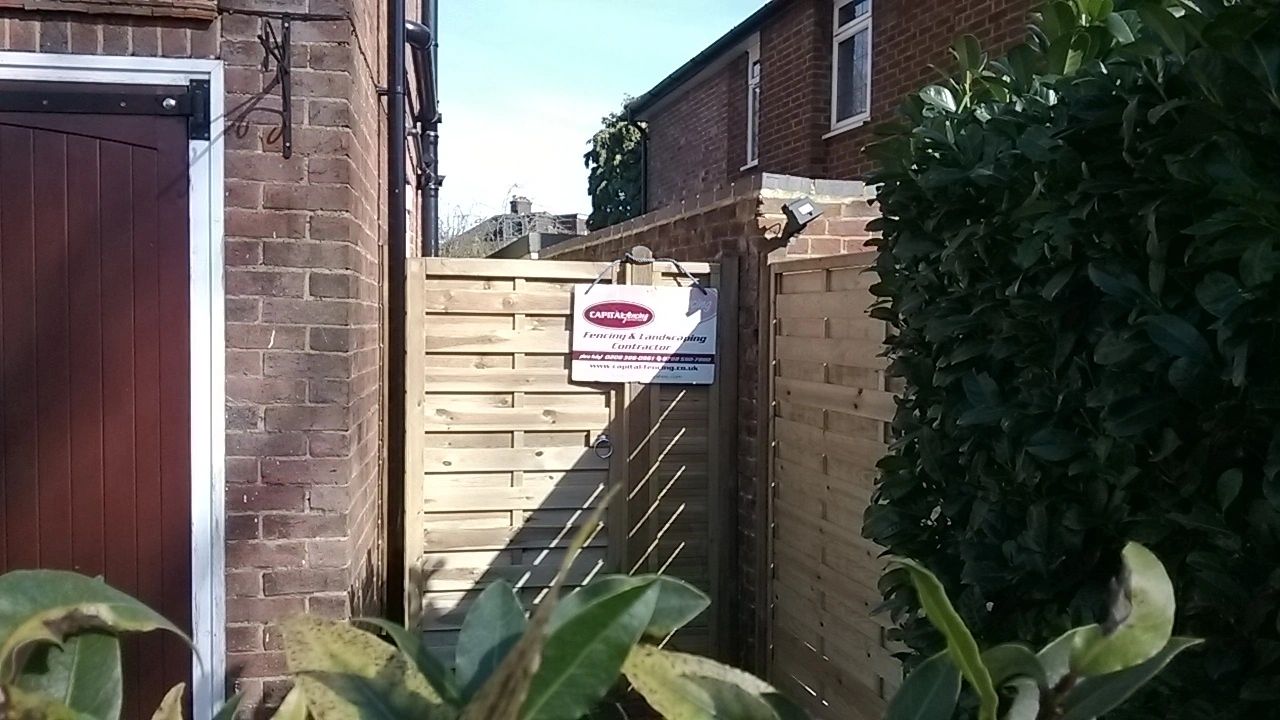
bespoke wooden gate installed by Capital Fencing in St Albans (AL1)double driveway gates installed by Capital Fencing in St Albans (AL1)hardwood side gate installed by Capital Fencing in St Albans (AL1)metal entrance gate installed by Capital Fencing in St Albans (AL1)

Local considerations across St Albans and hatfield

How a security survey is carried out

A security survey walks the whole perimeter, not just the section that prompted the enquiry — low runs, blind corners and gate junctions elsewhere on the boundary are usually the actual weak point, even when the call came in about one obviously damaged section.

We note sightlines from the street and from within the property, because a fence that blocks a view outward can work against security as easily as a low fence works against it from the other side.

Maintenance that prevents the next repair

Most repairs we're called out for could have been caught earlier with a simple seasonal check — a post that's started to lean, a gravel board showing early rot, or a hinge that's begun to sag are all cheaper to address before they fail outright.

We'll flag anything else on the boundary that looks like it's heading the same way while we're on site for an unrelated repair.

End-grain sealing on cut timber

Any cut made on site — trimming a post to length or cutting a rail to fit — exposes end grain that draws in moisture far faster than the treated face of the timber, making it a common starting point for rot if left unsealed.

Sealing cut ends with an end-grain preservative at the time of cutting, not afterward, closes off that entry point before the timber is fixed in place.

Why replacement panels sometimes need different post spacing to the originals

Panel sizing has changed slightly over past decades, and a fence originally built to an older standard width may not have a modern replacement panel that fits the existing post spacing exactly.

This becomes relevant on a partial repair where only some panels are being replaced and the remaining posts are staying in place, since a small mismatch can mean trimming a new panel down or accepting a slightly wider or narrower final bay.

It's worth measuring the actual existing post-to-post distance rather than assuming a 'standard' width will match, particularly on an older fence being partially rather than fully replaced.

Making a storm-damaged fence temporarily safe before full repair

Where a fence has failed suddenly — a fallen tree, a collapsed panel — and a full repair can't happen immediately, propping the affected section and taping off the area reduces the immediate risk to people or pets before proper repair work starts.

A temporary make-safe isn't a substitute for the repair itself, and a client should understand it's a stop-gap measure rather than something that resolves the underlying failure.

What happens if a boundary structure needs planning permission

Where a proposed fence, wall or gate exceeds permitted development limits, a standard planning application goes to the local authority, who assess it against the same character and amenity considerations as any other householder application.

A refusal can be appealed to the Planning Inspectorate, though that process takes months rather than weeks, which is worth factoring into any timeline for a boundary structure that's likely to need consent.

It's almost always faster and cheaper to design within permitted development limits from the outset than to plan around needing consent, unless there's a strong reason the extra height or coverage is necessary.

Realistic maintenance intervals

Pressure-treated softwood fencing generally wants a re-application of preservative or stain every two to three years to keep the surface protected, more often on a south-facing run that gets constant UV exposure.

Gate hinges and latches are worth checking annually for movement or corrosion, since a small adjustment caught early avoids the gate racking out of square and needing a rebuild.

Decking boards benefit from a yearly clean to clear leaf litter and algae from the gaps, which is what actually causes most of the slipperiness people blame on the timber itself.

Raised beds built directly against a fence

A raised planting bed built with its back edge against a fence line keeps damp soil and mulch in permanent contact with the lowest boards or gravel board, which accelerates rot at exactly the point most vulnerable to moisture.

Lining the inside face of the bed against the fence with a damp-proof membrane, rather than backfilling soil directly onto the timber, reduces this contact without changing the visible design.

This detail is easy to miss at the planning stage since the bed and the fence are often specified and built by different trades without either flagging the interaction.

Level changes revealed during a repair

Taking down a damaged section sometimes reveals that the ground level has changed since the original fence went up — through landscaping, subsidence or built-up paths — which affects how the replacement section should be set.

Where a level change is found, it's addressed as part of the repair rather than reinstating the fence at the original, now-inaccurate, ground line.

Decking joist spans by board thickness

Joist spacing for a deck is set by the thickness and species of the board being laid over it, not by a single universal figure — a standard 28mm softwood board typically wants joists no more than about 400-450mm apart, while thinner composite boards often need closer spacing again.

Manufacturers publish specific span tables for their composite products because the flex characteristics differ from timber, and installing outside those tables is one of the most common causes of a bouncy or springy deck.

Diagonal laying patterns also reduce the safe span compared with a straight run, since the board is effectively supported at a shorter distance along its length.

Gravel board rot and replacement

The gravel board takes the most ground contact and splashback of any timber component on the fence, so it's usually the first piece to need replacing regardless of how sound the panels or posts above it are.

Swapping a rotten timber gravel board for a concrete one at repair time removes that recurring failure point without needing to touch the panel above it.

Mesh tensioning on a chain-link or weld-mesh run

Mesh that's fitted slack sags between posts and can be pulled or climbed more easily, so a straining wire and turnbuckle at each end of a run tension the mesh evenly before it's clipped or tied to the line wires.

Re-tensioning is a routine maintenance task on an older mesh run, since posts settling slightly or ground movement over a season will slacken a mesh that was originally taut.

Arris rail mortice joints as a water trap

The mortice joint where an arris rail meets a post is a natural place for water to collect, since the joint interrupts the smooth run of both timbers and can hold moisture in the gap even after the surrounding wood has dried.

This is a common early failure point on older featherboard fencing, where the rail can rot through at the joint while the rest of the rail well away from the post remains sound.

Modern galvanised joist-hanger-style brackets used instead of a traditional mortice avoid this trap entirely, which is why many newer close-boarded fences use bracket fixings even where the visual style still resembles a traditional arris rail panel.

Bracketing as a repair technique versus re-jointing

A galvanised steel bracket bridges a failed timber joint — rail to post, or post to base — without needing to cut fresh joinery into timber that may already be weakened, which makes it quicker and less invasive than re-jointing.

Bracketing is a good fit where the surrounding timber is still structurally sound but the original joint has failed; where the timber itself has degraded, a bracket bolted into softened wood won't hold regardless of how strong the bracket is.

Composite thermal expansion

Wood-plastic composite boards expand and contract with temperature considerably more than solid timber, since the polymer content responds more to heat than wood fibre does on its own.

Manufacturers specify a mandatory expansion gap at both board ends and between boards laid end to end, and skipping that gap during installation is one of the most common causes of composite decking or fencing buckling in hot weather.

Dark-coloured composite absorbs more solar heat than lighter shades and expands correspondingly more, so the expansion allowance recommended for a dark board is often greater than for a pale one of the same profile.

Dealing with buried debris uncovered while digging out a repair footing

Old post stubs, broken glass, hardcore or builder's rubble from a previous era of the garden's use sometimes turn up when digging out a footing for repair, particularly on older plots that have been through several changes of use.

Where this happens, it's worth clearing enough of the obstruction to get a clean footing rather than working around it, and flagging anything unexpected — old drainage, buried cabling, unusually large rubble — to the client before continuing.

Matching fence specification to a site-specific threat assessment

Not every commercial boundary needs the same specification — a compound holding cash or controlled substances warrants a different height, mesh and topping to a low-value storage yard, and starting a quote from a fixed catalogue spec rather than the specific threat can lead to over- or under-specifying the job.

A short threat assessment covering what's inside the boundary, who has legitimate access, and what's happened on similar sites nearby gives a more defensible basis for the chosen spec than a generic default.

Diagnosing a fence problem before quoting

A repair quote starts with identifying which of the usual failure points is actually responsible — post, panel, gravel board or a full run — because pricing a full replacement for what's actually a single post repair costs the client far more than necessary.

We probe timber at ground level and check the whole run for related stress, not just the section that's obviously failed.

Balancing tight mesh apertures against airflow around plant equipment

A tight-aperture high-security mesh gives strong resistance to climbing and reach-through, but wrapped closely around outdoor plant equipment such as chillers or generators it can restrict airflow needed for the equipment to run efficiently.

Setting the mesh enclosure at a slight distance from the equipment casing, or specifying a marginally larger aperture where the site's threat assessment allows it, keeps most of the security benefit while avoiding an airflow restriction that could affect equipment performance.

Repairing a bowed panel

A panel that's bowed outward has usually taken sustained wind or leaning pressure that's stressed the internal battens rather than the face boards themselves, and a bow rarely pulls itself straight again once the timber has set in that shape.

Depending on severity, a bowed panel can sometimes be braced from behind with an additional batten, but a panel bowed badly enough to have cracked its frame is generally more reliably replaced than braced.

Corrosion inspection on buried metal fixings

Metal post anchors, brackets and shoes set at or below ground level corrode out of sight, meaning surface appearance above ground can look sound even where the buried portion has significantly deteriorated.

Rust staining bleeding up the timber post from ground level, or visible movement at the base despite an apparently solid concrete surround, are common indirect signs of corrosion happening below the visible surface.

Because the failure mode is progressive and hidden, periodic inspection of exposed fixings as a proxy, combined with checking for movement, is generally the practical approach rather than routinely excavating buried anchors.

Consent needed to connect drainage across a boundary

Running a new drainage connection across a neighbouring property's land, sometimes done alongside boundary works, needs the neighbour's consent and possibly a formal easement, not just a friendly verbal understanding.

Water companies can also require notice for new connections joining an existing public sewer, separate from any neighbour agreement about crossing their land.

Where fencing work uncovers or affects a drainage connection crossing the boundary, it's worth pausing to confirm what rights actually exist before proceeding.

Homes with off-street parking wanting matched double vehicle gates, manual or automated — that's who this page is for. In St Albans and out to St Albans City and District, we run the driveway double gates spec that survives extensive conservation areas mean fence heights and materials need to match the streetscape. Roads such as Hatfield Road and Folly Lane are typical of the local layout. St Albans Cathedral is a useful local reference point. Verulamium Park preserves the site of the Roman city of Verulamium, one of the largest Roman sites in Britain.

Get In Touch

Get My Free Quote — 24h Response

No callout fee · Free site visit · Friendly local team covering London & Hertfordshire.

Call us
07885907880
or 02036484746
Email
capital_fencing@yahoo.com
WhatsApp
Message us anytime
Area
London & Hertfordshire
Payment
Card payments accepted

Pay by debit or credit card, bank transfer or cash once the work and price are agreed. No deposit taken online.

Request a Free Quote

We'll get back to you within 24 hours.

Free Site Visit No Callout Fee
Call WhatsAppQuote