London & Hertfordshire Free Site Visit
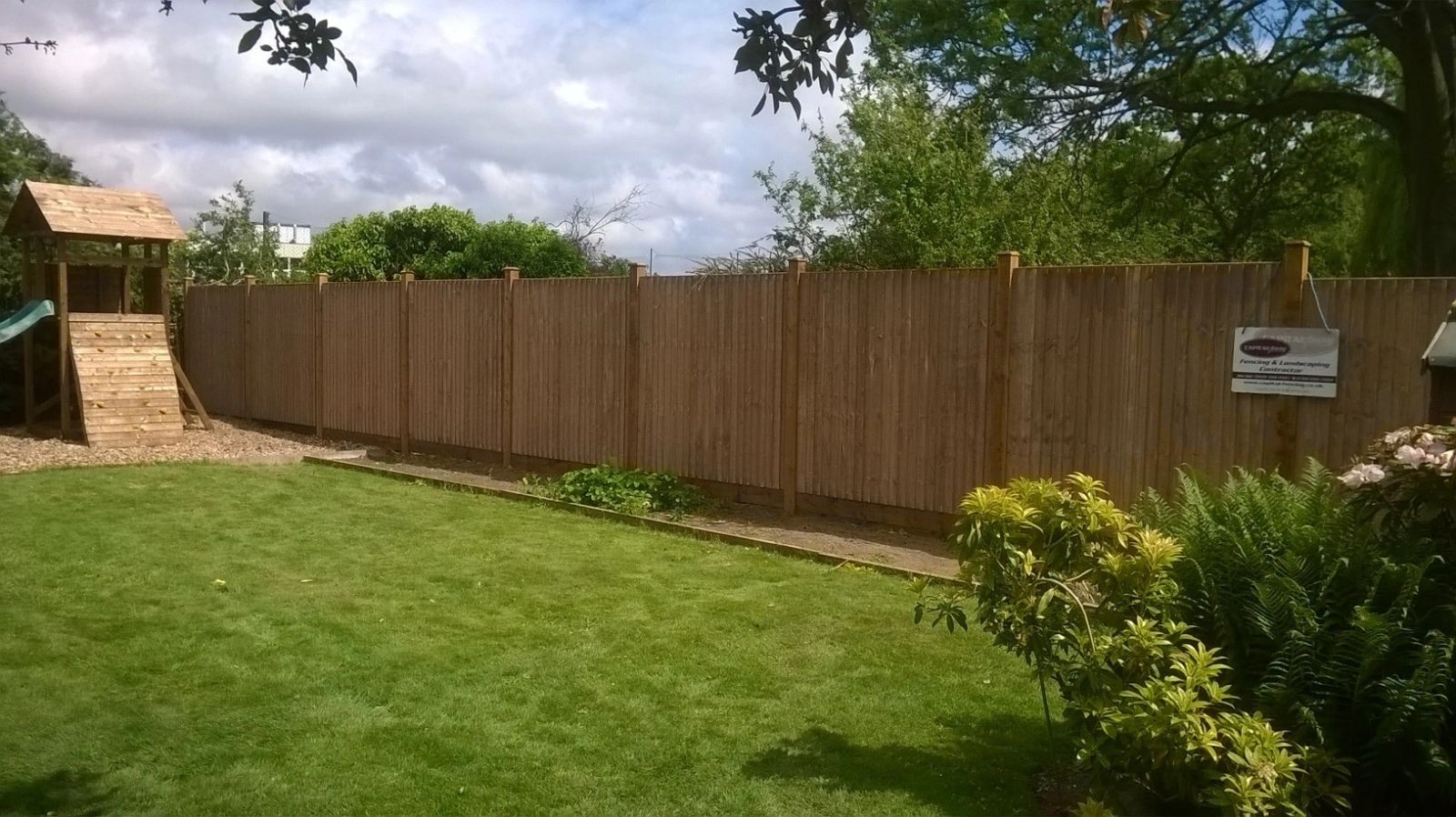
closeboard fence run installed by Capital Fencing in St Albans (AL1)
St Albans · AL1 / AL2 / AL3 / AL4

Local sloping-garden fencing specialist covering St Albans & hatfield

Capital Fencing installs sloping-garden fencing across St Albans and out toward hatfield and watford. What separates a sloping-garden fencing job from a standard boundary is the detail: stepped closeboard down a 900mm fall across a 15m rear boundary. That's the work, not the marketing. Roads such as Beaconsfield Road and Sandpit Lane are typical of the local layout. St Albans City station is a useful local reference point. Verulamium Park preserves the site of the Roman city of Verulamium, one of the largest Roman sites in Britain.

Capital Fencing installs sloping-garden fencing across St Albans and out toward hatfield and watford. What separates a sloping-garden fencing job from a standard boundary is the detail: stepped closeboard down a 900mm fall across a 15m rear boundary. That's the work, not the marketing. Roads such as Beaconsfield Road and Sandpit Lane are typical of the local layout. St Albans City station is a useful local reference point. Verulamium Park preserves the site of the Roman city of Verulamium, one of the largest Roman sites in Britain.

Why this spec, for homeowners with gardens that fall or rise across the boundary — stepped or racked builds

  • stepped builds keep the fence line legally correct even where the ground doesn't cooperate
  • closeboard suits stepping better than panel — no wasted panels cut to slope
  • sleeper-and-fence combined lines mean one contractor for what's usually two trades

Typical sloping-garden fencing briefs in St Albans

  • retaining sleepers under fencing to level a garden with a two-course drop to the neighbour
  • stepped closeboard down a 900mm fall across a 15m rear boundary
Default spec

How we build sloping-garden fencing in St Albans

closeboard on 100×100 pressure-treated posts, stepped in 150mm gravel-board increments or racked where the slope is gentle enough. On St Albans jobs we adjust for extensive conservation areas mean fence heights and materials need to match the streetscape.

Property mix locally: Victorian terraces, Edwardian villas in Marshalswick, and Tudor / Georgian properties near the cathedral. Typical gardens: mature gardens, often with established hedging that needs lifting before fencing goes in. Postcodes we regularly service: AL1, AL2, AL3, AL4.

What goes wrong

Common failure modes on sloping-garden fencing

  • using panels on any slope over 300mm across the bay — the panel drops one end and rots at the sunken corner
  • not draining behind sleeper retainers — the ground pushes the fence out within two seasons

Sloping Garden Fencing FAQs — St Albans

Who is liable when the ground falls onto a neighbour's plot?

On sloping-garden fencing jobs in St Albans (AL1), our default answer is: closeboard on 100×100 pressure-treated posts, stepped in 150mm gravel-board increments or racked where the slope is gentle enough. For context: closeboard suits stepping better than panel — no wasted panels cut to slope. Structural spans and post depths calculated, not guessed.

What's the biggest drop you can span in one bay?

Across St Albans we spec around extensive conservation areas mean fence heights and materials need to match the streetscape, so on sloping-garden fencing that usually means closeboard on stepped gravel boards. We'll walk you through stepped builds keep the fence line legally correct even where the ground doesn't cooperate on the site visit before you commit.

Should a fence follow the slope or step down it?

St Albans City and District coverage means we can survey most AL1 addresses inside a week — homeowners with gardens that fall or rise across the boundary — stepped or racked builds. For context: closeboard suits stepping better than panel — no wasted panels cut to slope. Structural spans and post depths calculated, not guessed.

Is panel fencing ever OK on a slope?

Practically: stepped closeboard down a 900mm fall across a 15m rear boundary. That's the St Albans version of this job, not a generic one. We'll walk you through stepped builds keep the fence line legally correct even where the ground doesn't cooperate on the site visit before you commit.

Can you match a neighbour's stepped boundary starting point?

On sloping-garden fencing jobs in St Albans (AL1), our default answer is: closeboard on 100×100 pressure-treated posts, stepped in 150mm gravel-board increments or racked where the slope is gentle enough. For context: closeboard suits stepping better than panel — no wasted panels cut to slope. Structural spans and post depths calculated, not guessed.

Recent sloping garden fencing work
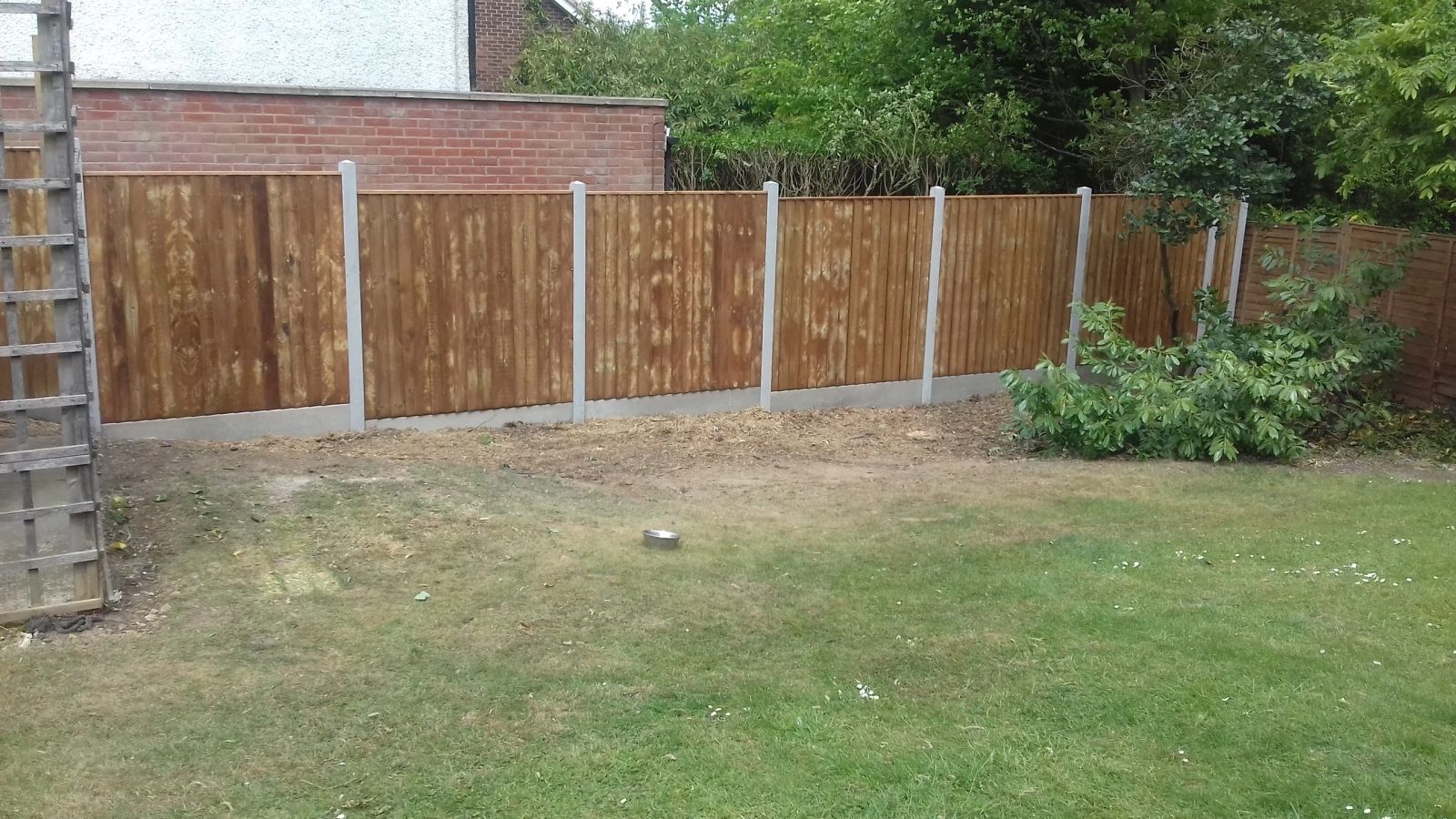
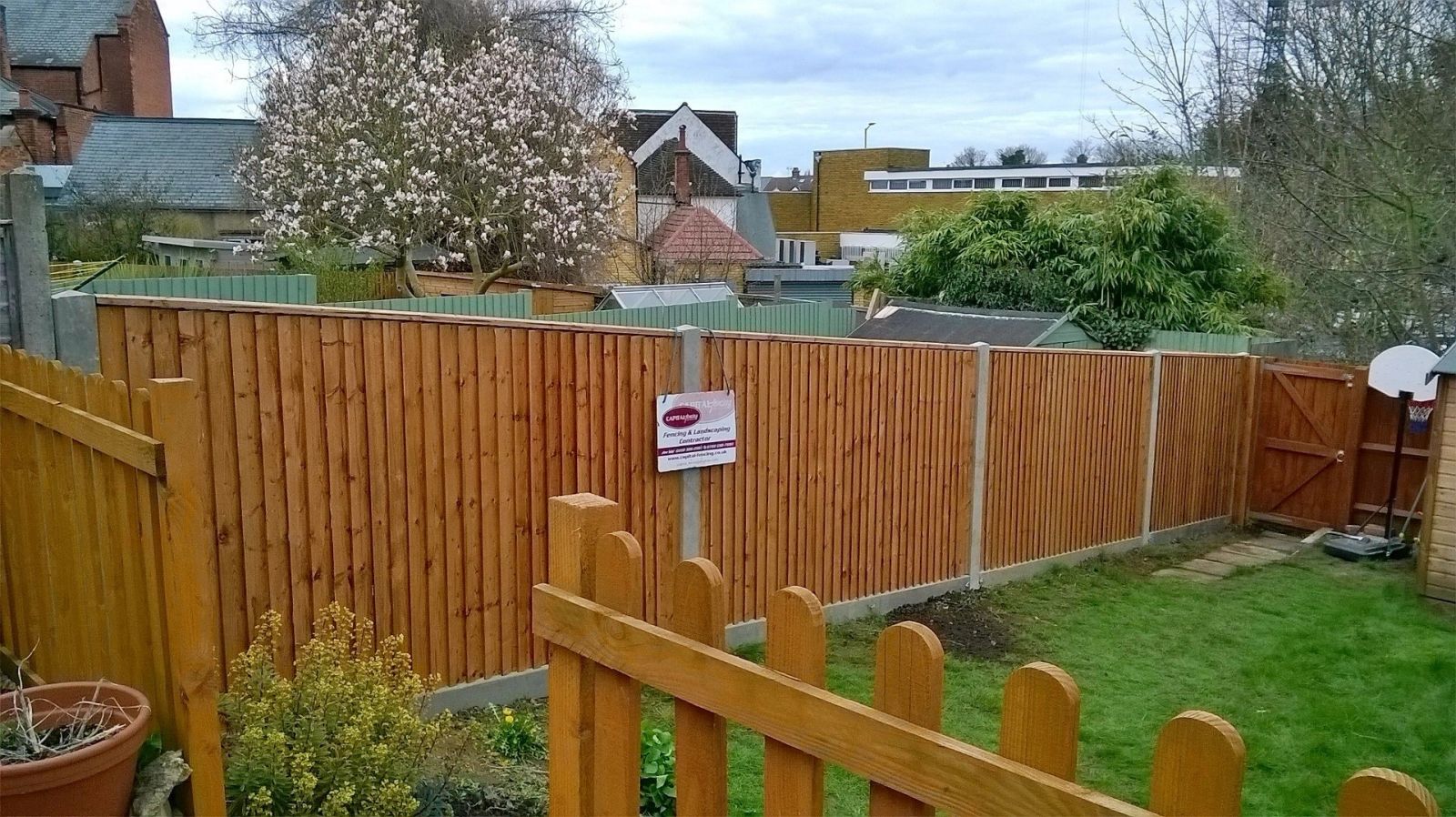
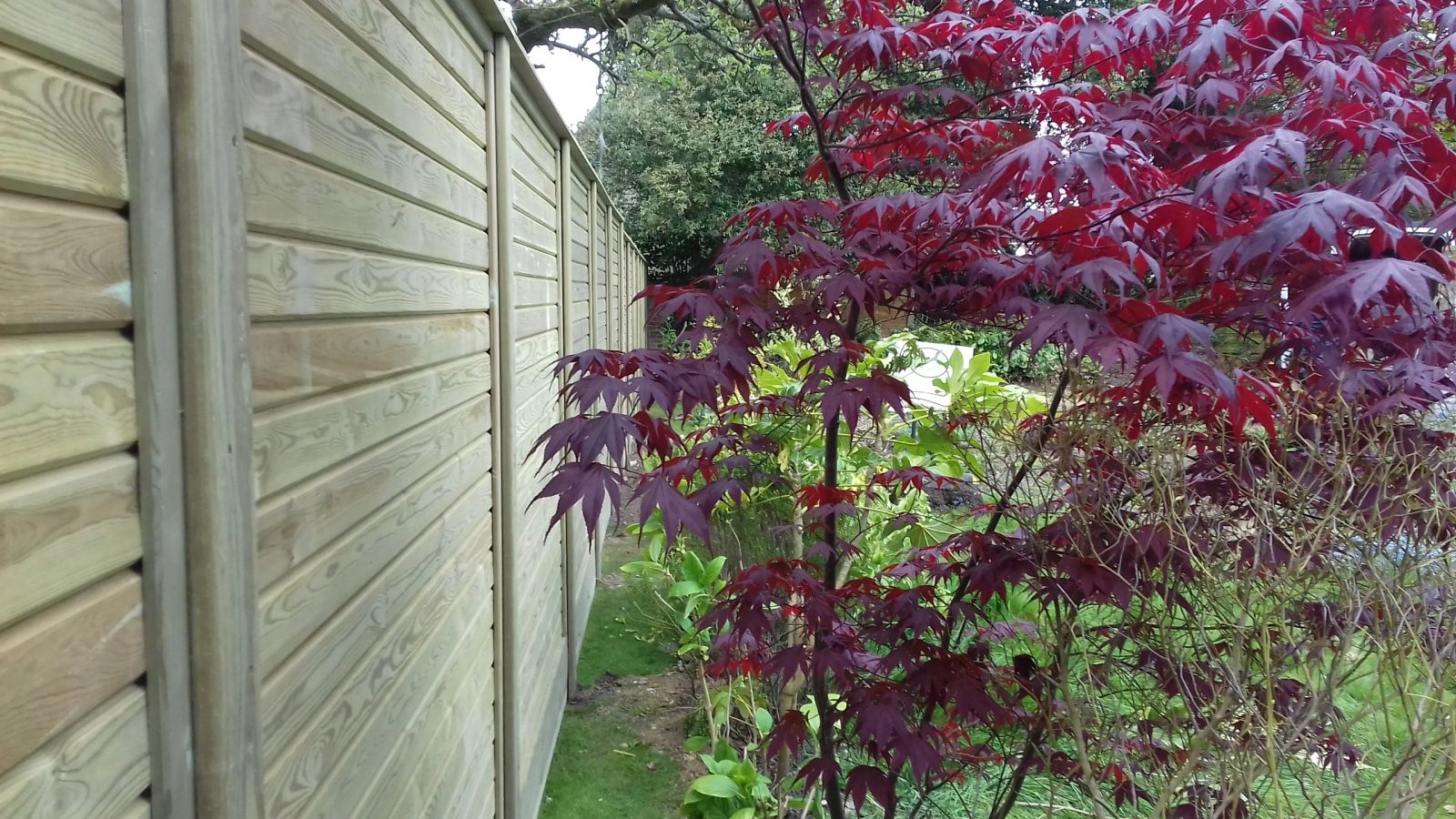
closeboard fence run installed by Capital Fencing in St Albans (AL1)panel fence install installed by Capital Fencing in St Albans (AL1)trellis-topped fence installed by Capital Fencing in St Albans (AL1)bespoke decorative fence installed by Capital Fencing in St Albans (AL1)

Site notes: sloping garden fencing in AL1

Trees and roots near a gate opening

Root growth near a gate post can lift the post slightly over time, which throws off the gate's swing even when the hinges and gate face are otherwise sound — we check for this before assuming the fault is purely in the ironmongery.

Where a protected tree sits close to a gate opening, any post repair nearby is checked against that protection first.

Boundary ownership when a fence needs repair

A failing fence is a common trigger for a dormant boundary dispute, since neither neighbour has had reason to check who's actually responsible until something needs fixing. Where ownership isn't clear from the deeds, we recommend confirming it and notifying the neighbour in writing before repair work starts.

On a shared rear boundary between terraced gardens this is worth doing even for a straightforward panel swap.

Mews and courtyard properties

Mews and courtyard developments typically share a single vehicle access route and sometimes a communal boundary treatment around the whole courtyard rather than individual garden fences.

Because the courtyard is often cobbled or block-paved right up to the building line, there's frequently no soil to dig a conventional post hole into, and fixings need to go into a paved base plate or bolted shoe instead of a concreted post.

Any alteration to a shared courtyard boundary usually needs the agreement of the other mews owners, since the fence is commonly held in joint ownership rather than allocated to one property.

Fencing next to a railway line

Gardens backing directly onto an operational railway usually have a boundary that belongs to the railway infrastructure owner rather than the homeowner, and any work near that boundary needs their agreement rather than being treated as a standard garden fence job.

Vibration from passing trains is a genuine consideration for post stability on ground close to the tracks, and residents commonly want additional sound-deadening in the fence specification for the same reason.

Access for maintaining a railway-side boundary is often restricted to the rail side only, which changes which side of the fence a repair crew can realistically work from.

Security at a garage flank wall boundary junction

A garage flank wall often forms part of the boundary line itself, and the gap between the end of the garage and the next boundary feature is a common blind spot that gets missed when a security upgrade focuses only on the open fence sections either side.

Where a flank wall is lower than the rest of the boundary's security height, an additional short fence run or topping across just that gap brings the whole line back up to a consistent standard.

Diagnosing sag, frame rack or post lean

A gate that no longer closes properly can be dropping at the hinge corner, racking as a whole rectangle out of square, or simply following a hinge post that's leaning in the ground — each has a different fix and they're easy to mix up from the ground.

We check the post for plumb first, then check the frame diagonals against each other, and only then look at the hinges themselves, since treating a leaning post as a hinge fault wastes a repair visit.

Letterplates fitted into gate doors

A letterplate is occasionally fitted into a solid garden or side gate door serving as a secondary entrance, and its position needs to clear internal ledges, braces or a deadlock case before cutting the opening.

Weather sealing around a letterplate in an exterior gate door matters more than on a covered porch door, since the opening faces the weather directly with no canopy above it.

Low bottom rails as a trip hazard

A gate's bottom rail set slightly proud of the finished ground or paving level can become a trip hazard, particularly at a frequently used pedestrian entrance, and this is worth checking as part of a repair rather than only assessing the gate's swing and hardware.

Adjusting the ground level either side or resetting the gate's hung height can resolve this without altering the gate's construction.

Drop bolts and ground sockets

A drop bolt fixed to the bottom rail of a leaf drops into a ground socket to hold that leaf still while the other leaf is used for daily access, and a socket that's silted up or out of alignment is a common reason a drop bolt stops locating properly.

We check the socket depth and drainage as well as the bolt itself, since a blocked socket is often mistaken for a bent or worn bolt.

Checking an unstable adjacent structure before repairing the fence against it

Where a fence panel is fixed to or sits hard against a garden wall, shed or outbuilding that's itself showing signs of movement, repairing the fence without addressing the structure it depends on risks the same failure recurring.

This is worth flagging to a client as a separate issue rather than working around it silently, since a fence repair fixed to an unstable wall is only as reliable as that wall.

Threading a fence run past a rainwater downpipe

A downpipe discharging near the boundary means the fence has to either step around it with a short jog in the line, or leave a gap in the panel run rather than fixing directly over the pipe and its gulley.

Fixing a post immediately behind a downpipe risks trapping water splashing off it against the post base, so a small offset gives both the pipe and the post room without altering the overall run length much.

Where the downpipe discharges to a gulley set into a path or patio, the gravel board also needs enough clearance to avoid sitting in standing water every time it rains.

Trellis toppers failing under wind load separately from the fence

A trellis topper adds height and surface area above a solid panel, which increases the wind load the whole assembly has to resist even though the panel below might be perfectly sound, and toppers are a common point of failure in gusty conditions.

Where a topper has failed repeatedly on an exposed boundary, a lower-solidity design or additional bracing to the topper's own fixings is worth considering rather than replacing the same topper style each time it fails.

Repairing a fence on a sloped or stepped boundary

A boundary on a slope often fails first at the lowest point of each step, where water naturally collects, so a repair there sometimes needs a revised drainage detail rather than simply replacing the failed section like-for-like.

We check the fall of the whole run before repairing one section, since a step that's settled unevenly can be the real cause of a failure further along.

Boundary fencing between church grounds and an adjoining graveyard

Church grounds fencing often has to distinguish between an actively used graveyard area, where ground disturbance for post holes needs careful checking against known burial plots, and a wider grounds boundary where standard fixing methods apply without restriction.

A lychgate or similar traditional entrance feature is frequently retained as the visual and ceremonial entry point even where a plainer security fence is added around the rest of the boundary for practical reasons.

Recycled plastic fence posts

Posts made from recycled plastic, sometimes blended with additives for UV resistance and rigidity, avoid timber's rot and insect vulnerability entirely, since the material has no organic content for fungi or insects to attack.

They tend to be more flexible than an equivalent timber section of the same size, which can be an advantage in absorbing impact but a disadvantage where rigidity is needed to resist sustained wind load without visible sway.

Their thermal expansion behaviour is closer to other polymer products than to timber, meaning fixings and adjoining materials need similar allowance for movement as with composite boards rather than being treated as a timber-equivalent product.

Cill board water-shedding function

A cill or capping rail fitted along the top of a panel fence sheds rainwater clear of the panel's top edge, in the same way a window cill sheds water clear of a wall, reducing the time the top edge of boards stays saturated.

Without a cill, the end grain along the top of vertical boards absorbs water directly and repeatedly, which is a common cause of premature rot starting specifically at the top of a panel rather than the base.

A cill with a slight forward overhang and a drip groove on its underside sheds water further clear of the face below it than a flush-fitted cill, reducing streak staining on the boards beneath.

Concrete spur repairs to a rotten post base

A concrete spur bolted alongside a post that's rotted at the base lets the sound timber above stay in use without a full replacement, provided enough good timber remains above the rot to take the bolts.

The spur is set into its own fresh concrete footing rather than simply strapped to the old base, since the old footing has usually already failed along with the timber.

Post splitting from over-driven fixings

Driving a nail or coach screw too close to a timber post's edge, particularly near the end grain, concentrates stress in a narrow section of fibres and can split the post along the grain rather than simply seating the fixing.

Pre-drilling a pilot hole for larger fixings, especially near board or post ends, relieves that concentrated stress by giving the fixing a path that doesn't have to force the surrounding fibres apart.

Species with straighter, more even grain generally resist this kind of splitting better than timber with interlocked or knotty grain near the fixing point, where existing weaknesses in the fibre structure make a split more likely to propagate.

Slamming post and gate stops

The slamming post on the latch side takes a repeated impact load every time the gate closes, and a stop fitted to it prevents the gate over-swinging past its closed position and straining the hinges on the return.

A missing or worn stop is a common, low-cost cause of a gate that gradually racks out of square from repeated over-travel.

Trellis toppers for extra height and privacy

Adding a trellis topper to an existing or new fence is a common way to gain extra height for climbing plants or additional privacy without exceeding permitted development limits for a solid boundary.

Because trellis is inherently more open than solid panel, it doesn't usually count the same way toward the 2m height rule in every case, but it's still worth checking with the local authority since interpretations vary.

A trellis topper needs its own bracing where it's more than a token height, since a tall panel of trellis catching wind behaves more like a sail than most people expect.

Maintaining ground sockets for gate drop bolts

A drop bolt socket set into the ground or a hardstanding surface collects grit, leaves and standing water over time, and a socket that isn't kept clear will stop the bolt seating fully, leaving a gate leaf that looks locked but isn't actually secured at that point.

Clearing and lightly lubricating the socket as part of routine maintenance is a small task that prevents a far more disruptive failure where a socket has to be dug out and reset after becoming completely blocked.

Replacing a post without dismantling the whole run

A single post can often be replaced by supporting the panels either side on temporary props, cutting the old post out at ground level, and fitting the new post into a fresh footing without lifting the neighbouring panels out.

This depends on the panel fixing type — nailed panels are harder to free without damage than panels held with clips or brackets, which come apart more cleanly.

Whether the brief is stepped closeboard down a 900mm fall across a 15m rear boundary or racked feather-edge run tracking a gentle slope without visible stagger, we quote it from a site visit, not a photo. St Albans is inside our core working patch and most jobs are booked in inside a fortnight. Roads such as Beaconsfield Road and London Road are typical of the local layout. St Albans City station is a useful local reference point. Verulamium Park preserves the site of the Roman city of Verulamium, one of the largest Roman sites in Britain.

Get In Touch

Get My Free Quote — 24h Response

No callout fee · Free site visit · Friendly local team covering London & Hertfordshire.

Call us
07885907880
or 02036484746
Email
capital_fencing@yahoo.com
WhatsApp
Message us anytime
Area
London & Hertfordshire
Payment
Card payments accepted

Pay by debit or credit card, bank transfer or cash once the work and price are agreed. No deposit taken online.

Request a Free Quote

We'll get back to you within 24 hours.

Free Site Visit No Callout Fee
Call WhatsAppQuote