London & Hertfordshire Free Site Visit
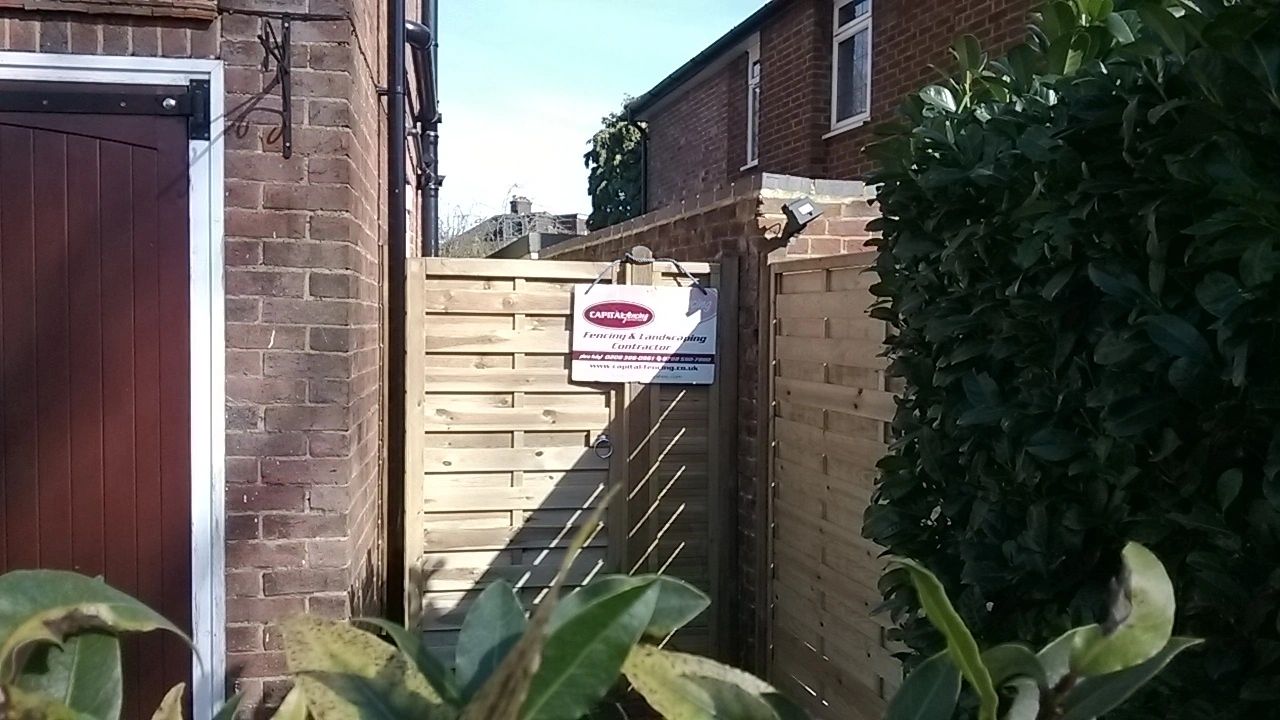
bespoke wooden gate installed by Capital Fencing in Ware (SG12)
Ware · SG12

Security & Access Gates, Ware: engineered-to-load spec for Georgian and Victorian properties in the centre

Capital Fencing installs security access gates across Ware and out toward hertford and hoddesdon. What separates a security access gates job from a standard boundary is the detail: hardwood driveway gates with anti-lift hinges, key-lockable drop bolt and prep for intercom cabling. That's the work, not the marketing. Roads such as Musley Hill and Crane Mead are typical of the local layout. Ware Priory is a useful local reference point. Musley Hill, behind the town centre, is on higher and drier ground than the river-level streets.

Capital Fencing installs security access gates across Ware and out toward hertford and hoddesdon. What separates a security access gates job from a standard boundary is the detail: hardwood driveway gates with anti-lift hinges, key-lockable drop bolt and prep for intercom cabling. That's the work, not the marketing. Roads such as Musley Hill and Crane Mead are typical of the local layout. Ware Priory is a useful local reference point. Musley Hill, behind the town centre, is on higher and drier ground than the river-level streets.

Typical security access gates briefs in Ware

  • matched pedestrian and vehicle gates cabled for GSM intercom and keypad entry
  • steel-framed pedestrian access gate with mag-lock and key-override for a small commercial forecourt
Default spec

How we build security access gates in Ware

steel or hardwood framed, anti-lift ball-race hinges, deadlocking hardware, cabling duct pre-run to the intercom position. On Ware jobs we adjust for riverside plots can hit the water table within two spades — concrete-set posts and proper drainage are essential.

Property mix locally: Georgian and Victorian properties in the centre, with newer suburban estates around Wengeo Lane. Typical gardens: long thin riverside plots — many drop down to the New River and need retaining work. Postcodes we regularly service: SG12.

Why this spec, for residential and small-commercial clients wanting secure access — anti-lift hinges, deadlocking, prep for entry systems

  • anti-lift hinge geometry as standard — a swing gate should not lift off the pins
  • prep work done for automation and access control even when it's phased for later
  • we co-ordinate with the intercom, mag-lock or GSM installer so cabling routes are right first time
What goes wrong

Common failure modes on security access gates

  • domestic hinges on a security gate — trivially lifted off
  • no separate escape release on a mag-locked pedestrian gate — building-control issue on an occupied premises

Security & Access Gates FAQs — Ware

What lock hardware do you use as standard?

On security access gates jobs in Ware (SG12), our default answer is: steel or hardwood framed, anti-lift ball-race hinges, deadlocking hardware, cabling duct pre-run to the intercom position. For context: prep work done for automation and access control even when it's phased for later. Structural spans and post depths calculated, not guessed.

Can you fit anti-lift hinges on a wooden gate?

Across Ware we spec around riverside plots can hit the water table within two spades — concrete-set posts and proper drainage are essential, so on security access gates that usually means hardwood on galvanised anti-lift hinges. We'll walk you through anti-lift hinge geometry as standard — a swing gate should not lift off the pins on the site visit before you commit.

Do you prep for future automation without installing it now?

East Hertfordshire District coverage means we can survey most SG12 addresses inside a week — residential and small-commercial clients wanting secure access — anti-lift hinges, deadlocking, prep for entry systems. The honest trade-off is domestic hinges on a security gate — trivially lifted off — which is exactly what our default spec designs out.

How do you handle escape release on a mag-locked gate?

Practically: hardwood driveway gates with anti-lift hinges, key-lockable drop bolt and prep for intercom cabling. That's the Ware version of this job, not a generic one. For context: prep work done for automation and access control even when it's phased for later. Structural spans and post depths calculated, not guessed.

Can the pedestrian and vehicle gates share entry control?

On security access gates jobs in Ware (SG12), our default answer is: steel or hardwood framed, anti-lift ball-race hinges, deadlocking hardware, cabling duct pre-run to the intercom position. We'll walk you through anti-lift hinge geometry as standard — a swing gate should not lift off the pins on the site visit before you commit.

Recent security & access gates work
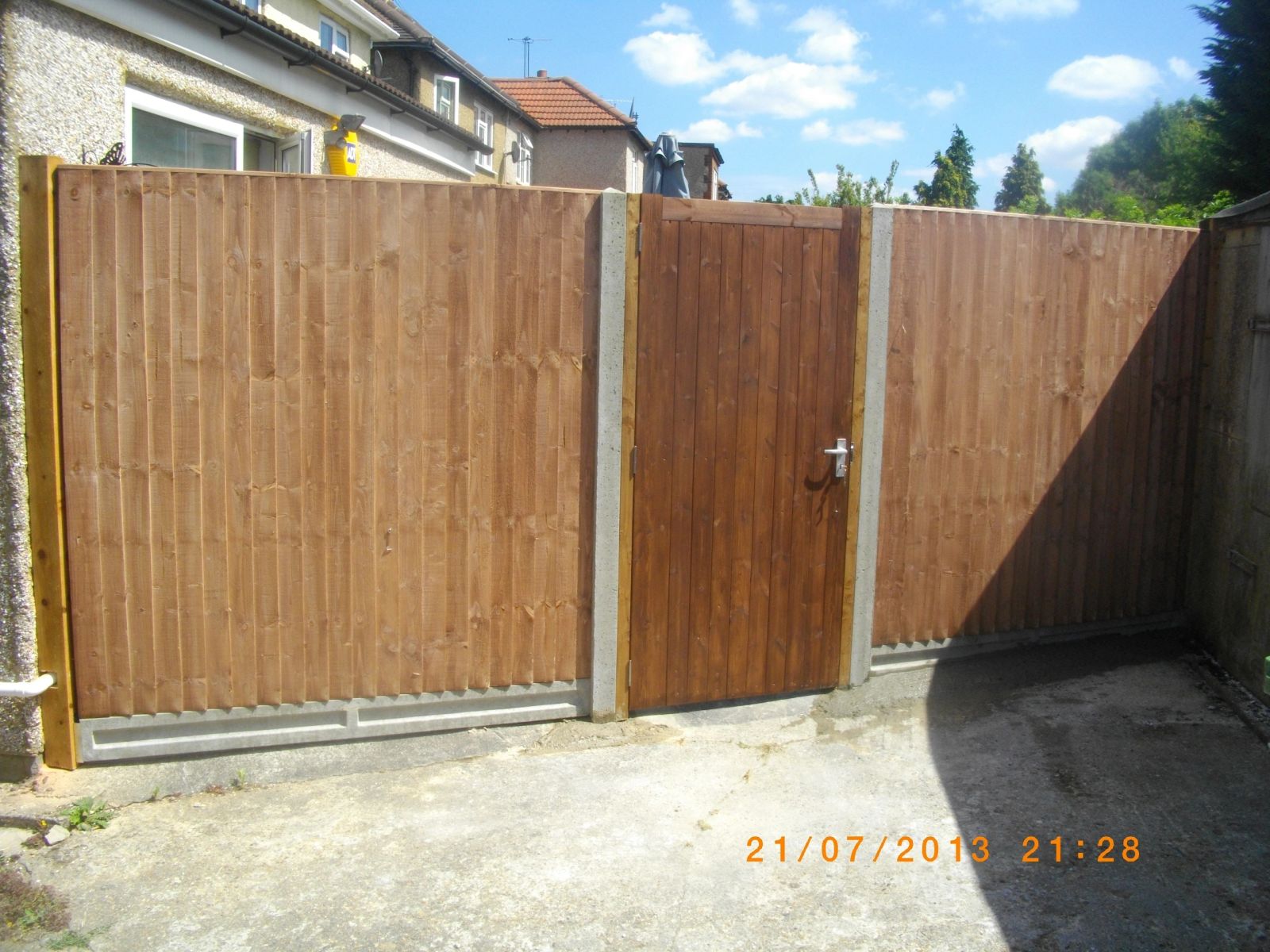
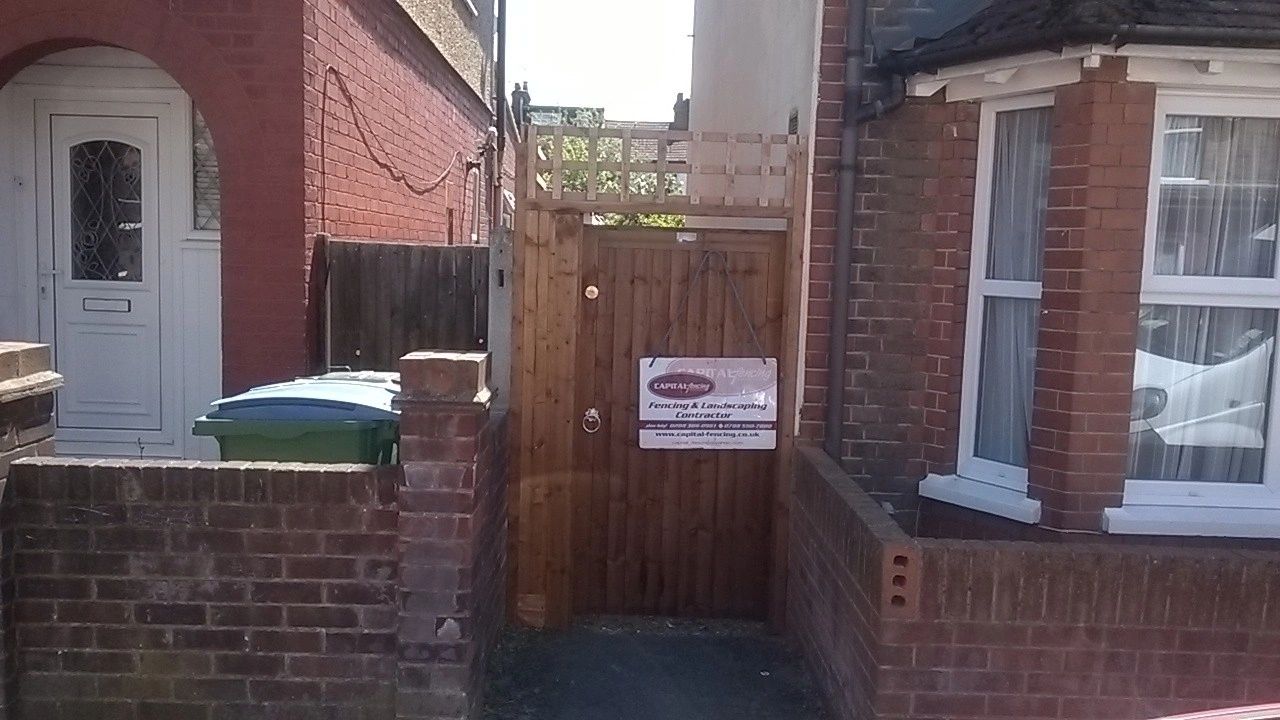
bespoke wooden gate installed by Capital Fencing in Ware (SG12)double driveway gates installed by Capital Fencing in Ware (SG12)hardwood side gate installed by Capital Fencing in Ware (SG12)metal entrance gate installed by Capital Fencing in Ware (SG12)

Local considerations across Ware and hertford

Boundary fencing on an allotment site

An allotment site boundary is often lower-spec than a commercial compound but still needs to deter casual theft of tools, produce and sheds, so a stock fence or low chain-link topped with a single strand of barbed wire is a common, proportionate choice.

Individual plot gates within the site are usually simpler again, since the main perimeter is doing the primary security work and plot-level fencing is more about defining boundaries between tenants.

Phasing a perimeter security upgrade

Replacing an entire perimeter in one go isn't always practical on an occupied commercial site, so work is often phased section by section, with each completed run left secure before the next section is opened up.

Phasing needs a sequence that never leaves the whole boundary compromised at once — usually working round from the least to most vulnerable elevation rather than a simple left-to-right order.

Protecting known cable and pipe runs during digging

Where a service run is known — marked by the utility company, visible from a meter or duct cover, or noted on a site plan — a physical marker or hand-dug trial pit at that point before general digging starts confirms its exact depth and route.

Once a service is located, leaving a visible marker such as a cane or spray line on the surface stops it being forgotten by whoever digs the next hole along the run, particularly on a multi-day job with different people digging on different days.

Ducted services are generally easier to work around than direct-buried cables since the duct itself gives some protection, but the duct can still be damaged by an auger or breaker if its depth isn't confirmed first.

Diverting a public right of way away from a new fence

Where a registered public right of way crosses land that's being fenced, it's not something that can simply be blocked — a formal diversion order from the council is needed to legally move its route.

This process typically involves public consultation and can take a meaningful amount of time, so it needs building into any project timeline where it's relevant.

Checking the definitive map of public rights of way, held by the county or unitary council, before finalising a fence layout avoids inadvertently obstructing a protected path.

Capping profile and how it sheds versus holds water

A flat-topped capping board holds a thin film of water after rain for longer than a capping profile with a rounded or angled top designed specifically to shed water to one side.

This difference seems minor but compounds over years, since the flat profile spends far more cumulative hours saturated, accelerating both rot and the lichen and algae growth that thrive on damp horizontal surfaces.

Choosing a weathered or torus capping profile over a plain flat board is a small upfront cost that measurably extends the component's realistic service life.

How garden slope affects water shedding along a fence base

On a sloped garden, water naturally runs along the base of a fence line toward the lowest point, which means the downhill end of a run often sits in wetter ground than the uphill end even though both were built to the same specification.

This uneven exposure is a common reason why one end of an otherwise uniform fence needs gravel board replacement years before the rest.

A shallow cross-fall drainage channel or a slightly raised gravel board at the low point can intercept some of this flow before it pools against the timber.

Ironmongery grades for gates

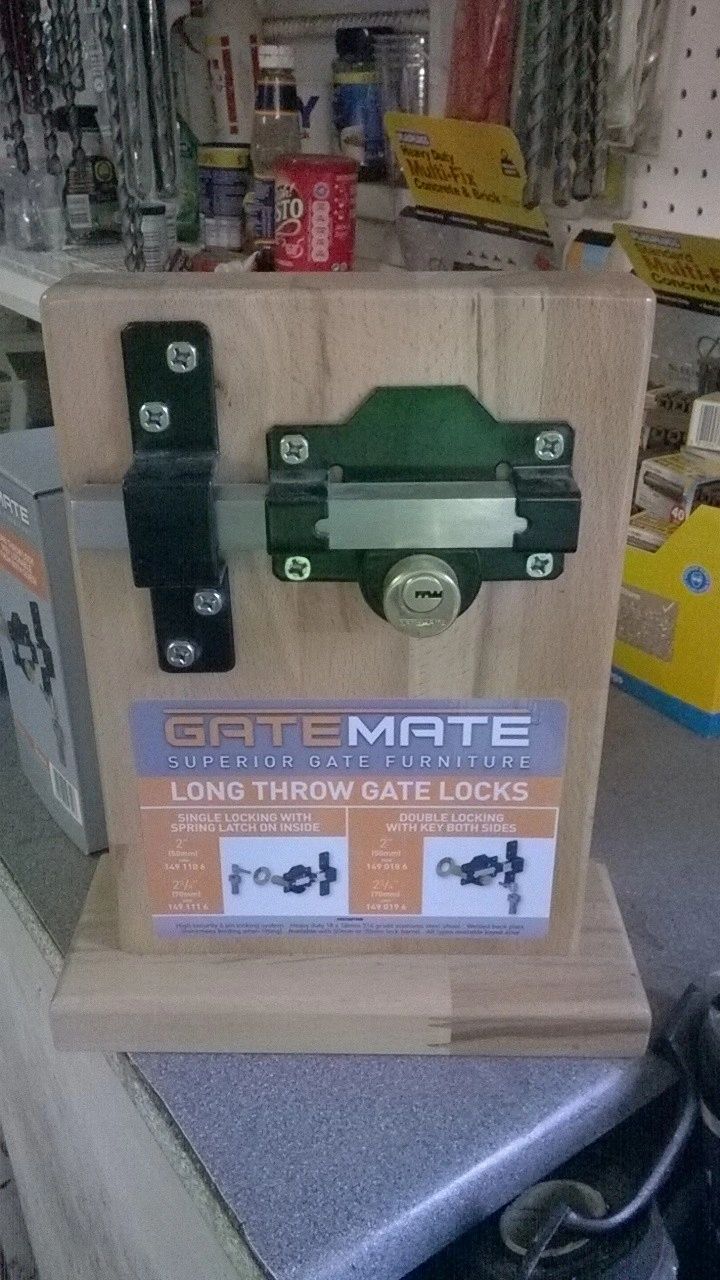
Gate hinges, latches and drop bolts are graded broadly by size and load rating rather than sold as one universal fitting, and undersized ironmongery on a heavy hardwood gate is a common cause of early sagging even when the frame itself is well built.

Externally, ironmongery needs a corrosion-resistant finish suited to constant weather exposure — galvanised, stainless or a specifically outdoor-rated coated finish — rather than internal-grade fittings that will rust and seize within a season or two.

A self-closing hinge or a matching pair of hinges rated for the gate's actual weight is worth specifying explicitly on a quote, since 'a pair of hinges' without a load rating leaves the actual spec to whatever's in stock.

Decking fixings visible versus hidden

Face-fixed decking is screwed directly down through the board top, which is simple, cheap and easy to replace a single board on, but leaves visible screw heads that can work slightly proud over time as the timber moves.

Hidden fixing clip systems fit into the board's grooved edge and screw down into the joist from the side, giving an unbroken top surface, but they generally cost more per board and make it harder to lift a single damaged board without disturbing its neighbours.

Composite boards are more often specified with hidden clip systems since the clean, screw-free look is part of the appeal that justifies the material's higher cost.

New build plots and pre-agreed boundary specifications

New build properties are often sold with a specific boundary treatment already agreed as part of the planning permission for the wider development, sometimes written into individual plot transfers.

Replacing a developer-installed fence with something different can, in some cases, breach these plot-specific terms even after the development has been fully sold and the developer has moved on.

Checking the original plot transfer documents, or the wider planning permission for the estate, is worth doing before assuming a new build boundary can simply be swapped for something else.

Ring latch pull mechanisms

A ring latch uses a rotating ring handle connected to an internal bar, giving a pulling action from either side of the gate rather than the push-down action of a thumb latch, and is common on cottage-style timber gates.

The ring's fixing pin and the bar's guide staples are the usual wear points, since repeated twisting loosens the pin over time even when the bar itself is undamaged.

Repair-versus-replace where the original installation was poor

A fence that's failed early because of shallow footings, undersized posts or poor timber grading in the original build is a weaker candidate for like-for-like repair, since fixing the immediate damage doesn't address why it failed in the first place.

In that situation it's worth being upfront that a repair matching the original spec may fail again on a similar timescale, and that a modest upgrade in post size or footing depth at repair time is often better value than repeating the original approach.

Sizing gates for specific vehicle types

A driveway gate wide enough for a family car may still be too narrow for a van, motorhome or trailer, which is worth checking against the actual vehicles a household owns or plans to own rather than a generic standard opening.

Turning circle matters as much as raw width on a tight driveway, since a gate that technically fits a vehicle's width can still be unusable if there isn't room to straighten up before passing through it.

For a household with mixed vehicle needs, a wider single gate or double gates with an off-centre split (one narrow, one wide leaf) can give flexibility that two equally-sized leaves don't.

RAL colours and UV fade

RAL is a standardised colour matching system widely used for powder coating and factory paint finishes on metal fencing and gates, allowing a specific shade to be reordered consistently years apart.

Darker RAL shades, particularly reds and some greens, tend to fade faster under UV exposure than blacks and greys, since the pigments used to achieve those colours are often less UV-stable.

South-facing runs in direct sun for most of the day will fade noticeably faster than a shaded run of the same colour and coating, which is worth factoring in in when matching an extension to existing fencing.

Automation compatibility checks and specialist referral

Before a gate is automated, its weight, swing clearance and frame rigidity need to suit the motor type being considered, and a gate that's sound for manual use isn't automatically suitable for automation without checking.

We check the gate itself is fit for automation and refer the motor, control-board and sensor installation to a specialist automation engineer.

Land registered as a town or village green

Land formally registered as a town or village green carries strong legal protection against enclosure or obstruction, including from fencing, under the Commons Act 2006.

This status can sometimes apply to open spaces that don't look obviously like a traditional village green, following a successful community application to register them.

Checking the relevant register before fencing land bordering an open green space avoids inadvertently obstructing protected land.

Feather-edge versus overlap panel construction

Feather-edge fencing uses individual tapered boards nailed vertically to horizontal arris rails, built up on site board by board, which makes it easier to repair a single damaged board without disturbing the rest of the run.

Pre-made overlap or lap panels are faster to install since they arrive as a complete unit, but a single split board usually means replacing the whole panel rather than one board.

Feather-edge also tends to be the sturdier choice on an exposed or long run, since the individual boards and rail structure resist wind loading better than a thinner factory panel.

Front garden boundary height compared to side and rear

The permitted development height limits genuinely differ by which boundary is involved — the 1m limit for frontages next to a road contrasts with the 2m general limit that applies to side and rear boundaries.

On corner or through-plots, more than one boundary can count as 'fronting a highway', which sometimes surprises homeowners who assume only the main road-facing side is restricted.

Checking which of a property's boundaries actually meet the legal definition of fronting a highway, rather than guessing from appearance, avoids building something that later needs adjusting.

Clearing old gate hardware and frames

Old hinges, latches and, where a frame is beyond repair, the timber itself are removed and taken off site as part of the job, rather than left for the client to dispose of separately.

Where original ironmongery is salvageable and still serviceable, we reuse it rather than replacing parts that don't need it.

Staining versus painting: different maintenance cycles

A translucent or semi-transparent stain penetrates the timber surface and wears gradually, so re-application every two to three years is a top-up rather than a full strip-back, and overlap patches between old and new coats blend reasonably well.

Opaque exterior paint or solid-colour masonry-style coatings sit on the surface as a film, which looks crisper initially but is prone to flaking and cracking as the timber moves seasonally, and once it starts to fail it usually needs full removal rather than a top coat.

Clients choosing paint for a specific colour should budget for that more disruptive maintenance cycle rather than assuming it behaves like a stain with a different finish.

Kiln-dried versus green timber movement

Green, or unseasoned, timber still holds a significant amount of moisture from milling and will keep shrinking as it dries out in situ, which can open gaps, twist boards or loosen fixings within the first year.

Kiln-dried timber has already been brought down to a stable moisture content under controlled heat, so it moves far less once installed, though it costs more to produce and can be less forgiving if left stacked in wet conditions on site.

Feather-edge and featheredge-style fencing is particularly sensitive to this, since green boards fitted tight can shrink into visible gaps by the following summer even though they looked fully overlapped on the day of installation.

Capping rails and their function

A capping rail sits along the top edge of a closeboard or panel run, covering the end grain of the vertical boards in the same way a post cap protects a post top.

Beyond weather protection it also ties the tops of the boards together, reducing the individual movement that otherwise shows up as a wavy top line after a few seasons of wetting and drying.

It's usually a shallow, weathered profile rather than flat stock, so it sheds water off the fence face instead of holding a bead of moisture along the top edge.

Material delivery constraints on restricted-access sites

A property reached only by a narrow alley, a flight of steps, or a shared passage without vehicle access changes how gate materials are delivered and handled, since a full-size gate leaf, a bag of postmix or a length of steel box section may need carrying in by hand over some distance.

This constraint is worth identifying before materials are ordered, since it can affect what size or weight of gate is practical to specify for that particular access route.

On security access gates in Ware you get the same crew from first site visit to hand-over. That's the whole model — small team, engineered-to-load spec, written quote before we start. Roads such as Musley Hill and High Street are typical of the local layout. Ware Priory is a useful local reference point. Musley Hill, behind the town centre, is on higher and drier ground than the river-level streets.

Get In Touch

Get My Free Quote — 24h Response

No callout fee · Free site visit · Friendly local team covering London & Hertfordshire.

Call us
07885907880
or 02036484746
Email
capital_fencing@yahoo.com
WhatsApp
Message us anytime
Area
London & Hertfordshire
Payment
Card payments accepted

Pay by debit or credit card, bank transfer or cash once the work and price are agreed. No deposit taken online.

Request a Free Quote

We'll get back to you within 24 hours.

Free Site Visit No Callout Fee
Call WhatsAppQuote