London & Hertfordshire Free Site Visit
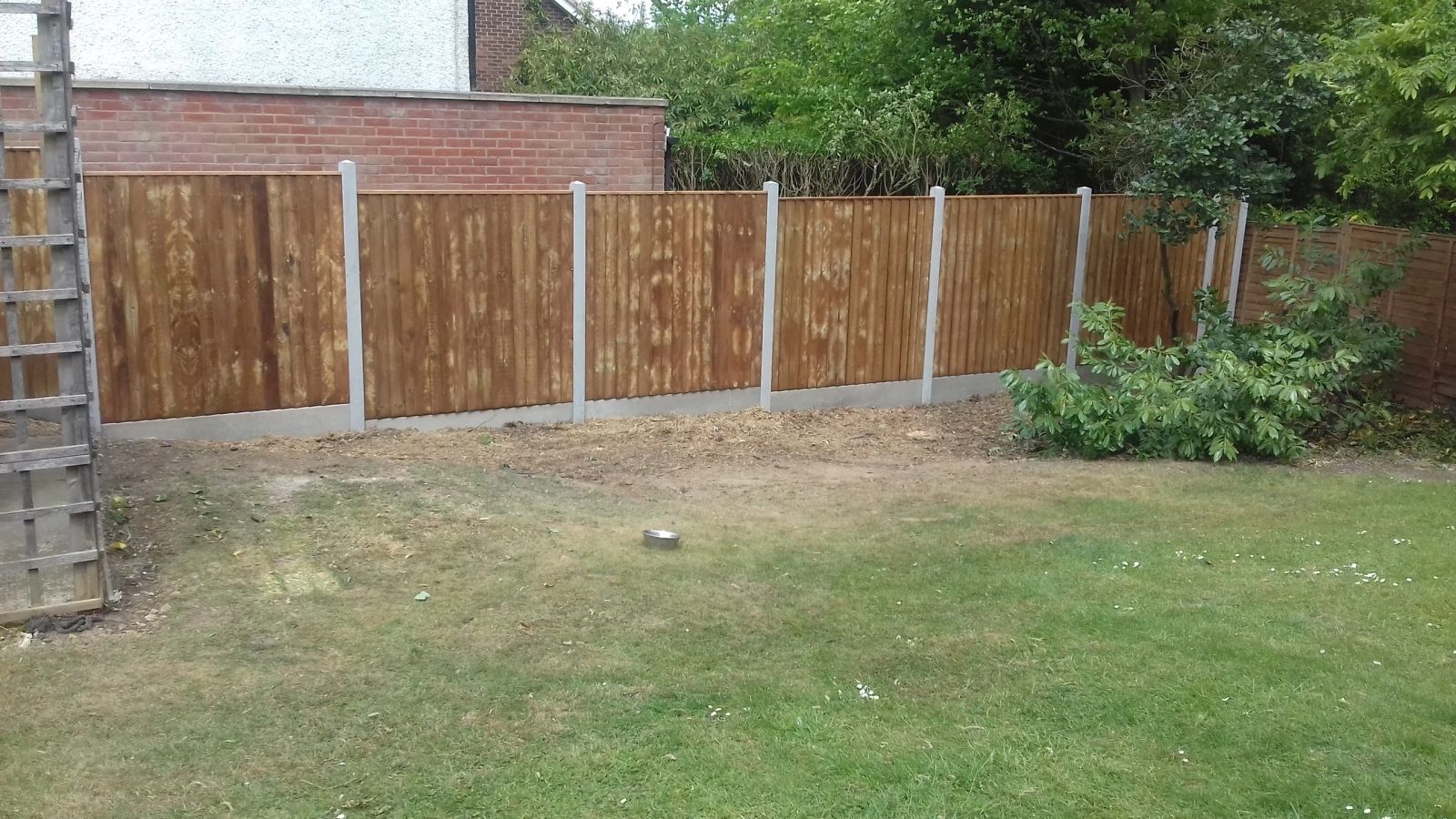
closeboard fence run installed by Capital Fencing in Haringey (N4)
Haringey · N4 / N8 / N15 / N17 / N22

Corner Plot Fencing, Haringey: planning-aware spec for Victorian terraces (Harringay Ladder

Capital Fencing installs corner-plot fencing across Haringey and out toward hackney and islington. What separates a corner-plot fencing job from a standard boundary is the detail: front-and-side boundary run around a corner plot keeping highway sight-line to 900mm at the junction. That's the work, not the marketing. Roads such as West Green Road and Ferme Park Road are typical of the local layout. Bruce Castle Park is a useful local reference point. Haringey covers a wide area including the Harringay Ladder, a distinctive grid of Victorian terraced streets between Green Lanes and Wightman Road.

Capital Fencing installs corner-plot fencing across Haringey and out toward hackney and islington. What separates a corner-plot fencing job from a standard boundary is the detail: front-and-side boundary run around a corner plot keeping highway sight-line to 900mm at the junction. That's the work, not the marketing. Roads such as West Green Road and Ferme Park Road are typical of the local layout. Bruce Castle Park is a useful local reference point. Haringey covers a wide area including the Harringay Ladder, a distinctive grid of Victorian terraced streets between Green Lanes and Wightman Road.

Why this spec, for houses on a corner with two road-facing boundaries — visibility, privacy and highway sight-lines all in play

  • highway visibility standards handled properly — no council-notice rebuild six months in
  • clean junction between two boundary types instead of one tired fence run stopping at a wall
  • corner post carries loads from two directions — we upsize as standard, not as an add-on

Typical corner-plot fencing briefs in Haringey

  • front-and-side boundary run around a corner plot keeping highway sight-line to 900mm at the junction
  • matched picket to the front, closeboard to the side, single point of change at the corner post
Default spec

How we build corner-plot fencing in Haringey

front boundary 900mm painted picket or bar-and-rail on the visibility splay, side boundary 1.8m closeboard beyond the sight-line. On Haringey jobs we adjust for ladder-street back-to-back gardens mean every fence run has two owners and three neighbours to keep informed.

Property mix locally: Victorian terraces (Harringay Ladder, Crouch End), 1930s semis in Muswell Hill, and post-war estates around Tottenham. Typical gardens: long thin Victorian rear gardens with London clay and mature street trees. Postcodes we regularly service: N4, N8, N15, N17, N22.

What goes wrong

Common failure modes on corner-plot fencing

  • carrying a full 1.8m closeboard all the way to the pavement corner — councils issue removal notices for exactly this
  • under-sizing the corner post so the whole two-sided run leans within a year

Corner Plot Fencing FAQs — Haringey

Can two different fence types meet at a corner?

On corner-plot fencing jobs in Haringey (N4), our default answer is: front boundary 900mm painted picket or bar-and-rail on the visibility splay, side boundary 1.8m closeboard beyond the sight-line. The honest trade-off is carrying a full 1.8m closeboard all the way to the pavement corner — councils issue removal notices for exactly this — which is exactly what our default spec designs out.

What happens if my corner boundary blocks a driver's view?

Across Haringey we spec around ladder-street back-to-back gardens mean every fence run has two owners and three neighbours to keep informed, so on corner-plot fencing that usually means picket or bar-and-rail on the sight-line splay. The honest trade-off is carrying a full 1.8m closeboard all the way to the pavement corner — councils issue removal notices for exactly this — which is exactly what our default spec designs out.

Where does the highway sight-line splay actually start?

Haringey coverage means we can survey most N4 addresses inside a week — houses on a corner with two road-facing boundaries — visibility, privacy and highway sight-lines all in play. For context: clean junction between two boundary types instead of one tired fence run stopping at a wall. We handle the council conversation as part of the job, not as an after-thought.

Do I need council permission for a corner plot boundary?

Practically: front-and-side boundary run around a corner plot keeping highway sight-line to 900mm at the junction. That's the Haringey version of this job, not a generic one. For context: clean junction between two boundary types instead of one tired fence run stopping at a wall. We handle the council conversation as part of the job, not as an after-thought.

How is the corner post different from a normal post?

On corner-plot fencing jobs in Haringey (N4), our default answer is: front boundary 900mm painted picket or bar-and-rail on the visibility splay, side boundary 1.8m closeboard beyond the sight-line. For context: clean junction between two boundary types instead of one tired fence run stopping at a wall. We handle the council conversation as part of the job, not as an after-thought.

Recent corner plot fencing work
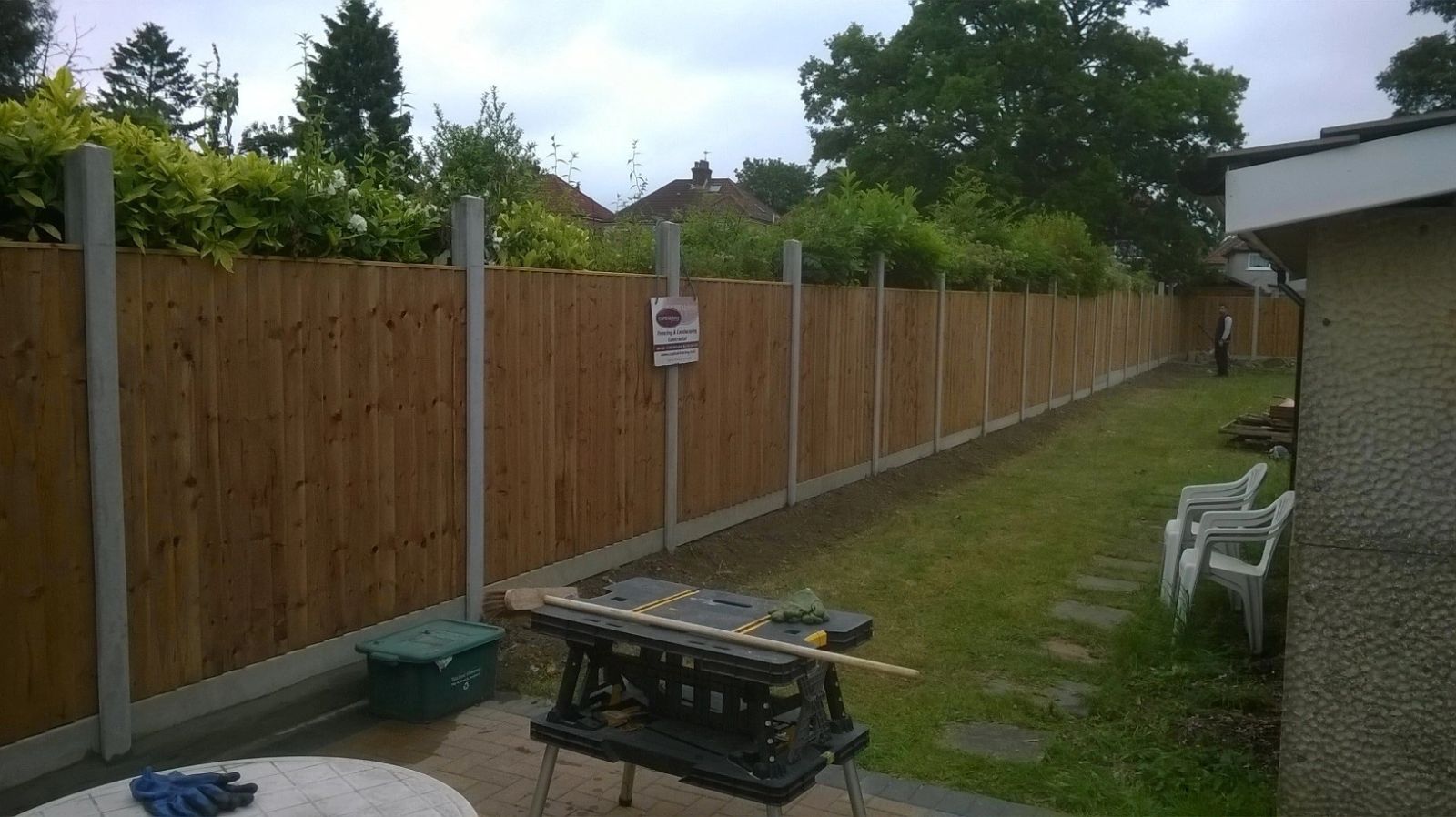
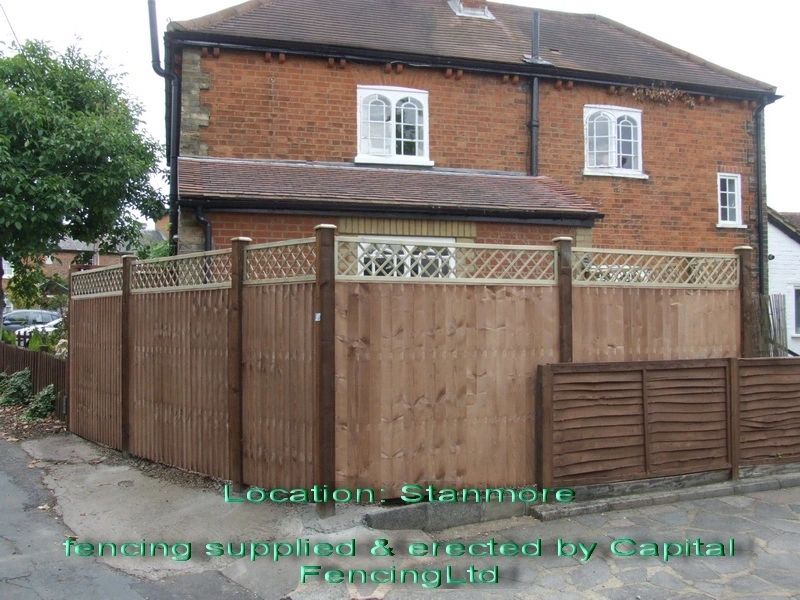
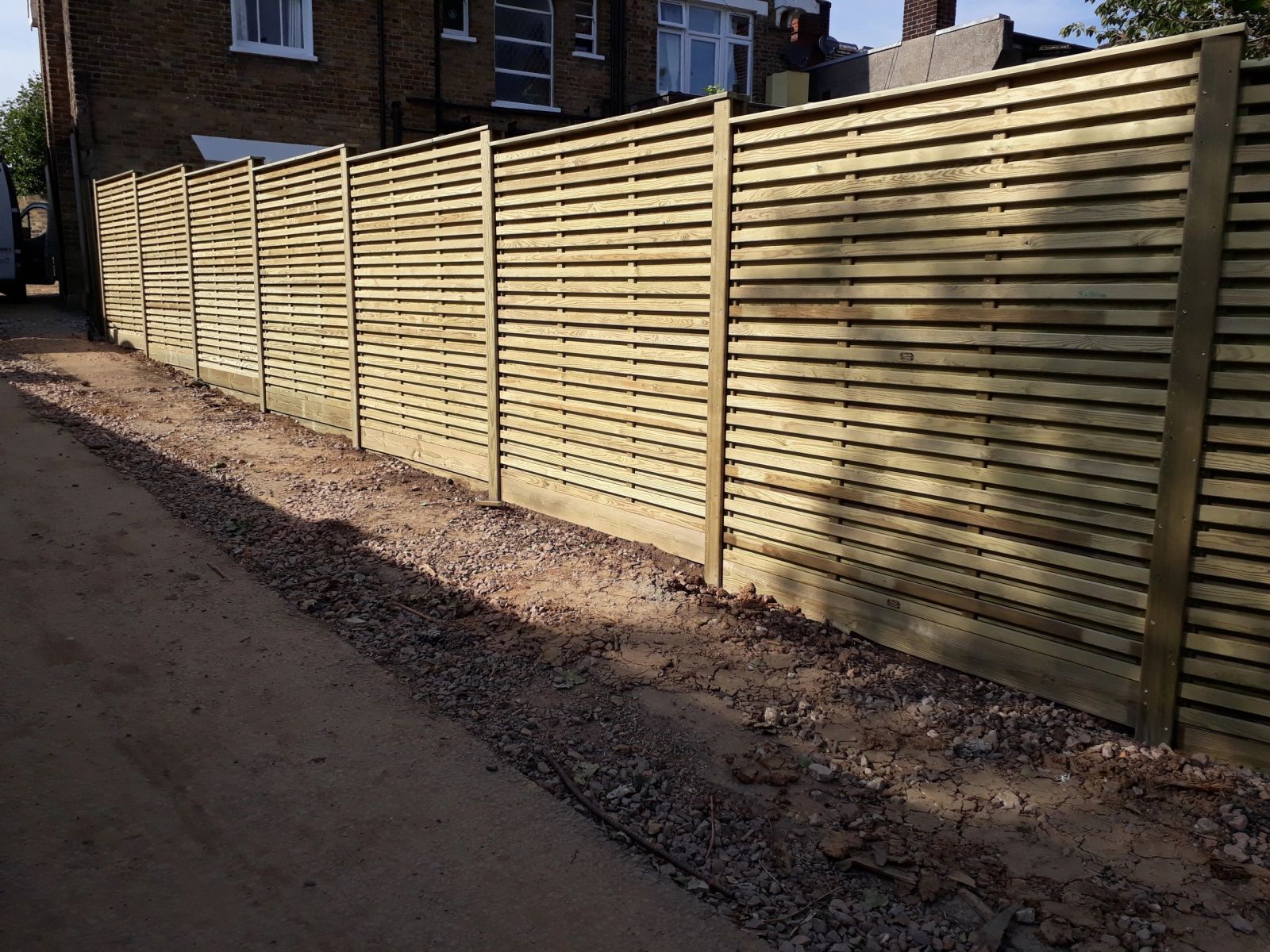
closeboard fence run installed by Capital Fencing in Haringey (N4)panel fence install installed by Capital Fencing in Haringey (N4)trellis-topped fence installed by Capital Fencing in Haringey (N4)bespoke decorative fence installed by Capital Fencing in Haringey (N4)

Local considerations across Haringey and hackney

Minimum clear width for pedestrian gate access

A pedestrian gate needs enough clear width once open to comfortably pass through with hands full, a pushchair or a wheeled bin, and a gate that technically opens but leaves very little usable width against an adjacent wall or post is a common design oversight on tight side returns.

Checking the actual clear opening, not just the gate leaf's nominal width, avoids this problem before a gate is ordered.

Cane bolt leverage on wide leaves

The long shaft of a cane bolt gives more leverage against a wide gate leaf twisting in wind than a short bolt fixed close to the bottom rail, which is why they're specified on wider double-gate leaves rather than narrow pedestrian gates.

A cane bolt still needs a properly prepared ground socket to work, and a shaft dropped onto uneven paving without a socket wears quickly and loses its holding grip.

Refitting a panel blown clear of its post clips

Slotted-post clip systems let a panel lift straight up and out under strong gusts once the clip lip has worn or bent slightly, which is a common failure on exposed corner bays rather than a sign the panel itself is faulty.

Refitting usually needs the clips checked for wear and sometimes replaced with a deeper or reinforced pattern before the same panel or a new one is dropped back in, since refitting into a worn clip just repeats the failure.

Building control interaction with retaining walls

A retaining wall over 1m in height, or one supporting a structure or the stability of a neighbouring building, generally falls within the scope of the Building Regulations even though a simple garden fence of the same height wouldn't, because failure carries a structural safety risk beyond the immediate boundary.

Building control involvement typically means the wall's design needs to demonstrate adequate drainage behind it and sufficient strength to resist the retained ground, often requiring a structural engineer's calculations rather than a standard trade specification.

Retaining structures built without the necessary building control sign-off can create problems on sale of the property, since a buyer's solicitor will often ask for a completion certificate that doesn't exist.

When a failed post means replacing the gate too

A hanging post that's rotted at ground level usually needs full replacement rather than repair, and because the gate is bolted directly to that post, the gate itself often has to come off and be reassessed for damage during the process even if the gate was previously sound.

This is worth explaining clearly to a client who's expecting a simple post swap, since the gate's own hinges and fixings may need attention at the same time.

Bearer support on adjustable pedestals

Adjustable plastic pedestals supporting deck bearers let each support point be levelled individually, which is useful over an uneven concrete base, a sloped patio, or ground that isn't practical to excavate level.

Pedestal spacing still needs to follow the same span logic as timber joists, since an adjustable base doesn't change how far the bearer above it can safely span before it needs another support point.

Pedestals also raise the whole deck slightly, which is worth checking against a threshold or step height at the house before committing to the system.

Matching stain colour on a repaired section against a faded run

A freshly stained repair section will look noticeably darker or more saturated than the rest of a run that's faded over several seasons of UV exposure, even using the exact same product and shade.

Some clients prefer to accept this and let the new section weather in naturally over a season, while others ask for the whole run to be recoated at the same time for a more even finish immediately after the repair.

Fence junctions above a retaining wall

A fence sitting on top of a retaining wall adds lateral load the wall wasn't necessarily designed for, particularly on a taller solid-faced security screen catching wind, so the wall's condition and the fence's fixing method both need checking before installation rather than assumed to be compatible.

Where the wall can't safely take a bolted post, a freestanding post line set back slightly from the wall edge, tied back if needed, keeps the fence load off the retaining structure entirely.

Deciding the scope of a part-run rebuild

A part-run rebuild replaces a defined stretch of bays back to sound posts at either end rather than patching individual failures within a longer run, which gives a cleaner, more consistent result where damage is clustered.

Setting the boundaries of a part-run rebuild means checking the posts just outside the visibly damaged section too, since a post that looks fine next to an obviously failed one can still be borderline and best included in the same piece of work.

Corner visibility splays affecting fence height specifically

Some corner plots have a specific visibility splay condition attached to their planning history that limits fence, hedge or wall height at the junction to well below the normal 1m road-facing limit.

This is separate from the general permitted development height rule and takes precedence where it applies, since it's usually tied to road safety at a specific junction.

Checking the property's planning history for this kind of condition before fencing a corner plot boundary avoids building something that later needs cutting back.

Level differences between plots and who retains

Where two plots sit at different levels, the general presumption in law is that whoever created the level difference — usually by cutting or raising ground during earlier development — is responsible for retaining it, though on old or unclear plots this isn't always documented.

A fence contractor isn't in a position to resolve a retaining dispute, but should flag it clearly where a proposed fence line runs directly along or above an unretained level change, since a fence is not a retaining structure and shouldn't be asked to do that job.

Getting this distinction agreed in writing between neighbours before work starts avoids the fence being blamed later for a ground movement problem it never caused.

Razor mesh panel systems for high-security compounds

A razor mesh panel embeds short, sharp folded barbs directly into the mesh weave itself rather than adding a separate topping coil, giving an anti-cut and anti-climb barrier across the whole panel height rather than only at the top.

These panels carry a higher injury risk than a standard mesh and are typically reserved for high-value compounds such as a fuel depot or a substation, kept well away from any pedestrian route.

Care homes

Care home boundaries need to manage two directions of risk at once: keeping the site secure from outside, and, where residents live with dementia, preventing unsupervised exit through a garden gate that looks like a normal feature of the grounds.

Gates onto care home gardens are often specified with a delayed-release or coded latch rather than a simple thumb-turn, agreed with the home's management against its own care regulator requirements.

Access for contractors on an occupied care site usually needs coordinating around resident routines and quiet hours rather than a standard domestic working day.

Zinc-aluminium coatings

Zinc-aluminium alloy coatings, sold under various trade names, combine zinc's sacrificial protection with aluminium's more stable barrier properties, generally giving longer service life than pure zinc galvanising in the same environment.

They're commonly used on wire products and fixings destined for coastal or heavily salted road environments, where standard galvanising alone corrodes faster than inland applications.

The trade-off is that these coatings are usually applied by wire-drawing or continuous coil coating processes rather than batch hot-dip immersion, which limits them to certain product types rather than large fabricated steelwork.

Listed building curtilage and garden boundaries

Structures within the curtilage of a listed building — which can include garden walls, gate piers and sometimes fencing — may themselves be treated as part of the listing, even if not mentioned explicitly.

That means listed building consent can be required for work that would otherwise be unremarkable on a non-listed property, and doing work without consent where it's needed is a criminal offence.

Anyone unsure whether their boundary falls within this kind of curtilage should raise it with the council's conservation or listed buildings officer before starting.

Kiln-dried versus green timber in new gate frames

A gate built from timber that wasn't properly dried before construction will shrink and potentially twist as it dries out in service, opening joints that were tight when first fitted, whereas kiln-dried stock has already done most of that movement before assembly.

This is worth checking when a newly fitted gate develops joint gaps within its first year, since it points to the timber's moisture content at build rather than a fitting fault.

Why repaired sections sometimes weather differently

New timber fitted into an older run will weather at a different rate to the surrounding boards for the first year or two, simply because the existing timber has already taken its first few seasons of treatment and UV exposure.

This settles down over time and isn't a sign of a poor repair — we explain this at the point of quoting so it isn't a surprise later.

Embodied carbon in timber versus composite materials

Timber sequesters carbon as it grows and, if sourced from a well-managed forest, typically carries a lower embodied carbon footprint through manufacture than composite products that incorporate manufactured polymer alongside recycled wood fibre.

Composite products often use recycled plastic content, which offsets some of their footprint by diverting material from landfill, but the manufacturing energy involved in producing the composite board itself is generally higher than sawing and treating solid timber.

Comparing the two fairly also needs to account for service life, since a material lasting genuinely longer before replacement can offset a higher manufacturing footprint over the full life of the fence.

Resin anchor fixings for a bolted baseplate post

A resin anchor sets a threaded stud into a drilled hole in existing concrete or masonry using a two-part chemical resin, giving a strong fixing for a bolted baseplate post where excavating a new footing isn't practical, such as on an existing hardstanding.

Anchor depth and resin cure time both need to match the manufacturer's data for the load expected, and a resin anchor installed into damp or dusty concrete without proper hole cleaning will pull out well below its rated capacity.

Diverting a public right of way away from a new fence

Where a registered public right of way crosses land that's being fenced, it's not something that can simply be blocked — a formal diversion order from the council is needed to legally move its route.

This process typically involves public consultation and can take a meaningful amount of time, so it needs building into any project timeline where it's relevant.

Checking the definitive map of public rights of way, held by the county or unitary council, before finalising a fence layout avoids inadvertently obstructing a protected path.

Fixed versus crimped capping rail junctions

A capping rail bolted or screwed to the top of a panel run gives a fixing point that can be removed for maintenance but is also the fixing most often targeted for theft or vandalism where the rail carries scrap value.

A crimped or one-way rivet fixing is harder to remove without specialist tools, trading off easy future maintenance access against a meaningfully harder target for casual interference with the capping line.

Post spacing on a run that doesn't divide evenly

Standard panels are usually 1.83m (6ft) wide, but very few boundary runs measure out as an exact multiple of that, so the layout has to absorb the remainder somewhere rather than pretend it isn't there.

The common approach is to split the shortfall across the two end bays so both are cut slightly narrower and roughly matched, rather than leaving one full-width bay and one very narrow offcut at a single end.

Where a fixed feature — a gate opening, a manhole, an existing post that must stay — sits partway along the run, setting out works outward from that fixed point in both directions rather than from one end only.

On corner-plot fencing in Haringey you get the same crew from first site visit to hand-over. That's the whole model — small team, planning-aware spec, written quote before we start. Roads such as Alexandra Park Road and Falkland Road are typical of the local layout. Harringay Ladder is a useful local reference point. Turnpike Lane and Wood Green form the borough's main retail centres.

Get In Touch

Get My Free Quote — 24h Response

No callout fee · Free site visit · Friendly local team covering London & Hertfordshire.

Call us
07885907880
or 02036484746
Email
capital_fencing@yahoo.com
WhatsApp
Message us anytime
Area
London & Hertfordshire
Payment
Card payments accepted

Pay by debit or credit card, bank transfer or cash once the work and price are agreed. No deposit taken online.

Request a Free Quote

We'll get back to you within 24 hours.

Free Site Visit No Callout Fee
Call WhatsAppQuote