London & Hertfordshire Free Site Visit
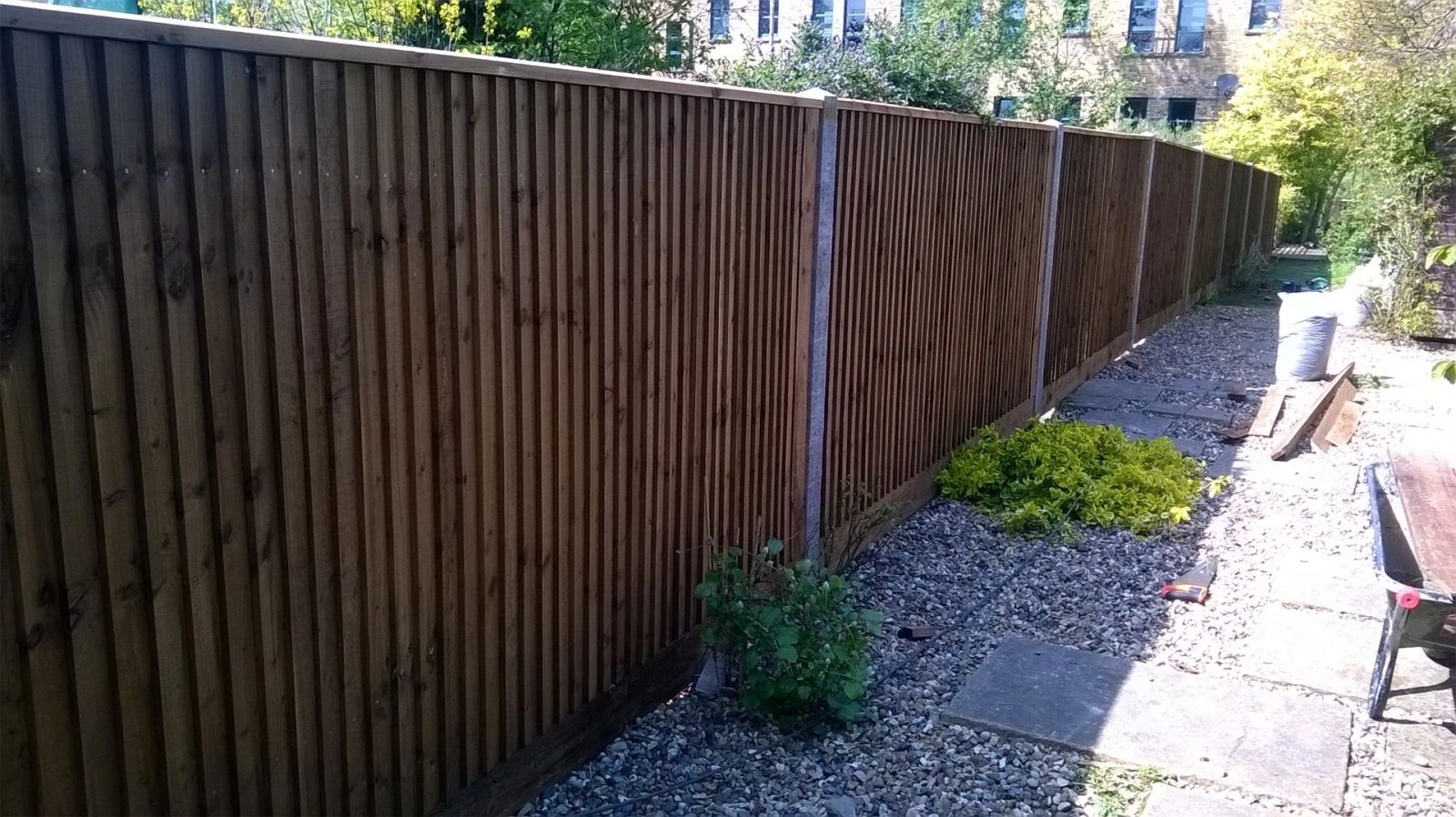
closeboard fence run installed by Capital Fencing in Hoddesdon (EN11)
Hoddesdon · EN11

Corner Plot Fencing in Hoddesdon (EN11)

If you're weighing corner-plot fencing for a property in Hoddesdon, the first thing that matters is conservation guidance, sight-line splays and permitted-development limits — not the material choice. Once that's settled, picket or bar-and-rail on the sight-line splay is where most of our corner-plot fencing work in EN11 lands, with closeboard behind the building line for privacy as a considered alternative. Roads such as Middlefield Road and Conduit Lane are typical of the local layout. Lowewood Museum is a useful local reference point. Hoddesdon's housing splits between the older High Street terraces, which have narrow rear access, and the more spacious Rye Park and Rye House estates further out.

If you're weighing corner-plot fencing for a property in Hoddesdon, the first thing that matters is conservation guidance, sight-line splays and permitted-development limits — not the material choice. Once that's settled, picket or bar-and-rail on the sight-line splay is where most of our corner-plot fencing work in EN11 lands, with closeboard behind the building line for privacy as a considered alternative. Roads such as Middlefield Road and Conduit Lane are typical of the local layout. Lowewood Museum is a useful local reference point. Hoddesdon's housing splits between the older High Street terraces, which have narrow rear access, and the more spacious Rye Park and Rye House estates further out.

Typical corner-plot fencing briefs in Hoddesdon

  • brick pier and metal railing frontage kept lower on the splay so parked cars can pull out safely
  • front-and-side boundary run around a corner plot keeping highway sight-line to 900mm at the junction
Default spec

How we build corner-plot fencing in Hoddesdon

front boundary 900mm painted picket or bar-and-rail on the visibility splay, side boundary 1.8m closeboard beyond the sight-line. On Hoddesdon jobs we adjust for older fence runs in the old town often hide rotted posts under cement skirts — full removal is usually required.

Property mix locally: 1930s and 1950s semis, with Victorian cottages toward the Old Town. Typical gardens: mid-sized flat gardens; properties near Rye Park often have direct alley access. Postcodes we regularly service: EN11.

Why this spec, for houses on a corner with two road-facing boundaries — visibility, privacy and highway sight-lines all in play

  • highway visibility standards handled properly — no council-notice rebuild six months in
  • clean junction between two boundary types instead of one tired fence run stopping at a wall
  • corner post carries loads from two directions — we upsize as standard, not as an add-on
What goes wrong

Common failure modes on corner-plot fencing

  • carrying a full 1.8m closeboard all the way to the pavement corner — councils issue removal notices for exactly this
  • under-sizing the corner post so the whole two-sided run leans within a year

Corner Plot Fencing FAQs — Hoddesdon

How is the corner post different from a normal post?

On corner-plot fencing jobs in Hoddesdon (EN11), our default answer is: front boundary 900mm painted picket or bar-and-rail on the visibility splay, side boundary 1.8m closeboard beyond the sight-line. We'll walk you through highway visibility standards handled properly — no council-notice rebuild six months in on the site visit before you commit.

What happens if my corner boundary blocks a driver's view?

Across Hoddesdon we spec around older fence runs in the old town often hide rotted posts under cement skirts — full removal is usually required, so on corner-plot fencing that usually means picket or bar-and-rail on the sight-line splay. For context: clean junction between two boundary types instead of one tired fence run stopping at a wall. We handle the council conversation as part of the job, not as an after-thought.

How high can a front boundary be on a corner plot?

Broxbourne Borough coverage means we can survey most EN11 addresses inside a week — houses on a corner with two road-facing boundaries — visibility, privacy and highway sight-lines all in play. We'll walk you through highway visibility standards handled properly — no council-notice rebuild six months in on the site visit before you commit.

Can two different fence types meet at a corner?

Practically: front-and-side boundary run around a corner plot keeping highway sight-line to 900mm at the junction. That's the Hoddesdon version of this job, not a generic one. For context: clean junction between two boundary types instead of one tired fence run stopping at a wall. We handle the council conversation as part of the job, not as an after-thought.

Where does the highway sight-line splay actually start?

On corner-plot fencing jobs in Hoddesdon (EN11), our default answer is: front boundary 900mm painted picket or bar-and-rail on the visibility splay, side boundary 1.8m closeboard beyond the sight-line. The honest trade-off is carrying a full 1.8m closeboard all the way to the pavement corner — councils issue removal notices for exactly this — which is exactly what our default spec designs out.

Recent corner plot fencing work
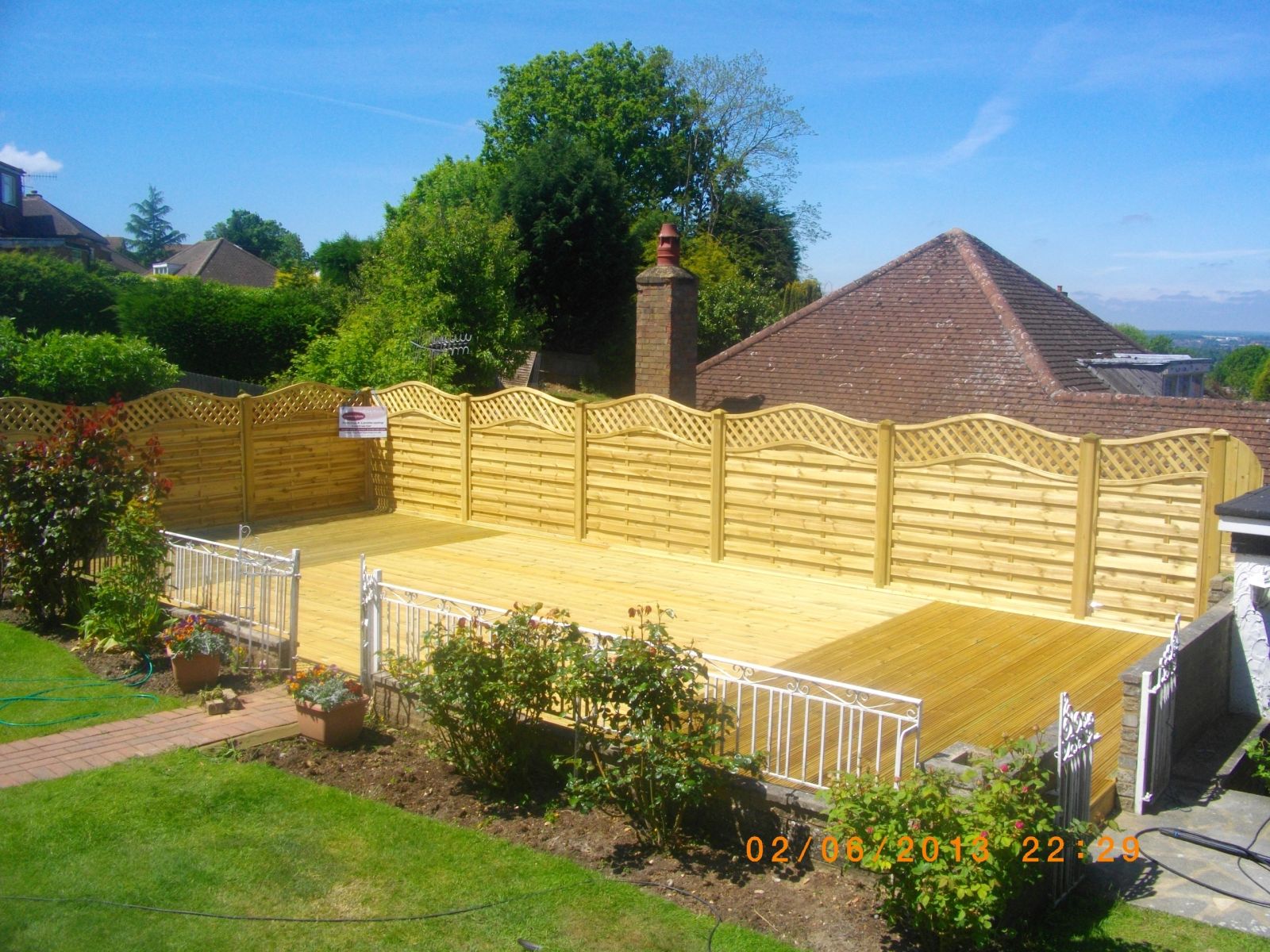
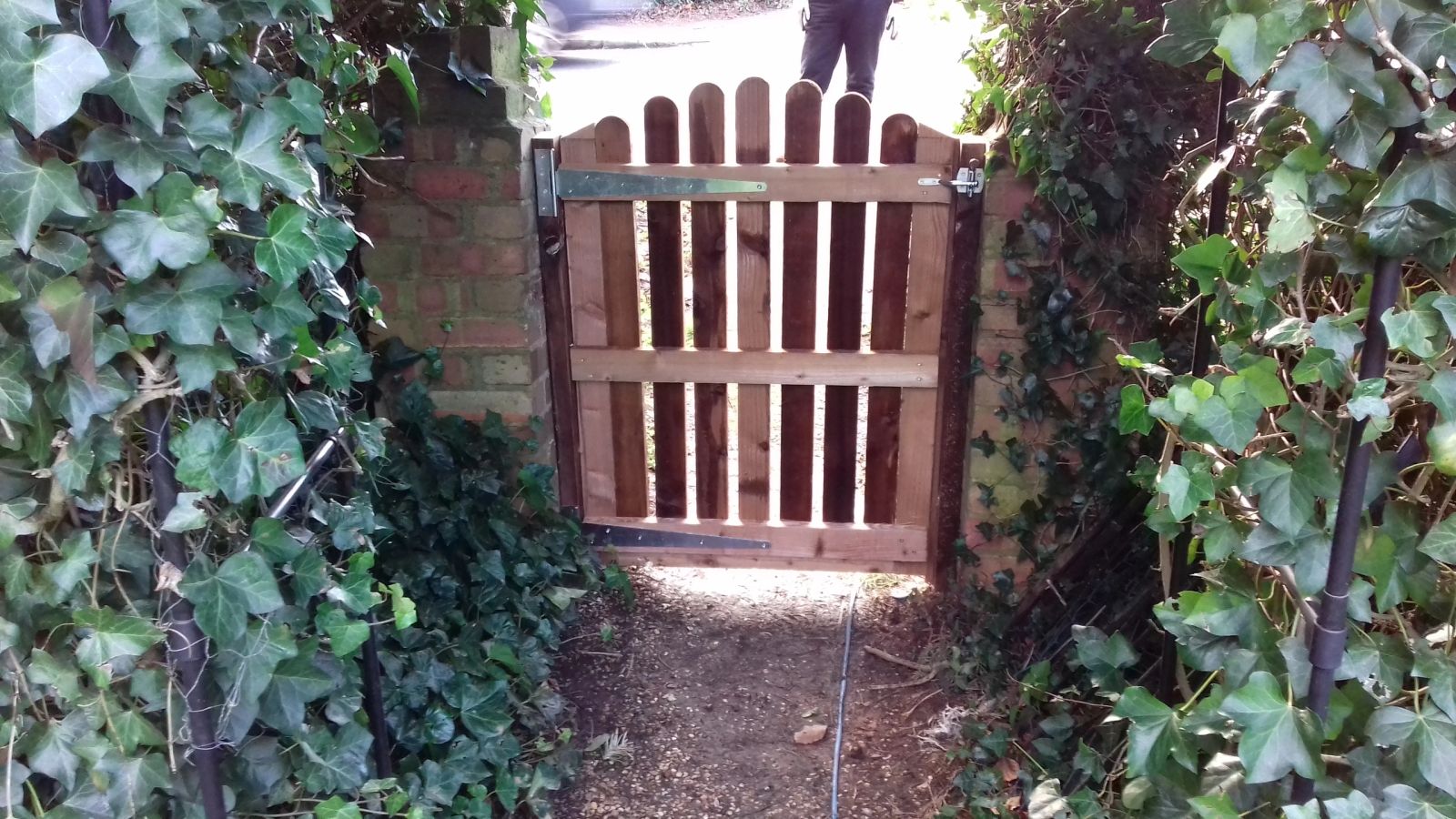
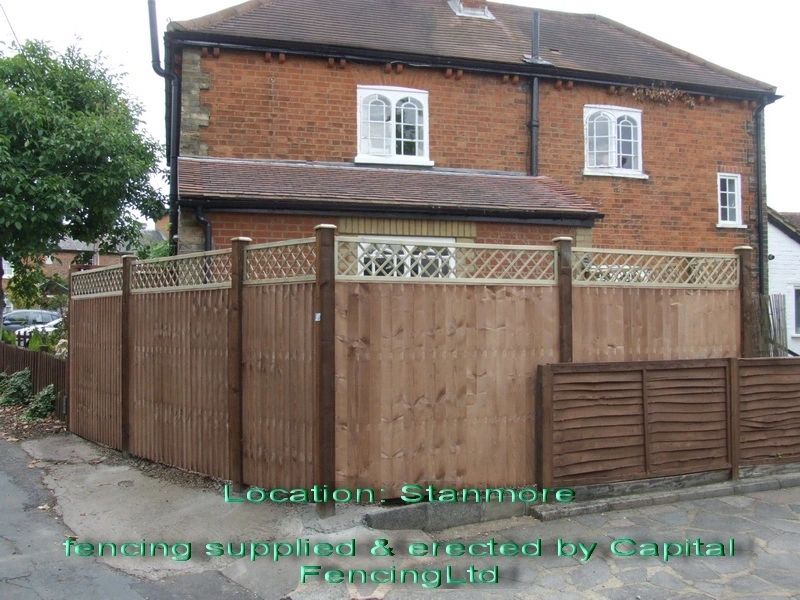
closeboard fence run installed by Capital Fencing in Hoddesdon (EN11)panel fence install installed by Capital Fencing in Hoddesdon (EN11)trellis-topped fence installed by Capital Fencing in Hoddesdon (EN11)bespoke decorative fence installed by Capital Fencing in Hoddesdon (EN11)

Corner Plot Fencing in Hoddesdon: the practical detail

Fence height and boundary lighting interaction

A taller solid fence can throw a shadow line that defeats existing security lighting, creating a dark strip right where an intruder would approach the boundary.

Lighting angles are worth reviewing alongside any height change, and a fence contractor should flag an obvious shadow problem even though relocating the light itself is usually a separate trade.

Gate ironmongery on a security boundary

A security fence is only as strong as its weakest gate junction — commercial-grade hinges, drop bolts and hasps matched to the fence spec close the gap that a domestic-grade fitting would leave open.

Where a client wants electronic access control we fit the mechanical hardware to the same spec and refer the electronic side to a specialist, rather than mixing a heavy-duty fence with a light-duty latch.

Restrictive covenants on open-plan frontages

Many post-war estates were built with an explicit covenant in the title deeds preventing front garden fences or walls above a low height, intended to preserve an open-plan street appearance.

These covenants are private legal obligations between landowners rather than planning rules, and breaching one can in principle be enforced by whoever holds the benefit of the covenant, sometimes a management company.

Checking the title register for this kind of restriction before fitting a front boundary fence avoids finding out about it after the work is done.

Outbuildings casting permanent shade onto a fence run

A shed, greenhouse or garage built close to a boundary casts a fixed shadow over part of the adjoining fence run for some or all of the day, creating the same slower-drying conditions as a north-facing aspect regardless of the fence's actual orientation.

This localised shading is easy to overlook when assessing a whole boundary's exposure, since the rest of the run a few metres away may be in full sun.

It's worth treating the shaded section as its own microclimate for treatment and inspection purposes rather than assuming uniform conditions along the full length.

A survey checklist for ground conditions

A useful pre-quote ground check covers a short list of practical questions: what does a trial hole show in the first 300-450mm, is there any standing or seeping water, are there visible roots or a stump near the line, and does the ground rise or fall noticeably along the run.

It's also worth asking the client directly about anything not visible on the surface — a known soakaway, an old outbuilding, a buried oil tank or a recent extension — since owners often know details that a visual survey alone won't reveal.

Recording these findings against each section of the run, rather than a single note for the whole boundary, is what allows post depth and base type to be specified accurately rather than uniformly guessed.

LOLER-adjacent inspection duties on powered gates

Automated or powered gates fall under machinery safety regulations rather than lifting equipment rules directly, but the same discipline of scheduled inspection applies — force limiting, safety edges and photocell alignment on a powered gate need periodic checking, not a one-off commissioning test.

Where a fencing contractor supplies the mechanical gate leaf but not the automation, responsibility for these checks is usually split contractually, and it's worth confirming who's covering what before the gate goes live.

Sliding versus swing gate mechanisms

A swing gate needs clear space to open into, whether that's the driveway itself or the street, while a sliding gate runs parallel to the boundary and suits plots where that swing space isn't available.

Sliding gates need a level, unobstructed track run at least as long as the gate itself, plus a foundation for the track and rollers that copes with the gate's full weight — cutting corners here is the most common cause of a sliding gate that jams.

Swing gates are generally simpler to install and service, which is worth weighing against a sliding gate's space-saving advantage on a tight or sloping driveway.

Haunching a post base above ground level

Haunching means shaping the concrete around a post so it stands slightly proud of the surrounding ground and slopes away from the post in all directions, rather than finishing flush or dished.

That slope sheds rainwater away from the timber-to-concrete interface, which is the point most prone to trapping moisture and starting rot at the base of an otherwise sound post.

A flush or dished base, by contrast, holds a shallow puddle around the post after every rainfall, quietly shortening the post's life regardless of how well the timber itself was treated.

Fencing near listed buildings

Listed building consent applies to works that affect the character of a listed building, and that can extend to boundary treatments within its curtilage even where the fence itself isn't old or notable.

In practice this usually means sticking to traditional materials and profiles — timber rather than metal panel systems, painted rather than stained finishes matching existing joinery — and checking with the conservation officer before ordering rather than after installation.

Unauthorised alterations near a listed building can require reversal at the owner's cost, so a five-minute enquiry call is cheap insurance against a much more expensive mistake.

Iroko and tropical hardwood density

Iroko is a dense West African hardwood sometimes used as a substitute for teak in gates and structural fencing components, valued for a natural durability that doesn't rely on chemical treatment.

Its density makes it heavier to handle and slower to work than softwood equivalents, and it typically needs pre-drilling for screws to avoid splitting.

Because it's naturally oily, some finishes and glues bond to it poorly unless the surface is wiped down with a solvent first, which is a detail that's easy to miss when substituting it into a softwood-designed detail.

Acoustic fencing compared with planting-based screening

Dense planting alone reduces perceived noise mostly by psychological and visual screening rather than genuine sound-blocking, since a hedge thin enough to see through offers little real acoustic mass.

A solid acoustic fence combined with planting in front of it gets the best of both — genuine sound reduction from the solid barrier, softened by greenery that also helps with dust and visual softening.

Where space is tight, prioritising the solid barrier over depth of planting usually gives a better acoustic result than a wide but thin screen of shrubs.

Temporary hoarding during other building work

Where fencing or gate work runs alongside a wider building project — an extension, a loft conversion with scaffolding, or a full renovation — a temporary hoarding or site fence often needs to go up before the permanent boundary work can start.

Temporary fencing adjoining a public footpath or road has its own public safety considerations, including visibility for pedestrians and vehicles passing the site.

Sequencing matters here — installing the final boundary fence before other trades have finished moving materials through that access point often means damage that has to be repaired before the job can be signed off.

Coordinating fencing work with other trades on a shared site

On a job where fencing follows landscaping, paving or groundworks by another trade, confirming final levels and boundary positions with that other trade before digging starts avoids fence posts being set to a level that then changes once the remaining groundwork is finished.

Where fencing is scheduled before paving, agreeing which side of the post line the paving will finish against prevents a post ending up embedded in what should have been a clear paving joint.

Simple sequencing conversations at the outset, rather than each trade working to its own assumptions, avoid the more expensive alternative of one trade's finished work being disturbed by the next.

Sliding gate track and roller wear

A sliding gate runs along a ground-mounted track or is carried on top rollers against a guide rail, and debris or corrosion in the track is one of the most common causes of a sliding gate becoming stiff or jamming partway through its travel.

Clearing and checking the track for level is usually the first step in diagnosing a sliding gate fault before assuming the rollers themselves need replacing.

Handling excavated spoil on a fencing job

Digging even a modest run of post holes generates a surprising volume of spoil, and leaving it in a single heap on a lawn for the duration of a job kills the grass underneath if left more than a few days.

Spreading spoil thinly on a border, bagging it for removal, or arranging same-day disposal all avoid that dead patch, and the right choice depends on whether the client wants the spoil kept for landscaping elsewhere on the plot.

Heavy clay spoil is particularly slow to dry and awkward to barrow once it's rained on, so timing the dig to avoid leaving wet spoil sitting overnight where possible reduces both the mess and the extra effort of moving it later.

Retail yards and car parks

Fencing around a retail unit's rear yard or customer car park usually has to satisfy insurer requirements for secured perimeters as well as simple boundary marking, particularly where stock or delivery cages are stored outside.

Vehicle impact is a real consideration in a car park boundary, and posts near a marked bay or turning circle are often specified heavier or protected by a bollard rather than relying on the fence itself to survive a low-speed shunt.

Work here is usually scheduled around trading hours and delivery windows, since blocking a rear yard during a delivery slot can hold up a retailer's whole day.

Basic safety checks before starting a repair

Before any post is dug out or panel removed, checking the fence isn't currently under load from a leaning tree, a taut washing line or a climbing plant reduces the risk of something moving unexpectedly once a fixing is cut free.

Gloves and eye protection matter as much on a small repair as a full installation, since old nails, splintered timber and rusted wire fixings are common causes of minor injury on repair work specifically.

Long-run line setting with laser and string

A straight security run over a long distance is set out with a string line or laser level between end posts before any intermediate post is positioned, since a small error compounded over many bays leaves a visibly crooked line.

On an undulating site, a laser also confirms consistent post height above ground even where the ground itself rises and falls, keeping the top line level rather than following every dip.

Planning enforcement notices on unauthorised boundaries

Councils have enforcement powers to require unauthorised boundary structures to be altered or removed, usually triggered by a neighbour's complaint or a routine site visit for unrelated work.

There are time limits on enforcement action for most breaches, though these vary by the type of breach and don't apply to work within a conservation area or affecting a listed building in the same way.

Responding promptly and cooperatively to any enforcement contact from a council generally leads to a better outcome than ignoring it.

Chalk ground in south Hertfordshire

South Hertfordshire sits over Chiltern chalk in places, ground that's generally stable and free-draining but can be extremely hard and slow to auger once you're through a thin topsoil layer.

Chalk doesn't shrink and swell the way clay does, so posts set in it are less prone to seasonal loosening, though a shattered or fractured chalk band can still leave voids that need packing rather than assuming solid bearing.

Where chalk is close to the surface, hand tools or a breaker attachment are sometimes quicker than persisting with a standard auger.

Douglas fir for structural fencing timber

Douglas fir is a stronger, stiffer softwood than typical whitewood or redwood, with a pronounced grain pattern and moderate natural durability in its heartwood, making it a common choice for structural posts and gate framing rather than boarding.

Its resin content is generally lower than pine, which reduces the risk of resin bleed showing through a painted or stained finish.

Because of its strength-to-weight ratio it's often specified for longer unsupported spans, such as wide gate frames, where a lighter section still needs to resist twisting under its own weight.

Tree roots and root protection areas

A tree's root protection area is calculated from its stem diameter and generally extends well beyond the canopy spread, meaning a fence line can fall inside it even where the tree itself looks distant.

Excavation within a root protection area should avoid cutting roots over around 25mm diameter where possible, using hand tools and routing the post line slightly off-square if that avoids a structural root.

For a fence contractor this usually means agreeing a no-dig or reduced-depth post solution on the affected section rather than a standard auger run across the whole boundary.

Whether the brief is front-and-side boundary run around a corner plot keeping highway sight-line to 900mm at the junction or matched picket to the front, closeboard to the side, single point of change at the corner post, we quote it from a site visit, not a photo. Hoddesdon is inside our core working patch and most jobs are booked in inside a fortnight. Roads such as Pauls Lane and Burford Street are typical of the local layout. Lowewood Museum is a useful local reference point. The town sits close to the River Lea and Spitalbrook, and the lower-lying streets nearest the water have a documented flood-risk history.

Get In Touch

Get My Free Quote — 24h Response

No callout fee · Free site visit · Friendly local team covering London & Hertfordshire.

Call us
07885907880
or 02036484746
Email
capital_fencing@yahoo.com
WhatsApp
Message us anytime
Area
London & Hertfordshire
Payment
Card payments accepted

Pay by debit or credit card, bank transfer or cash once the work and price are agreed. No deposit taken online.

Request a Free Quote

We'll get back to you within 24 hours.

Free Site Visit No Callout Fee
Call WhatsAppQuote