Haringey falls under Haringey Council, covering N4, N8, N15, N17, N22 — property here runs to victorian terraces (harringay ladder, crouch end), 1930s semis in muswell hill, and post-war estates around tottenham, with gardens typically long thin victorian rear gardens with london clay and mature street trees. The recurring factor on jobs here is ladder-street back-to-back gardens mean every fence run has two owners and three neighbours to keep informed. Tree roots and Tree Preservation Orders: Mature trees close to a boundary do two things to a fence: their roots can heave a post out of true over several years, and if the tree is protected by a Tree Preservation Order or sits in a conservation area, digging within its root protection area needs care and sometimes council sign-off. Where roots are already present we'll usually hand-dig around them rather than auger through, and set the post slightly off the direct line if that avoids cutting a structural root. Sliding versus swing gate mechanisms: A swing gate needs clear space to open into, whether that's the driveway itself or the street, while a sliding gate runs parallel to the boundary and suits plots where that swing space isn't available.
Local knowledge
What shapes a Haringey job
Property: Victorian terraces (Harringay Ladder, Crouch End), 1930s semis in Muswell Hill, and post-war estates around Tottenham
Gardens: long thin Victorian rear gardens with London clay and mature street trees
Ladder-street back-to-back gardens mean every fence run has two owners and three neighbours to keep informed
Under Haringey Council, covering N4, N8, N15, N17, N22. Nearest arterial: A105 Green Lanes / A503 Seven Sisters Road, A406 North Circular (5 min) / M25 J25 (20 min). Served from Turnpike Lane, Wood Green, Harringay (Piccadilly / Overground). Local commercial anchors: Wood Green High Road, Green Lanes (Harringay Ladder), Tottenham High Road.
Streets we regularly work on: Wightman Road, Green Lanes, West Green Road, Ferme Park Road. Local anchors: Harringay Ladder, Turnpike Lane market, Alexandra Palace.
Haringey covers a wide area including the Harringay Ladder, a distinctive grid of Victorian terraced streets between Green Lanes and Wightman Road. Alexandra Palace sits on high ground overlooking much of the borough, and the slope down from the Palace affects garden gradients on the surrounding streets. Turnpike Lane and Wood Green form the borough's main retail centres. The Ladder streets have long, narrow rear gardens with alley access at the ends of some blocks, while the wider Edwardian roads around Alexandra Park Road have side returns wide enough for a gate. Haringey Council maintains conservation areas covering parts of Muswell Hill, Crouch End and Tottenham, which affect front-boundary heights and materials. The New River runs through the east of the borough on its way south from Hertfordshire.
Practical points for boundary work in Haringey
Tree roots and Tree Preservation Orders
Mature trees close to a boundary do two things to a fence: their roots can heave a post out of true over several years, and if the tree is protected by a Tree Preservation Order or sits in a conservation area, digging within its root protection area needs care and sometimes council sign-off.
Where roots are already present we'll usually hand-dig around them rather than auger through, and set the post slightly off the direct line if that avoids cutting a structural root.
It's worth checking with the local authority's tree officer before any excavation near a TPO tree, since unauthorised root damage carries the same penalties as felling the tree itself.
Sliding versus swing gate mechanisms
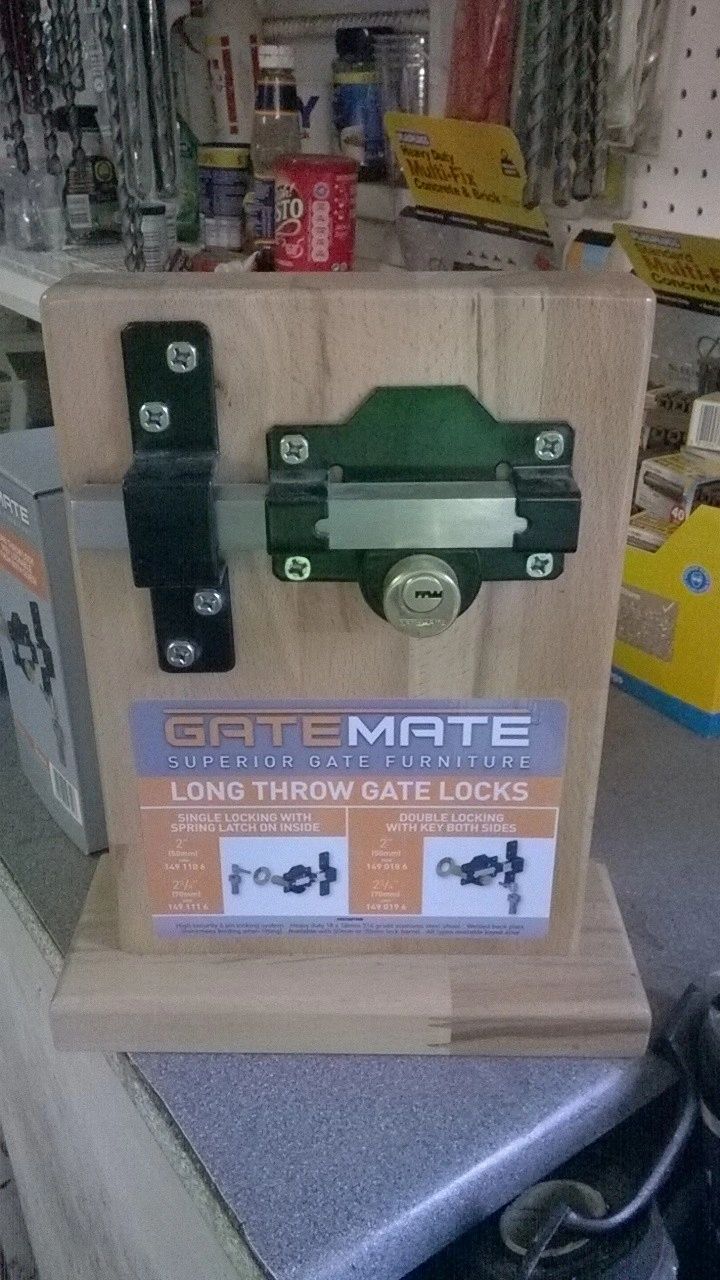
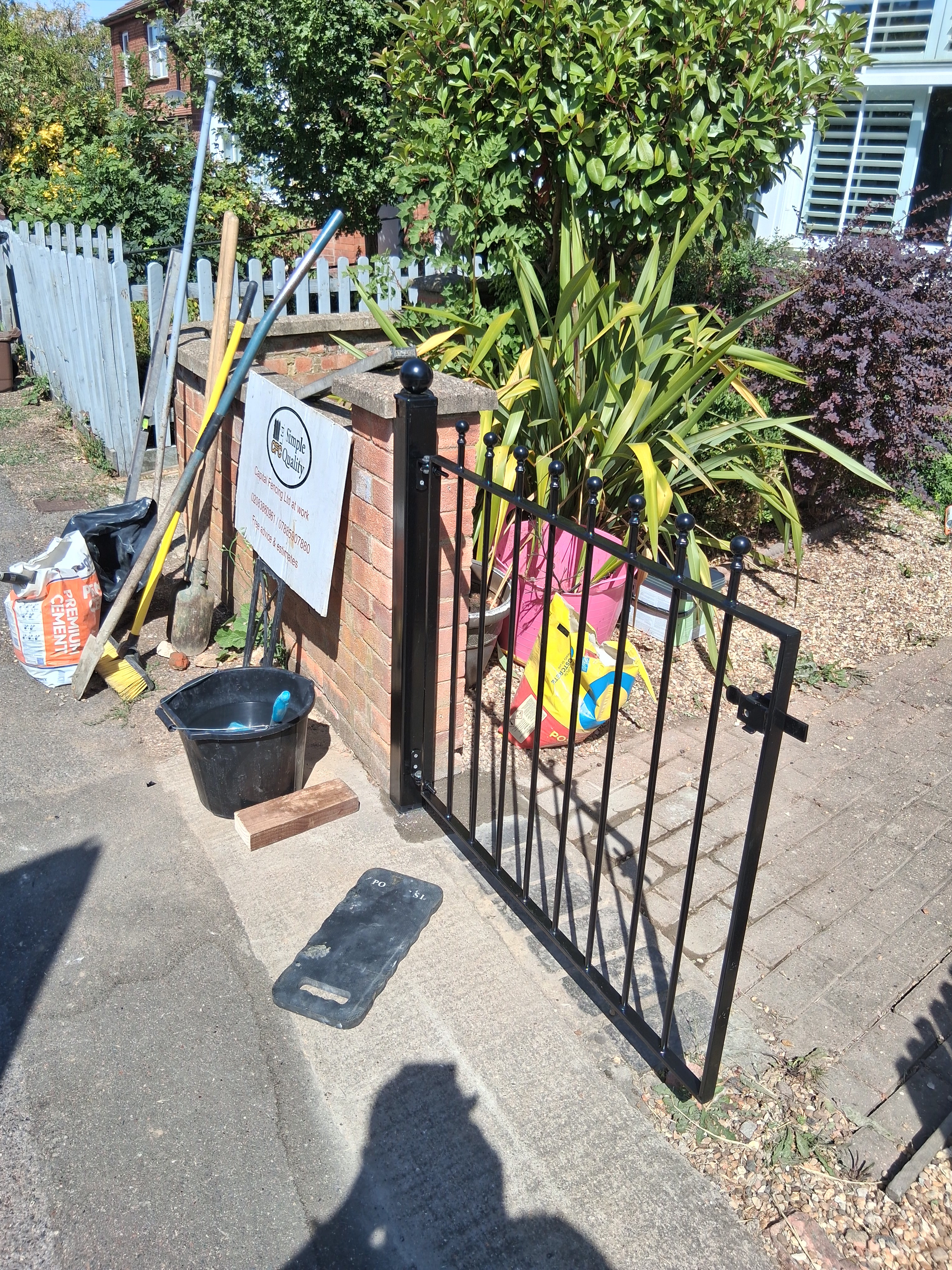
A swing gate needs clear space to open into, whether that's the driveway itself or the street, while a sliding gate runs parallel to the boundary and suits plots where that swing space isn't available.
Sliding gates need a level, unobstructed track run at least as long as the gate itself, plus a foundation for the track and rollers that copes with the gate's full weight — cutting corners here is the most common cause of a sliding gate that jams.
Swing gates are generally simpler to install and service, which is worth weighing against a sliding gate's space-saving advantage on a tight or sloping driveway.
A spec checklist for comparing quotes
Two quotes at very different prices for what looks like the same fence often differ in the parts that aren't obvious from a headline description — post type and spacing, gravel board material, rail count, use class of treatment, and whether waste removal is included.
Worth confirming explicitly: post material and size, number of arris rails for the height quoted, gravel board type, treatment use class of ground-contact timber, fixing corrosion class, and whether post caps and capping rail are included as standard.
A written spec covering those points, rather than just a total price and a photo of a similar job, is the practical way to compare quotes on equal terms rather than discovering the difference once the fence is already up.
Wet rot versus dry rot fungi in fence timber
Wet rot fungi need sustained high moisture content to establish and spread, and are the more common cause of decay in buried or ground-contact fence posts that stay consistently damp.
Dry rot, despite the name, also needs moisture to establish initially but can then spread through drier surrounding material via root-like strands, making it more of a concern in enclosed, poorly ventilated timber structures than open-air fencing.
In practice, most fence post decay encountered on typical garden and boundary fencing is wet rot rather than dry rot, given the open, ventilated conditions most fencing timber sits in.
Retaining structures below a fence line
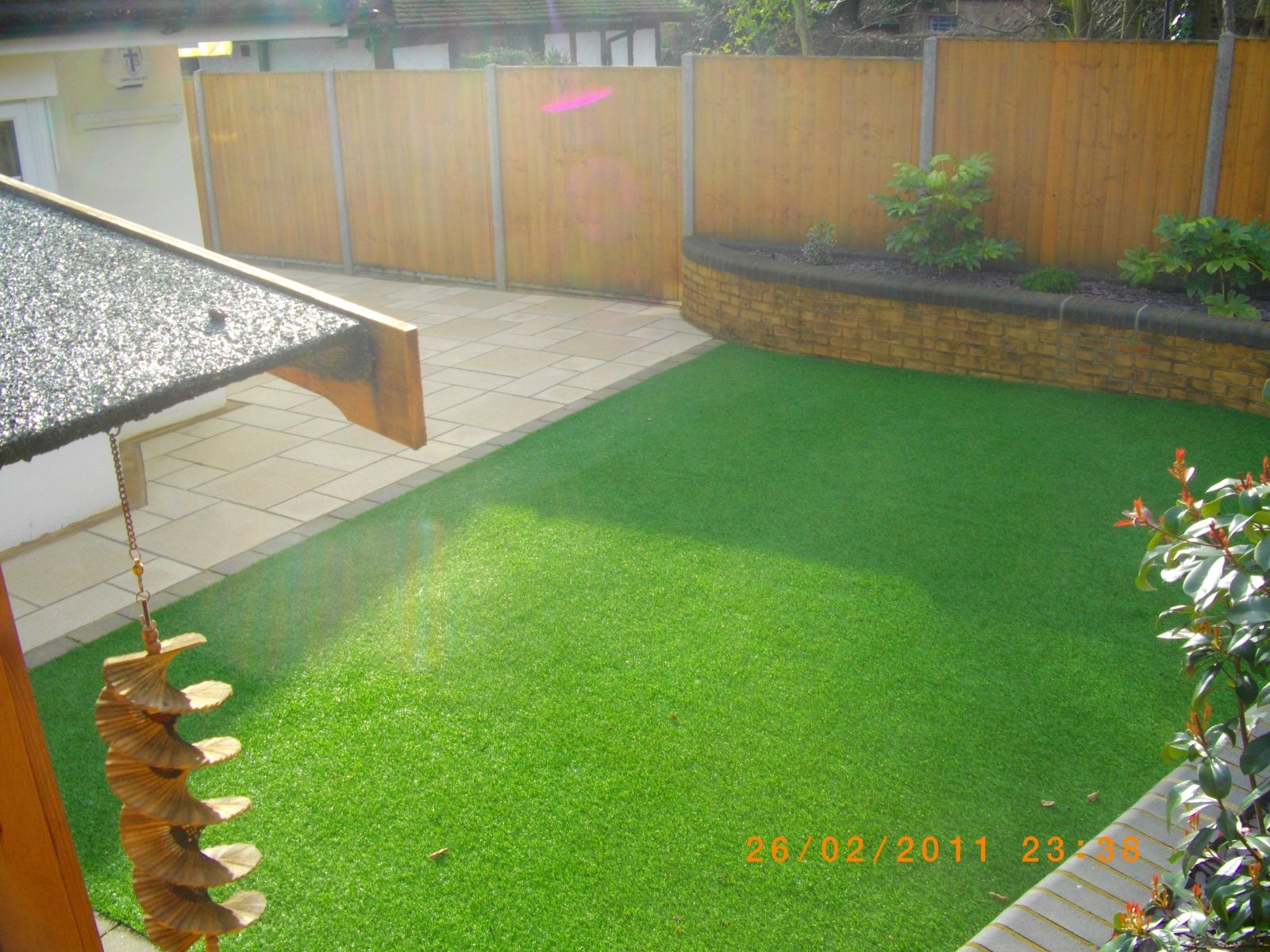
Where a retaining wall or sleeper structure holds back a level change directly under a fence, the fence and the retaining structure are doing two different jobs and shouldn't be treated as one build.
A timber fence post bolted into the top of a retaining wall relies entirely on that wall's own stability, so any doubt about the wall's condition needs resolving before new fencing is fixed to it.
Water draining from the raised bed above a retaining structure often exits at its base, which is worth accounting for when choosing post fixings and base materials at that point in the run.
Choosing a fence stain or paint finish
Fence stains range from clear or lightly tinted preservatives that let the timber grain show through, to fully opaque paints that behave more like a coating than a stain and hide the wood's natural texture.
Darker stains show dust and cobwebs less but can absorb more heat in direct summer sun, which slightly increases how much the timber expands and contracts through the day.
Whatever finish is chosen, re-application intervals differ significantly between a thin stain and a heavier paint system, which is worth factoring into the long-term maintenance plan rather than just the initial look.
Yes — Haringey is served from Turnpike Lane, Wood Green, Harringay (Piccadilly / Overground), off A105 Green Lanes / A503 Seven Sisters Road, and is inside our regular working patch.
How does "choosing a fence stain or paint finish" affect fencing or decking work in Haringey?
Whatever finish is chosen, re-application intervals differ significantly between a thin stain and a heavier paint system, which is worth factoring into the long-term maintenance plan rather than just the initial look. Fence stains range from clear or lightly tinted preservatives that let the timber grain show through, to fully opaque paints that behave more like a coating than a stain and hide the wood's natural texture. Darker stains show dust and cobwebs less but can absorb more heat in direct summer sun, which slightly increases how much the timber expands and contracts through the day.
What's the typical garden like in Haringey?
Long thin Victorian rear gardens with London clay and mature street trees is typical, alongside victorian terraces (harringay ladder, crouch end), 1930s semis in muswell hill, and post-war estates around tottenham.
Wet rot versus dry rot fungi in fence timber — what does that mean for a job in Haringey?
In practice, most fence post decay encountered on typical garden and boundary fencing is wet rot rather than dry rot, given the open, ventilated conditions most fencing timber sits in. Wet rot fungi need sustained high moisture content to establish and spread, and are the more common cause of decay in buried or ground-contact fence posts that stay consistently damp. Dry rot, despite the name, also needs moisture to establish initially but can then spread through drier surrounding material via root-like strands, making it more of a concern in enclosed, poorly ventilated timber structures than open-air fencing.
Does retaining structures below a fence line come up much on jobs around Haringey?
Where a retaining wall or sleeper structure holds back a level change directly under a fence, the fence and the retaining structure are doing two different jobs and shouldn't be treated as one build. A timber fence post bolted into the top of a retaining wall relies entirely on that wall's own stability, so any doubt about the wall's condition needs resolving before new fencing is fixed to it. Water draining from the raised bed above a retaining structure often exits at its base, which is worth accounting for when choosing post fixings and base materials at that point in the run.
A spec checklist for comparing quotes — what does that mean for a job in Haringey?
Worth confirming explicitly: post material and size, number of arris rails for the height quoted, gravel board type, treatment use class of ground-contact timber, fixing corrosion class, and whether post caps and capping rail are included as standard. A written spec covering those points, rather than just a total price and a photo of a similar job, is the practical way to compare quotes on equal terms rather than discovering the difference once the fence is already up. Two quotes at very different prices for what looks like the same fence often differ in the parts that aren't obvious from a headline description — post type and spacing, gravel board material, rail count, use class of treatment, and whether waste removal is included.
Coverage runs off A105 Green Lanes / A503 Seven Sisters Road, near A406 North Circular (5 min) / M25 J25 (20 min), served from Turnpike Lane, Wood Green, Harringay (Piccadilly / Overground). A spec checklist for comparing quotes: Two quotes at very different prices for what looks like the same fence often differ in the parts that aren't obvious from a headline description — post type and spacing, gravel board material, rail count, use class of treatment, and whether waste removal is included. Worth confirming explicitly: post material and size, number of arris rails for the height quoted, gravel board type, treatment use class of ground-contact timber, fixing corrosion class, and whether post caps and capping rail are included as standard. Wet rot versus dry rot fungi in fence timber: Wet rot fungi need sustained high moisture content to establish and spread, and are the more common cause of decay in buried or ground-contact fence posts that stay consistently damp.
Get In Touch
Get My Free Quote — 24h Response
No callout fee · Free site visit · Friendly local team covering London & Hertfordshire.