Self-closing and self-latching gates near water
A gate giving access to a garden pool or a boundary near open water benefits from a self-closing and self-latching mechanism that doesn't rely on a person remembering to shut and lock it every time, since a single unlatched instance is enough for an incident.
Combining a self-closing spring with a latch mounted high enough to be out of easy reach of a small child adds a second layer of protection beyond the closing action alone.
Tree roots and Tree Preservation Orders
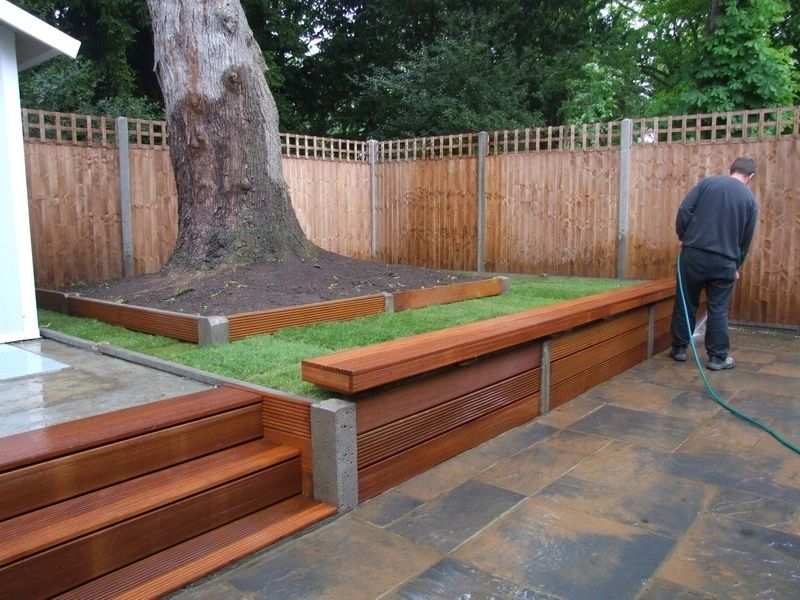
Mature trees close to a boundary do two things to a fence: their roots can heave a post out of true over several years, and if the tree is protected by a Tree Preservation Order or sits in a conservation area, digging within its root protection area needs care and sometimes council sign-off.
Where roots are already present we'll usually hand-dig around them rather than auger through, and set the post slightly off the direct line if that avoids cutting a structural root.
It's worth checking with the local authority's tree officer before any excavation near a TPO tree, since unauthorised root damage carries the same penalties as felling the tree itself.
Vegetation growing through or over a shared fence
Plants growing from one garden through, over or against a shared fence — a spreading shrub, an overhanging branch, a self-seeded sapling in the fence line itself — sit in a grey area between garden maintenance and boundary structure that isn't always covered by a simple 'good neighbour' agreement.
A sapling that germinates directly against a post and is left to grow can eventually distort or crack the post as its trunk thickens, which is a slow-motion structural problem rather than a purely cosmetic one.
Flagging seedlings growing in or immediately against a fence line at an early stage, before root or trunk growth causes structural distortion, avoids a much larger repair later.
Drainage channels behind a long acoustic run
A long, solid acoustic run without any breaks can act as a dam for surface water running across a sloped garden, causing pooling on the uphill side that wasn't a problem with a more open fence.
A drainage channel or a low-level gap fitted with a flap or grille at the lowest point of the run lets water through without significantly compromising the acoustic seal higher up the panel.
Sealing cut end grain on site-modified gates
Cutting a gate down to fit a narrower opening exposes fresh end grain that takes up water far faster than a factory-sealed edge, and leaving that cut unsealed is one of the quickest ways to start rot in an otherwise sound gate.
Sealing or capping any cut edge before the gate goes back into service is a small step that significantly extends the life of an altered gate.
Testing timber moisture content before deciding on a repair
A moisture meter reading on a post or board gives a more reliable picture of remaining life than appearance alone, since timber can look weathered but still be structurally sound, or look reasonably clean-faced while being saturated and soft just beneath the surface.
This is particularly useful where a client is unsure whether a section needs full replacement or can be left, since a moisture reading gives a specific figure to base that decision on rather than a subjective visual judgement.
Wicket gates set within a larger gate
A wicket gate is a small pedestrian door built into one leaf of a larger vehicle gate, allowing foot access without opening the whole gate, and it needs its own hinge, latch and frame within the host leaf.
Because it's a frame within a frame, movement in the main gate can throw the wicket's alignment out even when the wicket's own hardware is sound, so both are checked together.
Being mindful of working hours and noise on a repair in a residential setting
Cutting timber, breaking out old concrete and driving fixings all generate noise that's more noticeable on a short repair visit in a quiet residential street than it might be on a larger, more expected construction project nearby.
Keeping to reasonable working hours and giving immediate neighbours brief notice ahead of a repair that involves breaking out concrete is a simple courtesy that avoids unnecessary complaints on an otherwise routine job.
Checking for buried services before digging out a failed post
A repair that involves digging out an old footing carries the same risk of hitting a buried cable or pipe as a brand-new installation, and that risk doesn't go away just because a post has stood in that spot for years already.
Using a cable and pipe locator before digging, and digging by hand rather than with power tools near any suspected service run, is standard practice on repair work close to a house, garage or existing utility connection.
Spirit level versus laser level for checking a run
A spirit level checks a single post is plumb and a single panel is level, but confirming that an entire run stays level or follows a consistent fall over 20 or 30 metres is far quicker and more reliable with a rotating laser level set at a fixed height.
On a stepped run, a laser also makes it straightforward to confirm each step drops by the same consistent amount rather than checking each post in isolation and hoping the cumulative effect looks even.
A basic spirit level remains the more practical tool for quick checks during a single post's installation, since setting up a laser for every individual post would slow the job without adding useful accuracy at that scale.
Scoping a repair linked to an insurance claim
Where a repair follows an insured event, the scope of work is agreed and documented before starting, since insurers typically require a clear description of what failed and what's being replaced rather than a general like-for-like statement.
Photographs and a written note of the failure are kept alongside the repair record, which is useful if further questions come up later in the claims process.