Securing a rear alley boundary behind terraced housing
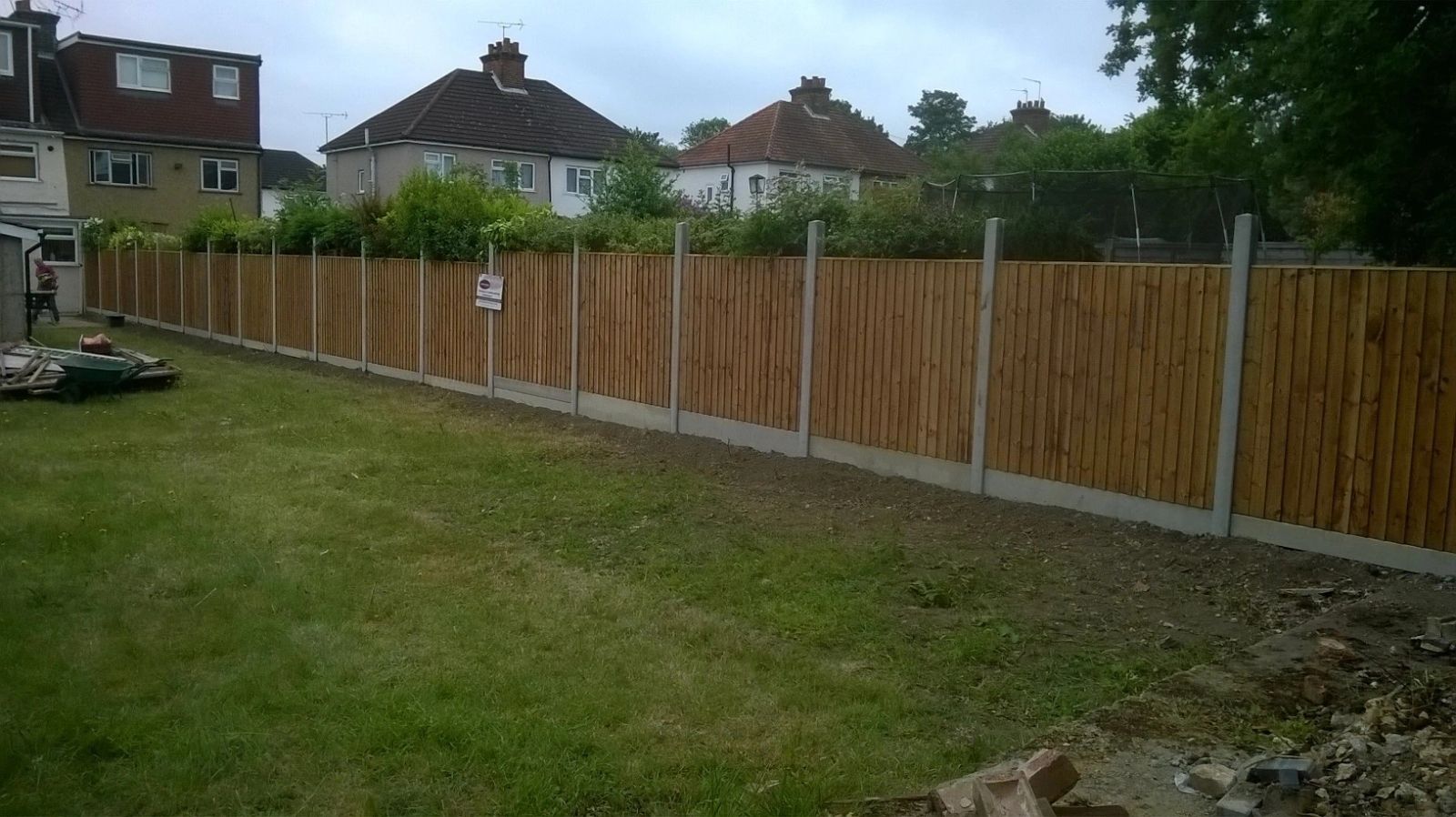
A rear alley boundary sees different pressure to a front garden fence, because it's typically unwatched, runs the full length of several properties, and is the route used to approach a back door or shed unseen from the street.
Consistent height and topping along the whole alley matters more here than on an individual plot, since a single weaker section among several stronger ones simply redirects the attempt rather than stopping it.
A fence's role alongside a formal noise complaint
Where noise from a specific source has escalated to a formal complaint to a local authority's environmental health team, a garden barrier can reduce day-to-day disturbance but doesn't replace or resolve that separate regulatory process.
Installing a barrier while a complaint is ongoing is a reasonable practical step, but it's not evidence that the underlying noise source itself has been addressed, and the two should be treated as separate tracks.
Matching gate infill to the adjoining fence
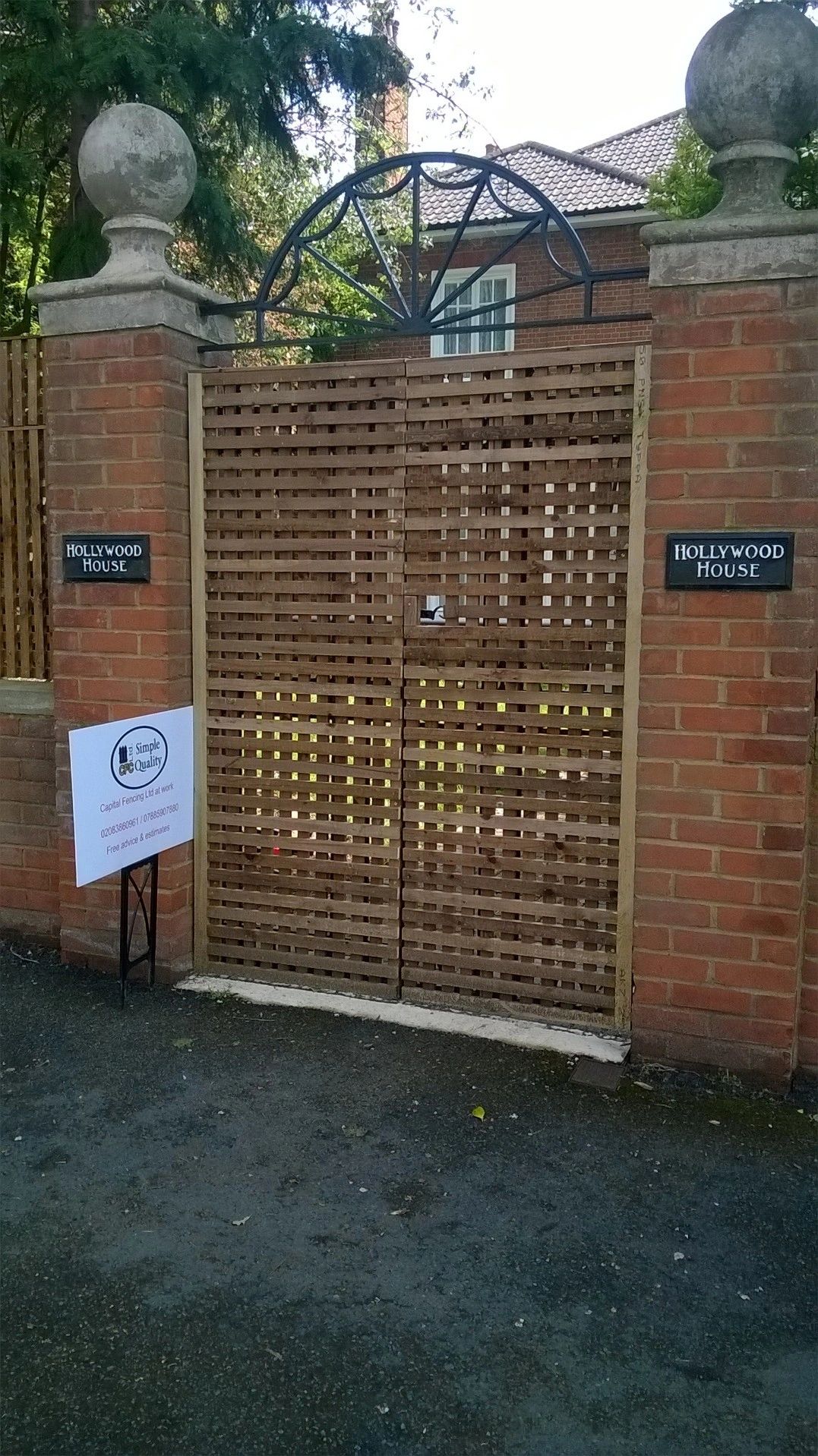
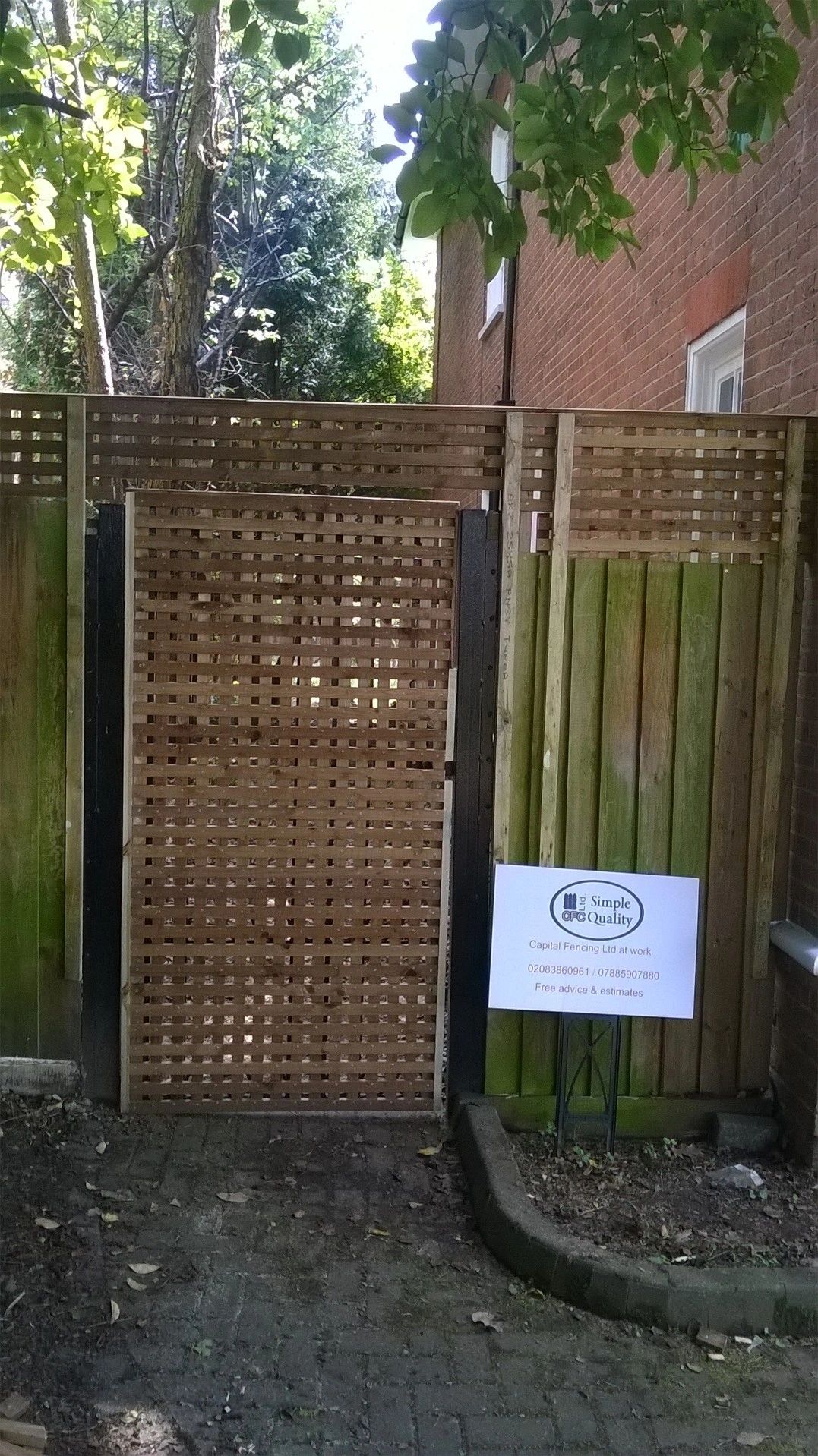
A gate with a different infill pattern to the fence either side is a visible weak point as well as an inconsistency, because an intruder targets the section that looks different from the rest of the run.
Matching pale spacing, mesh aperture or panel style across the gate and fence keeps the whole perimeter to one standard rather than leaving the gate as the obvious soft spot.
Construction hoarding versus the permanent boundary
Temporary site hoarding during a build is a separate specification from the permanent boundary that eventually replaces it — hoarding is chosen for site security and public safety during works, often under a party wall or highways licence, while the permanent fence is chosen for the finished property.
Where a boundary needs both, it's worth planning the sequence so the permanent fence isn't installed and then damaged by ongoing construction traffic before the build finishes.
Hoarding on a public highway usually needs its own licence from the council, separate from any planning permission covering the building work itself, and unlicensed hoarding on a footway can be removed by the authority.
Shiplap board profiles
Shiplap boards are machined with a rebated lap joint along each long edge, so adjoining boards interlock rather than simply overlapping flat, which sheds water more effectively than a plain overlap.
The rebate also means shiplap panels sit with a smaller visible overlap than feather-edge for the same weather resistance, giving a flatter, more even panel face.
Because the interlocking edges rely on a consistent machined profile, shiplap doesn't tolerate the same board-to-board variation as waney-edge, and a warped board can be harder to seat correctly in the joint.
Checking a post is plumb in two planes
A post checked with a spirit level on only one face can still be leaning across the run even though it looks vertical along it, so plumb needs confirming on two adjacent faces at right angles before concrete goes in.
This matters most on corner and gate posts, where a lean invisible from the main run direction becomes obvious the moment a gate is hung and doesn't swing true.
Rechecking plumb again just before the concrete starts to go off catches any post nudged out of position while backfilling or bracing, since that's a common point for a post to drift slightly unnoticed.
Use Class 4 versus Use Class 3 timber
The European use-class system grades timber by the exposure it's treated to withstand: Use Class 3 covers timber above ground but exposed to weather, such as capping or fascia boards, while Use Class 4 covers timber in ground contact or fresh water, such as posts.
A Use Class 4 post buried in soil needs a deeper, longer-lasting retention of preservative than a Use Class 3 rail bolted between two posts, because the ground contact zone stays damp for far longer than an exposed but well-drained horizontal timber.
Specifying the wrong class isn't always obvious at installation, since both can look identical when new, but it shows up years later as premature rot concentrated at ground level rather than along the whole length.
Industrial press and stamping noise
A stamping press or similar industrial machine produces sharp, repeated impact noise that can carry significant low-frequency content, and low-frequency impact noise is notably difficult for a garden-scale timber barrier to attenuate.
Where a residential boundary backs onto light industrial premises using this kind of equipment, a fence can reduce the higher-frequency component of the noise but rarely resolves the low-frequency thump on its own.
Low-frequency limits of a fence barrier
Low-frequency noise, such as heavy diesel engine rumble or bass from nearby plant, is inherently harder for any fence-height barrier to reduce than higher-frequency noise, because long sound wavelengths diffract over a barrier more readily.
We're upfront that a fence will typically do more for the higher-frequency content of traffic noise than for a low, droning hum, since that's a limitation of physics rather than of the build quality.