Repair-versus-replace where the original fence style is discontinued
Where a damaged section uses a panel style, board profile or post section that's no longer manufactured, a close match might be achievable for a small repair, but a larger area of damage can tip the balance toward replacing the whole run in a current style rather than chasing an increasingly poor match.
This is a judgement client conversation as much as a technical one, since some clients prioritise keeping the existing look even with a visible join, while others would rather have a uniform new run.
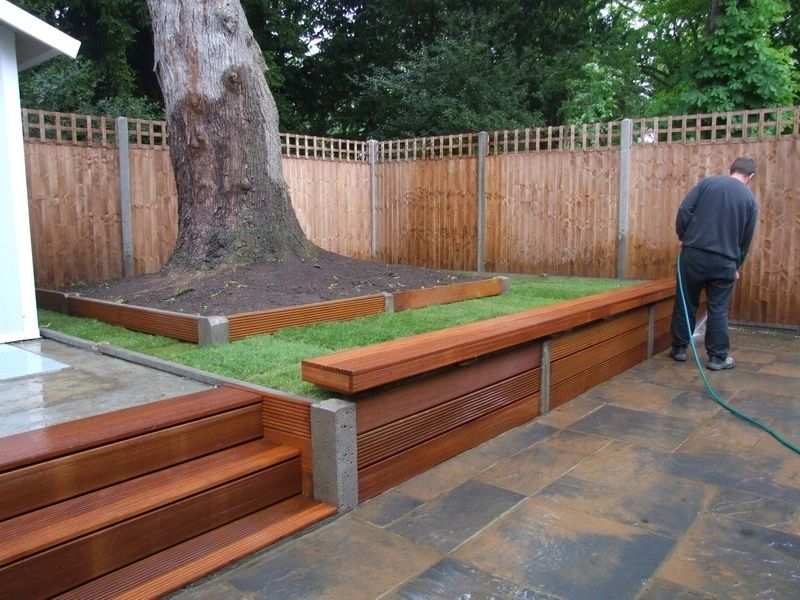
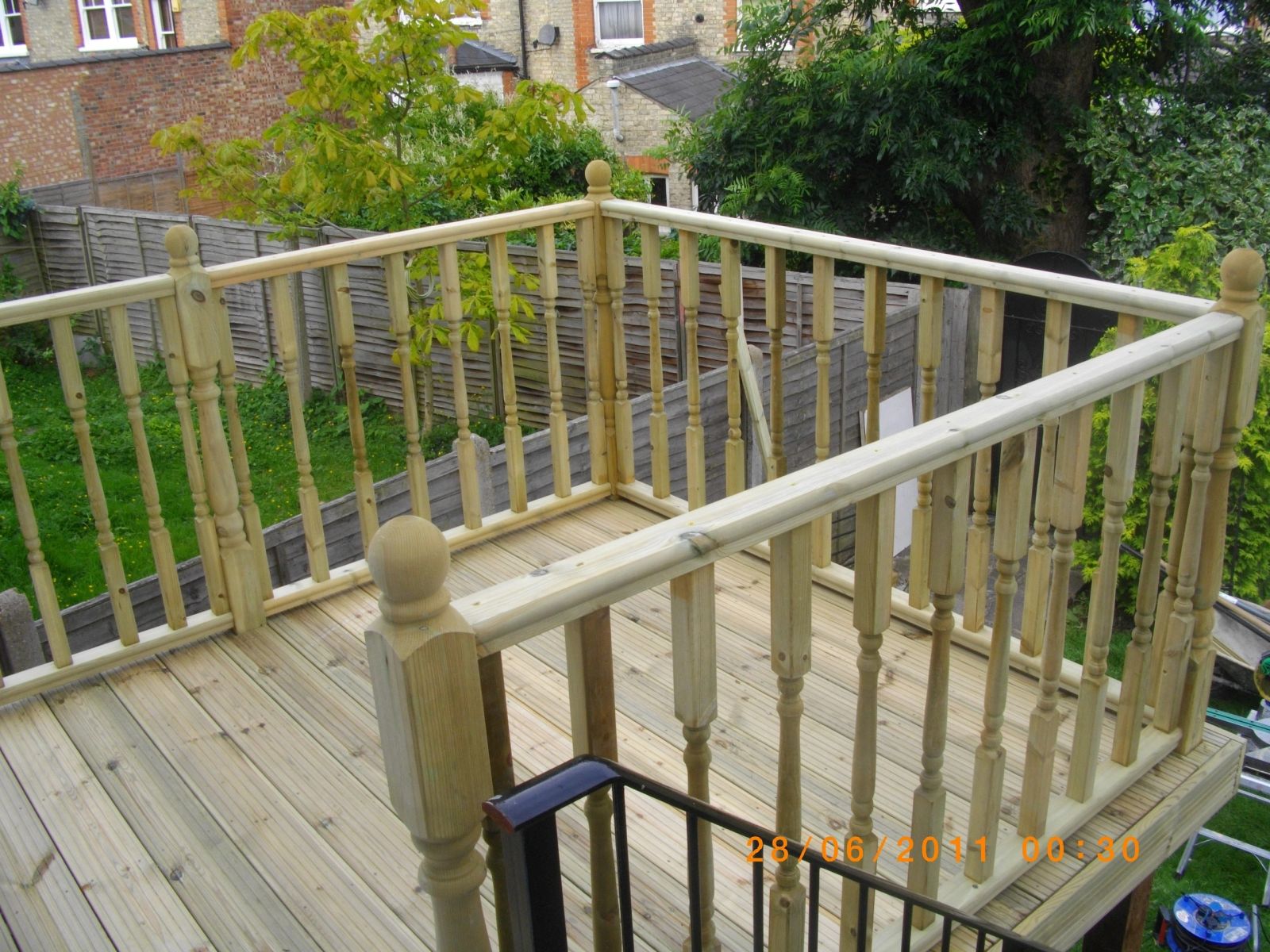
Garden levels raised by decking or patios
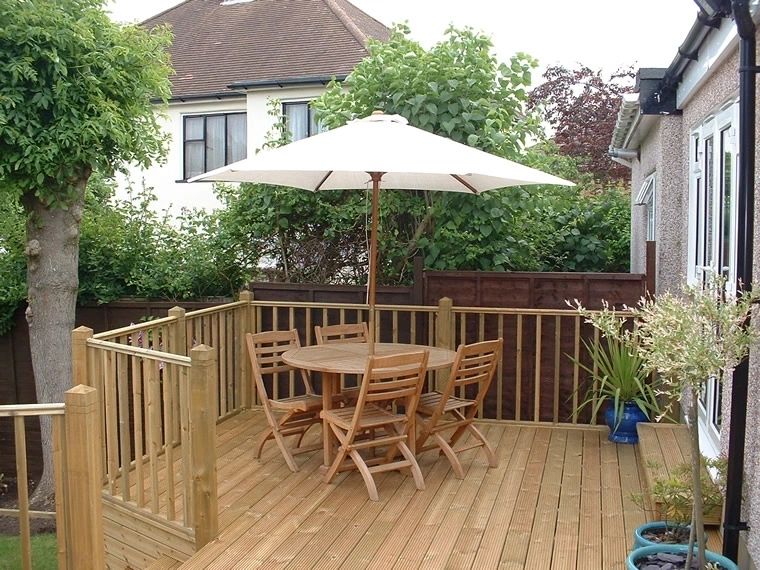
A raised deck or built-up patio on one side of a boundary can leave the finished surface level noticeably higher than the fence's original ground-level reference, sometimes reducing the effective fence height as seen from that side.
Where a neighbour raises their ground level after a fence is already installed, drainage that previously ran away from the fence can be redirected toward it, so it's worth checking finished levels on both sides before agreeing a new fence height or base detail.
A fence installed at the same time as a client's own raised patio should account for the new level from the outset, rather than being set to the pre-existing grade and later needing extension.
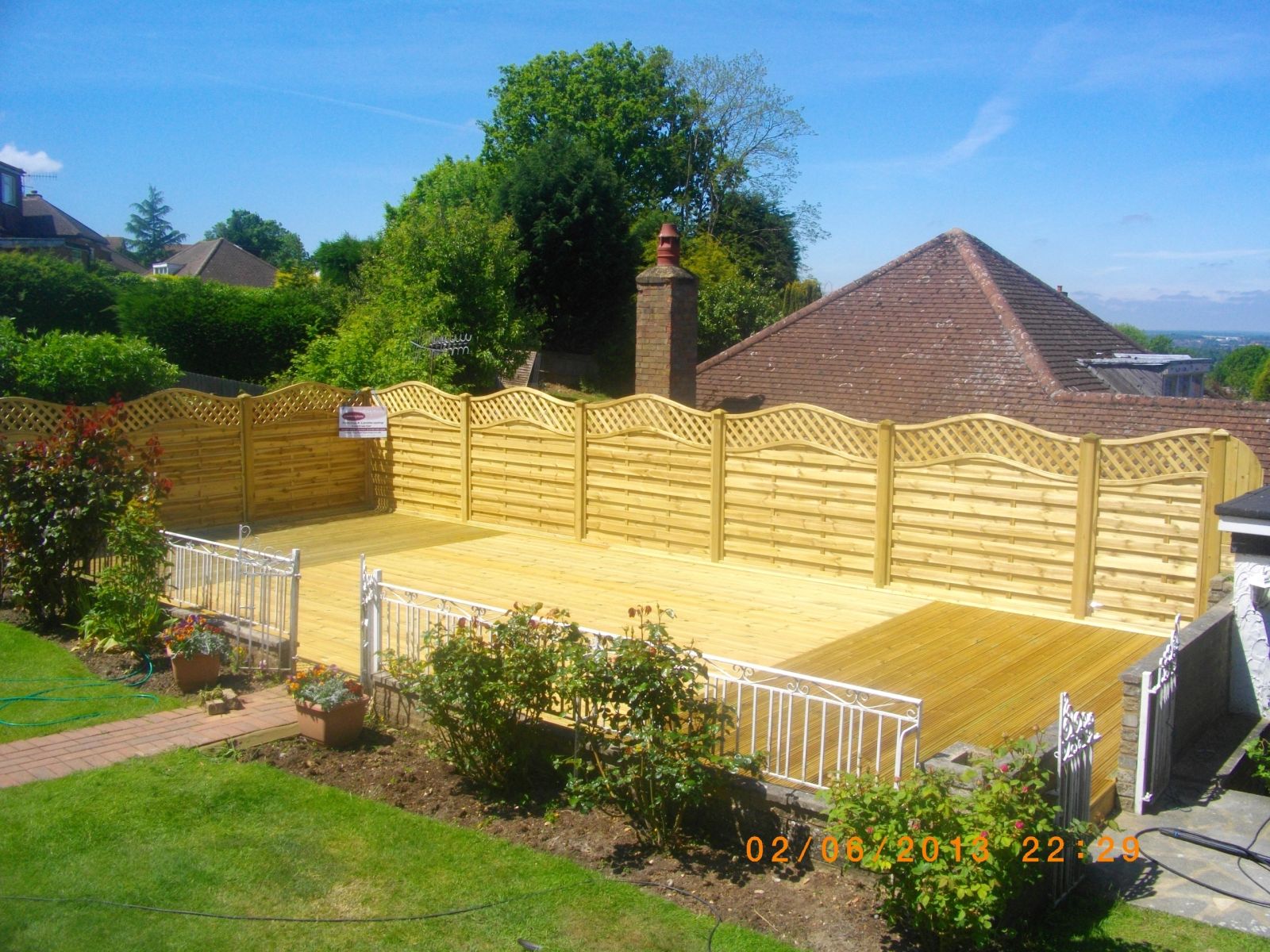
Repairing trellis toppers
A trellis topper is a lighter structure than the fence panel beneath it and is usually the first part of a run to fail in wind, since its open lattice catches gusts differently to a solid panel face.
Where the topper has failed but the panel below is sound, only the topper needs replacing, refitted to the same post caps or brackets as the original.
How a written quote should be structured
A clear fencing quote itemises materials, labour, waste removal and any groundwork separately, rather than a single lump sum that hides what's actually included.
It should state the exact fence height, post size, panel or board specification and run length, since 'like-for-like replacement' can mean very different things depending on what was there before.
Anything excluded — removal of the old fence, reinstating disturbed planting, or work beyond the surveyed run length — should be listed explicitly, so there's no ambiguity if ground conditions turn out different from what was assumed at survey.
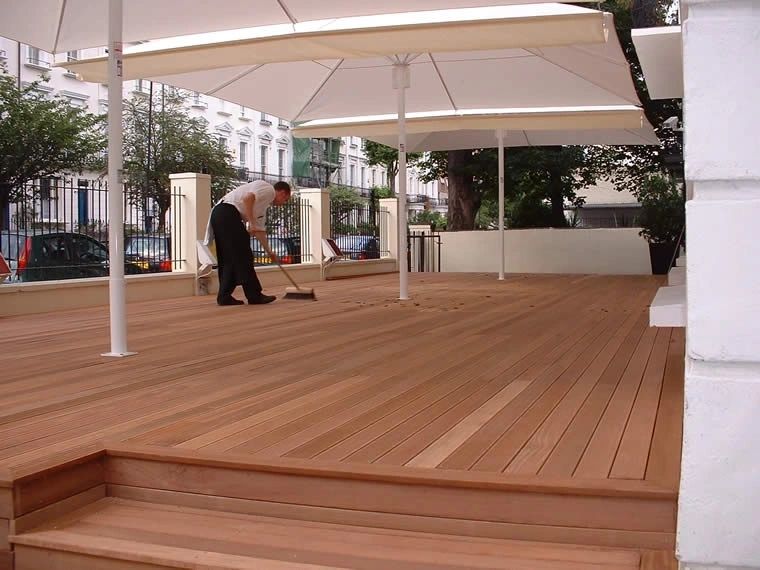
Matching joist centres to the deck board chosen
Choosing the decking board before finalising joist centres avoids a common sequencing mistake, since a thinner or more flexible board specified after the substructure is already built may need joists closer together than what's already in the ground.
Board thickness, species and orientation (laid along or across the joists) all interact, so a change to any one of them partway through a project can mean revisiting the joist layout rather than just swapping the board.
Getting board specification confirmed before ordering joist timber is a small step that avoids costly rework on a part-built substructure.
Church bells and scheduled chimes
Bells ring from height and radiate sound broadly rather than along a single line of sight, so a ground-level garden barrier has little effect on their carry compared with a low-level source like road traffic.
Because bell-ringing typically follows a known, limited schedule, it's usually treated as a background feature of the area rather than a noise problem a fence is asked to solve.
Removing old fencing and waste
Old fence panels, rotten posts and broken concrete bases don't disappear on their own, and a domestic wheelie bin won't take timber or rubble — it needs a licensed waste carrier and, for larger volumes, a registered waste transfer note.
Treated timber in particular shouldn't go on a garden bonfire, since older stock may have been treated with preservatives that produce harmful smoke when burned.
We'd always confirm whether removal and disposal of the old boundary is included in a quote, since it's one of the most common items left out of a cheaper like-for-like comparison.
Trellis toppers failing under wind load separately from the fence
A trellis topper adds height and surface area above a solid panel, which increases the wind load the whole assembly has to resist even though the panel below might be perfectly sound, and toppers are a common point of failure in gusty conditions.
Where a topper has failed repeatedly on an exposed boundary, a lower-solidity design or additional bracing to the topper's own fixings is worth considering rather than replacing the same topper style each time it fails.
Right to light and a tall boundary fence
There's no general legal 'right to a view' or automatic entitlement to sunlight in a garden, so a taller boundary fence built within the applicable height limits usually isn't unlawful purely because it shades a neighbour's garden.
Right to light law in England mainly concerns windows in buildings that have enjoyed light for a long period, rather than open garden space, and even then applies in fairly narrow circumstances.
Where a taller fence is likely to significantly affect a neighbour's garden, discussing it before building tends to prevent ill feeling even where there's no strict legal obstacle.
Meeting stiles on double gates
Where two leaves of a double gate meet in the middle, the meeting stiles need to stay flush and aligned with each other for the latch or bolt arrangement to work, and seasonal movement or a dropped hinge on either leaf throws this alignment off first.
We check both leaves together rather than adjusting one side in isolation, since a fix on one leaf alone can leave the meeting point mismatched.
The line-of-sight rule for barrier placement
As a rule of thumb, if you can see the noise source from where you're standing, sound is reaching you largely unimpeded — breaking that direct line of sight is the first test any acoustic fence design has to pass.
We check sightlines from typical positions in the garden, such as a patio or ground-floor window, not just from the boundary itself, since the barrier needs to work where people actually spend time.