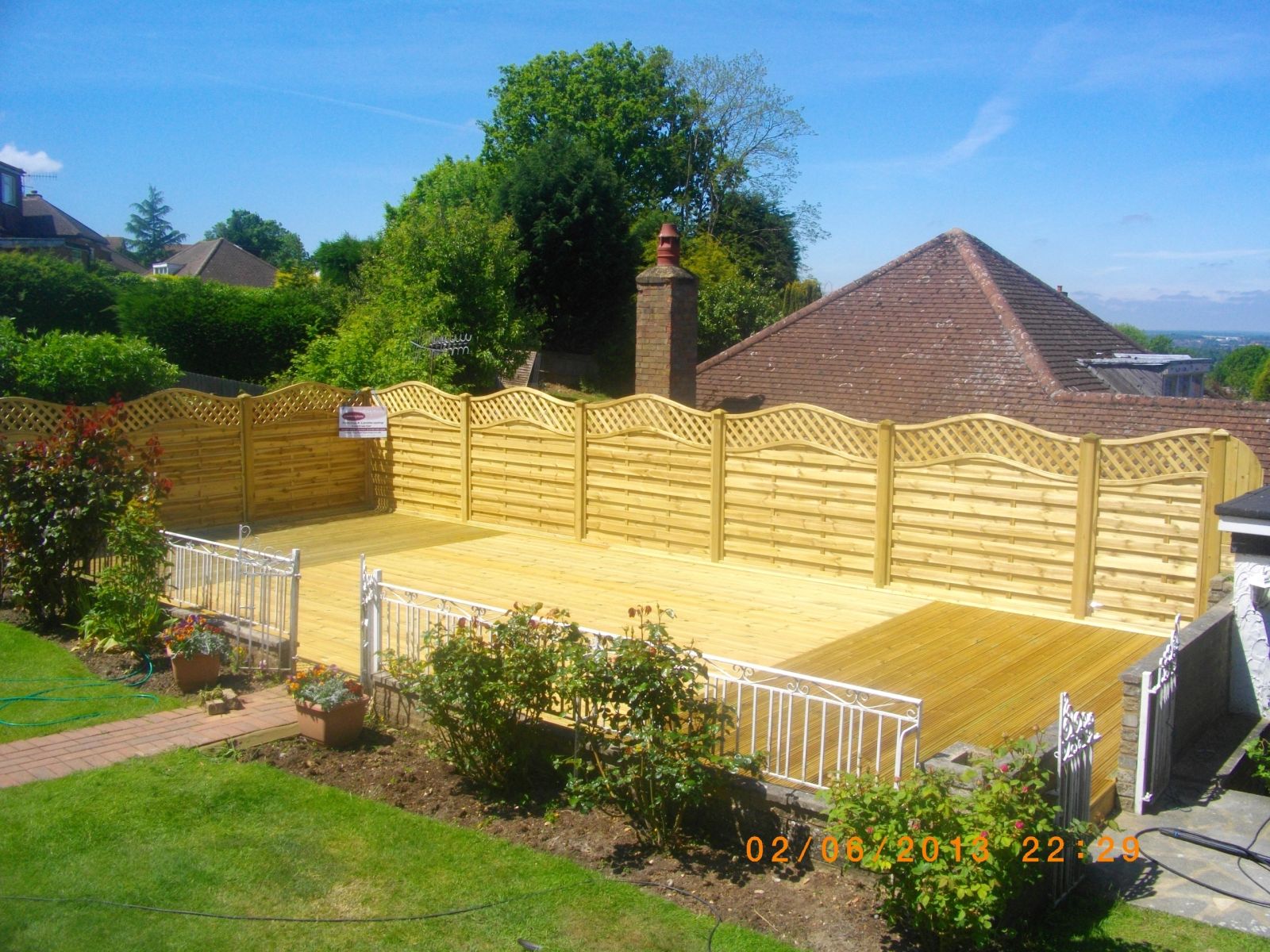
Handling excavated spoil on a fencing job
Digging even a modest run of post holes generates a surprising volume of spoil, and leaving it in a single heap on a lawn for the duration of a job kills the grass underneath if left more than a few days.
Spreading spoil thinly on a border, bagging it for removal, or arranging same-day disposal all avoid that dead patch, and the right choice depends on whether the client wants the spoil kept for landscaping elsewhere on the plot.
Heavy clay spoil is particularly slow to dry and awkward to barrow once it's rained on, so timing the dig to avoid leaving wet spoil sitting overnight where possible reduces both the mess and the extra effort of moving it later.
Hardstanding and uneven levels
Where a fence line crosses from a garden onto a patio, driveway or other hardstanding, post bases usually need core-drilling into the existing slab rather than a dug hole, which is a different technique and a different price than fencing over soil.
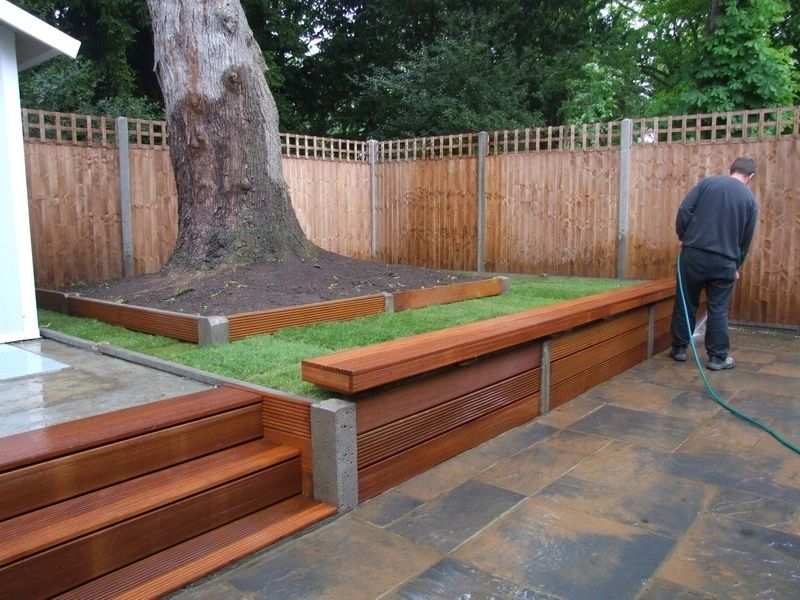
A change in level along a run — a step up to a raised patio, or a drop to a lower side passage — needs the fence height measured consistently from the ground it's actually protecting, not from an average across the whole run.
Getting this detail wrong is one of the more common reasons a finished fence ends up looking uneven even though every panel was fitted correctly on its own section.
Ivy and climber damage to fencing
Ivy and other vigorous climbers work their tendrils into joints and between boards, prising fixings apart gradually and trapping moisture against the timber underneath the growth.
Removing the growth as part of a repair often reveals damage that was hidden by the foliage, so the full extent of the repair sometimes isn't clear until the climber has been cut back.
Ground effect on sound propagation
Sound travelling close to the ground interacts with the ground surface itself — soft, absorptive ground like grass attenuates more than hard, reflective ground like tarmac or paving over the same distance.
A garden with a grassed area between the boundary and the house benefits slightly from this ground effect in addition to any barrier, while a fully paved garden loses that extra attenuation and relies more heavily on the barrier alone.
Tenancy and landlord repair responsibilities
Responsibility for a garden boundary at a rented property depends on the tenancy agreement, but where it's silent, the general position is that a landlord is responsible for structural boundary features while day-to-day garden maintenance often falls to the tenant.
A tenant generally can't authorise permanent alterations like a new fence line or wall without the landlord's consent, even where they're happy to pay for it, since it affects the property the landlord owns.
Storm or accidental damage to a boundary fence at a let property is usually the landlord's repair obligation, arranged directly or through a managing agent, rather than something the tenant is expected to fund unless they caused the damage.
What a repair sign-off covers
Once a repair is complete we check the repaired section moves and sits correctly against the rest of the run, not just that the immediate damage is fixed, since a post reset slightly out of line can put uneven strain on the panels either side.
We also leave the client with a clear note of what was replaced and what, if anything, is worth watching over the next year or two.
Acoustic barriers on a raised garden
A garden set above the level of an adjacent road or railway changes the geometry between source and listener, sometimes reducing the barrier height needed because the listener already sits some way above the noise source.
Conversely, a raised garden can also expose a ground-floor window at the source's own height while the fence line sits below, which needs checking rather than assuming height works purely in the garden's favour.
Corrosion inspection on buried metal fixings
Metal post anchors, brackets and shoes set at or below ground level corrode out of sight, meaning surface appearance above ground can look sound even where the buried portion has significantly deteriorated.
Rust staining bleeding up the timber post from ground level, or visible movement at the base despite an apparently solid concrete surround, are common indirect signs of corrosion happening below the visible surface.
Because the failure mode is progressive and hidden, periodic inspection of exposed fixings as a proxy, combined with checking for movement, is generally the practical approach rather than routinely excavating buried anchors.
Consent needed to connect drainage across a boundary
Running a new drainage connection across a neighbouring property's land, sometimes done alongside boundary works, needs the neighbour's consent and possibly a formal easement, not just a friendly verbal understanding.
Water companies can also require notice for new connections joining an existing public sewer, separate from any neighbour agreement about crossing their land.
Where fencing work uncovers or affects a drainage connection crossing the boundary, it's worth pausing to confirm what rights actually exist before proceeding.
Schedules of condition before nearby works
A schedule of condition is a dated record, often with photographs, of a boundary structure's state before nearby building work begins, used to settle any later dispute about damage caused during that work.
Where a neighbour is undertaking significant building work close to a shared boundary, requesting this kind of record beforehand is reasonable and protects both parties.
This is distinct from a full party wall agreement but is often produced as part of the wider party wall process where one applies.
Digging in waterlogged winter ground
A post hole dug in saturated winter ground can collapse in on itself before concrete goes in, particularly in sandy or silty soils that don't hold a vertical face when wet.
Digging a slightly wider hole and using a temporary former — a section of pipe or shuttering — to hold the sides while concrete is placed can rescue a hole that would otherwise keep sloughing back in.
Where conditions are bad enough that holes won't stay open at all, it's often more efficient to wait for a drier spell than to keep re-digging the same collapsing hole through a single working day.