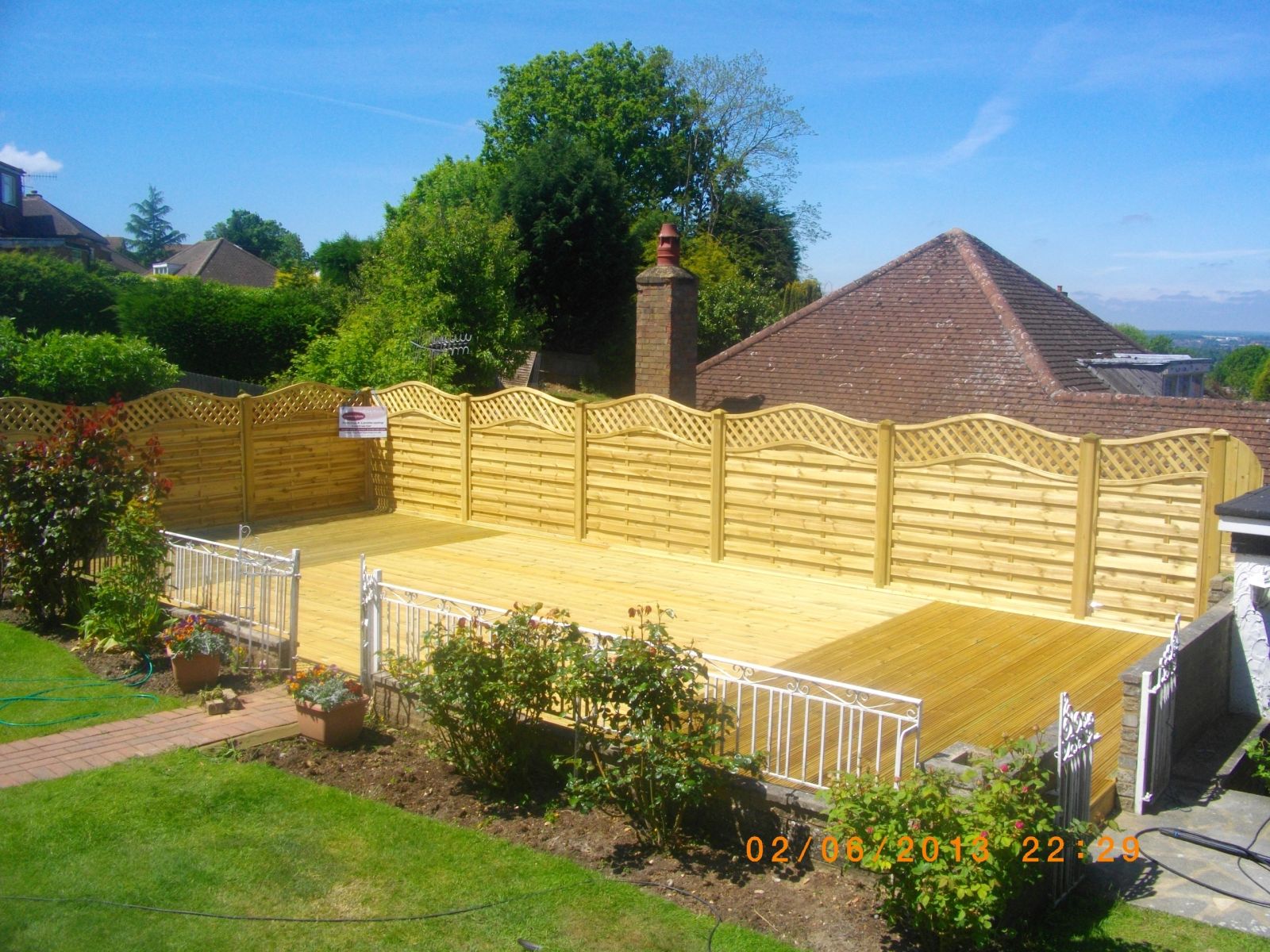
Fence or gate height near roof-mounted solar panels
A tall fence, gate, or dense trellis topper built close to a boundary can cast shade onto a neighbouring roof-mounted solar array during parts of the day, which isn't usually a planning matter but can become a point of neighbourly friction worth being aware of.
This is a relatively new consideration compared with the traditional daylight and boundary height concerns, but is increasingly relevant as more households install solar panels close to shared boundaries.
Discussing height and position informally with a neighbour before installing a particularly tall boundary feature near their south-facing roof avoids a dispute that has no clear formal regulation to resolve it.
Snapped concrete posts and slotted-panel swaps
A slotted concrete post system lets a panel be lifted out and a new one dropped in without disturbing the posts either side, which makes panel replacement quick, but the post itself is far less forgiving to repair once it's cracked or snapped.
A snapped concrete post is generally replaced outright rather than patched, since a repaired crack under load doesn't reliably hold the same weight as the original casting.
Cassette fixing tolerance and rattle
A cassette panel needs enough tolerance in its housing to allow for manufacturing variation and seasonal movement, but too much tolerance leaves the panel loose enough to rattle in wind, which both looks and sounds like a fault.
Getting that fixing tolerance right — snug enough to stay quiet, loose enough not to bind — is a detail checked at installation rather than left to whatever gap the framing happens to leave.
Stainless steel grades near salted roads
Grade 304 stainless steel resists general corrosion well but can develop surface pitting when regularly exposed to chloride from de-icing salt spray thrown up by passing traffic.
Grade 316 stainless includes molybdenum, which significantly improves resistance to chloride pitting, and is the more appropriate specification for fixings and fittings on roadside fencing subject to winter gritting.
The cost difference between the two grades is usually small relative to the fitting itself, so specifying 316 near a heavily gritted road is generally worth it for the extended service life alone.
Running bamboo and rhizome pressure on boundaries
Running bamboo species spread through underground rhizomes that can travel several metres from the parent plant and push up through gravel boards, path joints or even through weak points in a fence base.
Unlike tree roots, rhizome growth is fast and can reappear within a single growing season after being cut back, so a fence base alone rarely stops it without a physical rhizome barrier buried alongside it.
Where established running bamboo sits on a neighbouring boundary, it's worth flagging to the client that fence replacement won't solve the underlying spread on its own.
Digging in summer-baked clay ground
Clay that's dried and cracked over a hot summer can be almost as hard as digging through soft rock in the top few hundred millimetres, even though the same ground would be workable a season later once it's rehydrated.
An auger struggles on baked clay in the same way it struggles on rubble, tending to bounce and judder rather than cut cleanly, so a pilot hole broken up with a bar first can make the auger's job easier.
Watering the dig point lightly the day before, where practical, softens the very top layer enough to ease the first stage of digging without turning the hole into a mud pit.
Adverse possession and long-standing boundary drift
Where a fence has sat in the same slightly-wrong position for many years without objection, the land enclosed on the wrong side can sometimes be claimed through adverse possession, though registered land now has a stricter process than the old twelve-year rule for unregistered land.
A successful claim generally needs factual possession (using the land as an owner would, such as fencing it in and maintaining it) plus an intention to possess, sustained over the qualifying period, and the registered owner gets a chance to object once an application is made.
Replacing an old fence exactly on its existing (rather than legally correct) line can inadvertently continue a possession claim, so where a genuine discrepancy is known it's worth raising it with the neighbour rather than quietly perpetuating it.
Adverse possession and long-standing fence lines
Adverse possession is the legal principle by which someone can, in limited circumstances, gain rights over land they've occupied openly and continuously for a long period, even if it belongs on paper to someone else.
A fence that has sat in the same position for many years, accepted by both sides, can sometimes become evidence in this kind of claim, though the legal tests are specific and not automatically met just by time passing.
This is a specialist area of property law, so anyone facing a genuine dispute along these lines is better served by a solicitor than general guidance.
Small wind turbine noise
A small domestic or agricultural wind turbine produces both an aerodynamic swish from the blades and a mechanical hum from the generator, with the aerodynamic component varying with wind speed rather than staying constant.
Because the noise source sits well above ground level, a ground-mounted barrier does little to break the line of sight to it, and the practical response is usually about siting and orientation of the turbine itself rather than boundary screening.
House numbering and signage fixed to gates
A house number, nameplate or intercom panel is sometimes fixed directly to a gate rather than a post or wall, and this needs planning into the gate's design so the fixing doesn't interfere with the frame's structural members or the gate's swing clearance.
Retrofitting signage to an existing gate should avoid fixing through a stile or rail in a way that weakens it, favouring surface-mounted brackets instead where possible.
Accelerated hardware corrosion in coastal locations
Salt-laden air near the coast accelerates corrosion of untreated or lightly galvanised gate hardware considerably faster than an inland site, which can shorten the working life of hinges, latches and fixings if they're not specified with this exposure in mind.
Stainless steel or heavily galvanised fixings are generally a better specification than standard galvanised or plated hardware for a gate sited close to the coast.