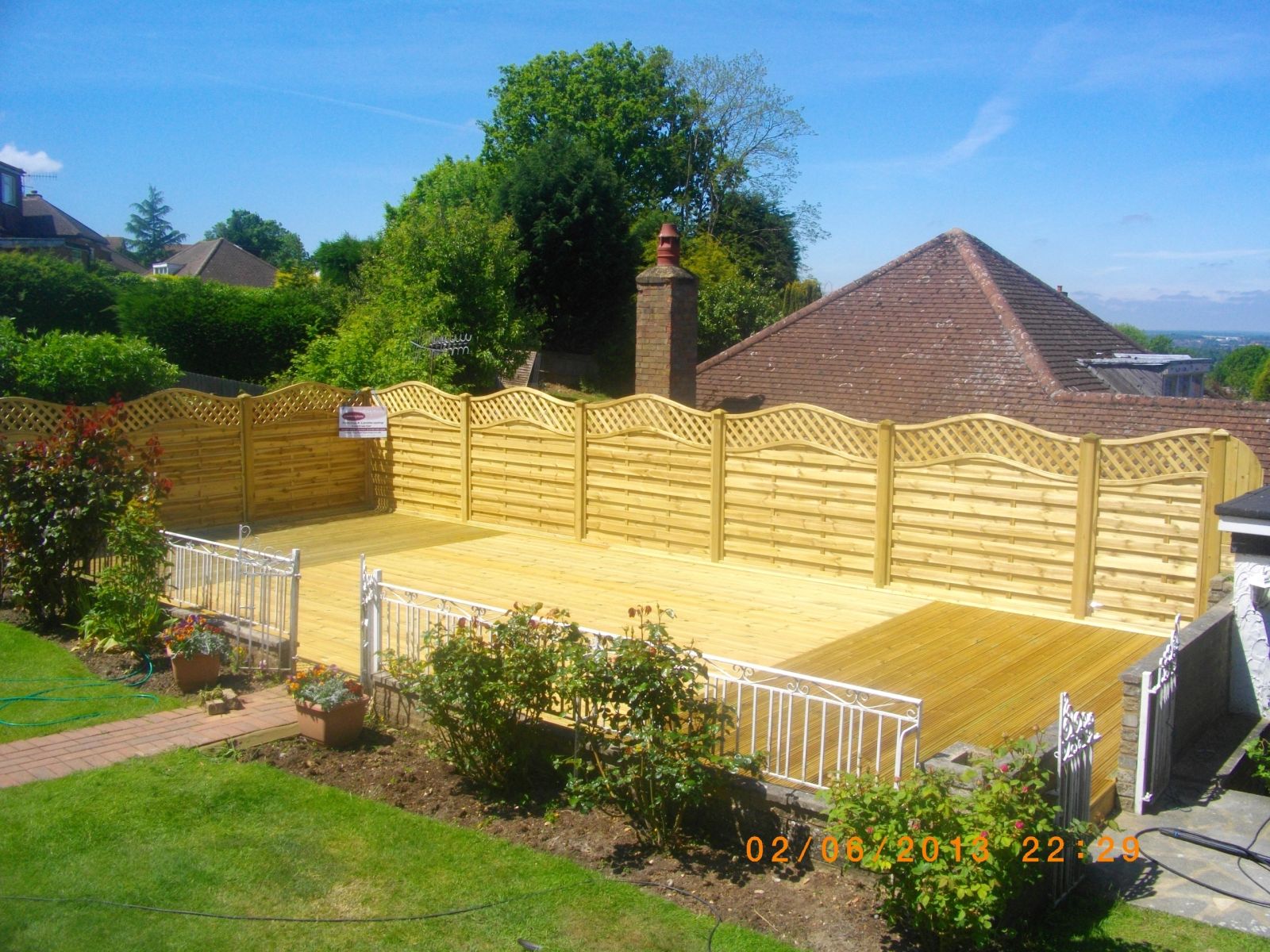
Fitting post caps correctly to shed water
A post cap that doesn't fully overhang the post's top edge on all sides leaves a lip where water can track back under the cap and sit on the end grain, defeating much of its purpose.
Pyramid or weathered profile caps shed water faster than a flat cap, which matters more on an exposed post than a sheltered one, though either performs better than no cap at all on a cut post top.
Caps fixed with a single central nail can work loose and rock in wind, letting water in at the edges; a bead of exterior adhesive under the cap in addition to fixings gives a more weathertight result.
Boundary fence position relative to a neighbour's extension
A recently built extension or conservatory next door can sometimes have its own planning conditions relating to adjacent boundary treatments, particularly around overlooking or privacy screening.
Where this applies, it's the extension's planning history rather than general permitted development rules that governs what's expected at that specific boundary.
Checking a neighbour's relevant planning permission, available on the council's public register, can clarify this before assuming standard rules apply to that stretch of boundary.
Disposing of rotten timber and green waste from a repair
Rotten fence timber is general waste rather than green waste, and larger quantities from a full-run repair usually need a licensed waste carrier or a permitted tip run rather than a domestic green bin, which only takes garden material.
Treated timber in particular shouldn't be burned on site, since older treatments can contain preservatives that produce harmful smoke, so timber waste from a repair should be taken away rather than disposed of on the plot.
Boundary rules in National Parks and AONBs
Properties within a National Park or an Area of Outstanding Natural Beauty can have reduced permitted development rights for boundary structures, reflecting the additional planning protection these areas carry.
Material and colour choices are often more tightly guided in these areas too, even where the height itself would otherwise be permitted.
The relevant National Park authority or council planning department is the right first point of contact for confirming what applies before ordering materials.
Knot loosening in structural timber
Knots are the base of a branch embedded in the trunk, and as timber dries the knot itself shrinks less than the surrounding wood, which can leave it loose or eventually cause it to drop out and leave a hole.
A live knot, still bonded to the surrounding fibres, is far less of a concern than a dead knot with a dark ring around it, which indicates the branch had already died before the tree grew over it and bonds poorly.
On load-bearing sections like arris rails, a cluster of large or dead knots near a fixing point is worth avoiding, since it reduces the effective cross-section carrying the load at that point.
Re-plumbing posts after ground movement
Seasonal clay movement can tilt a post a few degrees without breaking the footing outright, and re-plumbing involves breaking out enough of the old concrete to reset the post vertical rather than packing the gap and leaving the tilt.
Where movement is ongoing rather than a one-off event, re-plumbing without addressing drainage or ground preparation risks the same tilt recurring within a season or two.
The typical sequence for installing a fence run
A well-run fencing job generally sets out the full line first, digs and concretes every post before fixing anything else, and only starts hanging panels, rails or boards once every post has had time to cure.
Fixing panels to posts before the concrete has cured risks knocking a post out of true, which is why rushing straight from digging into panel-fitting on the same visit is usually avoided on anything beyond a very small repair.
Working this way also means any post that turns out to be misaligned is caught and corrected before panels are cut to fit it, rather than after, when correcting the post means undoing finished work.
Laminated engineered timber posts
Laminated posts are built up from several thinner timber sections glued face to face under pressure, which can even out natural defects like knots across the section and produce a straighter, more dimensionally stable post than a single sawn piece of the same size.
Because the lamination process distributes any given defect across a smaller proportion of the overall section, a laminated post is generally less likely to fail suddenly at a single knot or grain irregularity than solid sawn timber.
The adhesive bond line itself becomes a potential weak point if it's exposed to sustained moisture without an appropriate exterior-rated glue, so laminated posts intended for outdoor use need adhesives specifically rated for damp exposure rather than interior-grade bonding.
Carrying out a final walk-round check before calling a job complete
A final check along the full run — hinges swinging freely, caps seated, fixings tight, gravel boards sitting flush — catches small issues that are quick to fix on the day but awkward to revisit once tools and materials have left site.
Checking gate latches and bolts actually engage properly under normal use, not just that they look fitted, avoids a callback for something that would have taken moments to adjust while still on site.
A brief look at the surrounding area — cleared spoil, protected surfaces returned to their original state, tools accounted for — is as much a part of finishing the job properly as the fence itself.
Matching hinge fixing type to post material
A hinge that's designed to be screwed into timber needs a different fixing approach entirely on a steel or concrete post, and retrofitting a timber-style hinge onto the wrong post material without adapting the fixing method is a common cause of early failure.
Confirming the post material before selecting hinge hardware avoids ordering fittings that then need substituting on site.
Fixing a post that has rotated in its concrete base
A post can twist within a slightly oversized or cracked footing without leaning, so the panels either side pull out of square even though the post still stands upright, which is easy to miss on a quick visual check.
Repair means breaking out enough concrete to free the post, resetting it square to the run, and packing and re-pouring rather than trying to twist it back while still gripped by the old footing.