Delivery yard reversing alarms
Reversing alarms and yard activity produce short, high-frequency, intermittent noise that a solid boundary screen can meaningfully reduce for nearby residential properties, provided the screen runs the full length of the affected boundary.
Gaps for vehicle access through the screen are a common weak point, so gate design and closing sequence need as much attention as the fixed sections.
Combining a low mound with a fence on top
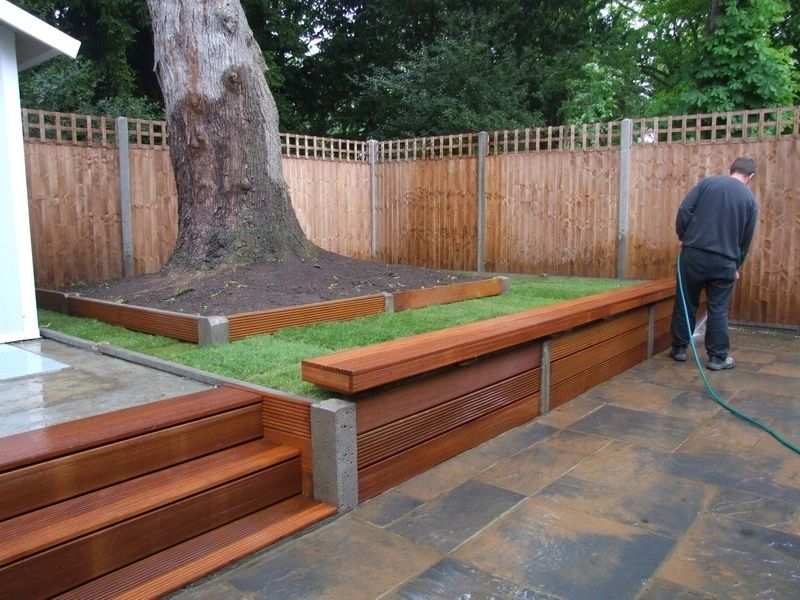
A modest earth mound topped with a fence can achieve a similar overall screening height to a much taller fence alone, while needing less imported barrier height and giving a softer, planted appearance at the base.
This combination suits a plot with enough depth to accommodate the mound's footprint, and the fence portion still needs the same attention to sealing and joint detail as a full-height barrier on its own.
Where acoustic and privacy needs overlap
A solid acoustic barrier usually also delivers strong visual privacy as a side effect of its sealed, gap-free construction, even where privacy wasn't the original driver for the project.
Conversely, a fence chosen purely for privacy using a lighter overlap or slatted construction won't deliver much acoustic benefit, so it's worth being clear at the outset which of the two needs is actually the priority.
Right to light and boundary structures
A right to light is a legal easement that can be acquired after twenty years of uninterrupted light through a defined window, and it protects a level of illumination to that window rather than an open view or unobstructed garden outlook.
An ordinary garden fence or low wall almost never generates a right to light issue, but a tall close-boarded fence, high wall or dense screening structure built close to a window that has enjoyed light for decades in principle could, particularly in dense urban plots.
In practice this rarely affects standard fencing height, but it's a different legal question from planning permission and worth being aware of on unusually tall or solid boundary structures near windows.
Decking substructures on clay
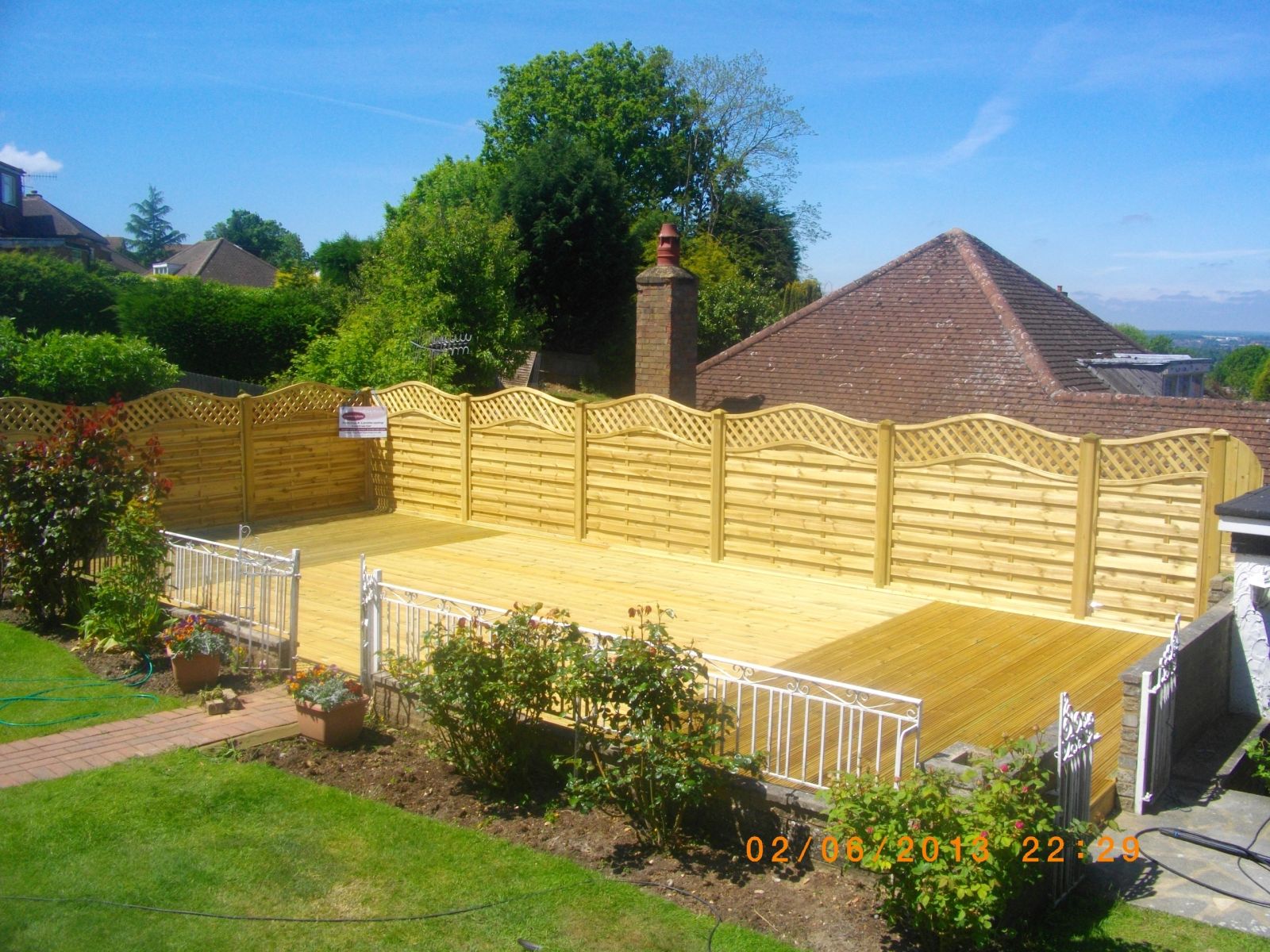
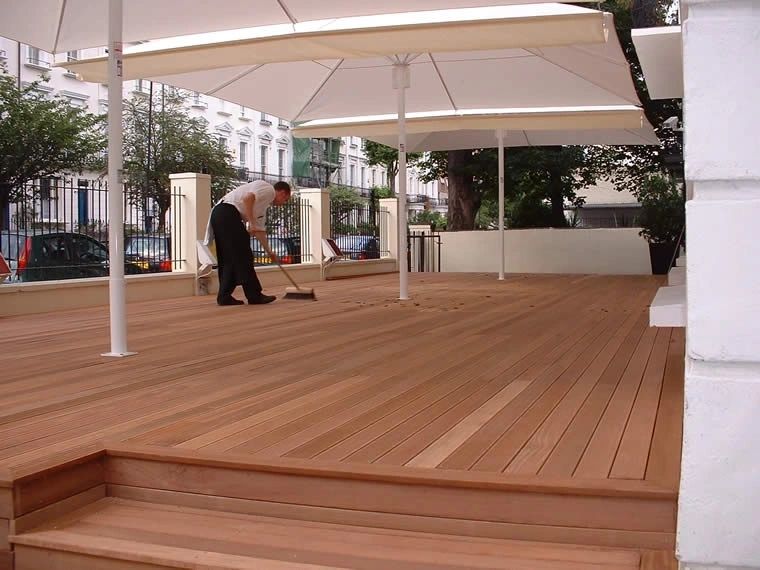
Timber decking built directly on shallow clay can move as the ground shrinks and swells seasonally, which shows up as a joist that's level in summer and slightly proud or dipped in winter.
Deeper post supports, or a raised deck design that isn't reliant on ground-bearing pads sitting in the active clay zone, avoid most of that seasonal movement.
Ventilation underneath the deck matters just as much as the foundation — a low, boxed-in deck with poor airflow traps moisture against the joists regardless of how well the posts are set.
Dealing with concealed or unusual legacy fixings
Older fence runs sometimes used fixings that aren't common today, such as coach-screws recessed and pelleted over, which take longer to locate and remove than a standard exposed nail or screw.
Identifying the fixing type before starting a repair avoids damaging surrounding sound timber by forcing a component free with the wrong method.
Setting out a straight run with string lines
A straight fence line starts with two fixed end points and a string line pulled taut between them, usually run just above where the posts will sit rather than at ground level where it snags on grass or debris.
On a long run the string sags under its own weight, so an intermediate profile or peg is needed every few bays to keep the sight line true rather than trusting a single span.
Any post that's set even 10-15mm off that line becomes visible once panels go in, because the eye picks up a wander in a boundary far more readily than a small step in level.
Threading a fence run past a rainwater downpipe
A downpipe discharging near the boundary means the fence has to either step around it with a short jog in the line, or leave a gap in the panel run rather than fixing directly over the pipe and its gulley.
Fixing a post immediately behind a downpipe risks trapping water splashing off it against the post base, so a small offset gives both the pipe and the post room without altering the overall run length much.
Where the downpipe discharges to a gulley set into a path or patio, the gravel board also needs enough clearance to avoid sitting in standing water every time it rains.
Rubber buffer pads at double-gate meeting stiles
A rubber buffer pad fitted where two gate leaves meet or where a gate meets its stop cushions the impact of closing, reducing wear on the timber or metal edge and quietening what would otherwise be a hard knock each time.
These pads perish with UV and weather exposure over time and need replacing periodically, since a hardened, cracked pad no longer cushions the impact it was fitted to absorb.
Galvanic corrosion between dissimilar metals
Galvanic corrosion occurs when two dissimilar metals are in direct contact in the presence of moisture, with the less noble metal corroding preferentially as electrons flow between the two through the electrolyte formed by the damp.
Aluminium fixed directly to steel, or stainless steel fixings used with certain aluminium alloys, are a commonly cited combination worth checking, since the galvanic reaction can accelerate corrosion of the aluminium component well beyond what it would experience alone.
Isolating dissimilar metals with a plastic washer, sleeve or compatible coating breaks the direct contact and largely prevents the reaction, which is a standard detail on aluminium gate fittings using steel fixings.
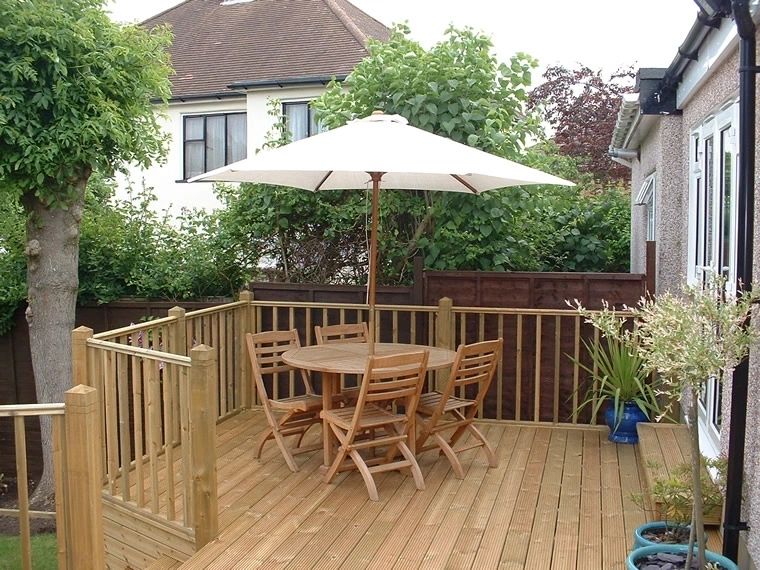
Balustrade heights on raised decking
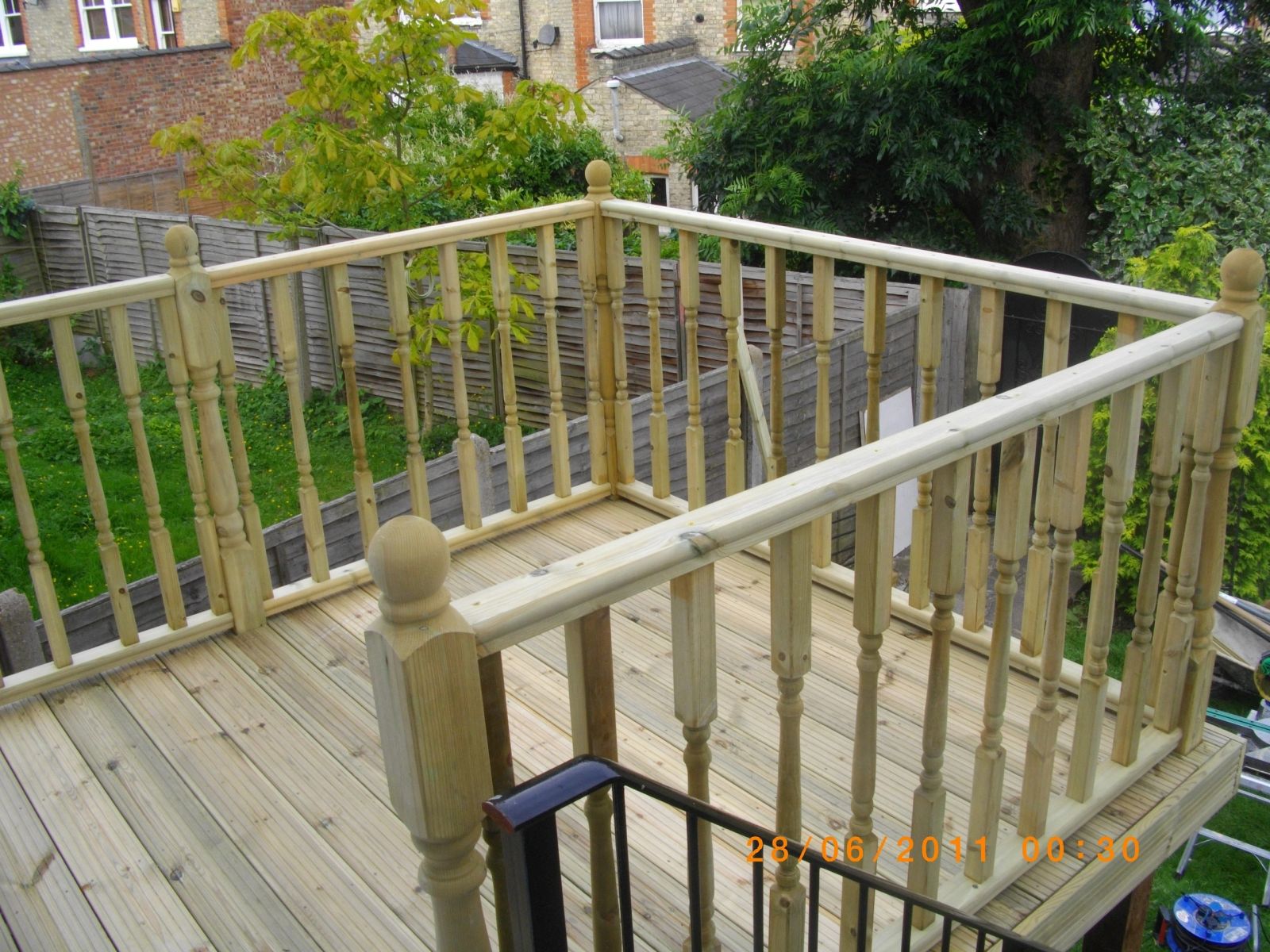
A raised deck with a drop of 600mm or more generally needs a balustrade for safety, with 900mm to 1100mm commonly used as the guide height depending on the drop and whether the household includes young children.
Baluster spacing should follow the same principle as fence gap safety — generally kept under 100mm — to avoid a child being able to squeeze through or get a head trapped between uprights.
Handrail fixings need to resist a lateral push load, not just support their own weight, so posts anchored into the deck frame itself rather than just screwed to a fascia board are the more reliable detail on any deck with a meaningful drop.