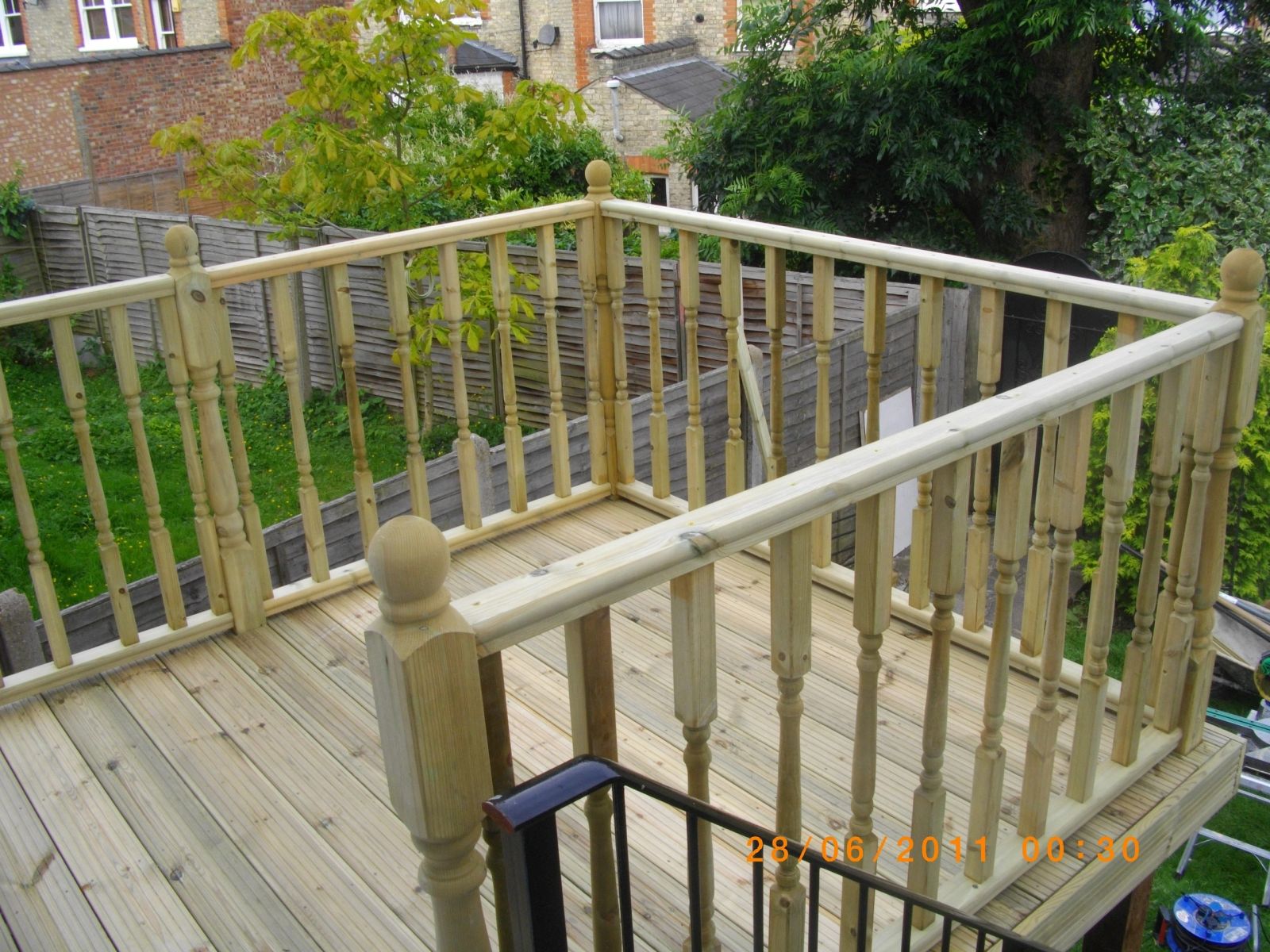
Retaining a slope under a heavy barrier
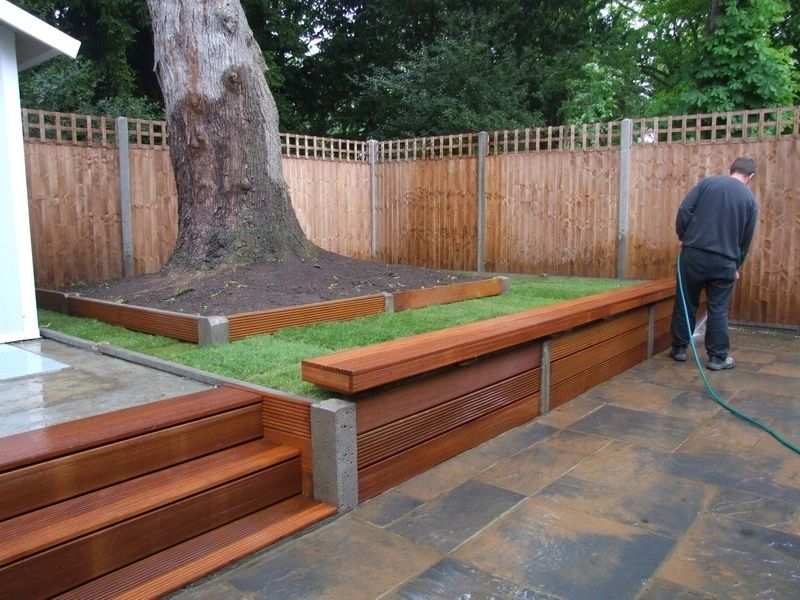
A sloped site under a heavy acoustic panel run may need a low retaining detail to keep post foundations level and consistent, rather than following the slope with a raked panel that would open a gap at the low end.
Retained ground behind the barrier also needs drainage considered, since trapped water against a retaining detail adds load and risks undermining the foundation over time.
Realistic maintenance intervals
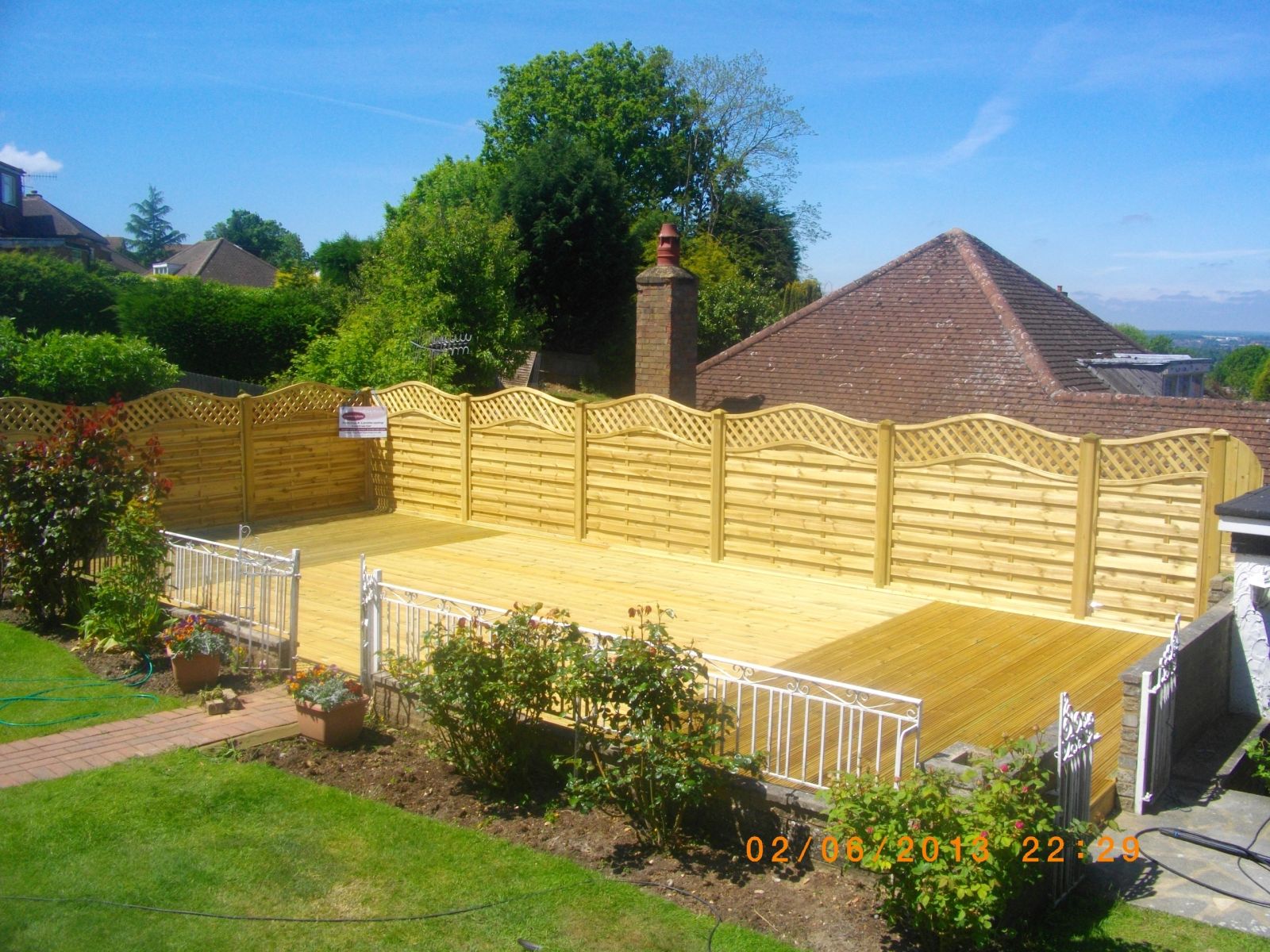
Pressure-treated softwood fencing generally wants a re-application of preservative or stain every two to three years to keep the surface protected, more often on a south-facing run that gets constant UV exposure.
Gate hinges and latches are worth checking annually for movement or corrosion, since a small adjustment caught early avoids the gate racking out of square and needing a rebuild.
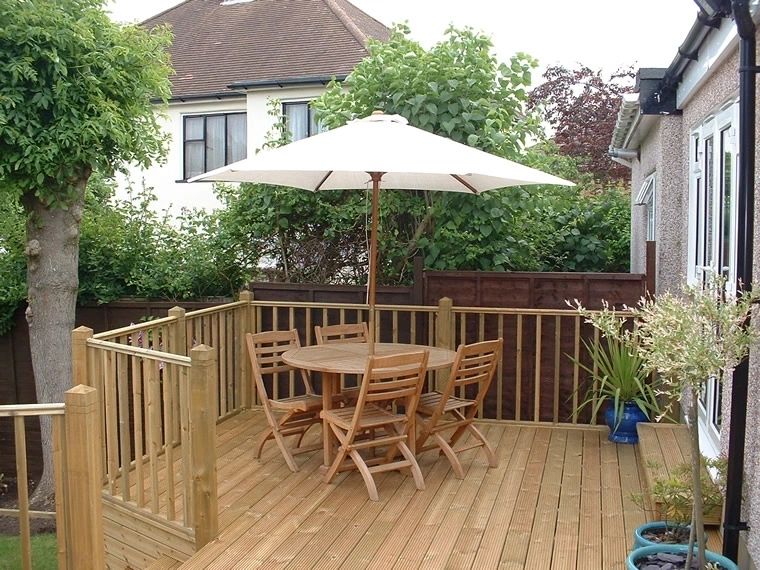
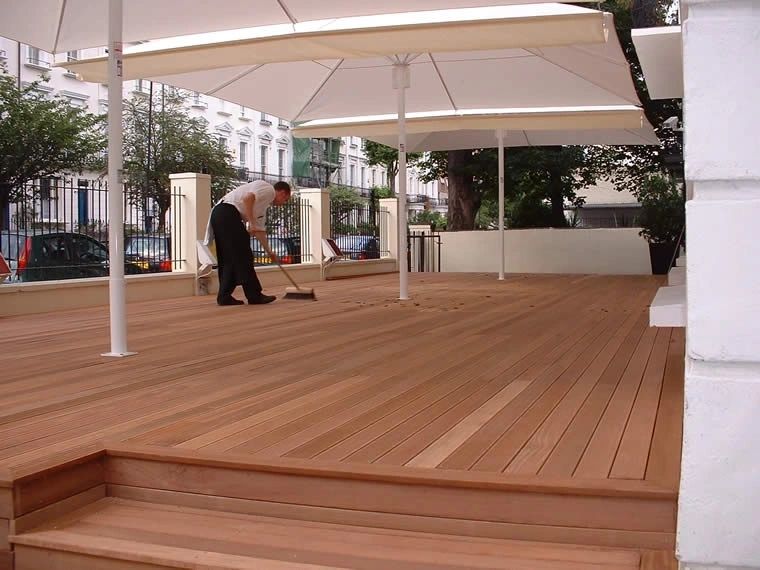
Decking boards benefit from a yearly clean to clear leaf litter and algae from the gaps, which is what actually causes most of the slipperiness people blame on the timber itself.
Keep wear from repeated latch impact
A keep takes the direct impact of the latch bar every time the gate closes, and over years of use the keep's opening can wear wider than the bar, letting the latch rattle loose even when the latch mechanism itself is fine.
Replacing a worn keep is usually far cheaper than replacing the latch it serves, so it's worth checking the keep first on an older gate with a loose-feeling latch.
Composite versus timber
Composite decking and fencing boards trade a higher upfront cost for lower ongoing maintenance — no annual staining or oiling, and better resistance to rot in permanently damp or shaded spots where timber struggles.
The trade-off is that composite doesn't weather the way timber does; it stays close to its original colour rather than silvering or taking on the character some clients want, and off-cuts and end sections need cutting and capping carefully to stop moisture getting into the core.
For a boundary fence that's mostly out of sight, timber with a reapplied treatment every few years is often the more economical long-term choice; for a heavily-used deck, composite's lower maintenance burden usually wins out.
Pub garden and commercial extract noise
Noise from a pub garden or a kitchen extract fan tends to combine intermittent voice noise with a continuous mechanical hum, and each needs addressing differently — extract fan noise responds well to a close, solid enclosure, while voice noise from an open garden area is harder to contain fully.
A barrier here is usually one part of a wider noise-management approach alongside operational measures on the commercial side.
Freeholder consent for leasehold flats
Where a garden or yard is demised under a long lease rather than owned outright, the lease itself often requires the freeholder's written consent before any structural alteration, and a new fence, wall or gate can count as an alteration even in a small private yard.
Some leases route this through a managing agent who needs formal notice and a fee before works start, and skipping that step can technically breach the lease even where the work itself is uncontroversial.
It's worth reading the relevant clause of the lease, or asking the managing agent directly, rather than assuming that owning the flat gives unrestricted rights over its garden boundary.
Dog kennels and repeated barking
Kennelled dogs barking in response to passers-by or other triggers produce a noise that's both loud and unpredictable in timing, which makes it harder to screen effectively than a noise source with a steady, predictable pattern.
A solid barrier close to the kennel run breaks the dogs' sightline to the trigger — often a person or another animal passing — which can reduce the frequency of barking as well as attenuating the sound itself.
Refrigeration chiller unit noise
An external chiller or condenser unit for commercial refrigeration produces a continuous low-frequency hum from its compressor and fan, and low-frequency noise is harder for a barrier to attenuate than higher-pitched sound.
A dense, well-sealed enclosure close around the unit itself tends to help more than a distant boundary fence, since it intercepts the noise at source rather than after it has already spread across a yard.
Aftercare guidance for the first season
Newly set posts need their first winter to fully settle, and a slight tightening of gate hinges or latch alignment after the first few months of seasonal movement is normal rather than a sign of poor work.
Untreated or lightly treated timber benefits from an owner-applied preservative or stain within the first year, particularly on end grain and cut edges exposed during installation, since factory treatment doesn't reach every surface once a panel's been cut to fit.
Clearing leaves and debris from the base of gravel boards each autumn, where they trap moisture against the timber, is a simple habit that measurably extends the life of a fence beyond what the initial installation alone determines.
Glue lines and re-gluing a loose frame joint
A joint that's opened up slightly but hasn't rotted can often be cleaned out, re-glued with an exterior-grade adhesive and clamped rather than remade from new timber, provided the wood itself is still sound.
Old animal-glue or PVA joints on older gates fail well before the timber does, which is why a loose but dry corner is worth checking before assuming a full rebuild is needed.
Mineral wool density as a build spec
Mineral wool infill used in an acoustic panel core is specified by density as well as thickness, since a denser wool of the same thickness generally performs better acoustically, at the cost of extra weight the posts and fixings then have to carry.
Lower-density wool, sometimes used to save weight or cost, gives a lighter panel but a noticeably reduced acoustic benefit, so density is worth checking against the spec sheet rather than assumed from thickness alone.