Council neighbour consultation schemes for permitted development
Certain categories of permitted development, mainly larger extensions rather than fencing itself, fall under a formal neighbour consultation scheme requiring the council to notify adjoining owners even without a full planning application.
Boundary fencing itself is rarely covered by this specific scheme, but it's sometimes confused with the ordinary neighbour notification that happens during a full planning application for other works.
Where in doubt about which process applies to a specific project, the council's planning department can clarify which consultation route, if any, is relevant.
Hardwood options for gates
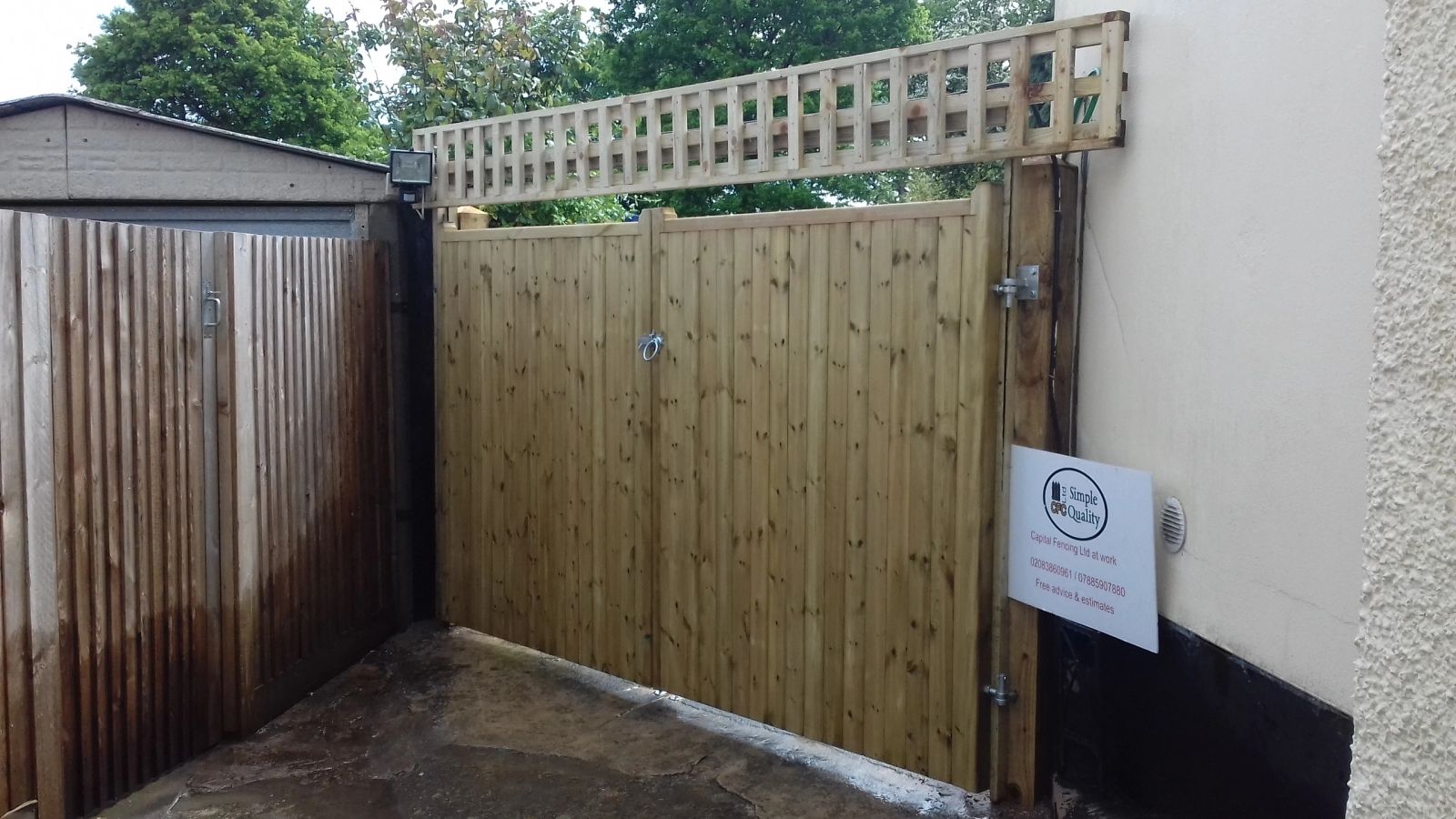
Gates take more racking stress than a fixed fence panel, opening and closing on a single edge, which is why hardwoods such as oak or iroko are often specified for gates even where the adjoining fence is softwood.
Oak's natural durability means it can be left untreated and will weather to silver-grey, but it also moves seasonally and can stain surrounding masonry with tannin run-off in wet weather, which is worth flagging before it's fitted next to a pale render or paving.
Hardwood gate frames are usually built with mortice-and-tenon joints rather than the simple nailed or bracketed joints acceptable on a softwood panel, since the joint has to resist years of racking without loosening.
Which side a fence's face and posts should sit on
There's a long-standing but informal convention that the 'good side' — the smooth face without visible posts and rails — should face the neighbouring property, though this is a courtesy rather than a legal requirement.
Some title deeds do specify a required orientation as part of an ownership condition, which takes precedence over the general convention where it applies.
Where no such condition exists, agreeing the facing direction with a neighbour before building avoids a common and easily-avoided source of minor friction.
Screening bin storage without blocking access
A dedicated bin store or screening fence at the front of a property needs to balance neatness against practical access — bins still need to be wheeled out to the collection point on the correct day without catching on a narrow gate opening.
Local authority bin sizes vary, so it's worth checking actual collection bin dimensions before building a fixed screen enclosure that later turns out too small for a new bin type.
A slatted or louvred screen usually works better than solid panel for bin storage, since it hides the bins from view while still letting air circulate rather than trapping odour against a solid surface.
Gravel terraces of the Lea and Colne valleys
The river terraces along the Lea and Colne valleys are largely sand and gravel over clay, ground that drains quickly and digs easily compared with the heavier clays further from the rivers.
Free-draining gravel is generally kinder to timber posts since water doesn't pool against the base, but loose gravel can also slump back into an open hole faster than clay, making a wider working hole necessary to get concrete properly around the post.
Where the gravel sits directly over a clay band, augers can hit a hard, sticky transition partway down that slows digging without warning.
Timber versus metal for a replacement gate
A timber gate is easier to match to an existing fence line and easier to repair in sections, while a metal gate holds its shape better against warping and racking but is harder to alter once fabricated.
We recommend based on what the existing boundary is built from and what the client actually wants to maintain over time, not a single default material.
Tree root damage to a shared boundary structure
Where a neighbour's tree roots have visibly damaged a shared boundary wall or fence footing, resolving responsibility for repair can depend on tree ownership, the nature of any easement, and whether prior warning was given about root damage.
This is a fact-specific question rather than one with a single automatic answer, and can occasionally end up needing legal advice where the cost of repair is significant.
Documenting the damage with photographs and dates as it develops is useful evidence regardless of which direction a later conversation about responsibility takes.
Right to light and a tall boundary fence
There's no general legal 'right to a view' or automatic entitlement to sunlight in a garden, so a taller boundary fence built within the applicable height limits usually isn't unlawful purely because it shades a neighbour's garden.
Right to light law in England mainly concerns windows in buildings that have enjoyed light for a long period, rather than open garden space, and even then applies in fairly narrow circumstances.
Where a taller fence is likely to significantly affect a neighbour's garden, discussing it before building tends to prevent ill feeling even where there's no strict legal obstacle.
Picket fence styles and spacing
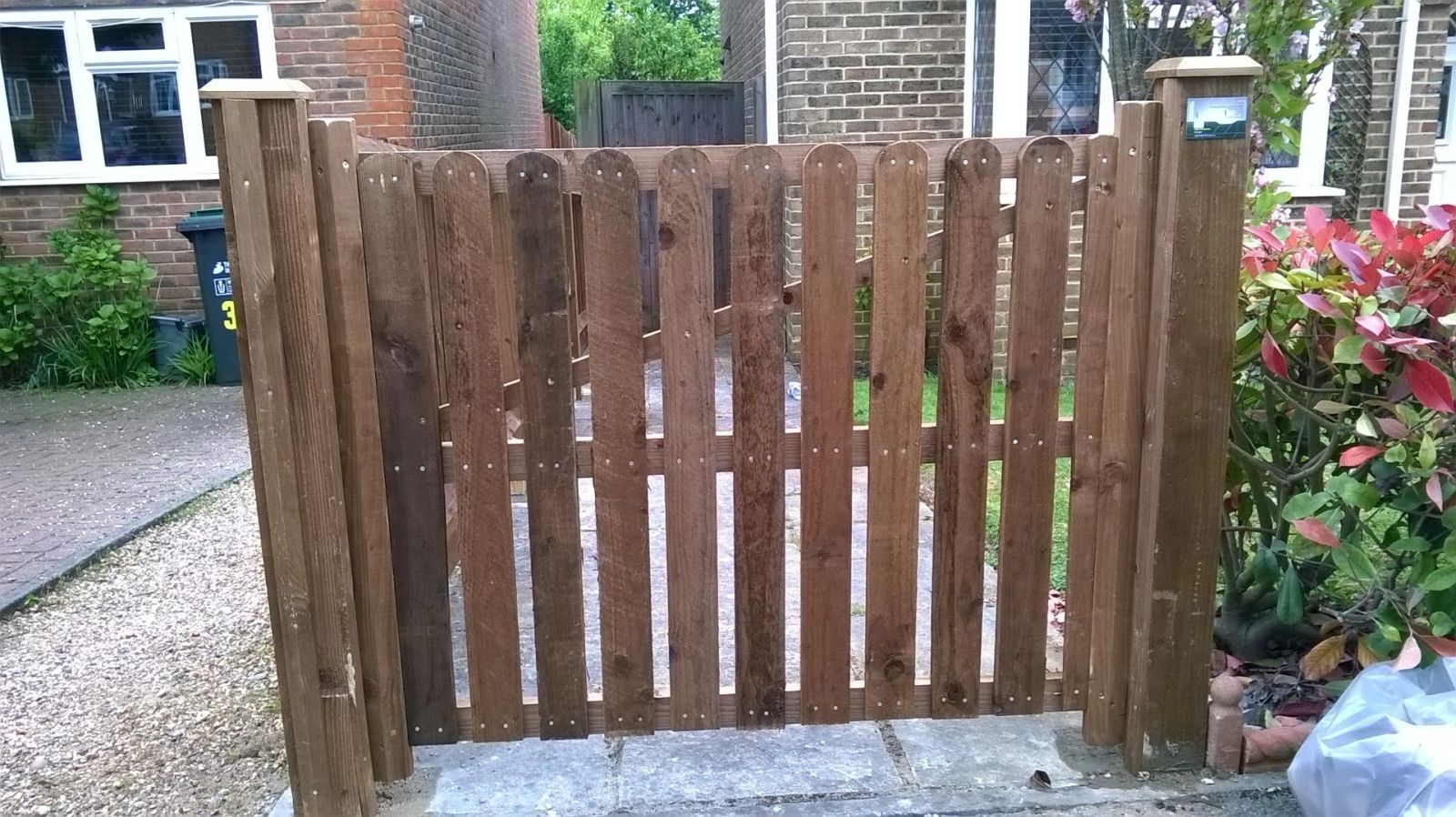
Picket fencing trades privacy for a lower, more open boundary, which suits front gardens where sightlines to the street and a welcoming appearance matter more than screening.
Picket spacing is a genuine design choice — narrower gaps look more traditional and offer a bit more containment for small pets, while wider spacing uses less timber and lets more light and air through a planted border behind it.
Because picket fencing is low, it rarely needs the same post depth as a taller closeboard run, though corner and gate posts still need proper concrete footings regardless of the fence's height.
Spectator segregation fencing at a sports ground boundary
Beyond the outer perimeter, many sports grounds use internal segregation fencing to separate spectator areas, and this internal fencing is usually a different specification to the outer boundary, prioritising crowd safety and sightlines over anti-intrusion detailing.
Any internal fencing used for crowd control needs to allow rapid emergency evacuation, so gate positions and opening widths are checked against relevant safety guidance rather than set purely by the site's security brief.
Diagnosing squeaks and creaks in gate hardware
A squeak or creak from a gate is almost always dry friction at a hinge pin, pivot or roller rather than a structural fault, and it's worth locating the exact source by working the gate slowly through its swing rather than assuming which hinge is responsible.
Cleaning out old, dirt-laden grease before applying fresh lubricant gives a longer-lasting fix than simply oiling over grit that's already worked into the bearing surface.