Specification driven by an insurer's boundary requirements
Some commercial and high-value premises have boundary security requirements set by an insurance policy — a minimum fence height, mesh type or lock standard — that the fencing spec has to meet regardless of what would otherwise be chosen.
Where a specific requirement applies, it's worth getting it in writing from the policy documents before quoting, since fitting to a general standard when a stricter one is required can leave a gap the client didn't expect.
Vehicle and impact loading on perimeter fencing
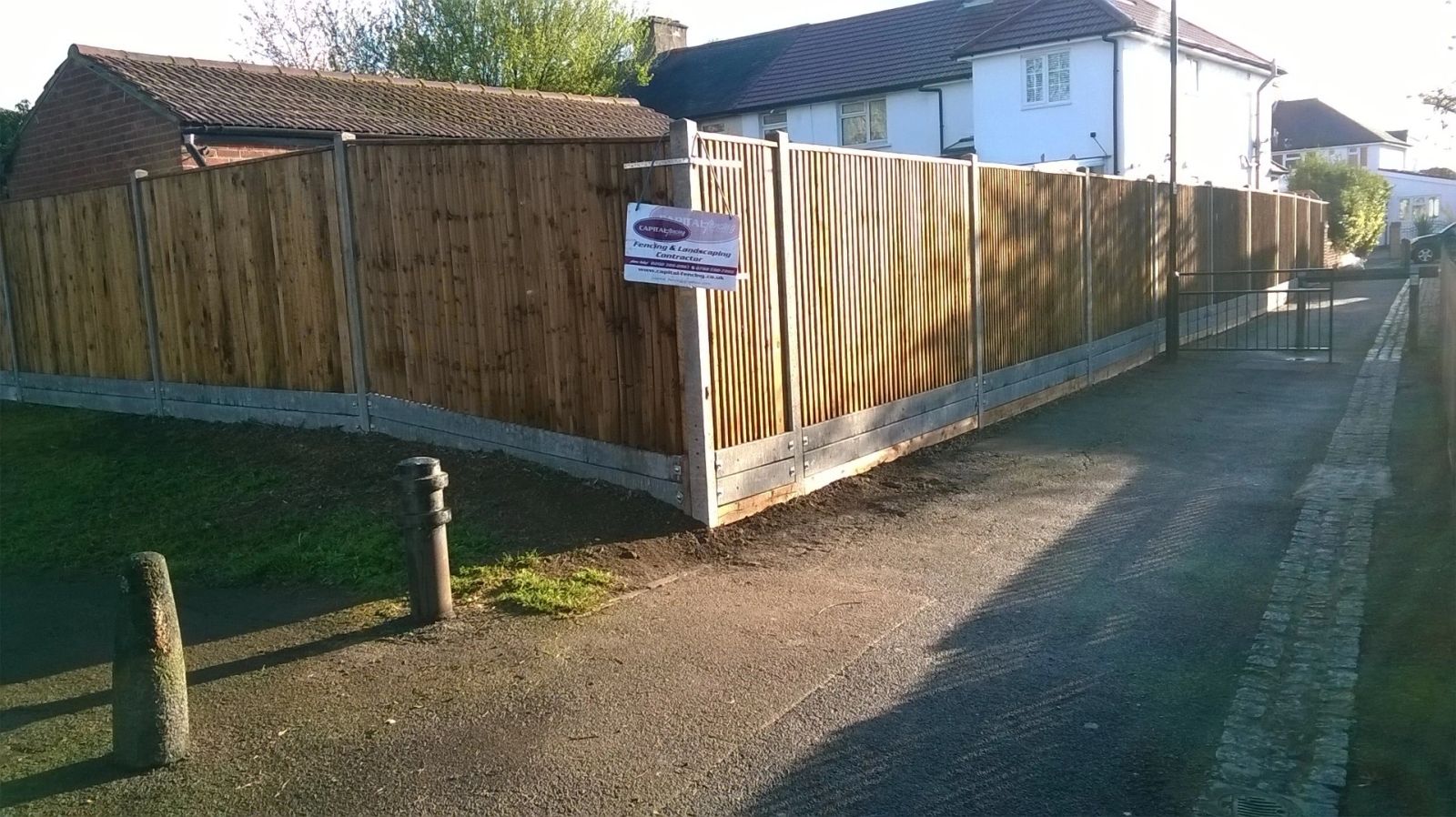
A boundary next to a car park, loading bay or farm track needs posts and panels sized for accidental impact loading, not just wind and climbing loads, because a reversing vehicle applies a very different force to the same run.
Where impact is a realistic risk, a kerb, bollard or heavier-gauge post is used to take the hit rather than relying on the fence panel itself to absorb it.
Keeping treated timber offcuts away from food-growing areas
Offcuts of pressure-treated fencing timber shouldn't be left lying in or used to edge a vegetable bed or fruit cage, since preservative can leach out of cut ends into adjacent soil over time.
Keeping offcuts on a hard surface or sheeting rather than directly on a border during the works avoids this becoming an issue even temporarily while the job is ongoing.
Where a client specifically wants to reuse leftover timber for raised beds, it's worth flagging that treated fencing stock isn't the right material for that purpose regardless of how convenient the offcuts seem.
Waste carrier duty of care for site waste
Anyone removing fencing, decking or building waste from a client's property in the course of business needs to be a registered waste carrier with the Environment Agency, and should be able to provide a waste transfer note showing where the material was taken.
Treated timber, in particular, is classed differently to plain untreated offcuts and generally can't simply go on a bonfire or into general household waste, since some older preservatives fall under hazardous waste rules.
Asking a contractor for their waste carrier registration number and a transfer note isn't excessive caution — the householder can be liable if waste is later found fly-tipped and traced back to the job.
Waste carrier duty of care for old fencing
Under the Environmental Protection Act 1990, anyone arranging removal of construction waste such as old fence panels and posts has a 'duty of care' to ensure it's handled by a registered waste carrier.
Asking to see a waste carrier's registration number, and requesting a waste transfer note for larger quantities, is a reasonable and legitimate request rather than an unusual one.
Householders can be held responsible if waste from their property is later found fly-tipped, even where they paid someone else to take it away, which is why checking credentials matters.
Run-off from a neighbour's hardstanding
A neighbouring driveway, patio or other hard surface that slopes toward a shared boundary sends its rainfall run-off directly onto the adjoining plot rather than allowing it to soak away locally, and that concentrated flow is often worse than ordinary rainfall on open ground.
A fence sitting in the path of that run-off can see its base saturated far more often than the rest of the same run, shortening the life of posts and gravel boards at that point specifically.
Where this is a known issue, a shallow channel or permeable strip along the fence line intercepts the flow before it reaches the timber, rather than leaving the fence itself to act as the only barrier.
Fascia boards and picture-framing a deck
A fascia board fixed around the visible edges of a deck hides the joist ends and cut board edges, giving a tidier finished look and protecting the end grain of the joists from direct weather exposure.
Picture-framing takes this further by running a border board around the perimeter with the main boards mitred into it, which reads as a more considered finish but needs accurate setting-out since any error in the mitred corners is highly visible.
Both details add material and labour without changing the deck's structural performance, so they're a specification choice driven by appearance and edge protection rather than necessity.
Fixing into a rendered wall without cracking the render
Render sits as a relatively thin, brittle coat over the masonry beneath it, so drilling straight through without care can crack or blow a patch of render around the hole rather than leaving a clean fixing point.
Marking and drilling a pilot hole slowly through the render layer first, before switching to full hammer action once through into the masonry, reduces the chance of the render cracking outward from the drill's initial impact.
Where render is already loose or hollow-sounding when tapped near the intended fixing point, it's worth choosing a different spot or repairing that patch of render first rather than fixing into a surface that's already failing.
Feather-edge board overlap
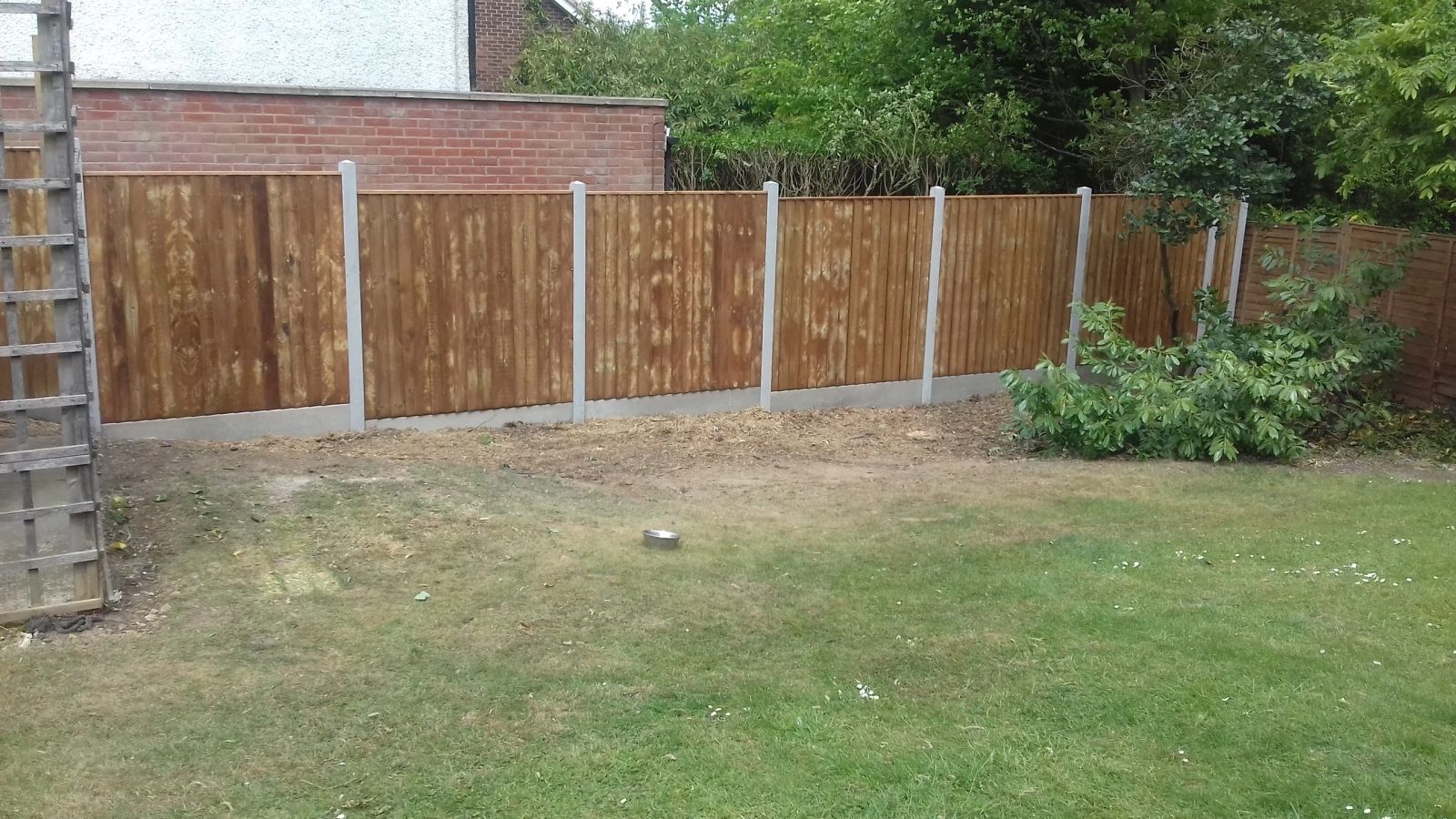
Feather-edge boards are sawn to a tapered profile, thick along one edge and thin along the other, and are hung vertically with each board overlapping the thin edge of its neighbour by a consistent margin, typically 15-20mm.
Getting that overlap consistent matters more than it looks, since too little overlap opens sightlines and lets wind-driven rain through as the boards shrink, while too much wastes timber and adds unnecessary weight to the rails.
Because the boards taper, the overlap measurement is usually taken at the board's face rather than assumed from its nominal width, and a badly calibrated first board throws off the spacing for the rest of the run.