Post fixing for a heavier double-skin panel
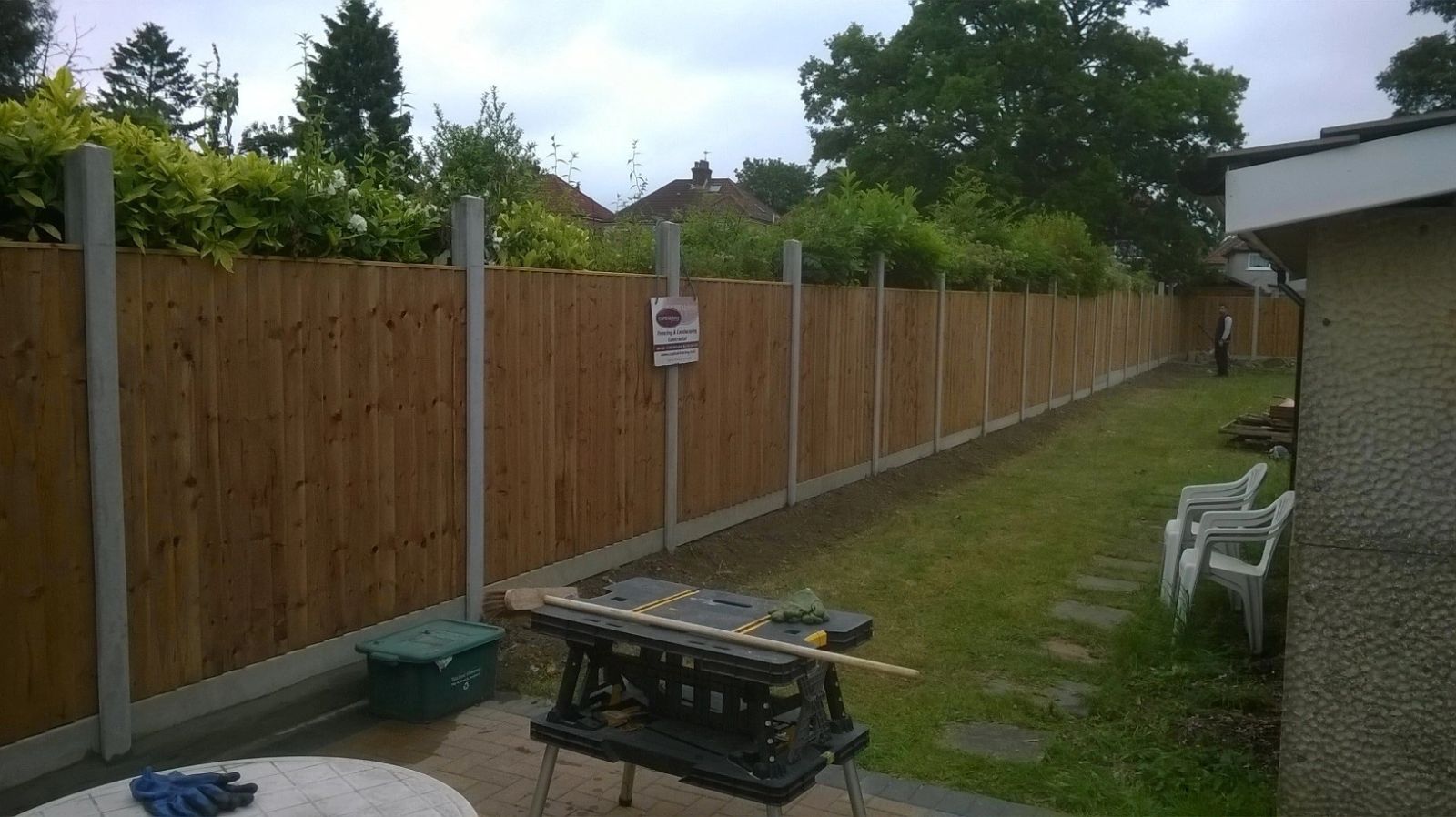
A double-skin acoustic panel is considerably heavier than a standard lap-panel fence, so the post and base spec has to be upgraded to carry that extra weight over the long term, not just at installation.
A post that's undersized for the load will lean within a couple of seasons, which opens gaps at the joints and undoes the sealed-joint principle the whole build depends on.
Powered auger versus hand-digging post holes
A petrol or hydraulic auger speeds up digging significantly on open, obstruction-free ground, but is the wrong tool near known services, tree roots or previous hardstanding, where it can't tell the difference between soil and something it shouldn't hit.
Access also decides the method — an auger needs room to manoeuvre and, for larger machines, a route wide enough to bring it onto site, which isn't always available on a narrow rear plot.
Hand-digging costs more in labour time but gives far more control in tight, obstructed or sensitive ground, which is why most quotes specify the method appropriate to the actual site rather than assuming the fastest option by default.
Fencing around front-garden parking
Converting part of a front garden to off-street parking usually needs a dropped kerb from the highway authority, and any remaining boundary fencing needs to respect the same visibility and access rules as the parking itself.
A low wall or open railing at the front, rather than a solid fence, is common on parking conversions so the parked vehicle doesn't look boxed in and sightlines for reversing onto the road stay clear.
Permeable paving is often a planning condition on larger front-garden parking areas to manage surface water run-off, which can indirectly affect where a boundary fence's own drainage needs to go.
Properties with no registered title at all
A small proportion of properties in England and Wales, usually those that haven't changed hands or been mortgaged for a very long time, still aren't registered with HM Land Registry at all.
In these cases, boundary questions rely entirely on the original paper deeds held by the owner, which can be less detailed or harder to interpret than a modern registered title plan.
First registration can be triggered voluntarily or by certain transactions, and often brings helpful clarity to boundary questions that were previously only defined by older paper deeds.
Inspecting fixing points for early corrosion during routine maintenance
Corrosion on a galvanised security fence typically shows first at cut ends, weld points and fixing holes where the zinc coating has been broken during manufacture or installation, rather than along an untouched length of rail or mesh.
A routine inspection checks these specific points rather than relying on a general look along the fence line, since a fixing bolt corroding from the inside can look sound from the outside until it fails under load.
Cutting a panel down for a short bay
A lap or closeboard panel can usually be cut down in width by removing boards from one edge and refixing the cut edge to the panel's own frame, provided there's still a batten or rail to fix into once the cut is made.
Concrete panels generally can't be cut at all, which is one of the practical reasons timber is chosen over concrete gravel-board-and-panel systems on an irregular boundary with several odd-width bays.
Whatever is cut, the new edge needs its own vertical support — either an extra batten screwed to the frame or, for a wider cut-down section, a slip post — so the panel doesn't flex or drop at the trimmed end.
Tree roots and Tree Preservation Orders
Mature trees close to a boundary do two things to a fence: their roots can heave a post out of true over several years, and if the tree is protected by a Tree Preservation Order or sits in a conservation area, digging within its root protection area needs care and sometimes council sign-off.
Where roots are already present we'll usually hand-dig around them rather than auger through, and set the post slightly off the direct line if that avoids cutting a structural root.
It's worth checking with the local authority's tree officer before any excavation near a TPO tree, since unauthorised root damage carries the same penalties as felling the tree itself.
Deck boards against a shaded wall building up algae
A deck built hard against a shaded wall, fence, or dense planting on one side often shows a distinct band of algae growth along that edge well before the rest of the deck, since it dries far more slowly after rain.
This uneven wear pattern is normal rather than a sign of a substandard board, but it does mean that edge needs cleaning more often to keep slip resistance consistent across the whole deck.
Where possible, leaving even a narrow gap between the deck edge and an adjoining wall or dense hedge improves airflow along that edge and reduces how quickly algae establishes there.
Ground-line collars on timber posts
A plastic or metal collar fitted around a timber post at the point where it enters the ground creates a physical break between the post and the surrounding soil, reducing direct abrasion and moisture wicking at that specific zone.
Ground level is where oxygen, moisture and soil organisms are all present together in the right combination for decay fungi to thrive, which is why this narrow band is disproportionately where post failure originates compared with either the fully buried or fully exposed sections.
A collar doesn't replace preservative treatment but adds a secondary physical barrier specifically targeted at this highest-risk zone, similar in principle to the extra retention already specified for ground-contact use-class timber.