Installation sequencing for heavy panels with limited access
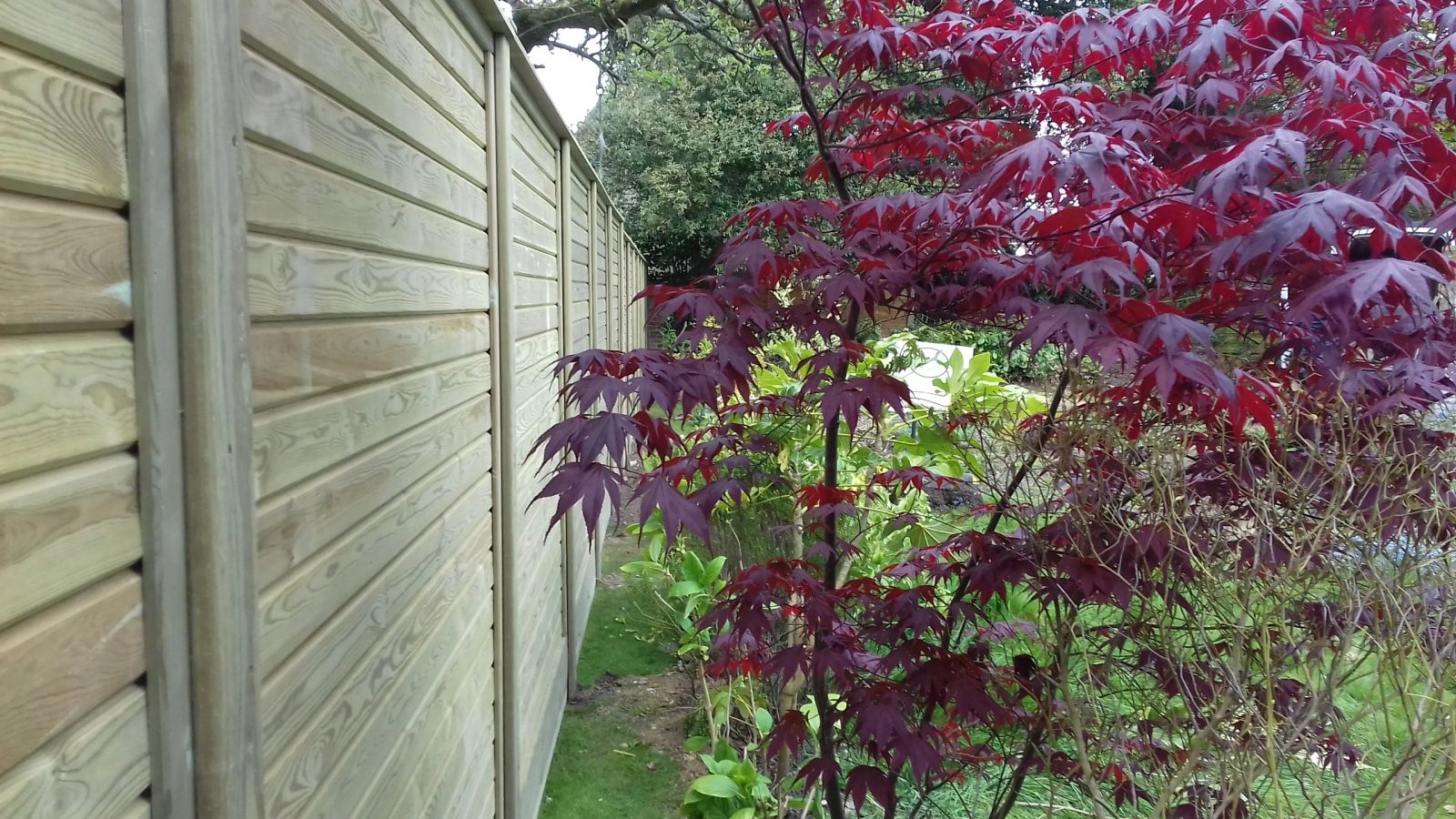
On a site with narrow side access or no vehicle route to the rear boundary, heavier acoustic materials are broken down into smaller loads and carried through in a planned sequence rather than delivered as full panels that can't physically get through.
Sequencing posts, infill and skins to match what can realistically be moved through restricted access avoids delays discovered only once the job is underway.
Coordinating fencing work with other trades on a shared site
On a job where fencing follows landscaping, paving or groundworks by another trade, confirming final levels and boundary positions with that other trade before digging starts avoids fence posts being set to a level that then changes once the remaining groundwork is finished.
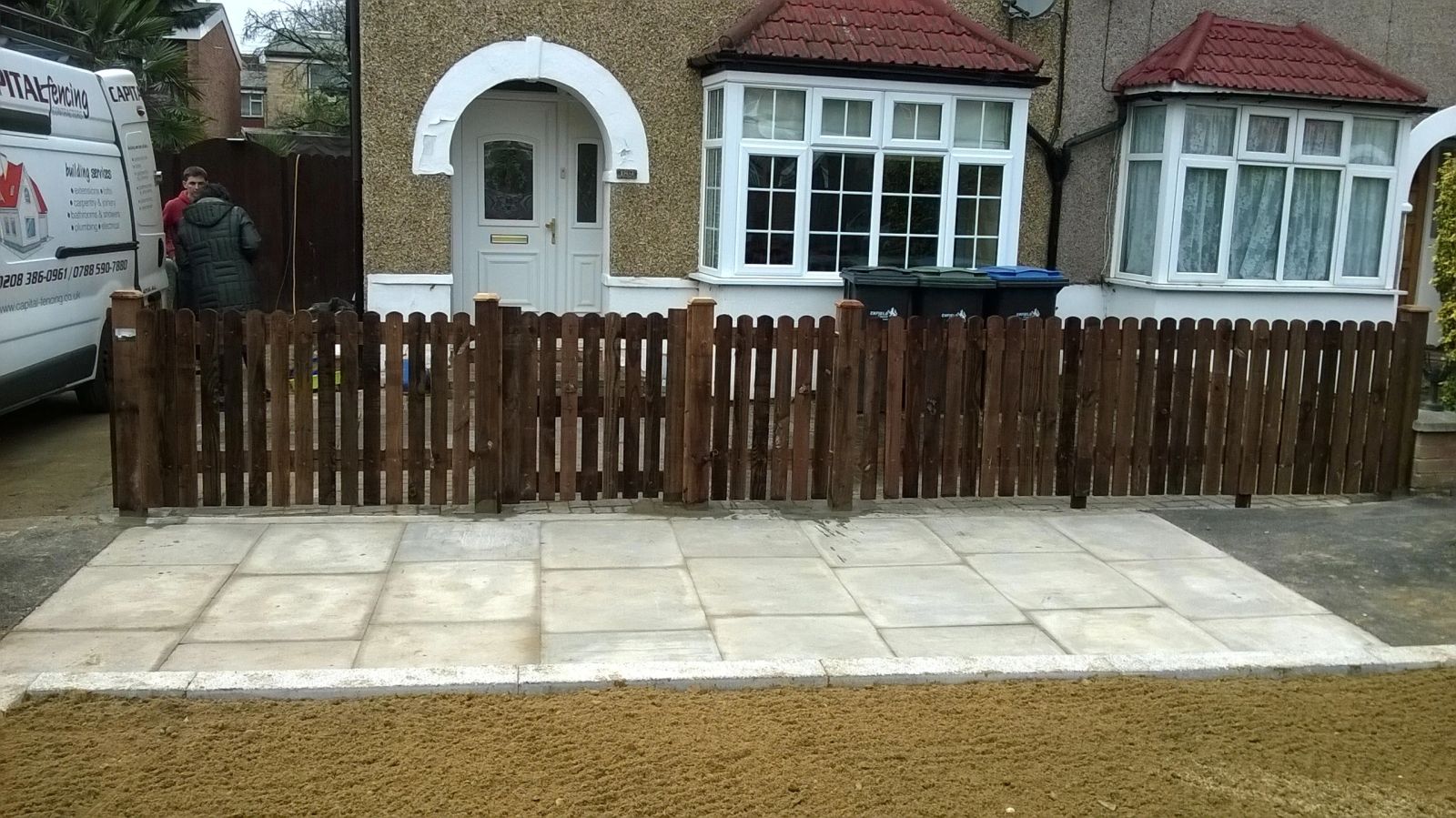
Where fencing is scheduled before paving, agreeing which side of the post line the paving will finish against prevents a post ending up embedded in what should have been a clear paving joint.
Simple sequencing conversations at the outset, rather than each trade working to its own assumptions, avoid the more expensive alternative of one trade's finished work being disturbed by the next.
Working around pets and children on site
An open trench, a stack of loose posts or a partially removed fence panel is an obvious hazard for a young child or an excitable dog, and on an occupied family garden it's worth agreeing at survey stage how pets will be kept away from the working area each day.
A garden with no boundary at all for part of a working day — because the old fence has come down and the new one isn't up yet — needs a temporary barrier or a clear arrangement for keeping animals indoors until the run is complete.
Leaving tools, concrete mix or offcuts accessible overnight on a site with children present is worth avoiding even where the work itself is finished for the day.
Clarifying the '358' mesh naming convention
The '358' name commonly used for high-security welded mesh refers to its aperture dimensions of roughly 76mm by 12.5mm, formed from wire around 4mm thick, giving a mesh too small to get fingers or toes into as a climbing aid.
Different manufacturers use slightly different wire gauges and coating specifications under the same '358' description, so a spec sheet is worth checking rather than assuming all products sold under that name are identical.
Data protection basics for boundary CCTV
Domestic CCTV covering only a homeowner's own property is generally exempt from full UK GDPR obligations, but that exemption narrows considerably once cameras capture a neighbour's garden, shared paths, or public areas.
Where wider coverage is genuinely needed, clear signage and being able to explain why footage is captured helps if a neighbour raises a concern with the Information Commissioner's Office.
Positioning cameras to focus tightly on a homeowner's own boundary and property, rather than sweeping across a neighbour's space, is the simplest way to avoid this becoming an issue.
Decking fixings visible versus hidden
Face-fixed decking is screwed directly down through the board top, which is simple, cheap and easy to replace a single board on, but leaves visible screw heads that can work slightly proud over time as the timber moves.
Hidden fixing clip systems fit into the board's grooved edge and screw down into the joist from the side, giving an unbroken top surface, but they generally cost more per board and make it harder to lift a single damaged board without disturbing its neighbours.
Composite boards are more often specified with hidden clip systems since the clean, screw-free look is part of the appeal that justifies the material's higher cost.
Balustrade heights on raised decking
A raised deck with a drop of 600mm or more generally needs a balustrade for safety, with 900mm to 1100mm commonly used as the guide height depending on the drop and whether the household includes young children.
Baluster spacing should follow the same principle as fence gap safety — generally kept under 100mm — to avoid a child being able to squeeze through or get a head trapped between uprights.
Handrail fixings need to resist a lateral push load, not just support their own weight, so posts anchored into the deck frame itself rather than just screwed to a fascia board are the more reliable detail on any deck with a meaningful drop.
Recycled plastic fence posts
Posts made from recycled plastic, sometimes blended with additives for UV resistance and rigidity, avoid timber's rot and insect vulnerability entirely, since the material has no organic content for fungi or insects to attack.
They tend to be more flexible than an equivalent timber section of the same size, which can be an advantage in absorbing impact but a disadvantage where rigidity is needed to resist sustained wind load without visible sway.
Their thermal expansion behaviour is closer to other polymer products than to timber, meaning fixings and adjoining materials need similar allowance for movement as with composite boards rather than being treated as a timber-equivalent product.
Ground effect on sound propagation
Sound travelling close to the ground interacts with the ground surface itself — soft, absorptive ground like grass attenuates more than hard, reflective ground like tarmac or paving over the same distance.
A garden with a grassed area between the boundary and the house benefits slightly from this ground effect in addition to any barrier, while a fully paved garden loses that extra attenuation and relies more heavily on the barrier alone.