Decking joist spans by board thickness
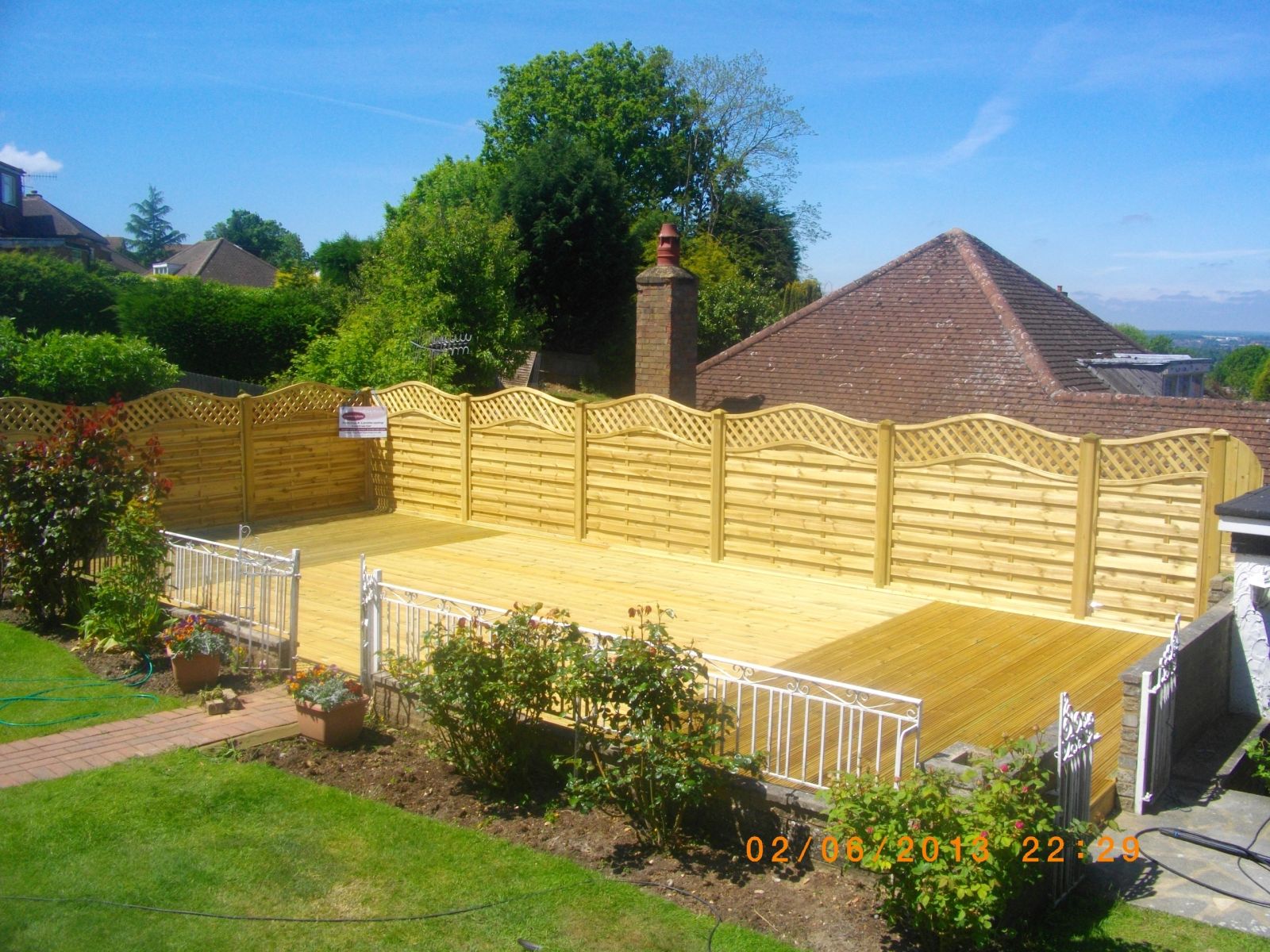
Joist spacing for a deck is set by the thickness and species of the board being laid over it, not by a single universal figure — a standard 28mm softwood board typically wants joists no more than about 400-450mm apart, while thinner composite boards often need closer spacing again.
Manufacturers publish specific span tables for their composite products because the flex characteristics differ from timber, and installing outside those tables is one of the most common causes of a bouncy or springy deck.
Diagonal laying patterns also reduce the safe span compared with a straight run, since the board is effectively supported at a shorter distance along its length.
Digging a post hole beside a mature root plate
Close to a mature tree, the first spade or auger pass often meets structural roots rather than clear soil, and cutting a root over roughly 25mm diameter can affect the tree's stability as well as its health.
Hand-digging with a spade and fork lets roots be worked around and exposed gradually, which an auger or mechanical borer can't do since it cuts through whatever's in its path without warning.
Where a root genuinely blocks the only sensible post position, moving the post sideways along the line by a short distance is almost always preferable to severing a major root to keep to the original spacing.
Running bamboo and rhizome pressure on boundaries
Running bamboo species spread through underground rhizomes that can travel several metres from the parent plant and push up through gravel boards, path joints or even through weak points in a fence base.
Unlike tree roots, rhizome growth is fast and can reappear within a single growing season after being cut back, so a fence base alone rarely stops it without a physical rhizome barrier buried alongside it.
Where established running bamboo sits on a neighbouring boundary, it's worth flagging to the client that fence replacement won't solve the underlying spread on its own.
Fencing a retail service yard
A retail service yard behind a shop or unit typically holds delivery access, waste storage and sometimes gas or refrigeration plant, so its fencing needs to allow regular vehicle and trolley movement while still closing off the yard from the public shopping area.
A sliding gate is often preferred here over a swing gate because it doesn't intrude into a tight yard footprint shared with delivery vehicles manoeuvring at close quarters.
Copper-based timber preservatives
Modern timber preservatives commonly use copper compounds as the primary biocide, since copper is effective against fungal decay and is less toxicologically hazardous than the older chromated copper arsenate formulations largely phased out for domestic use.
Copper-treated timber can accelerate corrosion in fixings made from certain metals, particularly plain steel and some aluminium alloys, in a similar way to oak's tannic acid reaction, which is why treated timber often specifies compatible fixing types.
Hot-dip galvanised and stainless steel fixings both perform acceptably with copper-treated timber, whereas untreated mild steel or some aluminium fixings can corrode noticeably faster in direct, damp contact with it.
Boundary questions in conveyancing enquiries
When a property is sold, standard conveyancing enquiries (the TA6 form) ask the seller to confirm boundary ownership and disclose any known disputes, including informal agreements about fence lines that were never registered.
An unrecorded verbal agreement about who maintains which boundary can cause problems at sale stage if it isn't consistent with the T-marks or general boundary on the title plan, since the buyer's solicitor will flag the discrepancy.
Keeping a simple written note or email trail of any boundary agreement reached with a neighbour, even an informal one, makes a later sale considerably smoother than relying on memory years afterwards.
Sizing a driveway gate
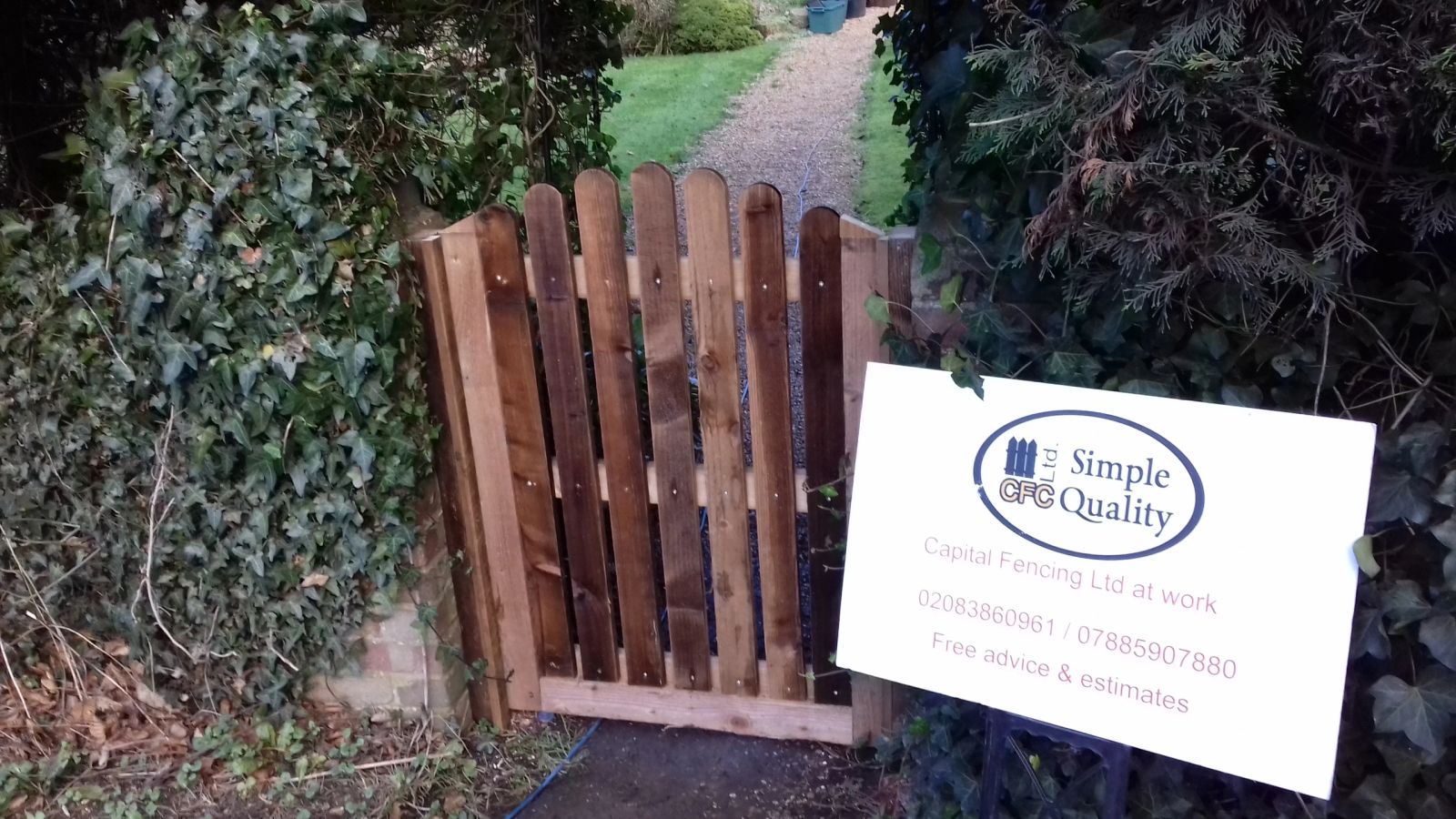
A single driveway gate needs enough swing clearance to open fully without catching a kerb, a parked car, or a slope in the drive itself, which is worth checking with a tape measure rather than assuming a standard width will fit.
Double gates spread the load and swing arc across two leaves, which suits wider openings and reduces the strain on any one hinge post, but need a solid centre stop or drop bolt so the leaves meet cleanly and don't rack under wind load.
Automation, if it's wanted, changes the gate's structural requirements too — motorised gates need a rigid, properly braced frame and adequate foundations for the motor mounts, which is worth specifying before the gate is built rather than retrofitting later.
School and nursery boundary rules
School and nursery boundaries are typically specified higher than a domestic fence and without footholds, finger-trap gaps or climbable rail patterns, because the boundary has to keep young children in as well as keep intruders out.
Gate self-closing and self-latching, non-climbable infill and a lockable-from-outside-only pedestrian gate are common requirements checked against the site's own policy rather than a general rule of thumb.
Boundaries next to an electricity substation
A local substation can produce a continuous low-level hum from transformer equipment, generally quieter than typical traffic noise but noticeable in an otherwise quiet garden, particularly at night when background noise drops.
A standard timber acoustic barrier can reduce the audible carry of this hum somewhat, though the fixed, unchanging nature of the source means the practical benefit is judged against a very specific quiet-hours baseline rather than a busy daytime one.