Timber species and surface spread of flame
Untreated softwood used for fencing and cladding has a fairly modest natural resistance to flame spread, and where fencing sits close to a building boundary, some specifications reference surface spread of flame classification for the cladding or fencing material used.
Flame-retardant treatments can be applied to timber to improve its classification, working by charring the surface to slow flame spread rather than by making the timber genuinely non-combustible.
This consideration applies mainly to close-boundary or party-wall-adjacent structures rather than typical open garden fencing, where fire classification of the timber itself is rarely a specified requirement.
Working hours restrictions set by councils
Most councils set standard permitted working hours for construction noise, commonly something like 8am to 6pm on weekdays and a shorter window on Saturdays, with no noisy work at all on Sundays and bank holidays, though the exact hours vary by borough.
These restrictions apply regardless of whether formal planning permission was needed for the work itself, and are usually enforced under separate environmental health powers rather than the planning system.
On a site with a specific planning condition attached, hours can be tighter still, so it's worth checking any condition notice as well as the general council policy before committing to a start time.
Talking to neighbours before you start
A shared boundary fence, even one that's entirely your responsibility to maintain, sits next to someone else's garden — giving a neighbour advance notice of the height, style and timing of the work heads off most disputes before they start.
Where a fence straddles the boundary line exactly, both parties technically have an interest in it, and a quick written note agreeing who's paying for what avoids a much longer argument later if it needs replacing again.
This isn't a formal Party Wall Act process — that applies to structures like walls between buildings — but the same basic courtesy of clear, written communication before work starts applies just as well to garden boundaries.
Contaminated or capped land general caution
Land with a history of industrial, landfill or heavy commercial use can be capped with a clean soil or membrane layer over contaminated material below, installed specifically to prevent exposure, and breaking through that cap with a post hole risks disturbing what it was designed to contain.
Signs worth treating with caution include unusually dark or ashy soil, chemical odours, unexpected debris at shallow depth, or a site known to have had a previous industrial use even if long redeveloped for housing.
Where contamination is a realistic possibility, checking any available site history or environmental report before excavating is a sensible precaution, and hand-digging with careful observation of the spoil is safer than blind augering.
Supporting neighbouring posts while replacing a single panel
Removing one panel from an established run can momentarily remove lateral support the panel itself was providing to its neighbouring posts, particularly on an older run where posts have relied on the panels bracing each other.
Temporary bracing on the posts either side while the old panel is out and the new one is fitted avoids one of them leaning or shifting during the brief window it's unsupported.
This is more of a concern on taller or more exposed runs than on a short, sheltered garden fence, but it's a quick precaution worth taking on any repair rather than assuming the remaining structure will hold itself steady unaided.
Tongue-and-groove versus overlap boards
Overlap boards, as used on a standard lap-panel fence, leave a thin air gap at every joint that sound passes through almost unimpeded, undermining any acoustic benefit from the timber's mass.
Tongue-and-groove or shiplap boarding interlocks at each joint, closing that gap and giving the face genuine continuity, which is why it's the standard choice for a timber acoustic skin rather than overlap boarding.
Scrap value theft targeting fence fittings
Cast aluminium or brass post caps and decorative finials have occasionally been targeted for scrap value on isolated boundaries, in the same way capping rails have, so lower-value steel or composite alternatives are sometimes specified deliberately on an exposed run for that reason alone.
Where a decorative metal fitting is wanted for appearance, fixing it with concealed or one-way screws reduces how quickly it can be removed compared with an exposed standard fixing.
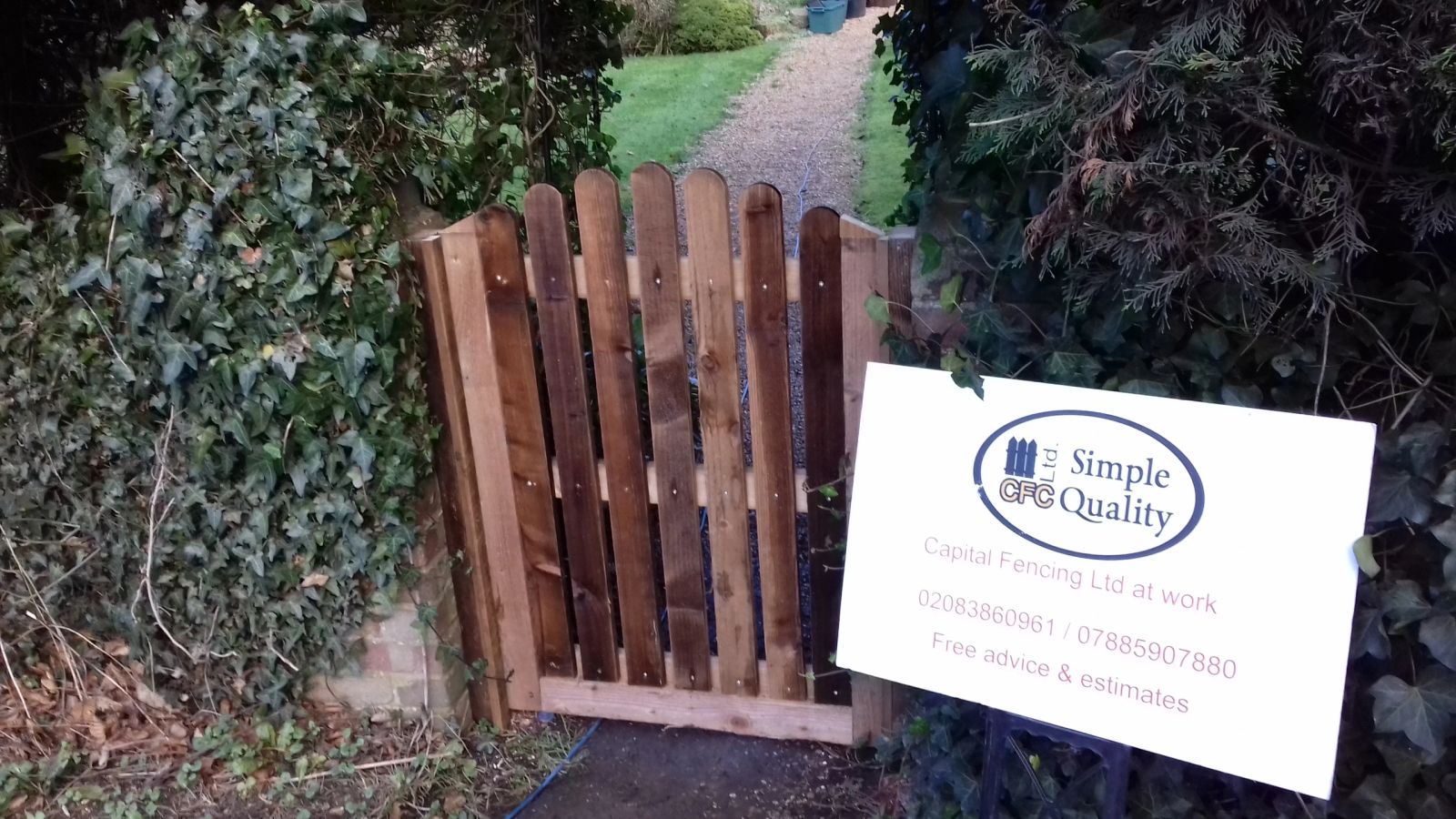
Checking a gate opening is square before building the gate
An opening that looks square by eye can still be a few centimetres out corner to corner, which only becomes obvious once a gate built to the nominal width won't hang without binding on one side.
Measuring both diagonals of the opening and comparing them is a quick way to confirm square — equal diagonals mean a true rectangle, unequal diagonals mean the posts have drifted out of parallel or the opening has racked.
Where an opening is slightly out of square and can't easily be corrected by resetting a post, building the gate with a small taper to match the actual opening is usually more practical than forcing the posts back into an exact rectangle.
Setting a realistic outcome before ordering materials
An acoustic fence is agreed to be a noticeable improvement rather than a silent garden, and putting that in writing before ordering materials avoids a mismatch between what's technically achievable and what was expected.
Photos or a simple sketch showing sightlines from the garden to the noise source help explain, before work starts, why a particular height or position has been chosen over a shorter or cheaper alternative.