Fox digging beneath chicken runs and fence lines
Foxes are capable diggers and will exploit any soft ground at the base of a fence or run, particularly around poultry enclosures, so a below-ground barrier matters as much as the fence height itself.
An L-shaped buried apron of mesh, turned outward from the base of the fence rather than straight down, stops digging by making the animal hit an obstruction before it reaches the fence line itself, which is more reliable than depth alone.
This detail is worth specifying separately from the fence quote for anyone keeping poultry or small livestock, since standard fence installation doesn't normally include a buried predator barrier.
Tongue-and-groove board joints
Tongue-and-groove boards have a projecting tongue on one edge and a matching groove on the other, which locks adjacent boards together and stops the panel racking or gapping as timber moves.
This gives a fully solid-looking panel face with no gaps even as the boards season, unlike an overlapping feather-edge panel where gaps can open as the wood shrinks.
The tight interlocking fit does mean less room for movement overall, so tongue-and-groove panels are more prone to visible buckling if fitted without a small expansion allowance at each end.
Tangential shrinkage and cupping
Wood shrinks more in the direction that runs tangentially to the growth rings than along the grain's length, and boards cut close to the outer edge of a log (flat-sawn) show this most, curling into a dish shape known as cupping as they dry.
A board with growth rings running roughly parallel to its face is far more prone to cupping than one cut through the centre of the log, where rings run closer to perpendicular to the face.
Fixing boards with two nails or screws per bearer rather than one resists cupping better, since a single central fixing lets the edges lift and curl relatively freely.
Why replacement panels sometimes need different post spacing to the originals
Panel sizing has changed slightly over past decades, and a fence originally built to an older standard width may not have a modern replacement panel that fits the existing post spacing exactly.
This becomes relevant on a partial repair where only some panels are being replaced and the remaining posts are staying in place, since a small mismatch can mean trimming a new panel down or accepting a slightly wider or narrower final bay.
It's worth measuring the actual existing post-to-post distance rather than assuming a 'standard' width will match, particularly on an older fence being partially rather than fully replaced.
Consent needed to connect drainage across a boundary
Running a new drainage connection across a neighbouring property's land, sometimes done alongside boundary works, needs the neighbour's consent and possibly a formal easement, not just a friendly verbal understanding.
Water companies can also require notice for new connections joining an existing public sewer, separate from any neighbour agreement about crossing their land.
Where fencing work uncovers or affects a drainage connection crossing the boundary, it's worth pausing to confirm what rights actually exist before proceeding.
Balustrade requirements on raised decking
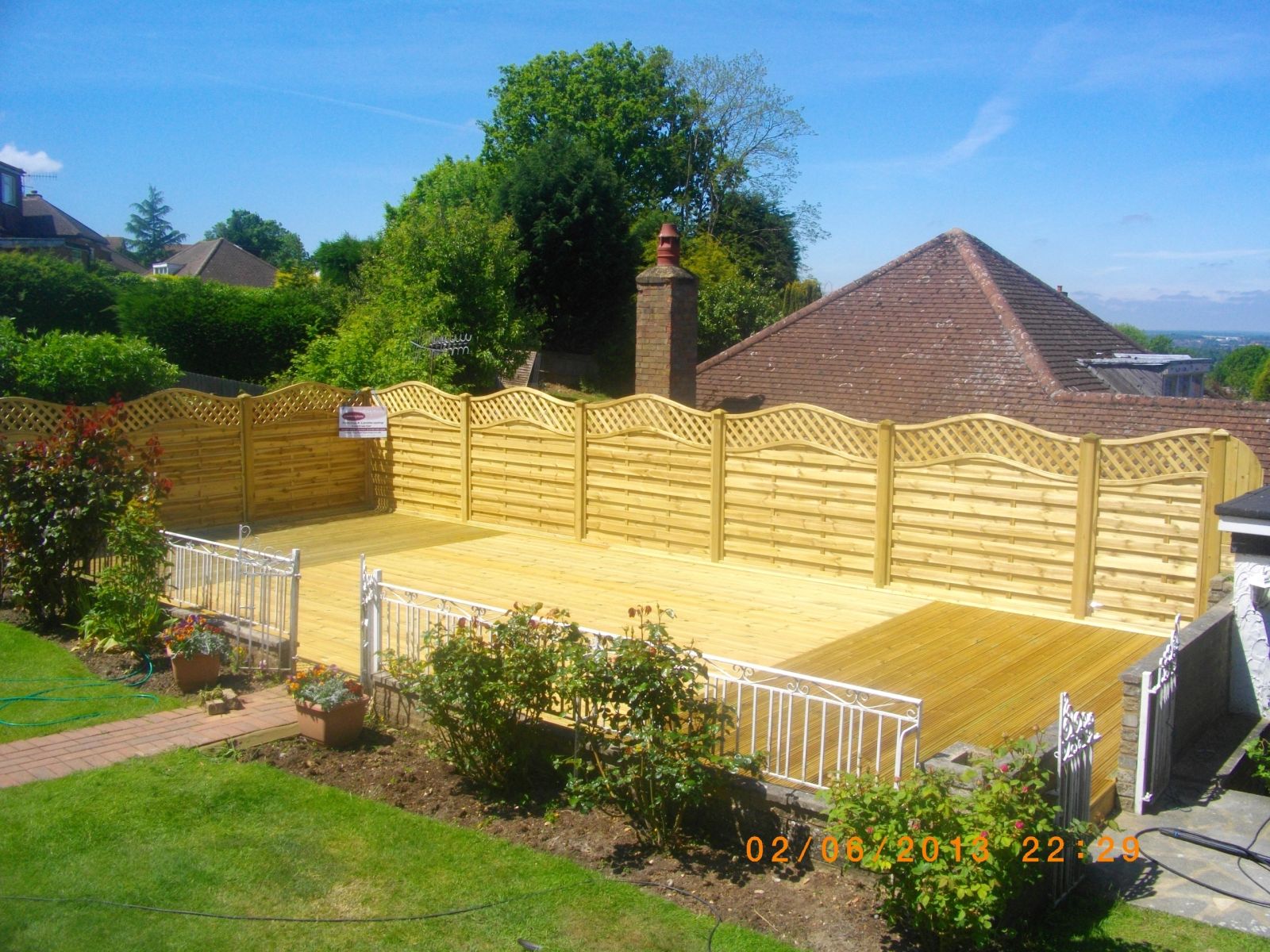
Building regulations generally expect a guarding balustrade wherever a raised deck has a drop of around 600mm or more, with a minimum height (typically around 900mm-1100mm depending on the situation) and gaps small enough that a 100mm sphere can't pass through.
That gap rule is specifically there to stop a small child getting a head or limb through the balustrade, so wide-slat contemporary balustrade designs need checking against it just as carefully as traditional close-spaced spindles.
A deck under that drop threshold doesn't need a balustrade by regulation, but a low kerb or edge trim is still worth considering as a visual cue to the edge, particularly at night.
Choosing gate ironmongery
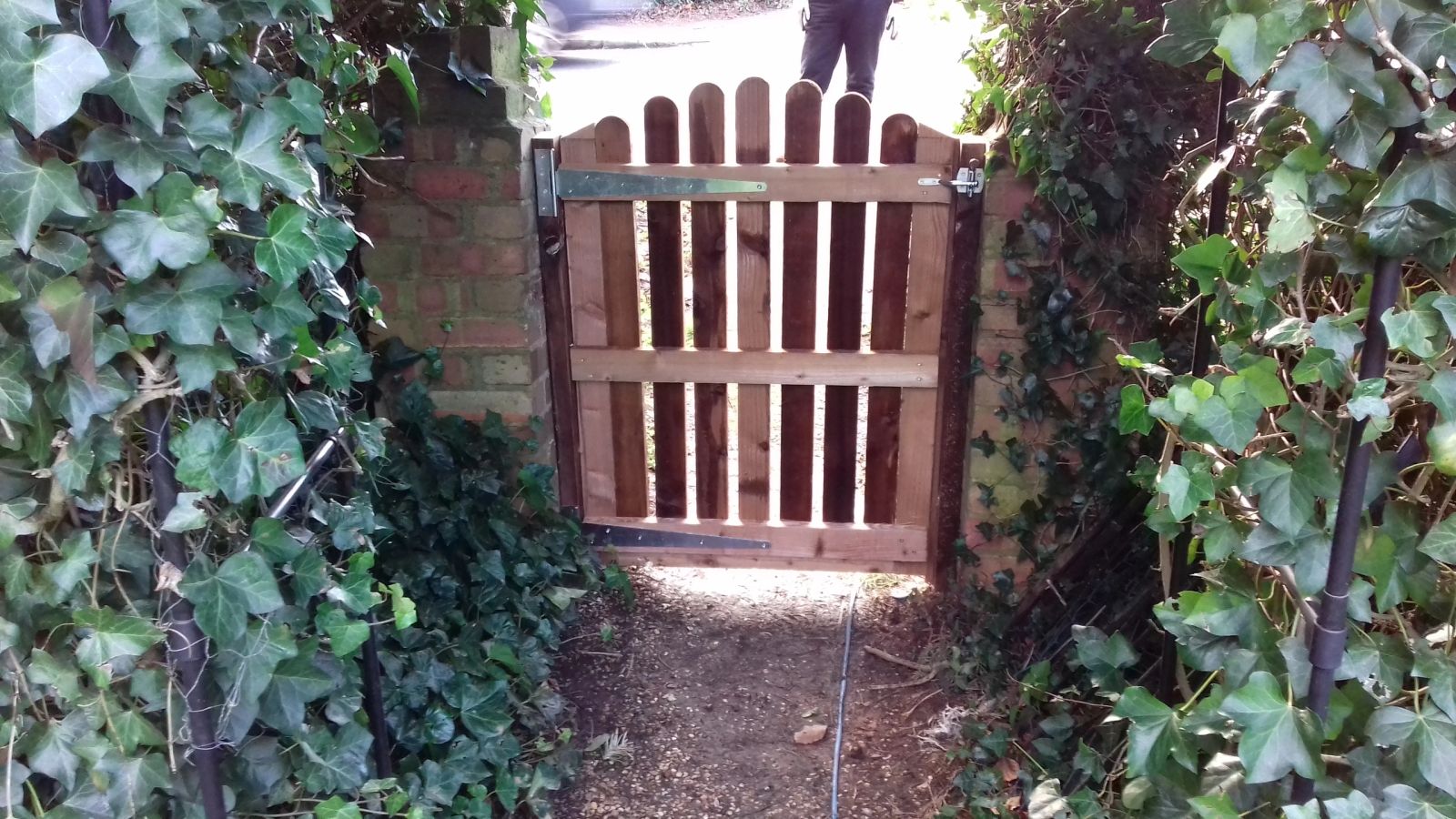
A gate is only as good as its hinges and latch — undersized hinges are the single most common reason a timber gate sags and starts dragging on the ground within a year or two.
Heavier gates, especially solid hardwood or wide driveway gates, need hinges rated for the actual weight rather than whatever came in the hardware pack, plus a diagonal bracing batten on the frame to stop it racking out of square.
Galvanised or stainless fixings are worth the small extra cost over standard zinc-plated ones anywhere exposed to weather, since a rusted hinge pin is a common and avoidable reason for an otherwise sound gate to fail.
Restrictive covenants on newer estates
Many post-war and modern estates carry restrictive covenants in the original transfer deeds that go beyond planning law, commonly limiting fence height, requiring a specific style, or banning solid boundary treatments on front gardens entirely to preserve open-plan sightlines.
These covenants are a private legal matter between landowner and the estate's management company or original developer, so full planning permission being unnecessary doesn't mean the fence is automatically allowed.
Breach of covenant is usually enforced by a neighbour, resident's association or management company rather than the council, and can result in a requirement to remove the work at the owner's cost, so checking the title register for covenants before ordering is worthwhile on any estate build.
Gas and water service positions near boundaries
Gas and water services typically run from the property boundary to the meter position in the shortest practical line, which on many plots means they cross close to or directly under a side boundary fence.
Utility companies can usually supply a service plan on request, though older properties sometimes have connections that predate accurate record-keeping and were never mapped precisely.
Where a plan shows a service crossing the fence line, hand-digging that section and setting the post either side of the marked route avoids the need to relocate a damaged supply.