Trellis toppers and wind load
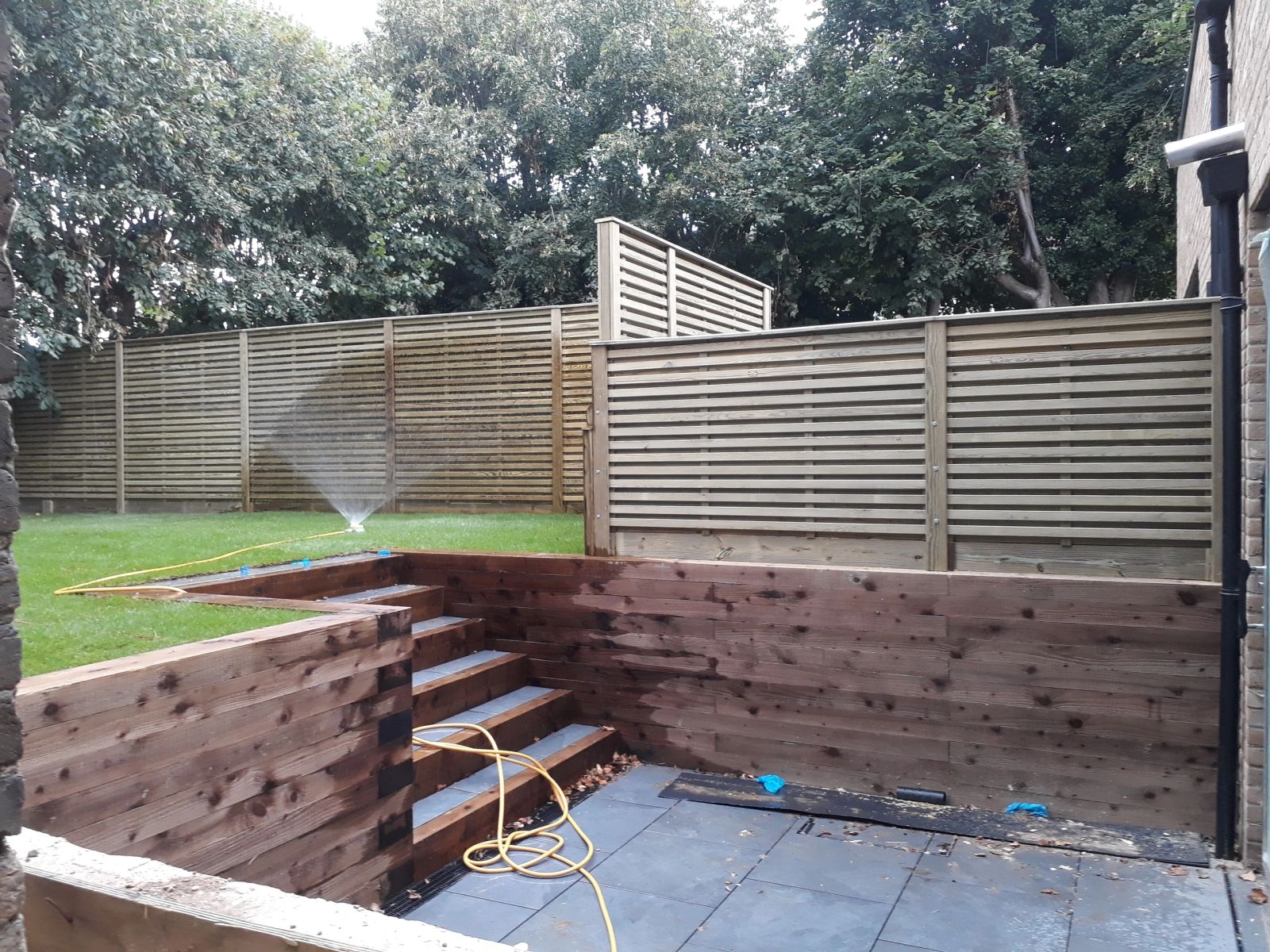
A trellis topper adds height to an existing or new fence — commonly for climbing plants or extra privacy — and because it's open lattice rather than solid boarding it adds relatively little wind load for the height gained.
That's useful on boundaries close to the 2m permitted development limit, where a solid panel extension would push both height and wind loading up together, but it only works if the topper is genuinely open lattice rather than a solid infill dressed up as trellis.
Fixing a topper to an old or undersized post rather than the fence itself is the most common reason toppers come loose, since the extra leverage at height needs a post that was sized for it from the start.
Trellis toppers and additional wind load
Adding a trellis topper to increase privacy height also increases the wind load a fence has to carry, since even open lattice trellis catches more air than its slim appearance suggests, especially once climbing plants fill in the gaps.
Posts sized correctly for a 1.8m panel don't automatically have the reserve strength for panel-plus-trellis at 2.1m or more, particularly on an exposed run.
Where a taller finished height is wanted, it's worth specifying posts for the full combined height from the outset rather than treating the trellis as a lightweight afterthought bolted to the top.
Right to light and a tall boundary fence
There's no general legal 'right to a view' or automatic entitlement to sunlight in a garden, so a taller boundary fence built within the applicable height limits usually isn't unlawful purely because it shades a neighbour's garden.
Right to light law in England mainly concerns windows in buildings that have enjoyed light for a long period, rather than open garden space, and even then applies in fairly narrow circumstances.
Where a taller fence is likely to significantly affect a neighbour's garden, discussing it before building tends to prevent ill feeling even where there's no strict legal obstacle.
End-of-terrace properties and long return boundaries
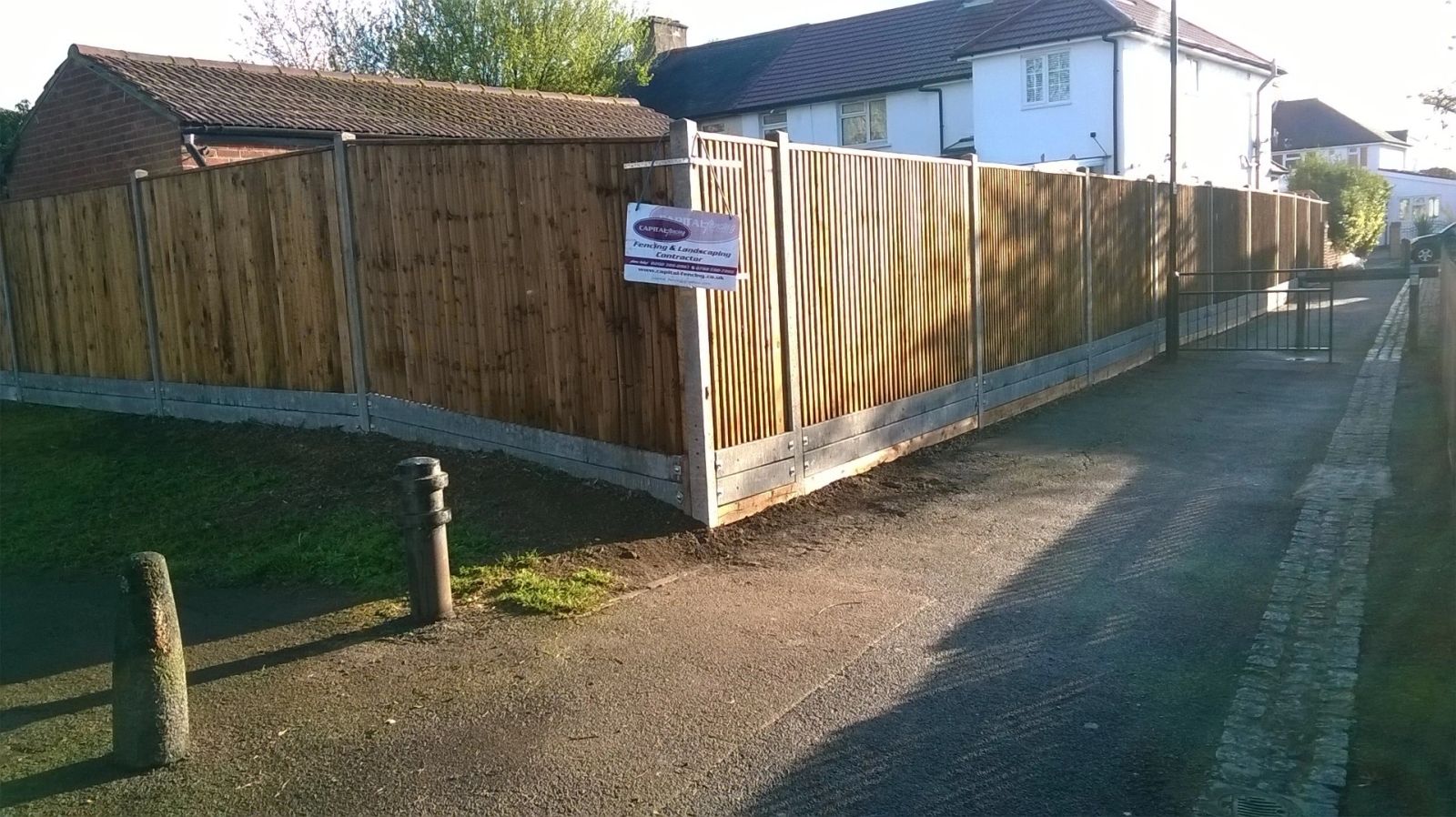
An end-of-terrace plot typically carries a much longer exposed side boundary than its mid-terrace neighbours, often running the full depth of the garden along a side street or footpath rather than backing onto another private garden.
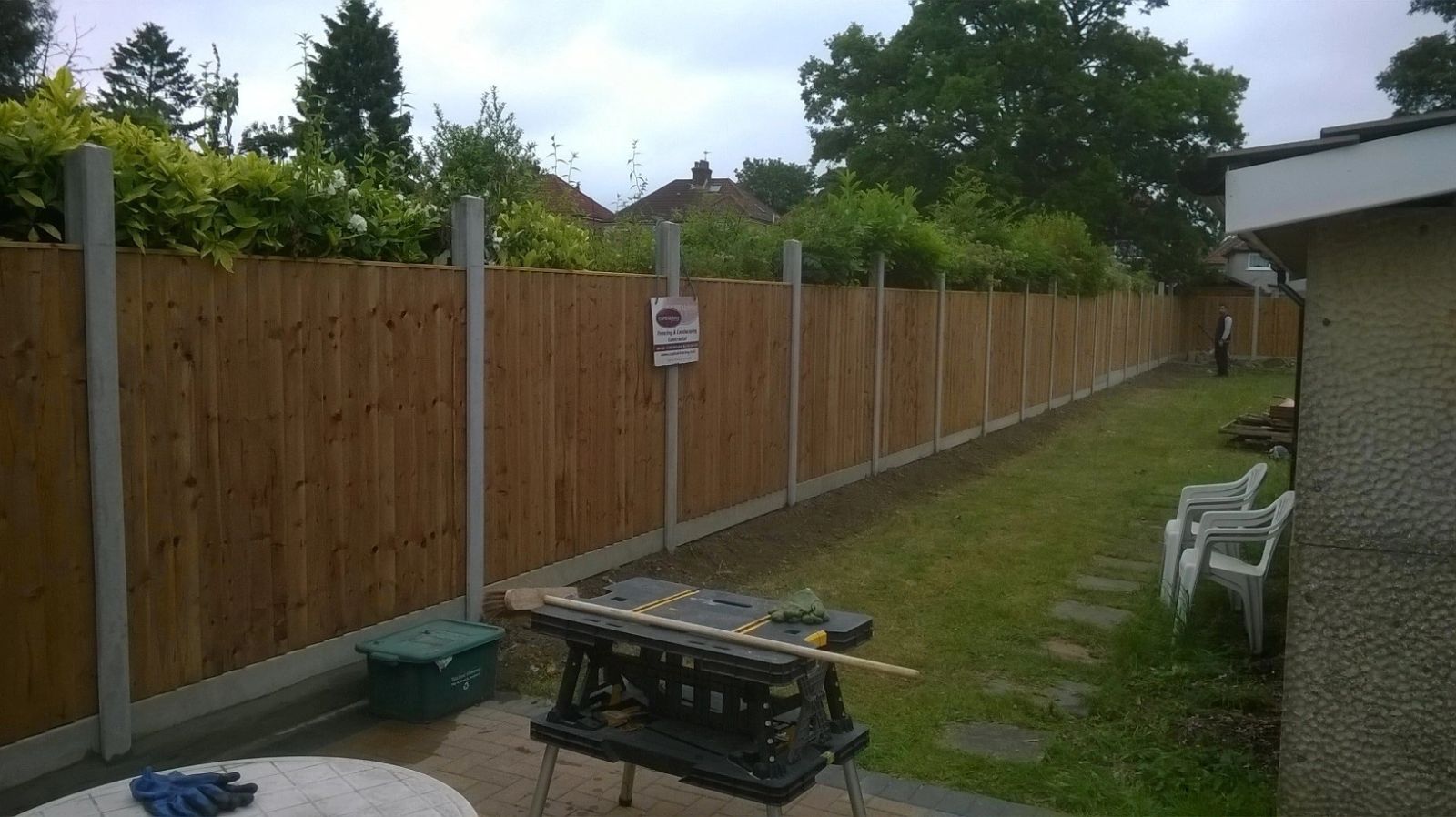
That length changes the practical spec: more posts see wind and impact loading from the public side, and a long uninterrupted run benefits from a support post or two extra to control any bow developing over time.
Because the boundary faces a public route, it's also the fence most likely to need a more robust anti-climb consideration than an equivalent internal party fence.
Fencing over services and cable routes
Before any post hole is dug, service records or a cable-avoidance sweep should confirm what runs under the line — a fence boundary often follows an old cable or drain route because that was the cheapest place to lay it originally.
Where a service can't be avoided, post positions are shifted along the run or a shallower surface-mounted base is used instead of digging through the service.
The distance-doubling rule of thumb
As a rough rule, doubling the distance from a point noise source reduces the sound level by a noticeable, broadly consistent amount in open ground, which is why moving a seating area further from a boundary can help almost as much as adding barrier height.
This rule applies most cleanly to a single point source in open space and becomes less reliable near reflective surfaces or with a source spread along a line, like a road, rather than concentrated at one point.
Bus routes as a noise source
A bus route produces a repeating cycle of acceleration, braking and idling rather than a steady traffic hum, with the diesel or hybrid engine note loudest as the vehicle pulls away from a nearby stop.
Because that noise repeats predictably through the day rather than being continuous, a barrier is judged on how much it softens each pass rather than on eliminating a constant background level.
Checking screw and bolt length matches the timber section
A fixing that's too short doesn't engage enough timber to hold under load, while one that's too long can punch through the far face of a rail or post, both of which are easy mistakes when reaching for whatever's in the tool bag rather than checking the actual section thickness first.
As a rough guide, a screw fixing generally wants to penetrate the receiving timber to a meaningful multiple of its own diameter to hold securely, which is worth checking against the actual post or rail dimensions being used on a given job rather than assumed from habit.
Where a through-bolt is used instead of a screw, matching the bolt length to the combined thickness of both pieces plus washer and nut avoids either an unsightly protruding stub or a bolt that can't be tightened properly.
Security fencing directly alongside a public footpath
A fence running hard against a public footpath needs anti-climb toppings avoided or set back for pedestrian safety, and any gate opening onto the footpath must not swing out into it, since an outward-opening gate on a shared path is both a trip hazard and often a rights-of-way issue.
Where the footpath is well used, sightlines along the path are kept open at any pinch point rather than allowed to be blocked entirely by a solid fence, partly for personal safety of path users after dark.