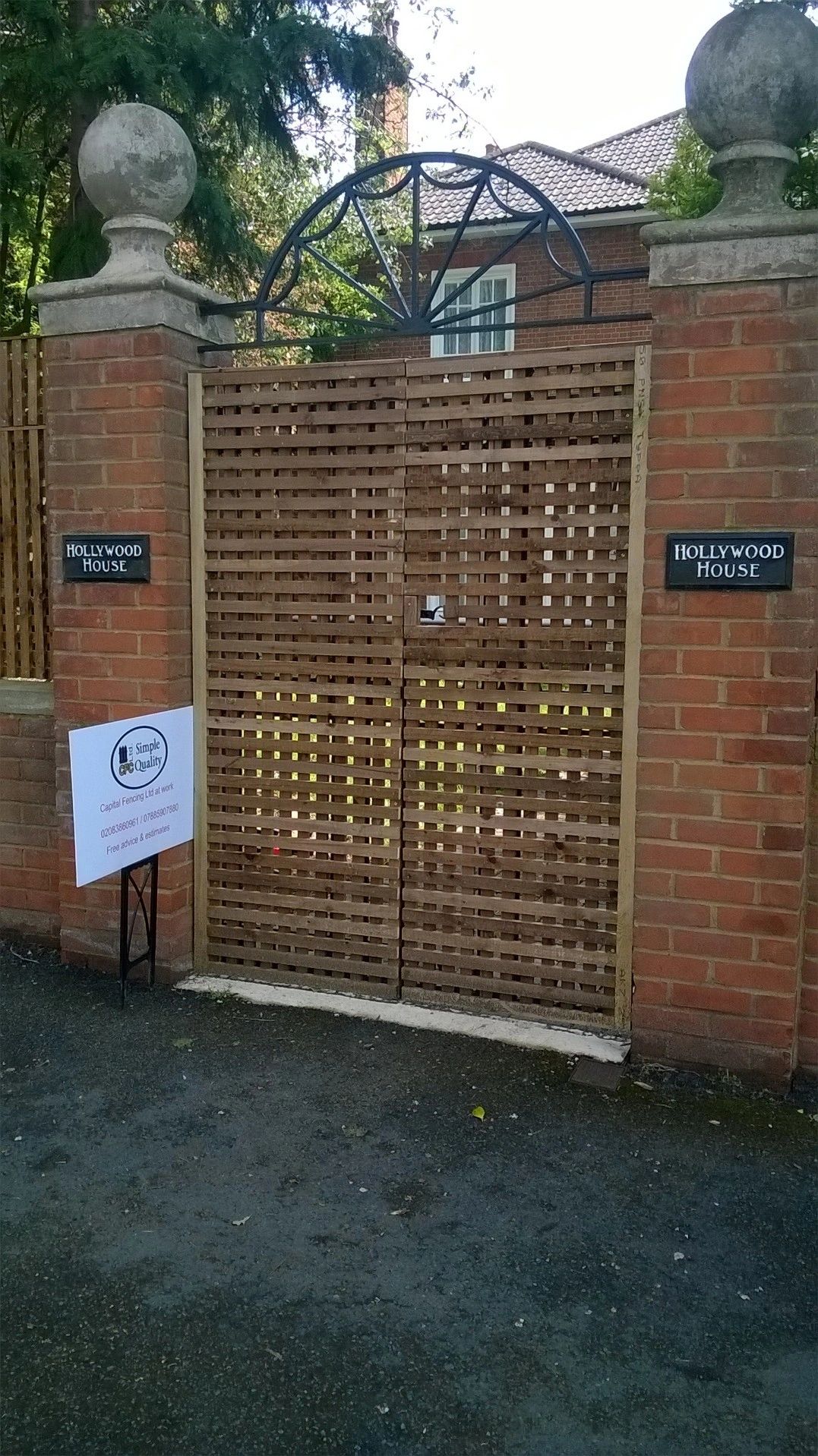
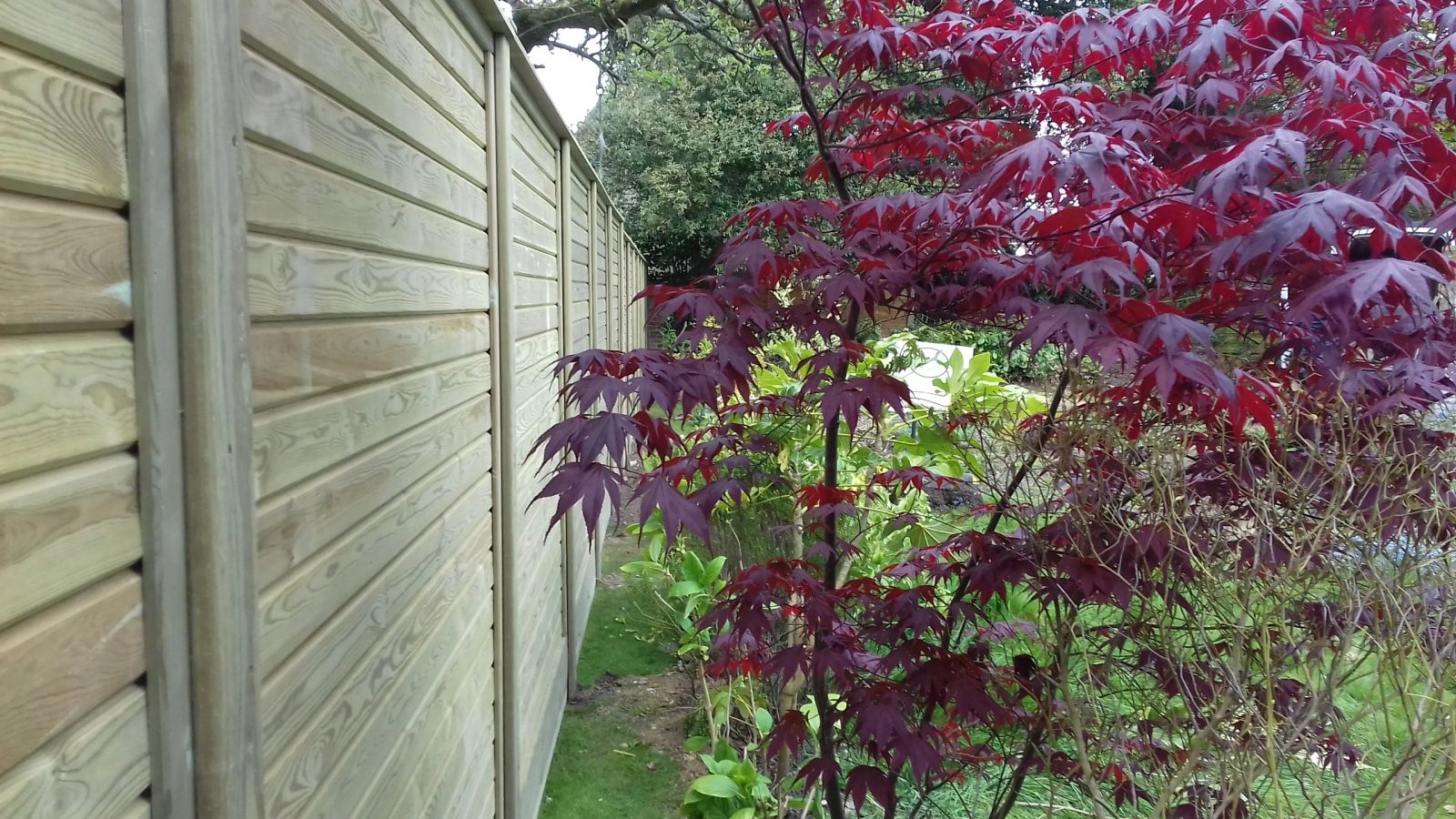
Checking post bases for corrosion under heavy load
A steel post base carrying the weight of a dense acoustic panel is under more sustained load than the same post supporting an open fence, so any corrosion at the base has a greater effect on the post's ability to stay upright.
An annual check at ground level, where moisture and debris tend to collect against the post, catches early corrosion before it compromises a post that's carrying more weight than a standard fence post would.
Thermally modified timber
Thermal modification heats timber to high temperatures in a low-oxygen environment, which alters its cell structure to reduce moisture absorption and improve decay resistance without adding any chemical preservative.
The process also darkens the timber throughout its thickness, which means a scratch or cut face shows a similar colour to the surface rather than exposing paler untreated wood underneath.
The heat treatment reduces the timber's flexural strength somewhat, so thermally modified timber is more commonly specified for cladding and decorative boarding than for load-bearing posts and rails.
Restaurants and pub gardens
Boundary fencing around a pub garden or restaurant terrace often does double duty as noise and light screening for neighbouring residential properties, and its height and permeability can be a condition attached to the premises licence rather than a free choice.
Trading hours mean access for fencing work is usually easiest early morning before service starts, since a garden in active use for covers can't have posts being dug mid-lunch.
Where outdoor seating sits close to the boundary, fixings and post positions need checking against any licensed seating plan so the finished fence doesn't reduce covers below what the licence allows.
Boundaries against a railway embankment
A boundary running along a railway embankment is very often owned and maintained by the railway infrastructure operator rather than the adjoining householder, and any work close to the operator's land, including digging near its toe or crest, usually needs prior notice or permission.
Embankment ground can also be made up of variable historic fill rather than natural strata, since many were built up from spoil during original construction, which affects both digging and the stability assumptions for post bases near the base of the slope.
Access for materials and machinery along these boundaries is frequently restricted, so confirming land ownership and any operator consent needed is a necessary step before quoting the work.
CDM regulations on domestic and commercial jobs
The Construction (Design and Management) Regulations 2015 apply to domestic projects as well as commercial ones, though on a domestic job the homeowner's CDM duties normally pass automatically to the contractor or principal contractor rather than sitting with the client directly.
On a commercial or public sector site, or a domestic job involving more than one contractor, formal duty-holder roles (principal designer, principal contractor) need to be identified and a construction phase plan put in place before work starts.
Even a straightforward domestic fencing job benefits from basic CDM thinking — safe access, checking for overhead cables or buried services, and clear site boundaries during the works — regardless of whether the formal paperwork threshold is met.
Supplementing a hedge line boundary with security fencing
A mature hedge gives limited security on its own because gaps at the base and thin patches higher up both offer a way through, so a low stock fence or mesh run installed within or just behind the hedge line closes those gaps without removing the hedge's screening value.
The supporting fence is set back enough from the hedge to allow future trimming access, since a fence built hard against the hedge line makes routine maintenance of the hedge itself far harder.
Ground conditions and base preparation
Clay ground swells and shrinks with the seasons, which can work a post loose over a few winters if the base wasn't set deep enough to begin with; free-draining ground behaves very differently and usually needs less depth for the same stability.
We test ground on site rather than assume — a boundary that looks straightforward from the surface can hide rubble, old foundations or a high water table that changes how a base is built.
Choosing between timber, concrete and steel posts
Timber posts are the cheapest and easiest to work with but are the first part of a fence to rot, particularly at ground level where they sit in permanently damp soil or concrete.
Concrete slotted posts cost more upfront and are harder to cut or adjust on site, but don't rot and hold panels rigidly without needing separate fixings, which suits a long, exposed or heavily-used run.
Steel posts, either box section or RSJ, are mostly reserved for commercial, security or very heavy-load applications where timber or concrete wouldn't cope with the weight or vandal-resistance required.
Prioritising gate spec over fence spec under a limited budget
Where a security budget doesn't stretch to upgrading an entire boundary at once, spending proportionally more on the gate and its ironmongery than on the fence panels themselves is usually the better trade-off, since a gate junction is statistically the more common point of forced entry than a length of intact fence.
A phased approach that fits a strong gate first and upgrades panel sections over following phases still leaves weaker fence runs as the interim weak point, so this trade-off is only sound as a first step, not a final specification.