Wind load: solid panels versus slatted screens
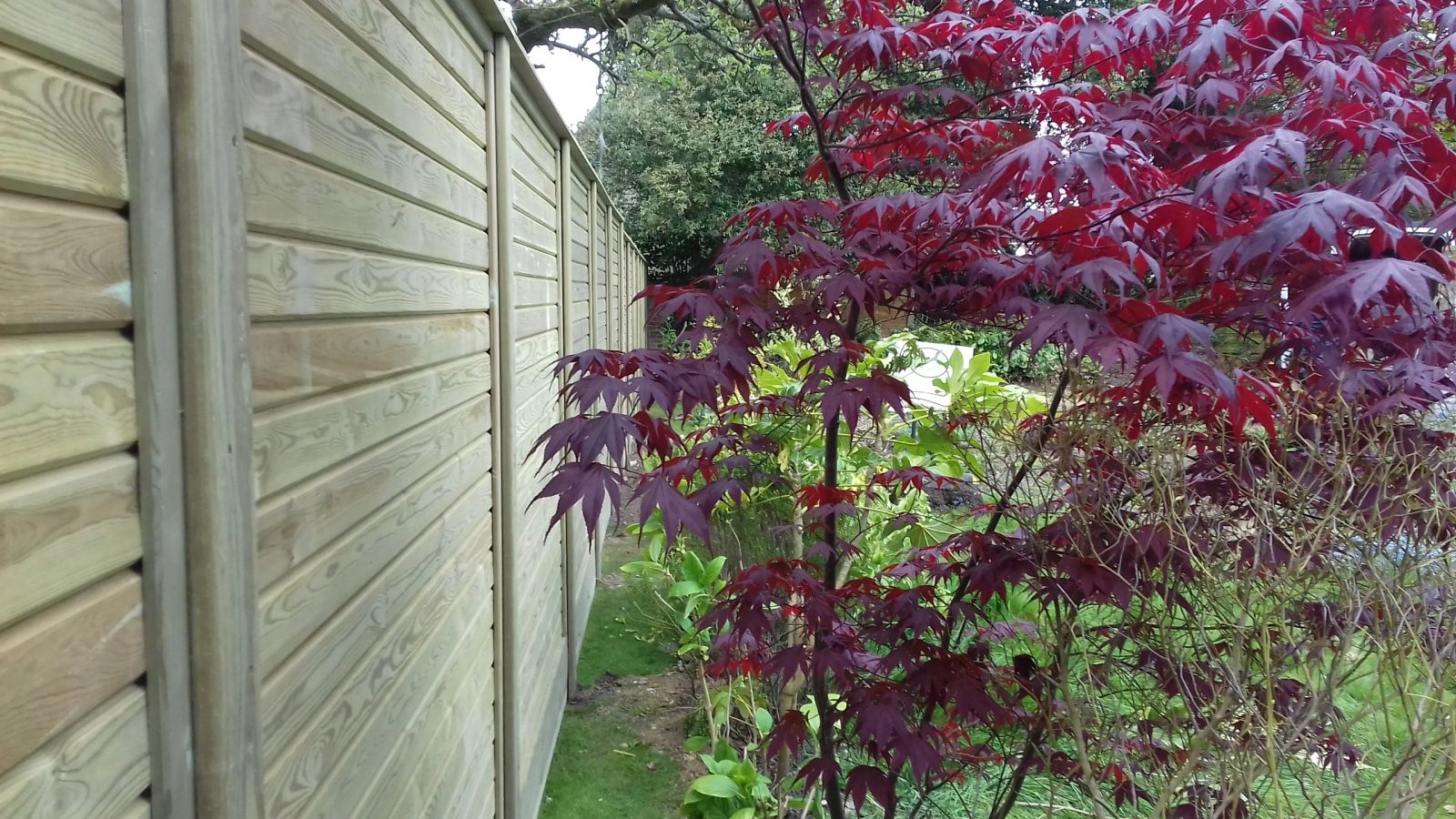
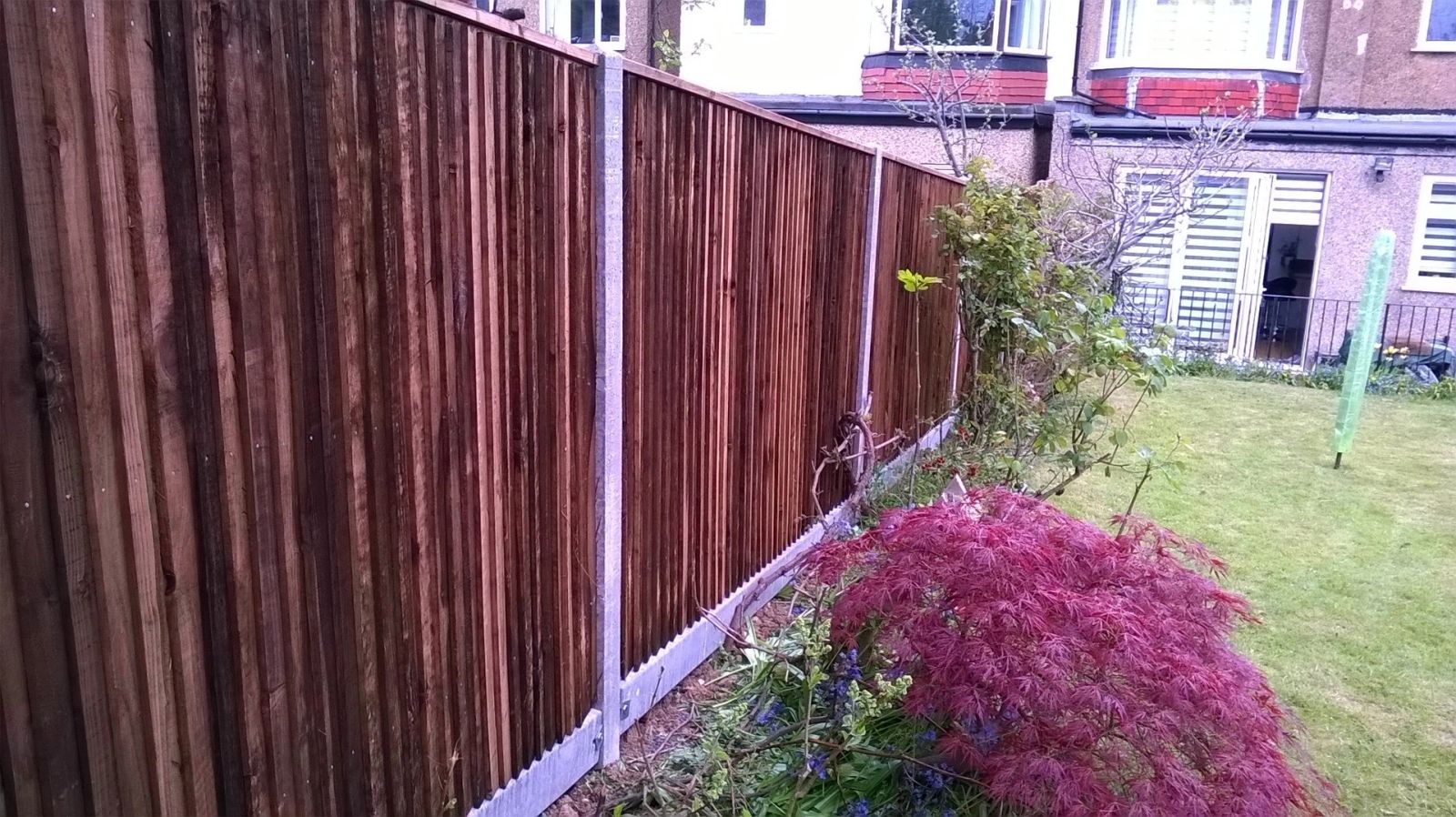
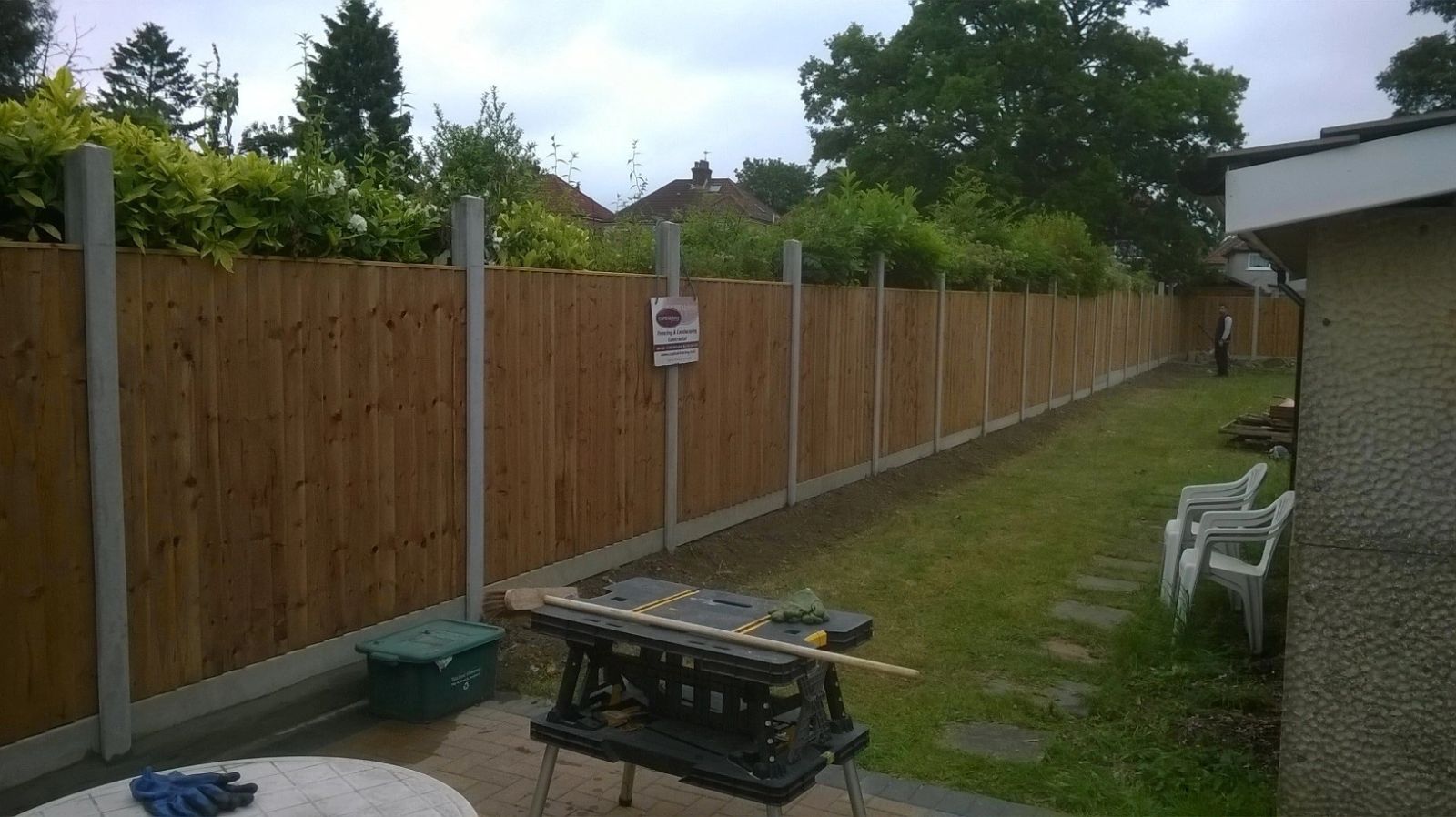
A solid close-boarded panel presents its whole face to the wind, so on an exposed run the load transferred into the post is far higher than the same height in a slatted or louvred screen with even small gaps between boards.
Manufacturers' span tables for solid panels assume a sheltered suburban garden; on an open plot the safe bay width between posts often needs reducing rather than relying on the standard 1.8m centre.
Where the client wants privacy rather than a windbreak, a slatted design with a close-boarded section lower down still cuts load noticeably while keeping most of the screening effect.
TPO and conservation-area tree rules
A Tree Preservation Order protects a specific tree, group or woodland, and covers root damage as well as felling or pruning, so unauthorised digging within its root zone is a legal matter, not just good practice.
Trees within a conservation area that aren't individually protected by a TPO still usually require six weeks' written notice to the council before any work, giving the authority a chance to consider a TPO if it judges the tree merits protection.
Checking the council's TPO register and conservation area boundary before excavation is a five-minute task that avoids a potentially serious enforcement issue later.
Sleeper edging and planters
Softwood landscape sleepers are pressure-treated to a ground-contact use class and are generally cheaper and more consistent in size than reclaimed hardwood railway sleepers, which vary in condition and may carry historic residues such as creosote unsuitable for areas near planting or seating.
Sleepers used for raised beds or low retaining edges are usually stacked and pinned with long timber screws or steel rebar driven through pre-drilled holes rather than simply stacked loose, since an unpinned stack can shift as the ground behind it settles.
Where a sleeper structure is also expected to retain a meaningful depth of soil rather than just edge a bed, it moves into proper retaining-wall territory with its own drainage and structural considerations.
Helical pile foundations for a commercial security run
A helical pile is screwed into the ground using hydraulic or mechanical torque rather than being set in an excavated and concreted hole, giving a foundation that can be installed quickly on a site where digging is disruptive or where ground conditions are variable along the run.
Load capacity is checked by torque readings taken during installation rather than assumed from a standard depth, which makes helical piling useful on a site where soil type changes noticeably across the length of the boundary.
Turning and manoeuvring noise in a cul-de-sac
A cul-de-sac head sees vehicles braking, reversing and turning rather than passing through at a steady speed, producing a different noise character from a through road — shorter bursts, more low-speed engine and tyre noise, and occasional reversing alarms.
A plot on the turning head benefits from a barrier assessed against this stop-start pattern rather than against a through-traffic model, since the noise events are more frequent but individually shorter.
Ring-shank versus smooth nails
Ring-shank nails have a series of raised rings machined into the shank, which bite into surrounding timber fibres as they're driven and resist being pulled back out far more effectively than a plain smooth shank.
That extra grip matters on fencing components subject to repeated movement from wind load, such as feather-edge boards on rails, where smooth nails can gradually work loose over several seasons of flexing.
The trade-off is that ring-shank nails are harder to remove cleanly for repairs, often splitting the timber around them rather than sliding out, whereas smooth nails can usually be levered free without damaging the board.
Galvanic corrosion between dissimilar metals
Galvanic corrosion occurs when two dissimilar metals are in direct contact in the presence of moisture, with the less noble metal corroding preferentially as electrons flow between the two through the electrolyte formed by the damp.
Aluminium fixed directly to steel, or stainless steel fixings used with certain aluminium alloys, are a commonly cited combination worth checking, since the galvanic reaction can accelerate corrosion of the aluminium component well beyond what it would experience alone.
Isolating dissimilar metals with a plastic washer, sleeve or compatible coating breaks the direct contact and largely prevents the reaction, which is a standard detail on aluminium gate fittings using steel fixings.
Air source heat pump fan directivity
An air source heat pump's fan doesn't radiate noise evenly in all directions — it's typically louder directly in front of the unit than to the sides or rear, so orientation relative to a neighbouring boundary matters as much as distance.
A screen placed to intercept the direct-line noise from the fan face, rather than simply run along the boundary, addresses the loudest path without needing to enclose the whole unit.
Post anchor sockets versus set-in posts
A bolt-down or drive-in post anchor holds a timber post entirely above ground level, isolating the post's end grain from the direct soil and moisture contact it would face if simply set into a concreted hole.
Because the post itself never touches the ground, anchor-mounted posts largely avoid the ground-line rot that's the single most common failure point for concreted posts, though the anchor and its fixings become the new focus for corrosion.
Anchors do transfer more concentrated leverage into a smaller fixing area at the base than a post set deep in concrete, so they generally need a correspondingly larger or deeper concrete footing beneath them for the same wind load.