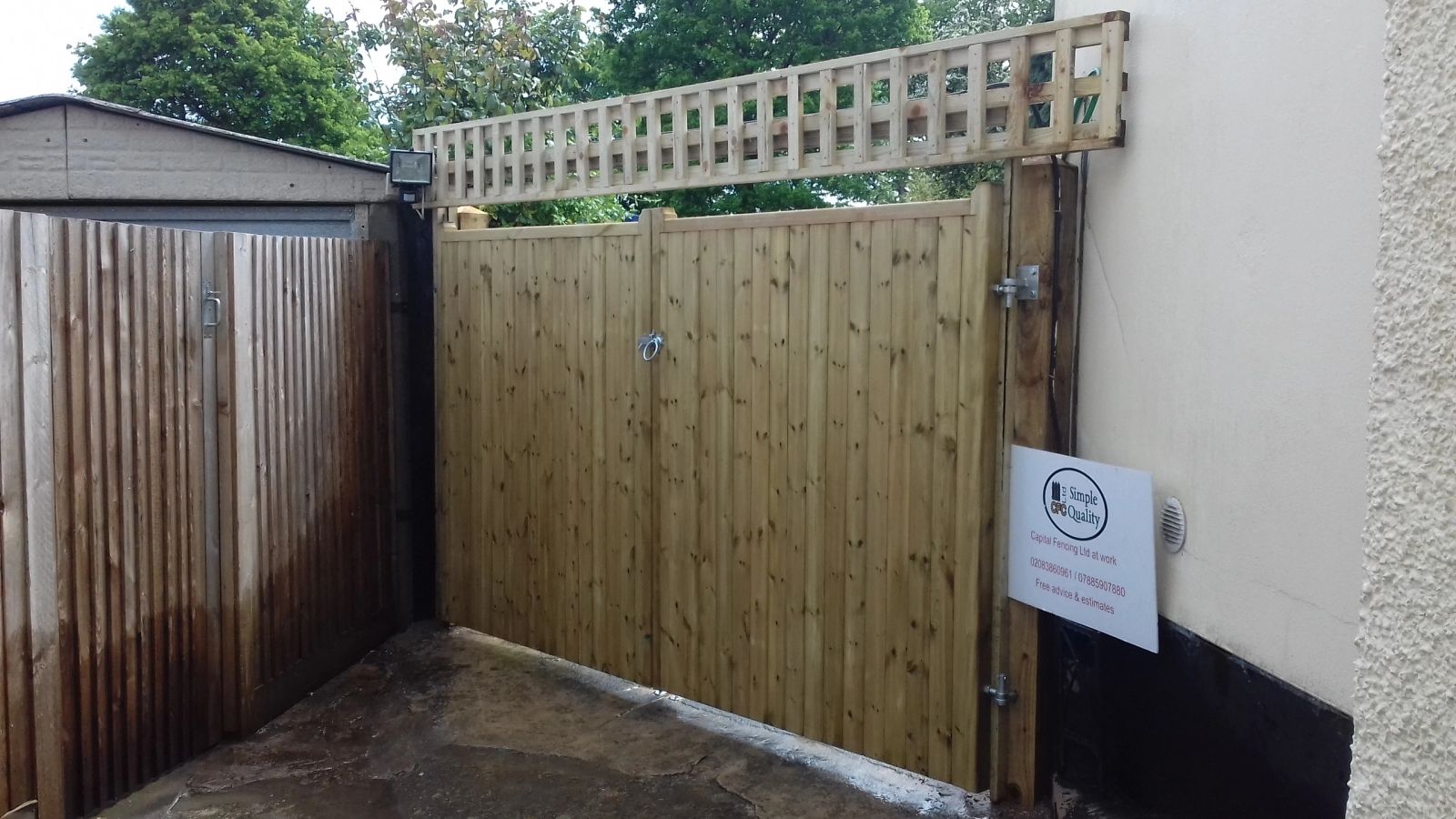
Hinge-post fixing and why it fails first
The hinge post carries the full weight of a gate every time it swings, and over years that repeated leverage is what pulls fixings loose or racks a timber frame out of square, far more than the latch side ever does.
A repair that only addresses the visible sag without checking the hinge post fixing itself tends to be a short-lived fix.
Panel weight per square metre as a spec figure
Acoustic panels are specified partly by their weight per square metre, since that figure correlates closely with how much sound the panel blocks, more so than its stated thickness or its outward appearance.
Two panels of the same overall dimensions can differ noticeably in acoustic performance if their core density or facing material gives them different weights per square metre, which is why the figure is checked rather than assumed.
Weathering and maintenance of heavy panels
A heavy timber acoustic panel weathers in the same way as any exterior timber, but any movement at a joint has a bigger acoustic consequence than on a standard fence, so checks focus specifically on joint integrity rather than only on appearance.
A re-treatment or repaint cycle appropriate to the timber species and finish keeps the outer skin sound, which protects both the structure and the acoustic seal it maintains.
Preventing warp in a gate leaf during storage before fitting
A gate leaf left leaning against a wall or stacked flat on damp ground before fitting can pick up an uneven moisture gradient across its faces, encouraging warp before it's even hung.
Storing a gate flat, supported evenly and off the ground, with both faces exposed to similar conditions, reduces the risk of a leaf arriving on site already slightly twisted.
Solid panel screening against wind loading and neighbour impact
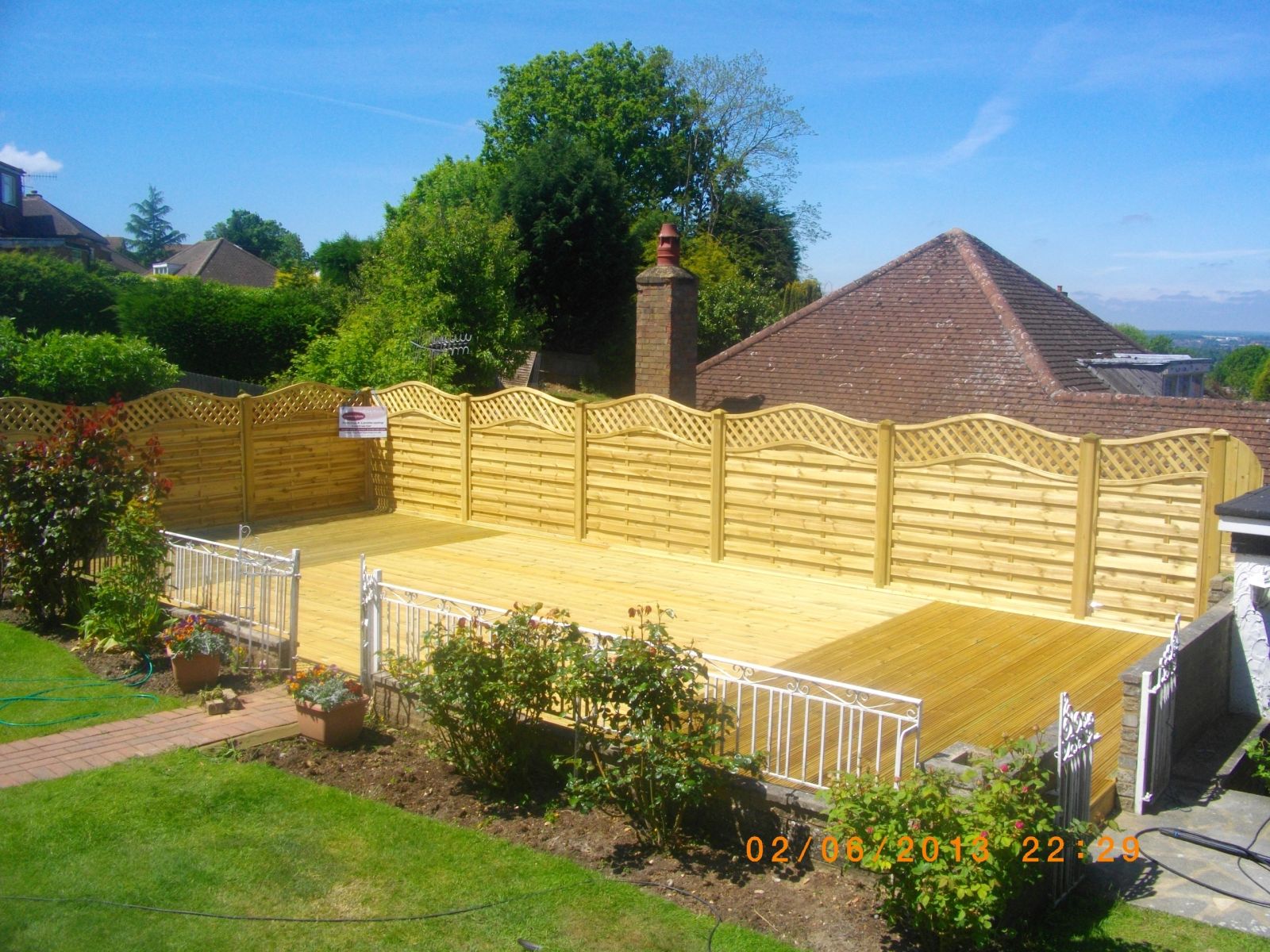
A solid-faced security panel gives better visual screening and blocks a would-be intruder's view of what's inside a compound, but it also catches significantly more wind than an open mesh or picket design of the same height, requiring stronger posts and closer spacing to stay stable.
Where a solid screen also sits close to a neighbouring property, its impact on that neighbour's light and outlook is worth considering alongside the loading calculation, since a taller solid screen can raise a separate boundary dispute even where it's structurally sound.
Highways not yet adopted on newer estates
On newer housing estates, roads and footways can remain unadopted by the council for a period after construction, sometimes maintained instead under a bond by the developer.
This can affect whether the 1m road-facing fence height limit strictly applies yet in the same way, since the technical definition of a highway used by vehicles depends partly on adoption status.
Checking with the council whether a specific new estate's roads have been formally adopted is worth doing before assuming which height limit applies to a road-facing boundary.
Corner plots and highway sightlines
A boundary fronting a road used by vehicles is limited to 1m under permitted development, but corner plots have a second constraint: the highway authority's visibility splay, which can require even lower boundary treatment near a junction so drivers can see pedestrians and oncoming traffic.
These splays are measured as a triangle from a set point back along both roads and are sometimes fixed by a planning condition on the original build rather than by the general permitted development rules.
A solid fence built to the letter of the 1m rule can still be a highway safety problem on a tight corner, so it's worth checking the local plan or asking planning before finalising height on a corner boundary.
Small wind turbine noise
A small domestic or agricultural wind turbine produces both an aerodynamic swish from the blades and a mechanical hum from the generator, with the aerodynamic component varying with wind speed rather than staying constant.
Because the noise source sits well above ground level, a ground-mounted barrier does little to break the line of sight to it, and the practical response is usually about siting and orientation of the turbine itself rather than boundary screening.
Green belt and stock-proof boundaries
Plots backing onto green belt land, paddocks or working farmland often need a genuinely stock-proof boundary rather than a decorative garden fence, particularly where livestock graze the adjoining field.
Post-and-rail with stock netting, or a taller close-boarded run where privacy also matters, both do the job, but a standard panel fence with gaps at the base is routinely pushed through or under by sheep and larger dogs.
Any new boundary on green belt land should also be checked against local planning policy, since green belt designation adds another layer of restriction on top of the usual permitted development rules.
Douglas fir for structural fencing timber
Douglas fir is a stronger, stiffer softwood than typical whitewood or redwood, with a pronounced grain pattern and moderate natural durability in its heartwood, making it a common choice for structural posts and gate framing rather than boarding.
Its resin content is generally lower than pine, which reduces the risk of resin bleed showing through a painted or stained finish.
Because of its strength-to-weight ratio it's often specified for longer unsupported spans, such as wide gate frames, where a lighter section still needs to resist twisting under its own weight.
Pressure treatment and incising
Pressure treatment (vacuum-pressure impregnation) forces preservative into the timber under pressure rather than just coating the surface, which is why treated softwood outperforms a surface-brushed equivalent even though both can look similar when new.
Denser softwoods such as redwood resist deep penetration, so posts and other high-risk sections are often incised first — small slits cut into the surface — to let preservative reach further into the timber than it otherwise would.
Incising leaves a visible pattern of shallow cuts on the timber face, which is a normal sign of proper treatment rather than a defect, though it's more noticeable on posts than on finish-grade boards.