Green walls and planting myths
A green wall or dense hedge is often assumed to block noise the way a solid fence does, but foliage alone has very little mass and provides only a small acoustic benefit, mostly by adding minor absorption rather than blocking a sound path.
Planting in front of a solid acoustic fence can genuinely help at the margins and improve the visual outlook, but it isn't a substitute for the barrier itself.
Asbestos awareness near older garage flanks
Older garages, outbuildings and some boundary walls built before the 1999 asbestos ban can incorporate asbestos-containing materials in flank panels, corrugated roofing or old fence panel infill, particularly on properties from the mid-20th century.
Disturbing suspected asbestos material isn't something to tackle as part of routine fence replacement — it needs a competent assessment and, if confirmed, removal by a licensed contractor in line with HSE guidance.
Where an older boundary structure looks like it might contain asbestos sheeting, the sensible step is to leave it undisturbed and get it checked before any adjacent groundworks begin.
Fixing to an existing wall to add mass
Where an existing wall already forms part of the boundary but doesn't give enough height or mass for the noise involved, extending it upward or fixing an acoustic panel section to the top can add the extra performance needed without rebuilding the whole boundary.
The wall's structural condition and the fixing method both need checking first, since an old wall may not be able to safely carry the extra height or weight without additional support.
Setting out a line over a sloping plot
On a slope, a string line pulled level between two posts of equal height will sit above the ground at one end and below it at the other, so setting out has to work from a boning rod or a laser level rather than the string alone.
The usual method is to fix the top and bottom posts first, establish the actual fall between them, then decide bay by bay whether intermediate posts step down in even drops or follow the ground continuously.
Getting this decision agreed before any post is concreted matters, because changing from a stepped to a raked layout partway along a run after posts are set means starting again.
Matching a new gate to the existing boundary
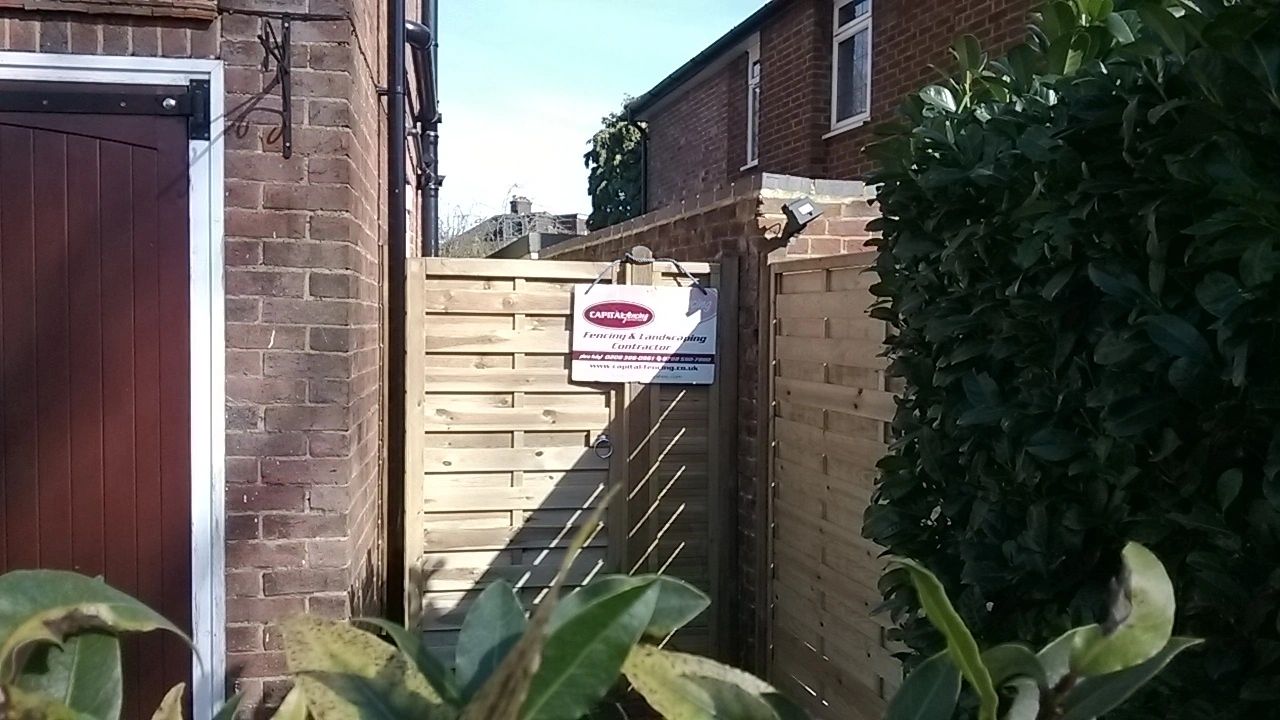
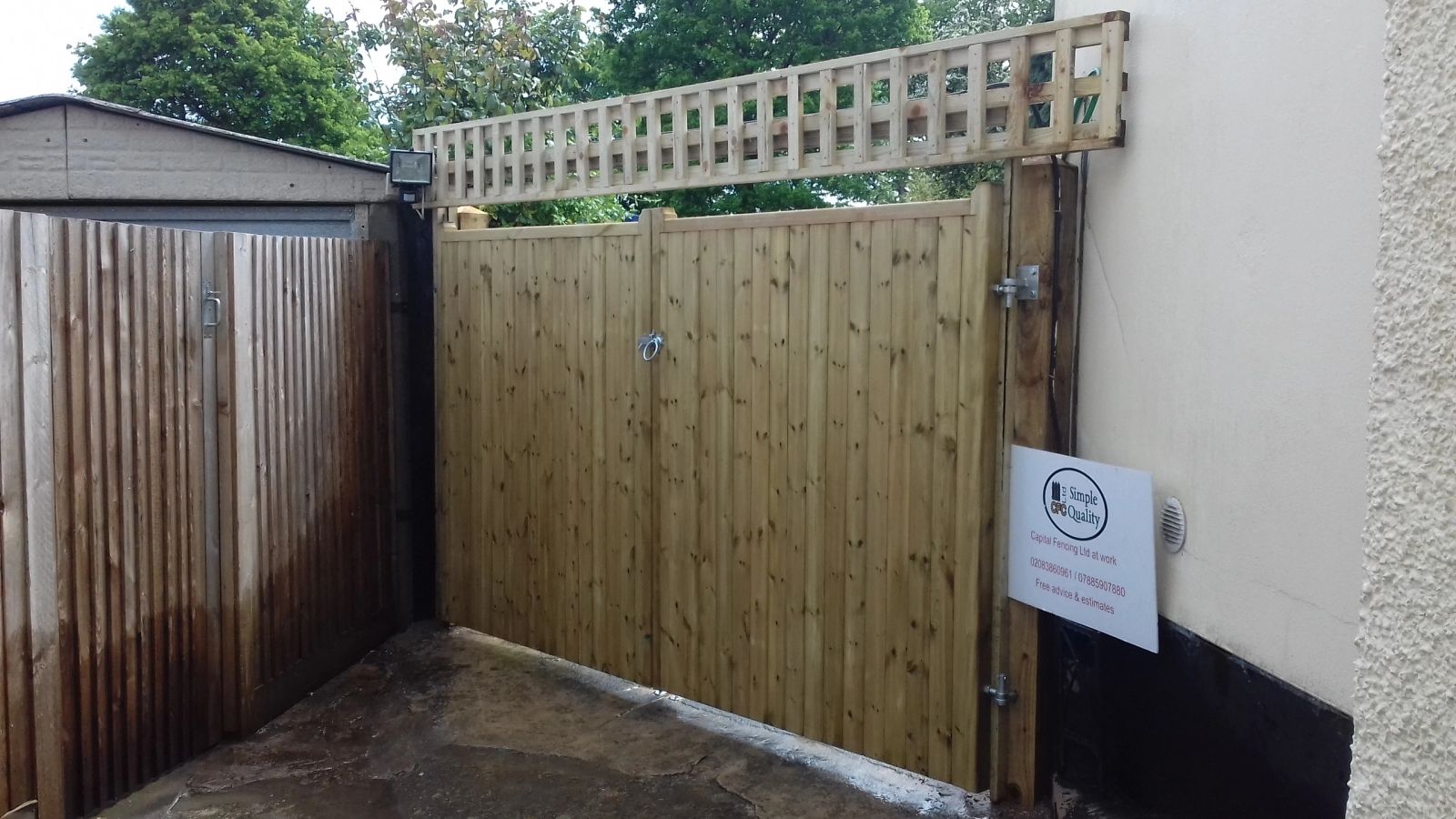
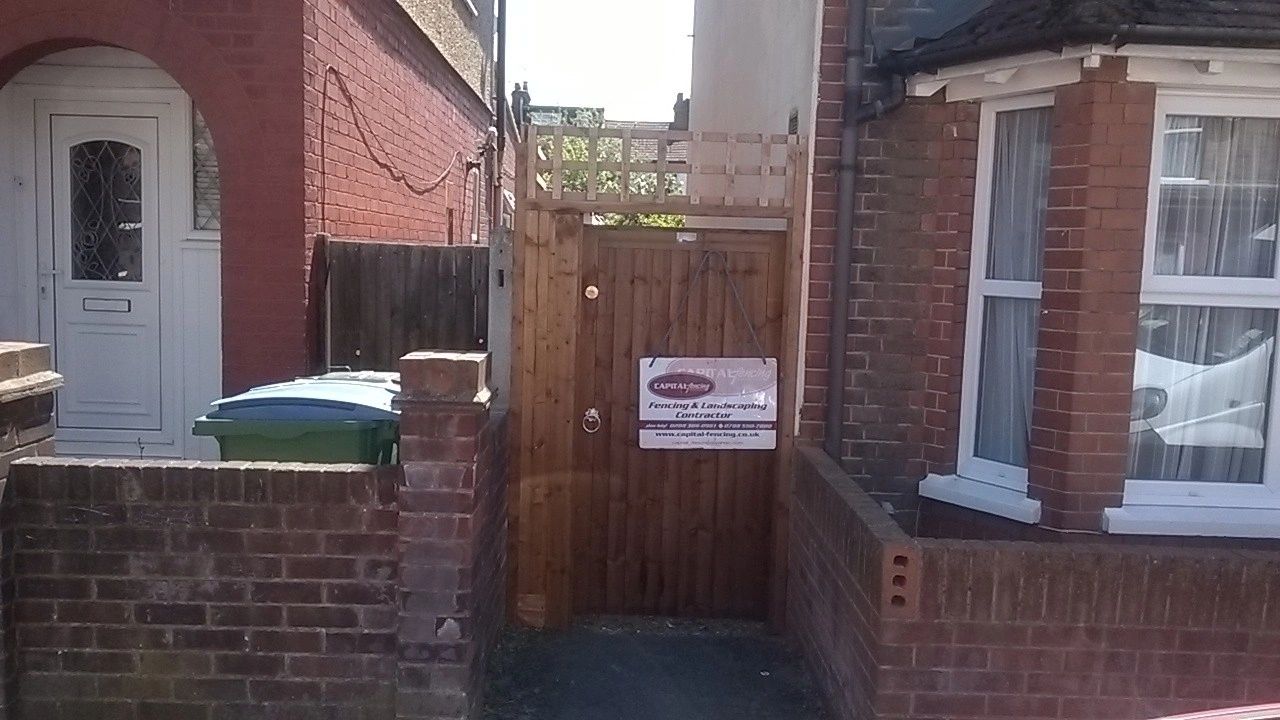
A replacement gate is sized and detailed to match the piers or posts either side of the opening rather than fitted as a stock size, since a gate that doesn't sit flush against its opening looks obviously replaced even when well built.
Where the surrounding fence has a specific profile or capping detail, the gate frame is matched to it.
Party wall and neighbour consultation
Where an acoustic barrier sits on or very near a shared boundary, agreeing the work with the neighbour in writing beforehand avoids later disputes over ownership, appearance and maintenance responsibility.
On a semi-detached or terraced property, a taller acoustic fence can also affect a neighbour's light or outlook, which is worth raising with them directly rather than only checking the legal minimum.
Working over septic or drainage runs
Properties without mains drainage, more common on the rural fringes of Hertfordshire, often have a septic tank or soakaway drainage field with pipework running across the garden that a fence line can unknowingly cross.
A collapsed or compressed drainage pipe under a post base is a common cause of a fence settling unevenly a season or two after installation.
Where a septic system's layout isn't documented, a damp or lush strip of grass running away from the tank is often the visible sign of a soakaway field that needs avoiding when setting posts.
Slamming post and gate stops
The slamming post on the latch side takes a repeated impact load every time the gate closes, and a stop fitted to it prevents the gate over-swinging past its closed position and straining the hinges on the return.
A missing or worn stop is a common, low-cost cause of a gate that gradually racks out of square from repeated over-travel.
Post cap design and end-grain water shedding
The cut top of a fence post exposes end grain, which absorbs water far faster than the sealed or treated face of the post, making it one of the most vulnerable points on an otherwise sound post if left uncapped.
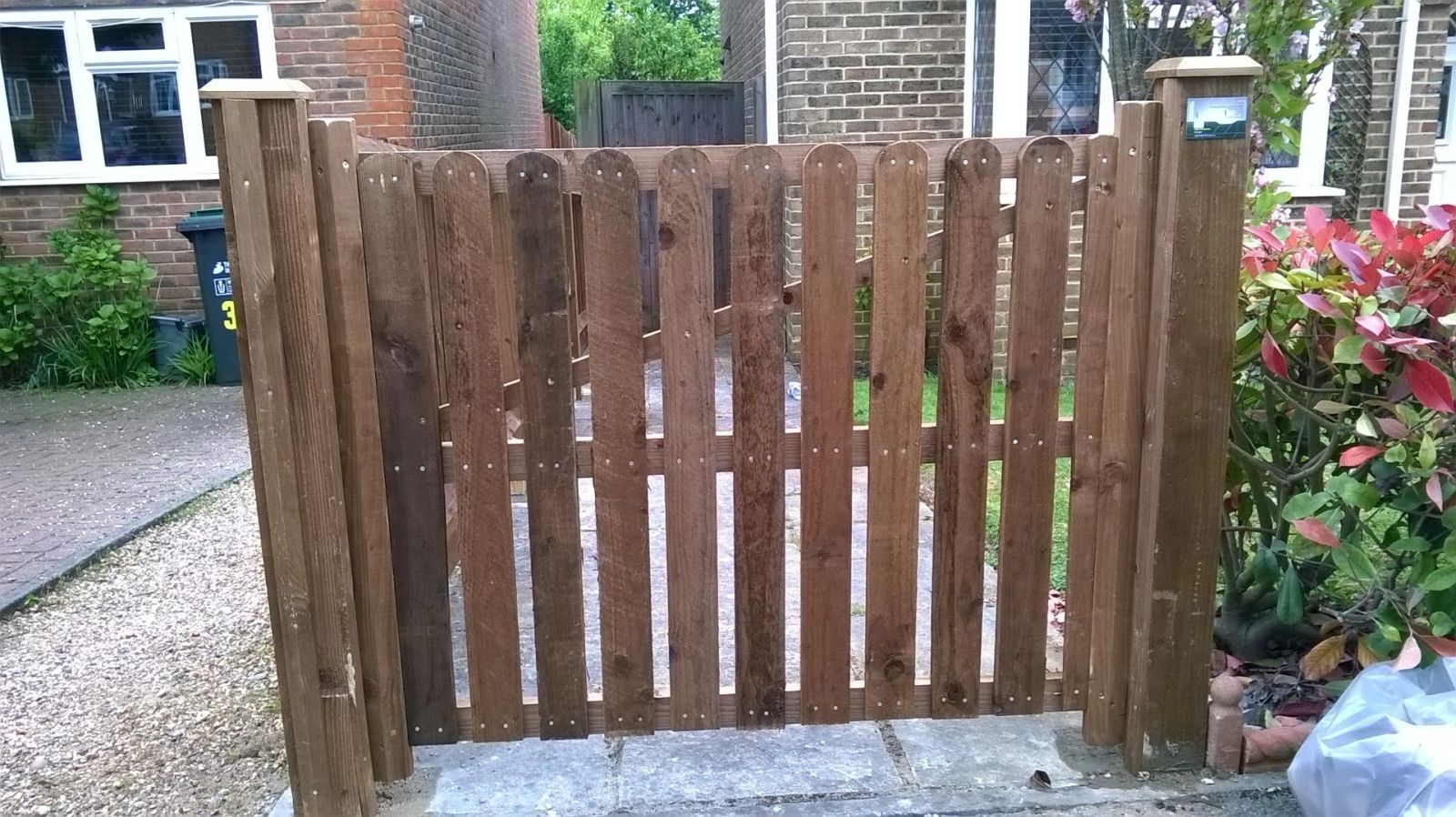
A pyramid or weathered-top post cap sheds water away from that end grain rather than letting it pool on a flat cut surface, extending the practical life of the post noticeably for a small extra cost.
Where posts are cut to length on site rather than supplied pre-capped, re-treating the freshly cut end before fitting a cap matters just as much as the cap itself, since paint or preservative rarely penetrates deep enough at the mill to protect a subsequent site cut.
Arris rails and rail counts by height
Arris rails are the triangular-section horizontal timbers that run between posts and carry the vertical boards in a closeboard fence, and how many are used per bay is set by the finished height rather than fixed at two everywhere.
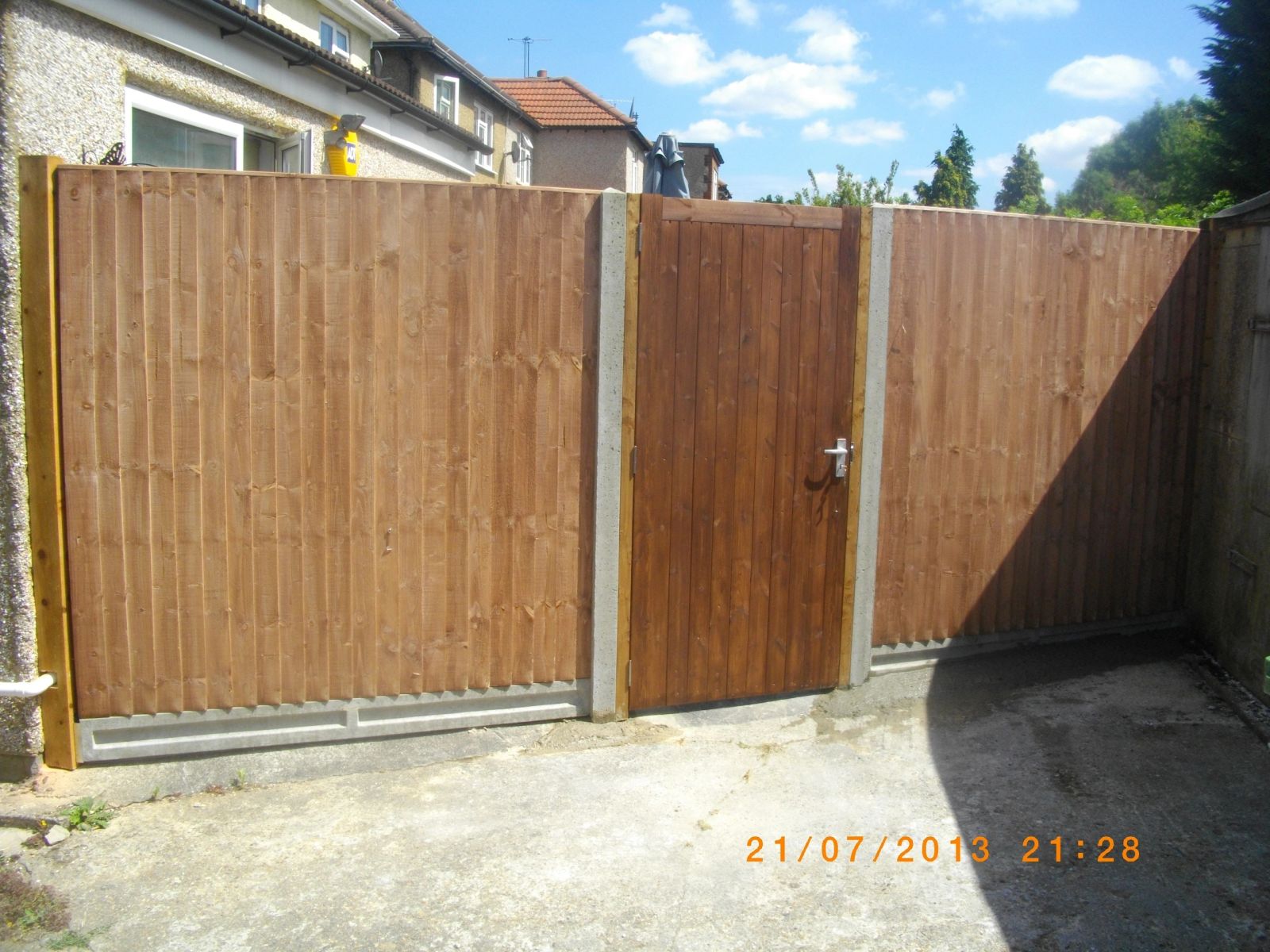
A fence up to around 1.2m typically runs on two rails, but anything taller — particularly 1.8m closeboard — needs a third rail roughly at mid-height to stop the boards bowing outward under wind pressure.
Morticing the rail ends into the post rather than merely nailing them on gives a stiffer, longer-lived joint, which matters more as the number of rails and the height of the fence both increase.
Dust and noise control in a tight garden
Cutting timber, breaking out old concrete bases or using a petrol auger all generate noise and dust that carries further in a small enclosed garden between close-set houses than on an open plot.
Local authorities can restrict noisy work hours under the Control of Pollution Act, and even where no formal restriction applies, starting before a reasonable hour or working into the evening is one of the fastest ways to draw a neighbour complaint.
Sheeting off concrete-cutting dust and keeping cut ends away from a neighbour's washing line or open windows is a small step that avoids most of the friction on a shared boundary job.