Matching a gate to an existing fence style
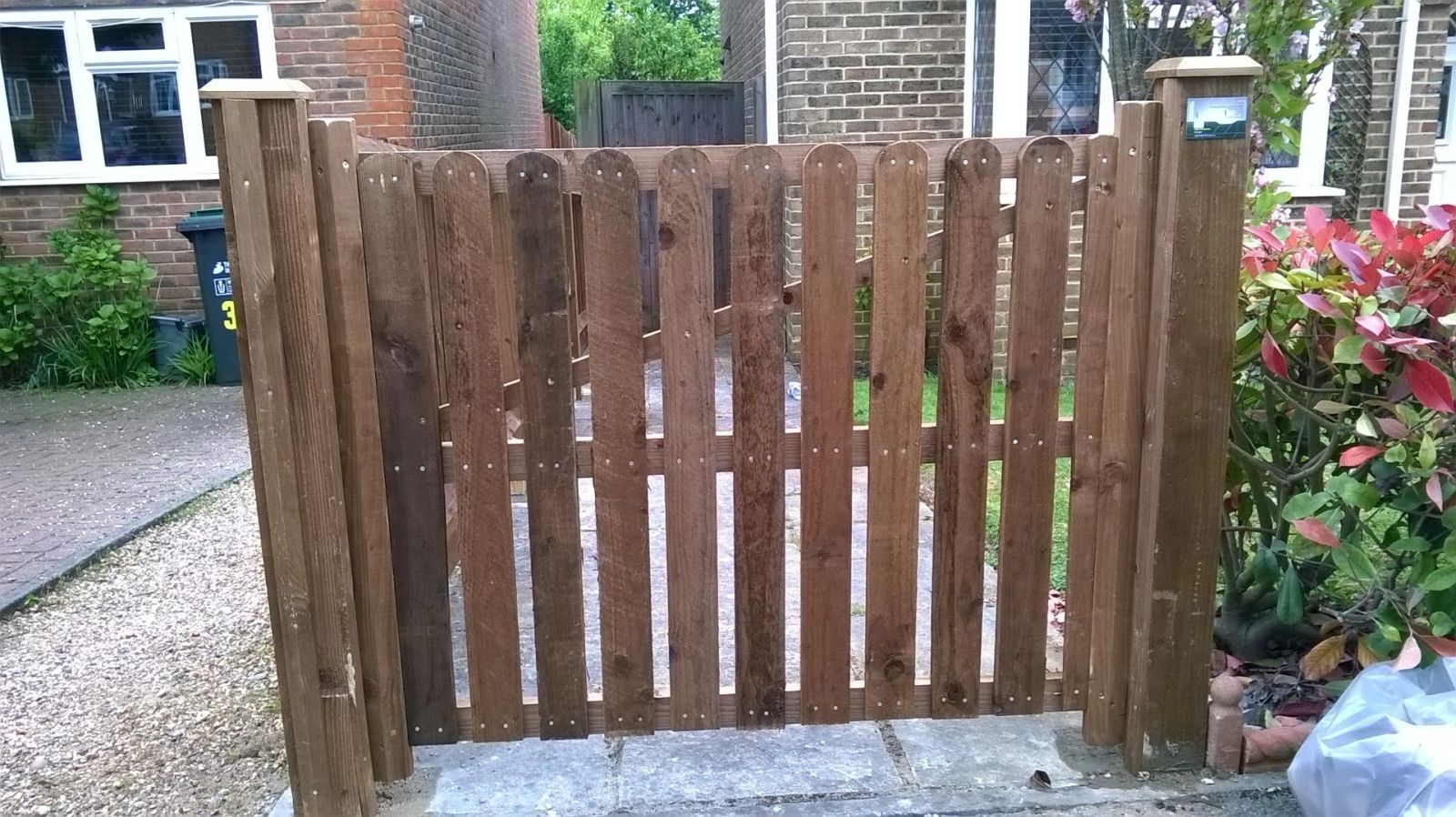
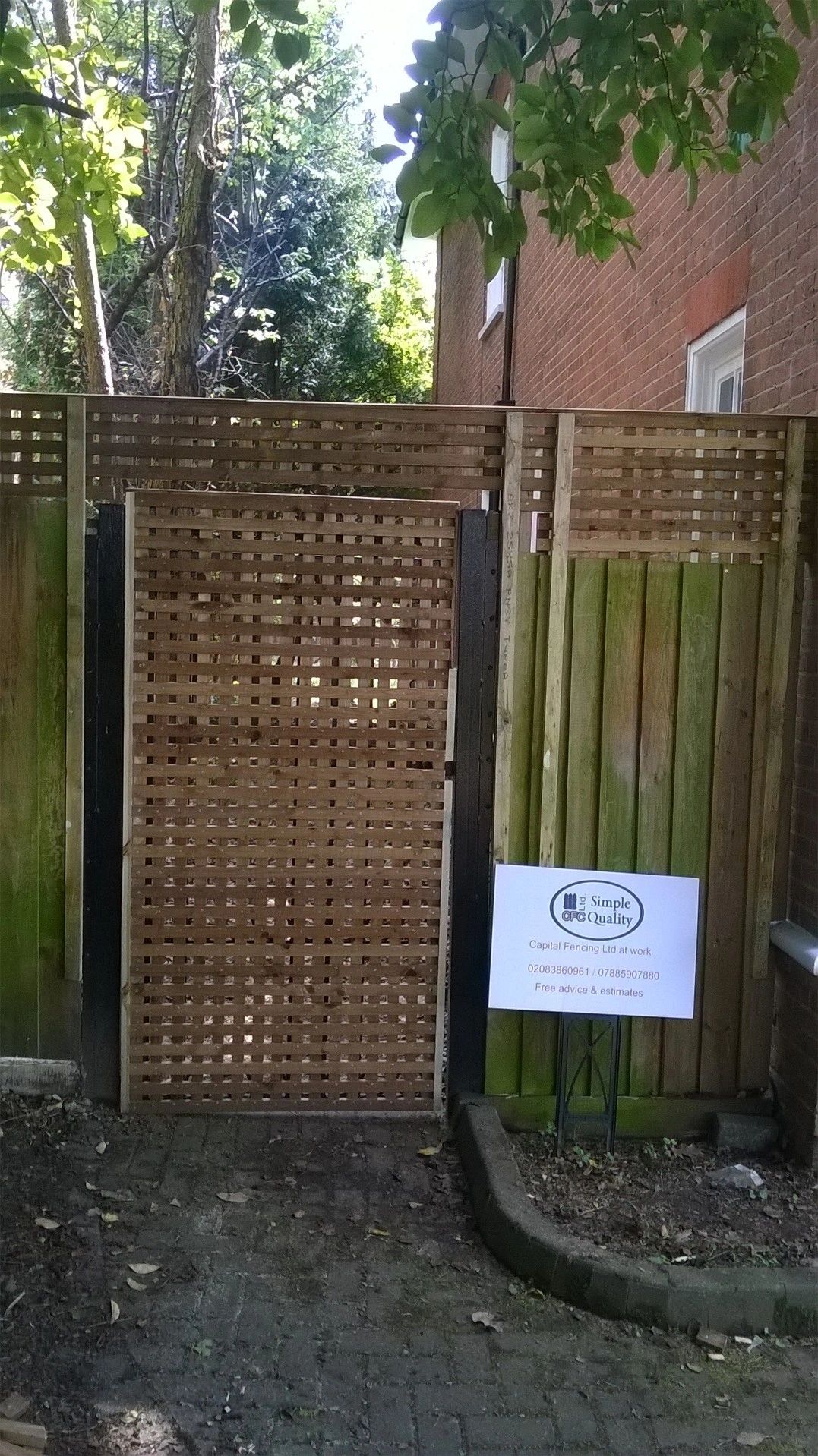
A replacement gate looks obviously mismatched if its board profile, height or capping detail doesn't follow the fence either side of it, even when the gate itself is well built.
We match board spacing, rail positions and capping profile to the existing run rather than fitting a stock gate design into a bespoke boundary.
Contaminated or capped land general caution
Land with a history of industrial, landfill or heavy commercial use can be capped with a clean soil or membrane layer over contaminated material below, installed specifically to prevent exposure, and breaking through that cap with a post hole risks disturbing what it was designed to contain.
Signs worth treating with caution include unusually dark or ashy soil, chemical odours, unexpected debris at shallow depth, or a site known to have had a previous industrial use even if long redeveloped for housing.
Where contamination is a realistic possibility, checking any available site history or environmental report before excavating is a sensible precaution, and hand-digging with careful observation of the spoil is safer than blind augering.
UV stabilisers in composite and PVC fencing
UV stabiliser additives are blended into composite and PVC fencing products during manufacture to slow the surface degradation and colour fade that ultraviolet exposure otherwise causes in polymer materials over time.
Products with a lower proportion of UV stabiliser, often reflected in a lower price point, tend to show chalking, a dusty faded surface, and colour loss earlier than better-stabilised equivalents exposed to the same sunlight.
South and west-facing runs receive substantially more cumulative UV exposure than shaded or north-facing runs, so the same product can visibly fade at different rates depending purely on orientation and surrounding shade.
Checking a frame is square before re-hanging
A frame that's been repaired or partially rebuilt is checked for square by measuring both diagonals rather than by eye, since a frame can look straight from the front while still being out of square enough to bind against its post.
Only once the diagonals match is the gate face re-hung onto the corrected frame.
Refuse and recycling collection rounds
A weekly collection round brings a short burst of noise from the vehicle's reverse alarm, bin lifting mechanism and glass or metal being tipped, concentrated into a few minutes rather than spread through the day.
A boundary barrier reduces the carry of that burst into a garden or ground-floor room, but the timing and duration of the round itself is outside anything a fence can influence.
Balustrades and handrails on raised decking
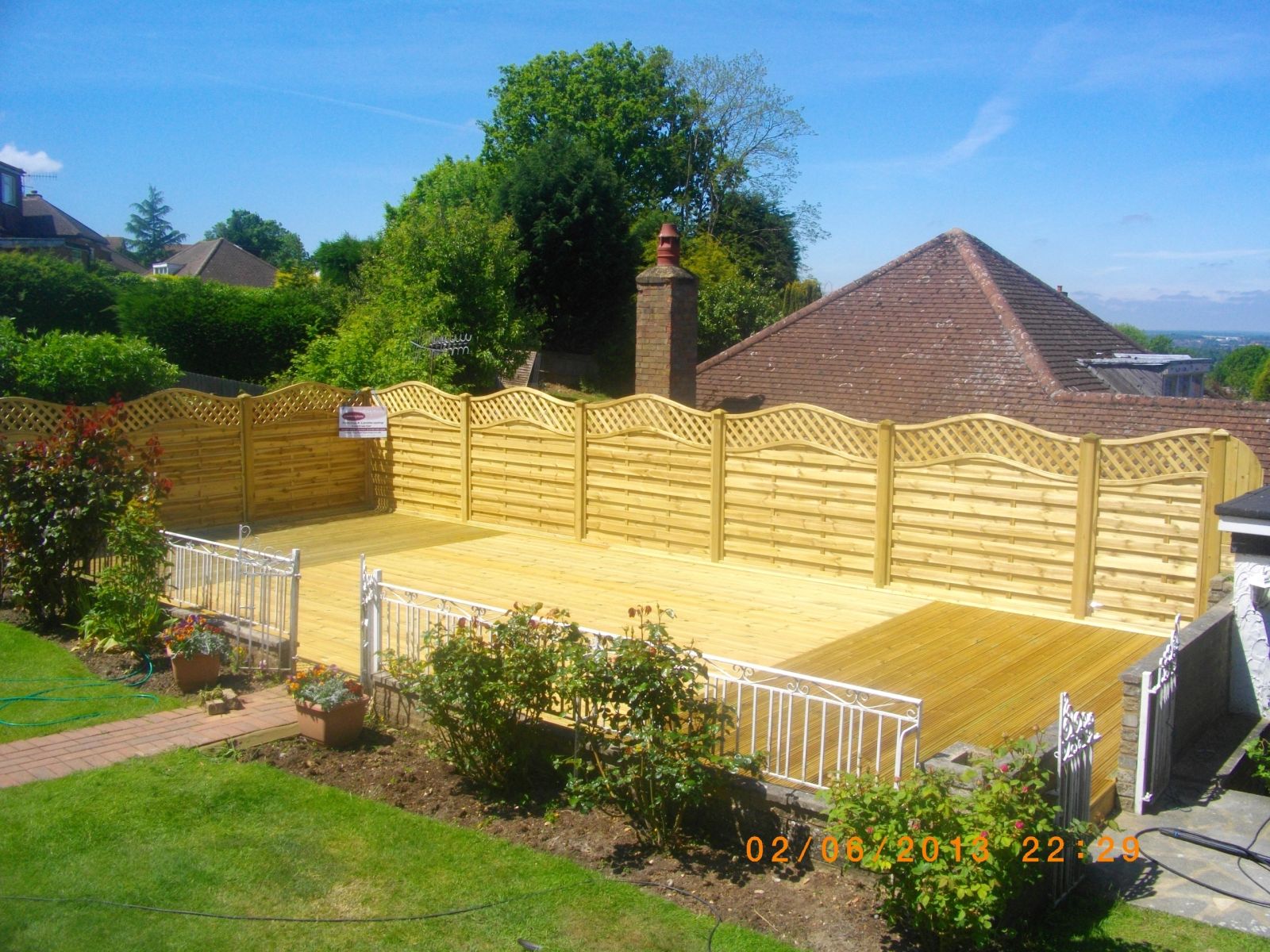
Decking raised more than around 600mm above the ground typically needs a balustrade under Building Regulations Part K, with baluster gaps narrow enough that a 100mm sphere can't pass through, to stop a child slipping between rails.
Handrail height and the strength of the newel post fixings both matter more on a raised structure than a ground-level deck, since the loads involved in someone leaning on a rail are higher than most people assume.
Steps down from a raised deck need their own handrail treatment where the rise is significant, and non-slip tread nosing is worth specifying for anywhere used year-round.
Gate stop positioning for correct swing angle
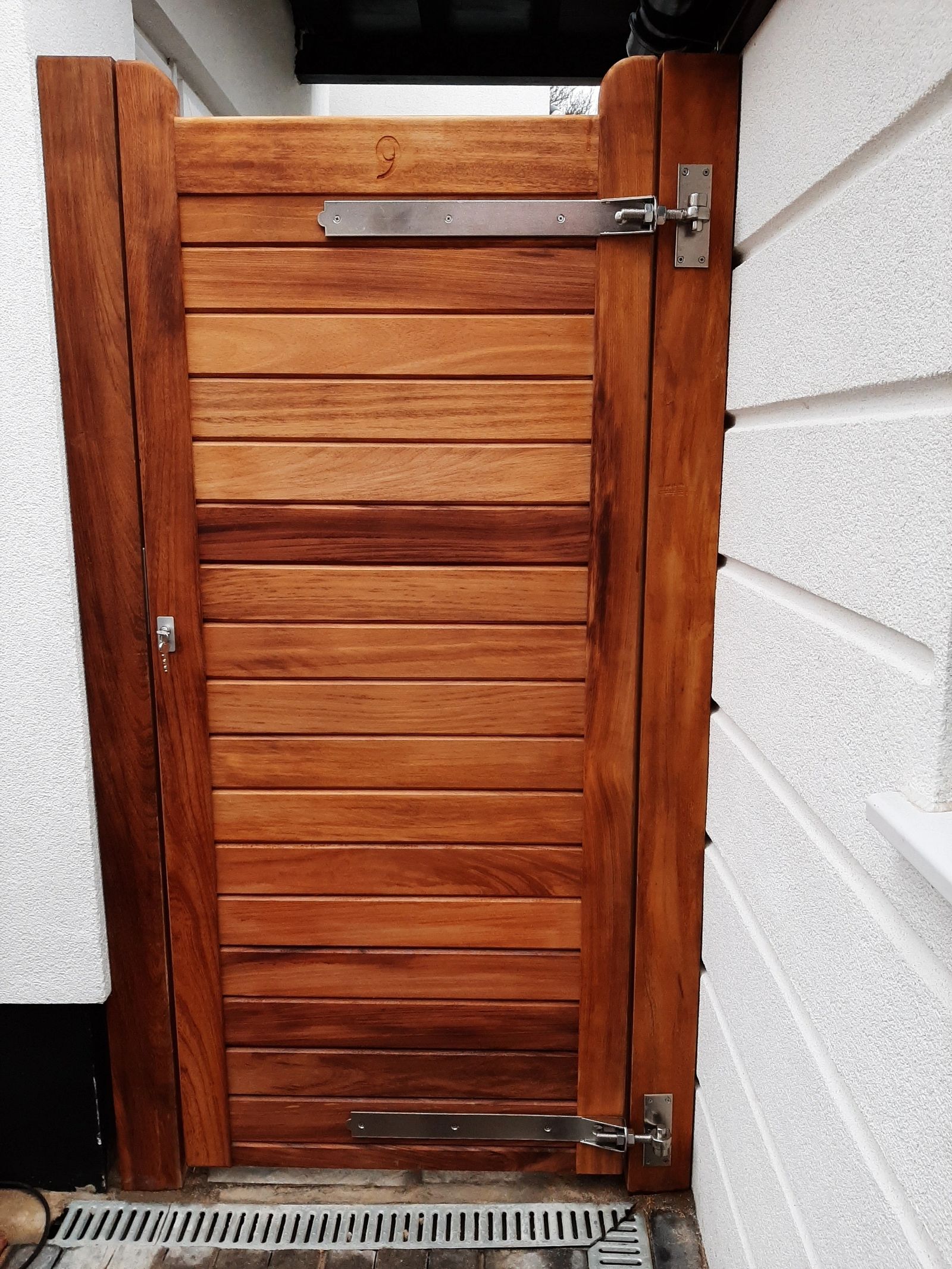
A gate stop set into the ground or fixed to the post limits how far a gate can swing open, protecting the hinges from being forced past their working range by wind or an over-enthusiastic push.
Positioning the stop correctly against the gate's actual swing arc, rather than a generic distance from the post, avoids the stop being struck at an angle that damages the gate's bottom rail.
Invasive plants and boundary work
Japanese knotweed and other invasive species near a boundary line carry specific legal obligations around disposal — cut material can't simply go in a garden waste bin, and spreading it to a neighbour's land or public land is itself an offence.
Digging near a known knotweed stand needs specialist handling rather than routine post-hole digging, since disturbing the rhizome can make an existing infestation worse rather than clearing it.
Where a boundary survey or site visit turns up suspected knotweed, the sensible step is a specialist identification and treatment plan before any fencing work goes ahead in that area of the garden.
Heat pump and AC unit enclosures
An acoustic enclosure around a heat pump or air conditioning condenser needs solid, gap-free sides and enough clearance to avoid restricting the unit's airflow, since blocking intake or exhaust can cause the unit to run harder and louder.
Manufacturer clearance distances are checked before an enclosure is built, and a removable or hinged section is normally included for servicing access.
Hedgerows as a boundary feature
Some countryside and village hedgerows are protected under the Hedgerow Regulations 1997, which can restrict removing an 'important' hedgerow even where it marks a private boundary.
This mainly affects longer, older hedges in rural or semi-rural locations rather than typical suburban garden hedges, but the distinction isn't always obvious without checking.
Where a fence is planned to replace or run alongside a hedge, it's worth confirming with the council whether the hedgerow itself has any protected status before removal work begins.
Manhole covers sitting on or near a boundary
It's not unusual for a drainage manhole cover to sit directly on, or very close to, a garden boundary line, reflecting how shared drainage runs were originally laid out.
Water companies and building control generally expect ongoing access to manhole covers to be maintained, which can rule out building a fixed fence panel or post directly over one.
Where a boundary run includes a manhole cover, planning a removable panel section or routing the fence slightly around it avoids blocking access that may later be needed for drain clearance.