Restrictor arms and stays for wind-prone double gates
A restrictor arm or stay holds a double gate leaf open at a set angle, preventing it from swinging shut or being blown further open by wind while a vehicle passes through, which is particularly useful on an exposed driveway entrance.
Without a stay, an open gate leaf left unsecured in wind can swing back and strike a vehicle or a person passing through the opening.
Seasonal restrictions on hedge and vegetation clearance
Clearing vegetation or a hedge to make way for a fence during bird nesting season, broadly March to August, risks disturbing an active nest, which is a wildlife offence regardless of whether the fencing work itself is otherwise unrestricted.
A quick visual check for active nests before cutting back growth is standard practice, and where a nest is found the sensible step is working around it rather than pushing ahead with clearance.
Outside nesting season, most routine hedge cutting ahead of fencing work has no seasonal restriction, though thicker or more established hedgerows may still need the checks covered elsewhere for protected hedgerows.
Repairing posts in waterlogged ground after heavy rain
A footing dug in waterlogged ground doesn't compact or bond as reliably as one dug in drier conditions, and standing water in the hole can dilute a concrete mix before it's had a chance to set properly.
Where a repair can't wait for drier ground, options include a free-draining aggregate base in the hole and a quick-set mix suited to damp conditions, but the underlying decision is often whether the repair should be delayed a few days rather than pushed through in poor conditions.
Adjustable bolt-on hinges for metal gates
Adjustable bolt-on hinges, common on metal driveway gates, let the gate's height and pitch be fine-tuned after fitting via a bolt and welded bracket rather than needing the hinge repositioned entirely.
These are useful where ground level or post position isn't perfectly fixed, since small adjustments can be made without unbolting the gate from the post.
Deck board gapping to allow seasonal movement
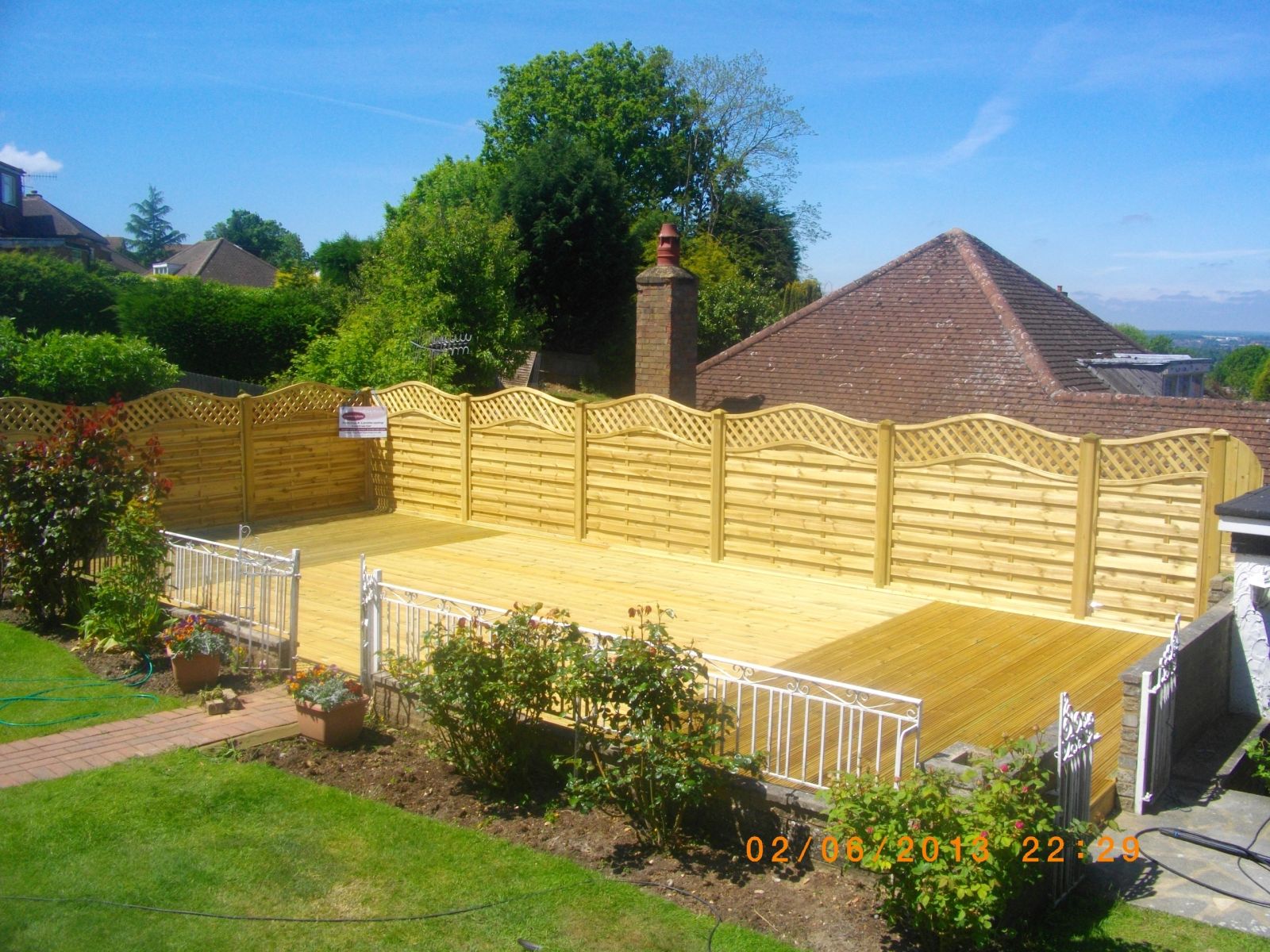
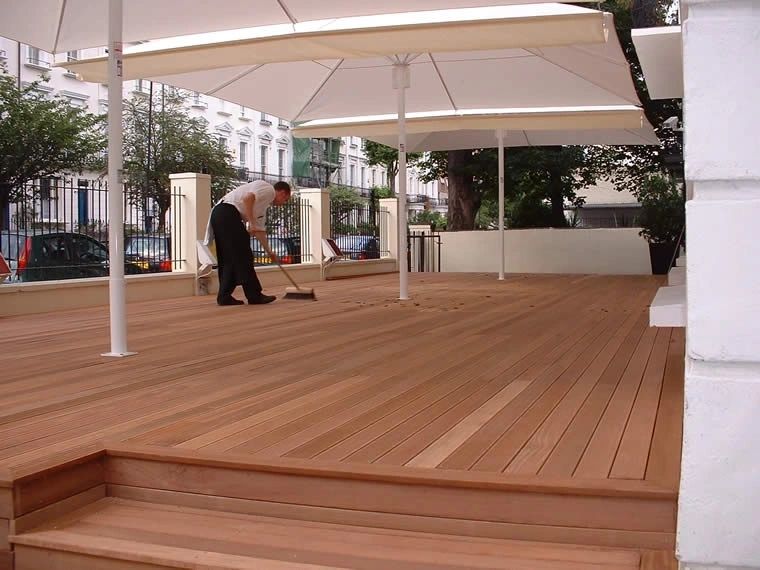
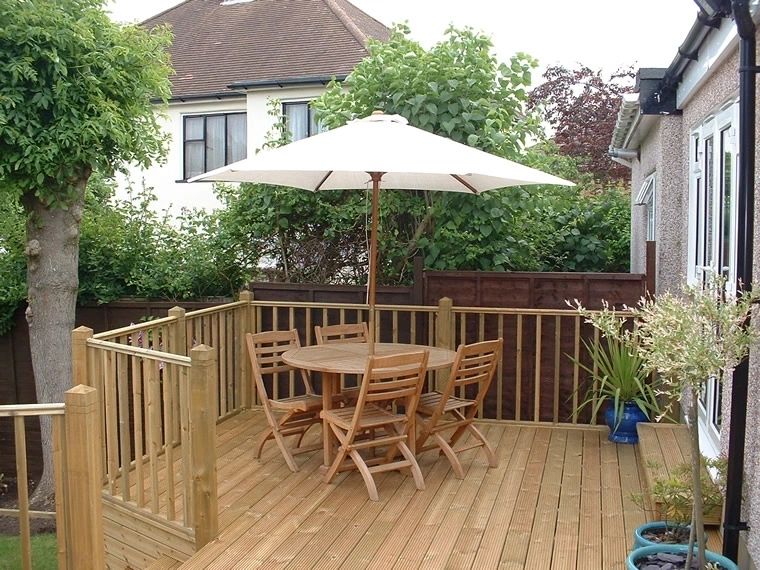
Timber deck boards expand slightly when they absorb moisture and contract as they dry, so boards laid without a small gap between them can cup, bow or push against each other as conditions change through the year.
The correct gap depends on the moisture content of the timber at the time of laying — kiln-dried boards laid tight in winter may need a slightly wider gap than the same boards laid already at a higher moisture content in summer.
Composite boards move with temperature rather than moisture and have their own manufacturer-specified gap and expansion allowance, particularly at butt joints and against fixed edging.
Threshold and step detailing under a gate
Where a gate crosses a change in ground level, a threshold detail — a shaped cill, a small step, or a sloped paving strip — needs designing in so the gate can swing freely without a permanent gap left underneath for drafts, debris or small pets to pass through.
Retrofitting a threshold detail to an existing gate is more limited than designing it in from the start, since the gate's swing arc is already fixed by its hinges.
Protecting a driveway surface during on-site concrete mixing
Mixing concrete directly on a resin-bound, block-paved or stamped concrete driveway risks permanent staining if spilt mix isn't cleared immediately, since cement staining bonds into a porous surface far more readily than it wipes off.
A mixing board or tray, and a bucket of clean water kept nearby to rinse tools and any spillage straight away, are simple precautions that cost little time compared with the alternative of professionally cleaning a stained driveway afterwards.
Where a mixer is used rather than hand-mixing, positioning it so any spill or overflow lands on a protected area rather than the finished surface is worth doing before the first batch rather than after the first mess.
Handling a live boundary dispute discovered during a repair
Sometimes a repair call-out uncovers that neighbours actively disagree about where the boundary line sits, which is a different situation to simply not knowing who's responsible for maintenance, and it needs resolving before any post is reset rather than worked around.
In that situation the sensible step is pausing repair work on the disputed section until the neighbours have agreed the line, since resetting a post on a disputed line can itself become evidence in the dispute.
Quick-set post mix versus mixed concrete
A quick-set post concrete cures within a few hours and is convenient for a single-post repair where the fence needs to take load again quickly, but a standard mixed concrete generally gives a denser, longer-lasting footing for a larger job.
For a repair affecting several posts along a run, mixed concrete is usually the more durable choice even though it takes longer to reach working strength.
Boundary fencing near basement lightwells
Properties with a basement lightwell or sunken front area need fencing or railings around the opening itself for safety, independent of the main boundary treatment facing the street.
Post foundations for a fence running close to a lightwell need checking against the lightwell's own retaining structure, since digging a standard post hole too close to an unsupported excavation edge risks undermining it.
Drainage from a raised boundary or planting bed above a lightwell also needs directing away from the opening, since a fence that funnels rainwater toward a basement window is a bigger problem than the fence itself.
Public liability considerations on a shared boundary
Work that takes place on or near a shared boundary inherently affects two properties, which is one reason contractors carry public liability insurance covering damage or injury arising from the works, generally quite separate from any specific job guarantee.
Clients are entitled to ask to see a contractor's current public liability certificate before work starts, and for jobs involving excavation near a neighbour's structure or a shared wall it's reasonable practice to confirm cover explicitly rather than assume it.
This is a generic industry consideration rather than a claim about any particular policy, and the details of cover, exclusions and limits vary between insurers and should be checked directly with the provider.