Removing an existing low fence before an acoustic upgrade
Where an existing low or open fence is being replaced with a solid acoustic build, old post stumps and concrete are broken out rather than built around, since a new heavier panel needs its own correctly positioned foundation.
Salvaged materials from the old fence are cleared from site as standard, and any boundary marker or shared feature is noted before removal in case a neighbour raises a query later.
Salt and de-icing near a pavement
A front boundary fence close to a pavement or road gritted in winter is exposed to salt spray and run-off that a rear-garden fence never sees, and that salt accelerates corrosion in untreated steel fixings and speeds up timber degradation at ground level.
Galvanised or stainless fixings resist this better than standard bright steel, and are worth specifying as standard on any boundary within a few metres of a regularly gritted surface.
Salt-laden ground also tends to stay damp for longer after a thaw, extending the period a post base is sitting in wet conditions each winter.
Weed and damp membrane beneath a ground-level deck
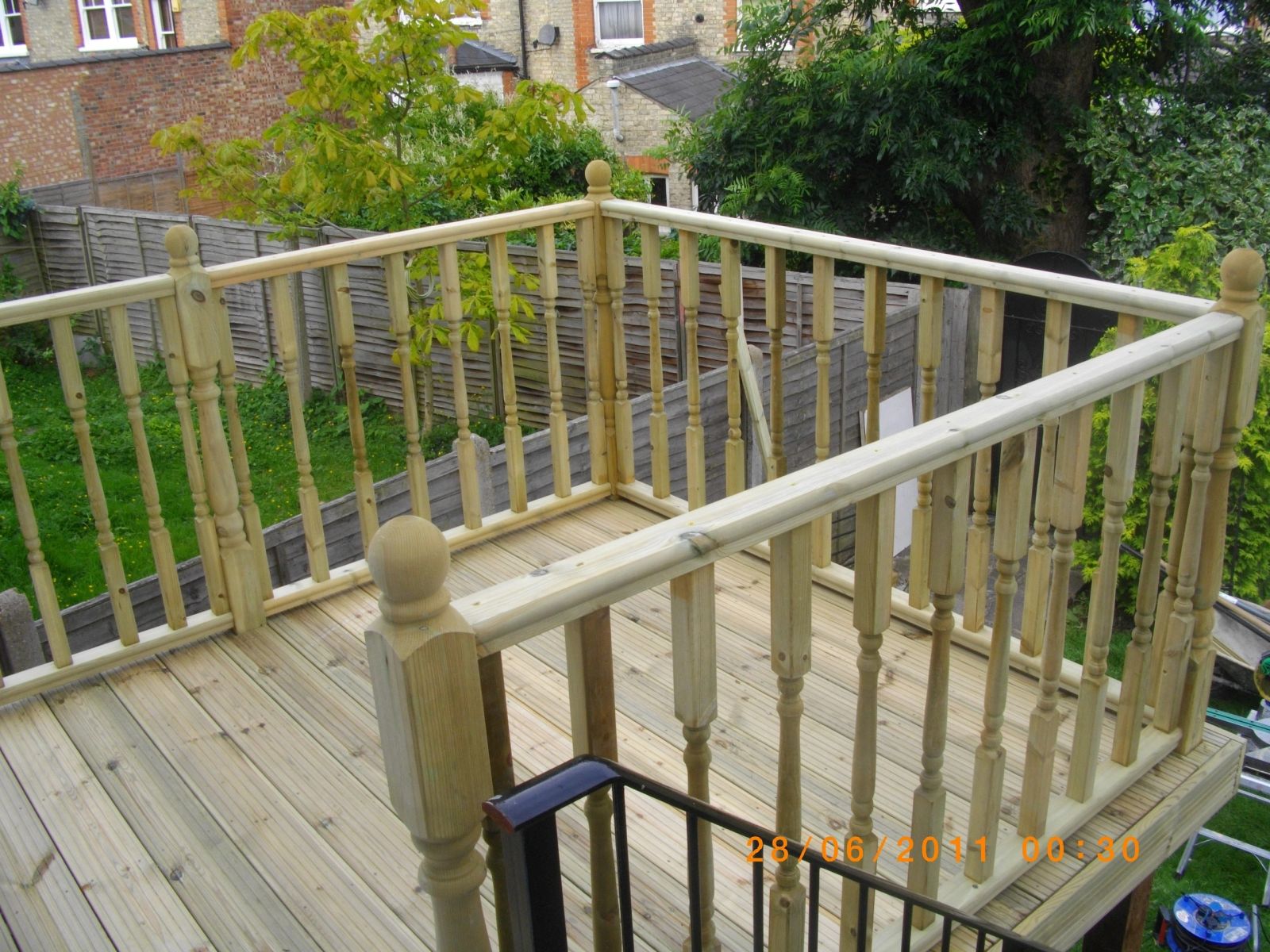
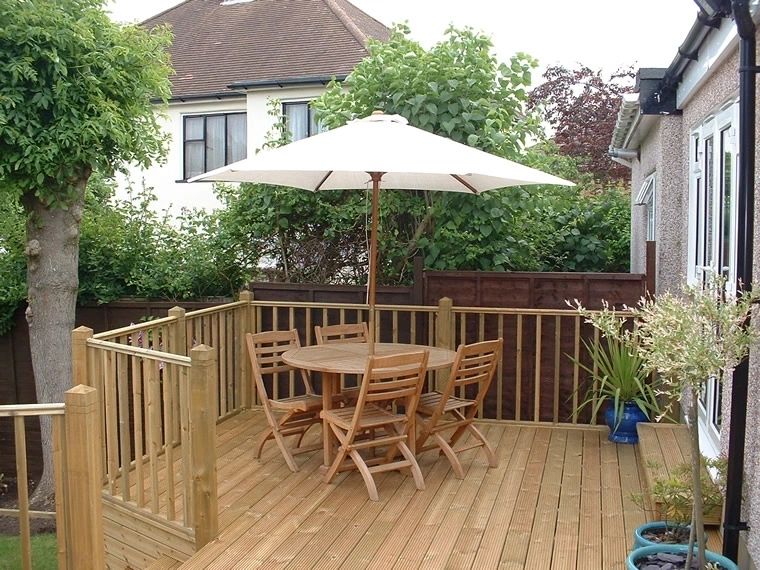
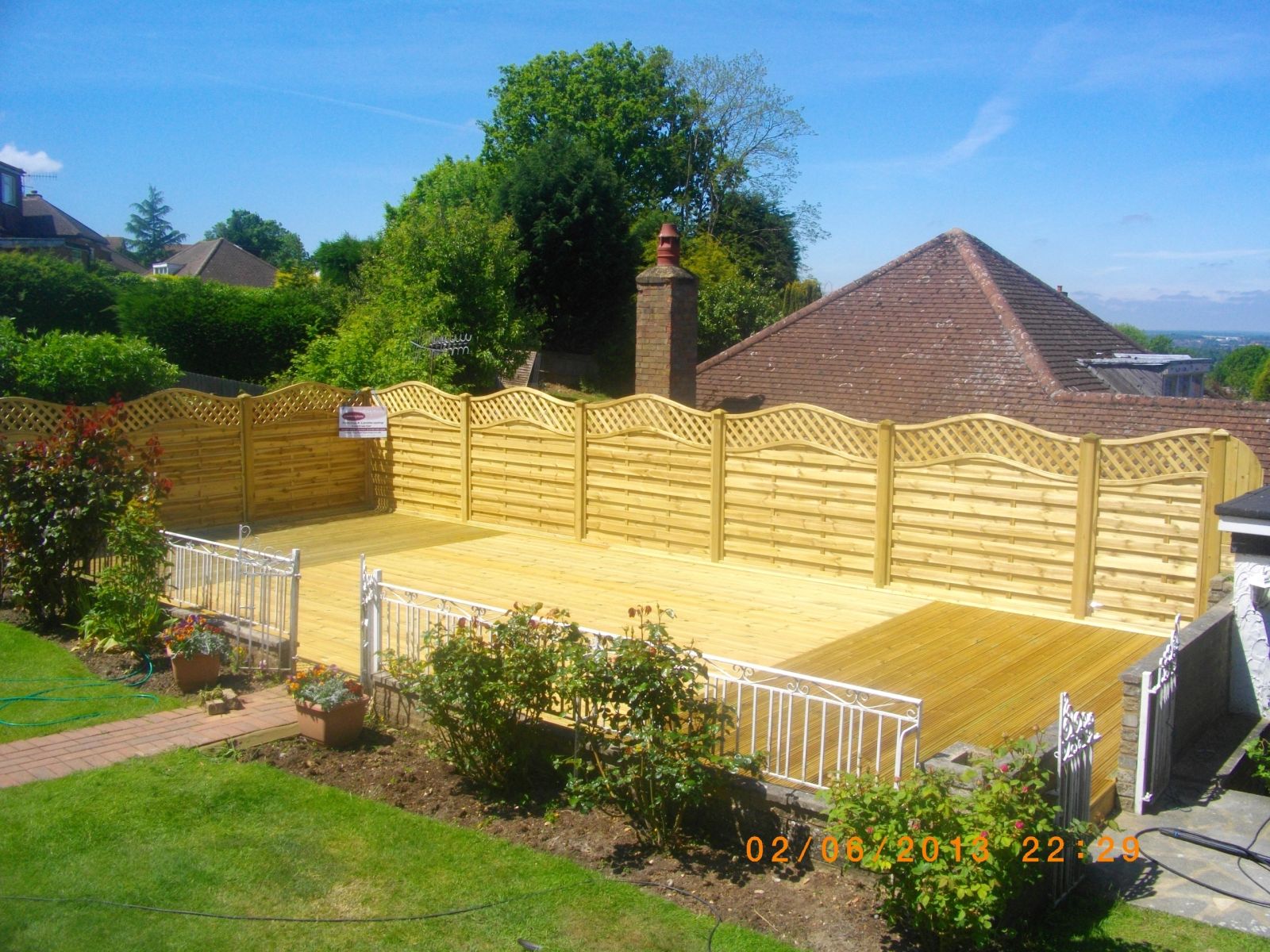
A permeable membrane laid over the ground beneath a low-level deck suppresses weed growth and reduces the amount of moisture rising from bare soil into the enclosed void under the boards.
It needs to be permeable rather than a solid impermeable sheet, since trapping ground moisture entirely beneath an impermeable membrane can create a worse damp environment than leaving the soil exposed to some airflow.
Combined with adequate ventilation gaps at the deck's edges, a permeable membrane is a low-cost addition that measurably reduces the humidity the joists sit in throughout the year.
Checking cumulative ground level change along a long boundary
A gentle, barely perceptible slope checked only between adjacent posts can still add up to a substantial total fall over a long boundary, which is easy to miss without measuring from a single fixed datum along the whole run.
Taking level readings from one datum point at both ends and at intervals along the run, rather than only comparing each post to its immediate neighbour, reveals the true overall fall before panel and post heights are finalised.
This matters most for ordering materials in advance, since a run that turns out to need more steps or a longer rake than first estimated can mean extra cut panels or capping that weren't in the original take-off.
Bottom rail profiles that trap standing water
A flat-topped bottom rail on a timber gate can hold a film of standing water after rain rather than shedding it, and this repeated wetting is a common cause of rot starting at the bottom rail well before the rest of the gate shows any deterioration.
A weathered or sloped top edge on a replacement bottom rail sheds water more effectively than a flat profile, extending the life of that component specifically.
Drive-through lane and order-point noise
A drive-through lane generates queuing engine idle, order-point speaker announcements and stop-start acceleration in a fairly continuous stream during trading hours, which differs from the short bursts typical of a delivery yard.
Because the order point itself sits at a fixed location, a barrier positioned to break the sightline to that specific point often does more than a longer run along the whole lane.
Detached plots with a paddock or field edge
Detached properties backing onto a paddock, field or grazing land need a boundary that does two jobs at once — keeping the garden private and, if livestock use the adjoining land, keeping animals off the garden side.
A standard close-boarded fence isn't stock-proof on its own; where horses or cattle are present on the other side, a stock fence or post-and-rail set slightly inside the garden fence is the usual belt-and-braces approach.
Field boundaries also see more vegetation growth and root pressure from hedgerows than a typical suburban fence line, so posts often need resetting or straightening more often than an equivalent garden boundary.
Boundaries against a watercourse and riparian basics
A property boundary running along a stream, brook or ditch usually carries riparian responsibilities regardless of who technically owns the fence, including keeping the watercourse clear of obstruction and not doing anything that would worsen flood risk downstream.
Fence posts set close to a watercourse bank should avoid undermining or destabilising the bank itself, and in many cases installing anything within a set distance of the top of the bank needs consent from the relevant flood or drainage authority.
Ground immediately alongside a watercourse is also more likely to be periodically saturated or subject to erosion, which should factor into post depth and material choice on that section.
Composite colour fade realism
Composite boards do fade slightly in their first year or two of UV exposure before settling to a stable colour, which is a normal part of the material rather than a fault, but it means a newly added run will look a shade brighter than an older adjoining one for a while.
Darker composite colours fade proportionally more than lighter ones and also run hotter in direct sun, which can matter for boards used on south-facing screening close to seating areas.
Manufacturers typically quote colour consistency rather than a fixed fade-free guarantee, so matching an extension to an existing composite run several years old is unlikely to be an exact colour match regardless of the batch ordered.
Noise from works and considerate constructor practice
Percussive work like post-driving, cutting concrete gravel boards or using a breaker on old foundations generates noise that can exceed what's reasonable outside the agreed working hours, even where the overall job is short.
A simple courtesy notice to immediate neighbours ahead of noisy days, giving a rough time window, reduces the chance of a complaint escalating to environmental health, which has statutory powers to serve an abatement notice on persistent nuisance noise.
Sequencing the noisiest tasks earlier in the working day and away from very early morning or evening, even within the permitted hours, is standard considerate practice on jobs close to occupied houses.
Repairing a fence near a tree protected by a Tree Preservation Order
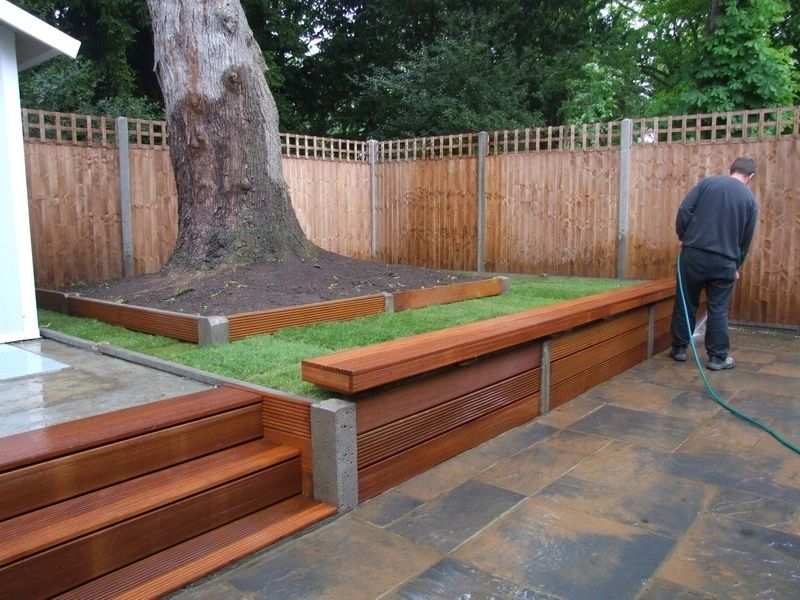
Digging a new post hole or footing close to a protected tree's root zone can be restricted even where the fence itself needs no permission, since the restriction is about protecting the tree's roots rather than the fence.
Where root heave from a nearby tree has caused the damage being repaired, it's worth checking whether the tree is protected before digging anywhere near it, since hand-digging around roots or repositioning the post slightly may be required instead of a standard footing.