Zinc-aluminium coatings
Zinc-aluminium alloy coatings, sold under various trade names, combine zinc's sacrificial protection with aluminium's more stable barrier properties, generally giving longer service life than pure zinc galvanising in the same environment.
They're commonly used on wire products and fixings destined for coastal or heavily salted road environments, where standard galvanising alone corrodes faster than inland applications.
The trade-off is that these coatings are usually applied by wire-drawing or continuous coil coating processes rather than batch hot-dip immersion, which limits them to certain product types rather than large fabricated steelwork.
Wind noise through the fence itself
A poorly sealed acoustic fence can generate its own noise in high wind — whistling through small gaps or rattling loose boards — which is a different problem from the external noise it's meant to screen but is often confused with it.
Tight, well-fitted joints and secure fixings reduce this, and it's worth checking on-site during a windy period as part of a completed installation's sign-off.
Post spacing on a run that doesn't divide evenly
Standard panels are usually 1.83m (6ft) wide, but very few boundary runs measure out as an exact multiple of that, so the layout has to absorb the remainder somewhere rather than pretend it isn't there.
The common approach is to split the shortfall across the two end bays so both are cut slightly narrower and roughly matched, rather than leaving one full-width bay and one very narrow offcut at a single end.
Where a fixed feature — a gate opening, a manhole, an existing post that must stay — sits partway along the run, setting out works outward from that fixed point in both directions rather than from one end only.
Badger and wildlife legal considerations
Badgers and their setts are protected under wildlife legislation, so a repair near an active sett or badger path needs the presence of the animal considered before any digging or fixing work near that spot.
Where wildlife activity is suspected near a repair site, we recommend checking for protected status before altering ground close to the affected boundary.
A fence's role alongside a formal noise complaint
Where noise from a specific source has escalated to a formal complaint to a local authority's environmental health team, a garden barrier can reduce day-to-day disturbance but doesn't replace or resolve that separate regulatory process.
Installing a barrier while a complaint is ongoing is a reasonable practical step, but it's not evidence that the underlying noise source itself has been addressed, and the two should be treated as separate tracks.
Over-boarding as an alternative to board-by-board replacement
Over-boarding fixes new feather-edge boards directly over an existing run rather than stripping and replacing individual damaged boards, which suits a run with widespread but shallow weathering rather than a handful of severe failures.
It doesn't fix a failing arris rail or post underneath, so it's only appropriate once the frame behind the boards has been checked and confirmed sound, otherwise the extra weight of a second layer of boards can accelerate a frame that was already borderline.
Measuring the boundary before specifying an acoustic build
An accurate boundary survey — length, existing height variation, ground level changes and any obstructions — is needed before an acoustic spec is finalised, since a build designed around approximate measurements risks gaps at transitions.
Level changes along the run are recorded specifically, since these affect whether a stepped or level-topped panel arrangement is needed to keep the line of sight consistently broken.
HMOs and student lets
Houses in multiple occupation see heavier day-to-day wear on boundary fencing than a single-family home — more bikes, more bins, more casual leaning and climbing — and a spec that assumes normal domestic use often underperforms within a couple of years.
Licensing conditions for larger HMOs sometimes specify secure cycle storage or bin enclosures behind a lockable gate, which needs building into the boundary design rather than treated as an afterthought.
Because tenancies turn over regularly, it also helps to agree access arrangements with the managing agent rather than relying on whichever tenant happens to be in at the time of the survey.
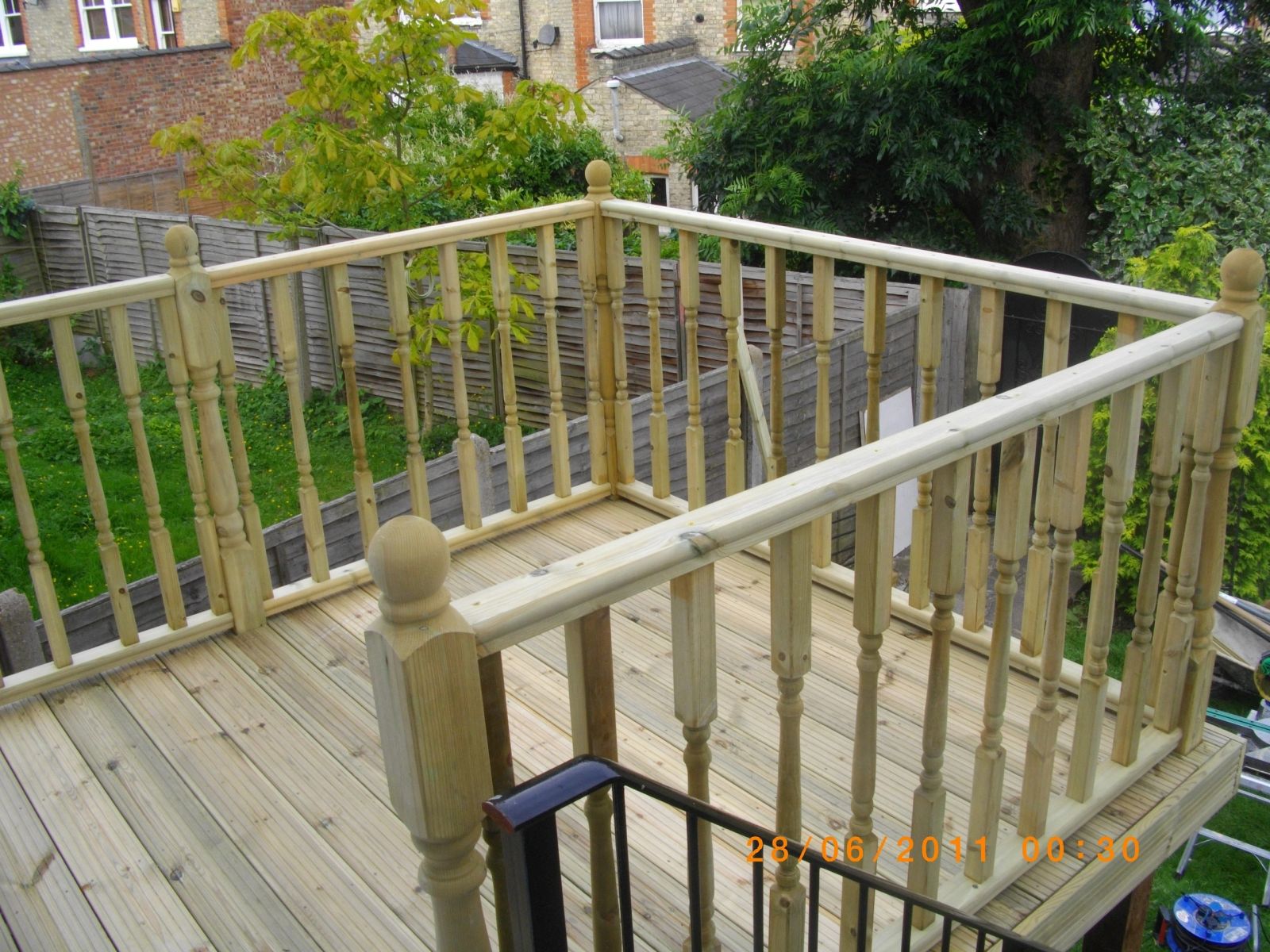
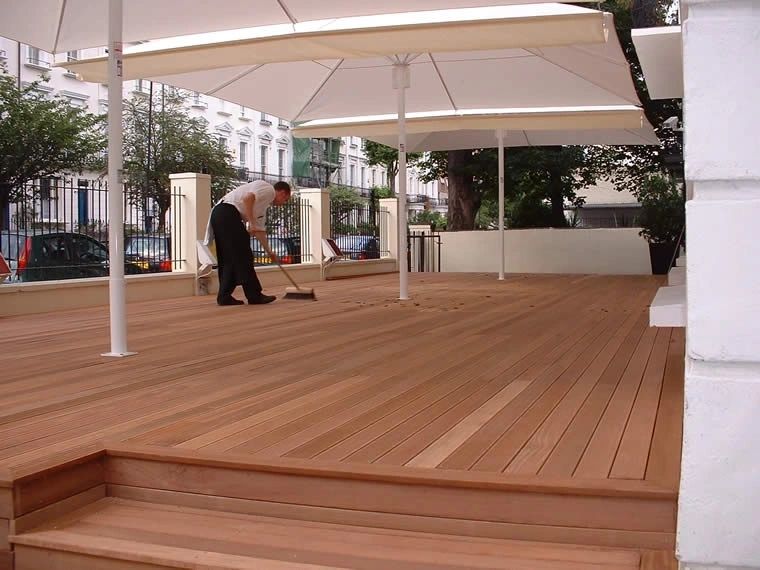
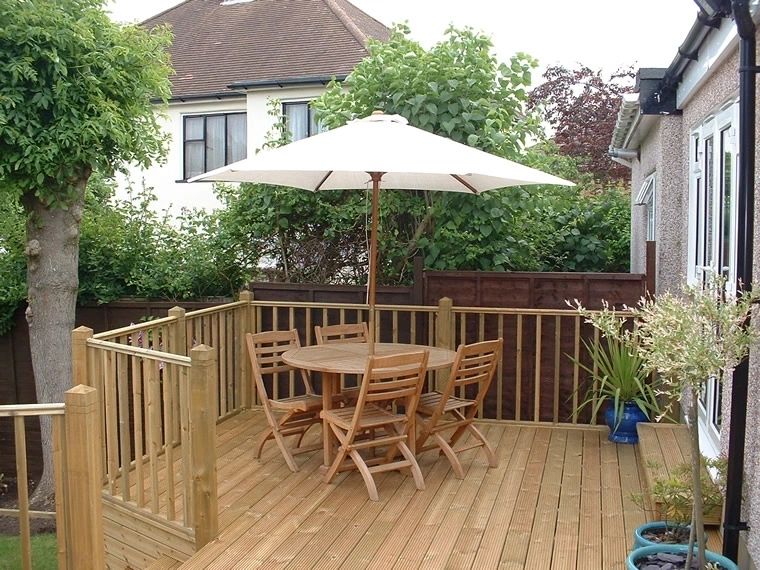
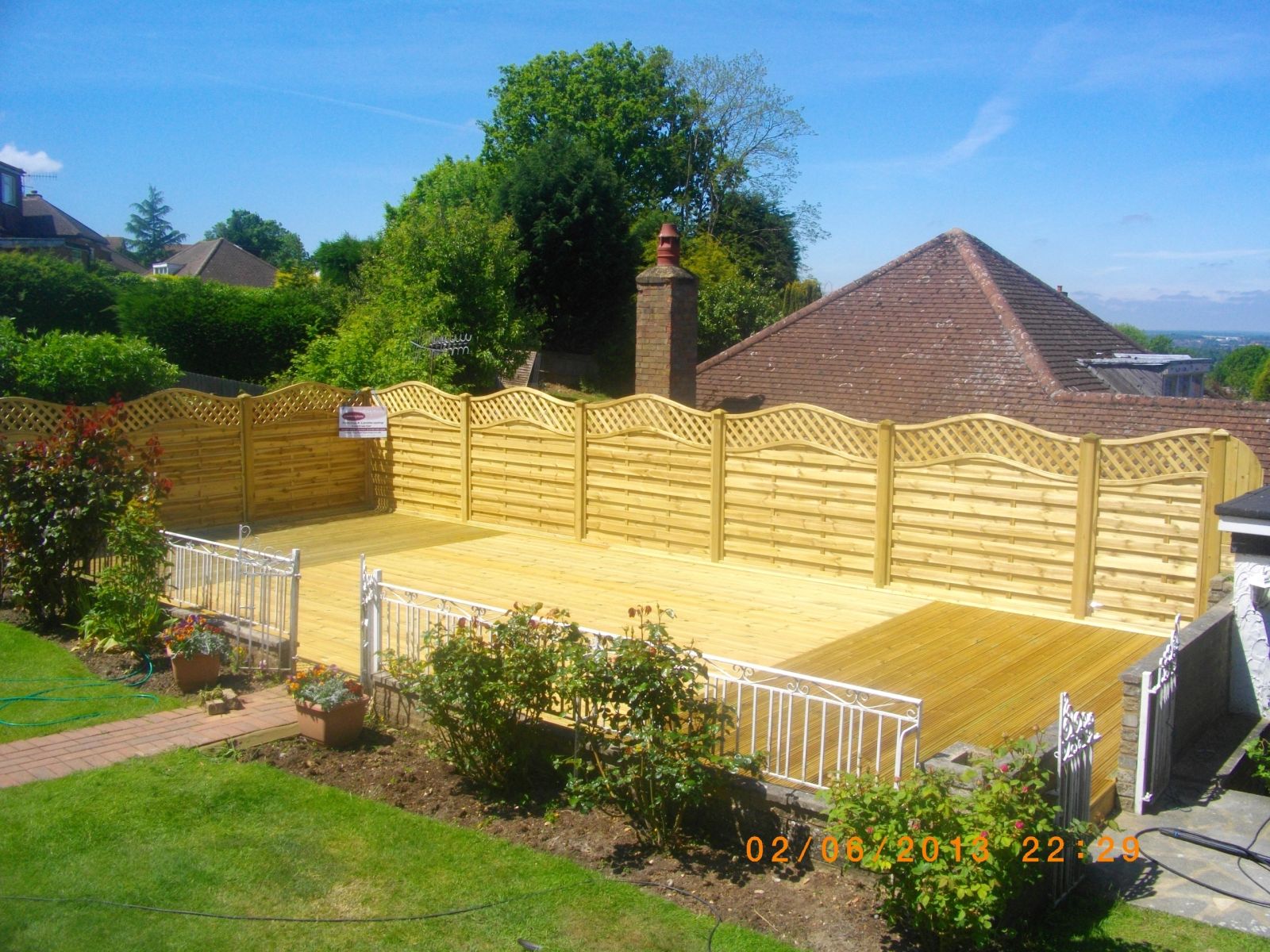
Decking fixings visible versus hidden
Face-fixed decking is screwed directly down through the board top, which is simple, cheap and easy to replace a single board on, but leaves visible screw heads that can work slightly proud over time as the timber moves.
Hidden fixing clip systems fit into the board's grooved edge and screw down into the joist from the side, giving an unbroken top surface, but they generally cost more per board and make it harder to lift a single damaged board without disturbing its neighbours.
Composite boards are more often specified with hidden clip systems since the clean, screw-free look is part of the appeal that justifies the material's higher cost.
Using profile boards at corners
Profile boards — a horizontal board fixed between two pegs set back from the actual corner — let a string line be set, removed and reinstated at the exact same point throughout a job without disturbing the corner itself.
They're most useful where a run turns through an angle, since the intersecting lines from two boards mark the true corner point independently of any post already dug.
Leaving the boards in place until the last post is set and checked avoids the common error of the line creeping slightly as pegs get knocked or the string is re-tied.
Slotted versus morticed concrete posts
Slotted concrete posts have a continuous groove cast into two or four faces so panels slide down into the slot from above, which makes them fast to erect but means every panel in a run has to come out to replace one in the middle.
Morticed concrete posts have discrete rectangular pockets for arris rail ends instead, matching closeboard or panel construction where individual boards or panels can be replaced without disturbing the rest of the run.
The choice is largely dictated by the fencing system being used — panel fencing wants slotted posts, boarded fencing wants morticed — rather than being a free preference at quote stage.