Bus routes as a noise source
A bus route produces a repeating cycle of acceleration, braking and idling rather than a steady traffic hum, with the diesel or hybrid engine note loudest as the vehicle pulls away from a nearby stop.
Because that noise repeats predictably through the day rather than being continuous, a barrier is judged on how much it softens each pass rather than on eliminating a constant background level.
Post top crown-cutting for water shedding
A crown cut, a shallow diagonal saw cut across the top of a fence post, sheds rainwater to one side rather than letting it pool flat on the post's exposed end grain.
It's a lower-cost alternative to fitting a separate post cap and can be combined with an end-grain preservative treatment applied to the freshly cut surface for extra protection.
A flat-topped post left uncapped and uncut is the most exposed detail on an otherwise well-treated post, since the end grain there absorbs water directly with nothing to divert it.
Building control interaction with retaining walls
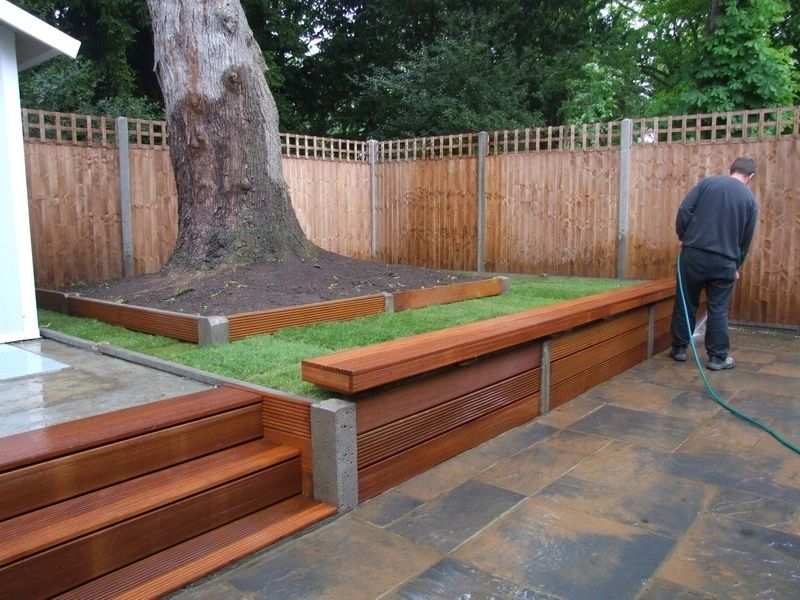
A retaining wall over 1m in height, or one supporting a structure or the stability of a neighbouring building, generally falls within the scope of the Building Regulations even though a simple garden fence of the same height wouldn't, because failure carries a structural safety risk beyond the immediate boundary.
Building control involvement typically means the wall's design needs to demonstrate adequate drainage behind it and sufficient strength to resist the retained ground, often requiring a structural engineer's calculations rather than a standard trade specification.
Retaining structures built without the necessary building control sign-off can create problems on sale of the property, since a buyer's solicitor will often ask for a completion certificate that doesn't exist.
Ground-line collars on timber posts
A plastic or metal collar fitted around a timber post at the point where it enters the ground creates a physical break between the post and the surrounding soil, reducing direct abrasion and moisture wicking at that specific zone.
Ground level is where oxygen, moisture and soil organisms are all present together in the right combination for decay fungi to thrive, which is why this narrow band is disproportionately where post failure originates compared with either the fully buried or fully exposed sections.
A collar doesn't replace preservative treatment but adds a secondary physical barrier specifically targeted at this highest-risk zone, similar in principle to the extra retention already specified for ground-contact use-class timber.
Working over a neighbour's flowerbed
Repairing a shared boundary sometimes means working from the neighbour's side, particularly where the fence faces that way or access from the owner's side is blocked, and that access should be agreed with the neighbour before work starts.
Protecting planting beds and lawn on the working side during the repair avoids turning a fence job into a wider dispute over incidental damage.
Checking a gate opening is square before building the gate
An opening that looks square by eye can still be a few centimetres out corner to corner, which only becomes obvious once a gate built to the nominal width won't hang without binding on one side.
Measuring both diagonals of the opening and comparing them is a quick way to confirm square — equal diagonals mean a true rectangle, unequal diagonals mean the posts have drifted out of parallel or the opening has racked.
Where an opening is slightly out of square and can't easily be corrected by resetting a post, building the gate with a small taper to match the actual opening is usually more practical than forcing the posts back into an exact rectangle.
Overhanging branches and the right to prune
A landowner has the right to cut back branches or roots that cross the boundary from a neighbour's tree, up to the boundary line, without needing the tree owner's permission, but the cut material technically remains the tree owner's property and should be offered back.
That right doesn't extend to entering the neighbour's land to do the work without consent, and it's overridden where the tree is protected by a Tree Preservation Order or sits within a conservation area, in which case council notice is needed first.
Cutting back further than necessary to clear the boundary, or in a way that damages the tree's health, can itself expose the pruning party to a claim, so proportionate, boundary-line-only cutting is the safer approach.
Discontinued panel styles
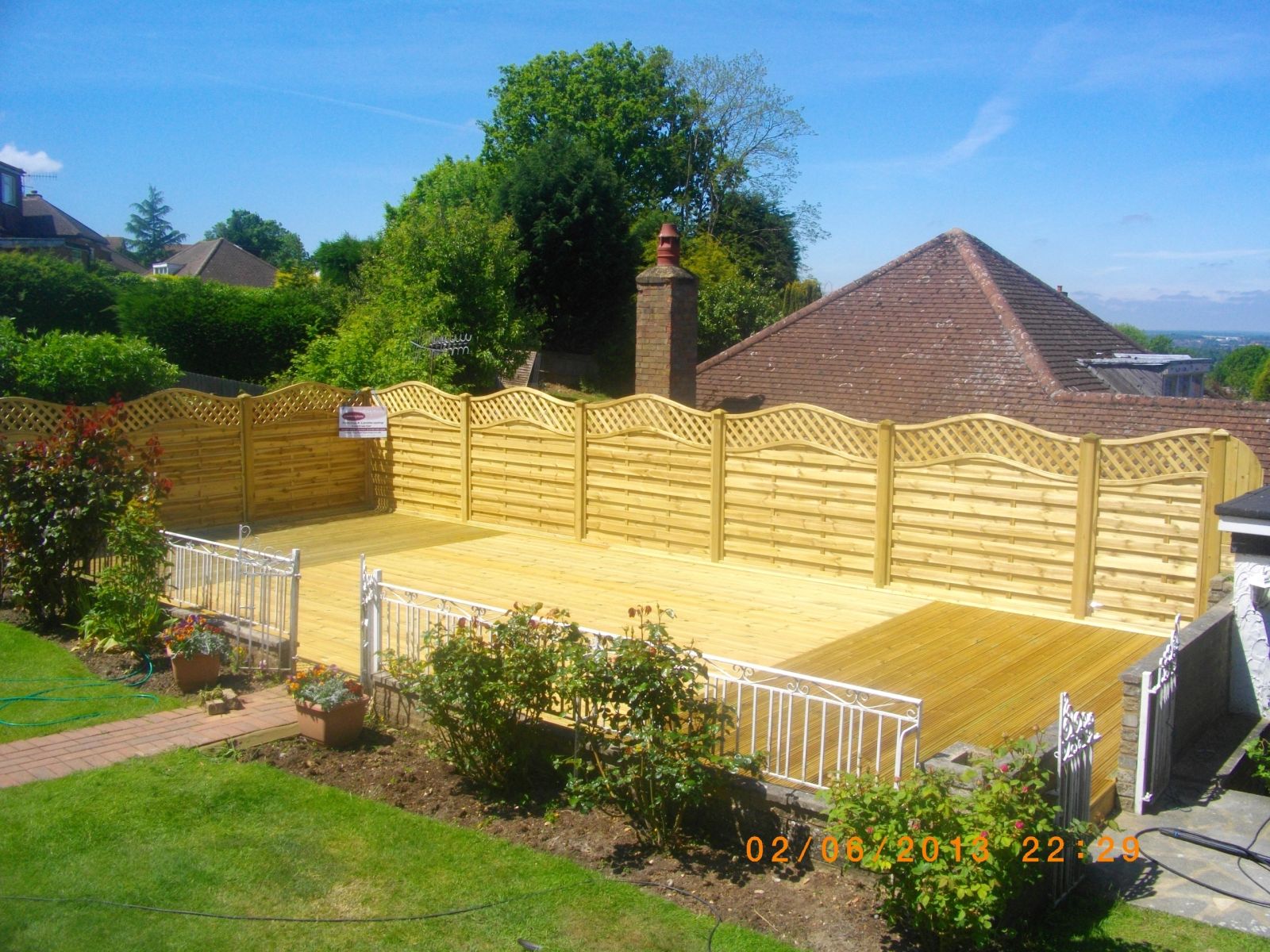
Panel fencing ranges get discontinued or reformulated by manufacturers more often than solid boarded fencing components, since panels are a proprietary product rather than built from generic stock timber sizes.
A ten- or fifteen-year-old panel range is often simply no longer made, which means a single damaged panel in an otherwise sound run may need the whole run replaced, or a mismatched panel accepted as a compromise.
Closeboard and picket fencing, built from standard boards, rails and posts rather than a proprietary panel, are generally easier to repair piecemeal decades later precisely because the components aren't tied to one manufacturer's product cycle.
Chalk ground in south Hertfordshire
South Hertfordshire sits over Chiltern chalk in places, ground that's generally stable and free-draining but can be extremely hard and slow to auger once you're through a thin topsoil layer.
Chalk doesn't shrink and swell the way clay does, so posts set in it are less prone to seasonal loosening, though a shattered or fractured chalk band can still leave voids that need packing rather than assuming solid bearing.
Where chalk is close to the surface, hand tools or a breaker attachment are sometimes quicker than persisting with a standard auger.
Gate hinge material and load ratings
Gate hinges are rated by the load they can bear without excessive wear or sag, and that rating depends on the hinge's material, its pin diameter and the bearing surface area between the moving parts.
A heavy timber gate on a lightweight hinge designed for a garden gate will wear the pin and bushing far faster than the same hinge on a lighter gate, eventually developing a visible droop at the latch side.
Stainless steel or greased bronze bushings resist wear better than plain steel-on-steel hinges, particularly on gates opened frequently, where repeated friction is the main driver of hinge wear rather than corrosion.
Telling a buildings insurer about boundary changes
Some buildings insurance policies ask to be told about certain changes to a property, and a small number specifically mention boundary walls or fences depending on the insurer's wording.
This is less about the fence itself and more about making sure existing cover for storm or accidental damage properly reflects what's actually there.
Checking a policy's terms, or simply asking the insurer, before or after significant boundary work avoids an unpleasant surprise if a claim is ever needed.