Resetting versus replacing a post
A post repair is either a reset in fresh concrete where the timber itself is sound, a concrete spur bolted above a rotten section where enough good timber remains, or a full replacement where rot has reached the panel fixings.
We test each post on site with a probe at ground level rather than deciding from a visual check alone, since a post can look fine above ground and be rotten just below it.
Temporary hoarding during other building work
Where fencing or gate work runs alongside a wider building project — an extension, a loft conversion with scaffolding, or a full renovation — a temporary hoarding or site fence often needs to go up before the permanent boundary work can start.
Temporary fencing adjoining a public footpath or road has its own public safety considerations, including visibility for pedestrians and vehicles passing the site.
Sequencing matters here — installing the final boundary fence before other trades have finished moving materials through that access point often means damage that has to be repaired before the job can be signed off.
When a boundary dispute reaches a solicitor's letter
A formal 'letter before action' from a solicitor is usually a sign that informal resolution has broken down and one party is preparing to escalate a boundary or fencing dispute further.
Receiving one doesn't automatically mean court is inevitable, but it does mean the matter should be taken seriously and responded to, ideally with professional legal advice rather than informally.
Most fencing disputes never reach this stage, but knowing the general process exists helps put an early disagreement into perspective before it escalates unnecessarily.
Slip resistance and board grooving
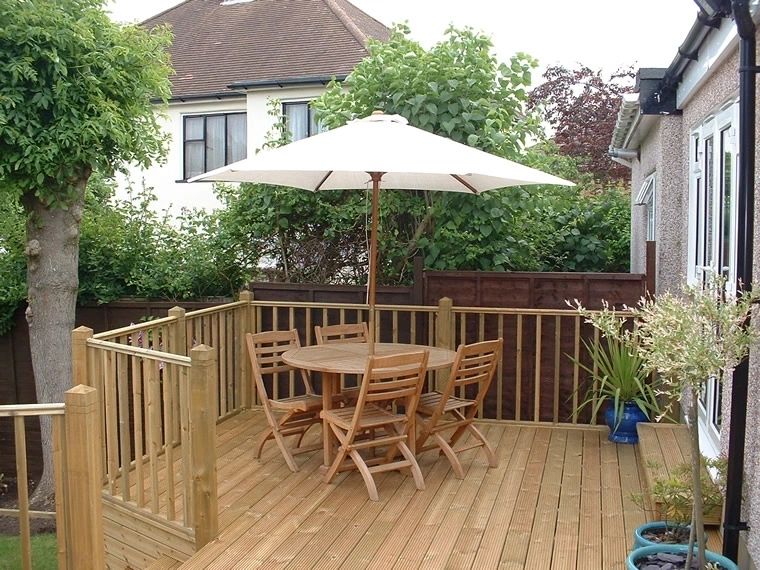
Grooved decking boards are often assumed to be more slip-resistant than a smooth reeded board, but grooves can actually hold water, algae and leaf debris that make the surface more slippery if it isn't cleaned regularly, rather than less.
A smooth board kept clean and free of algae, or a textured composite surface designed specifically for grip, often performs better in practice than a grooved timber board left unmaintained.
Orientation of grooves relative to the main walking direction, and a regular cleaning routine, matter more to actual slip performance than the board profile alone.
Deck height relative to the house damp-proof course
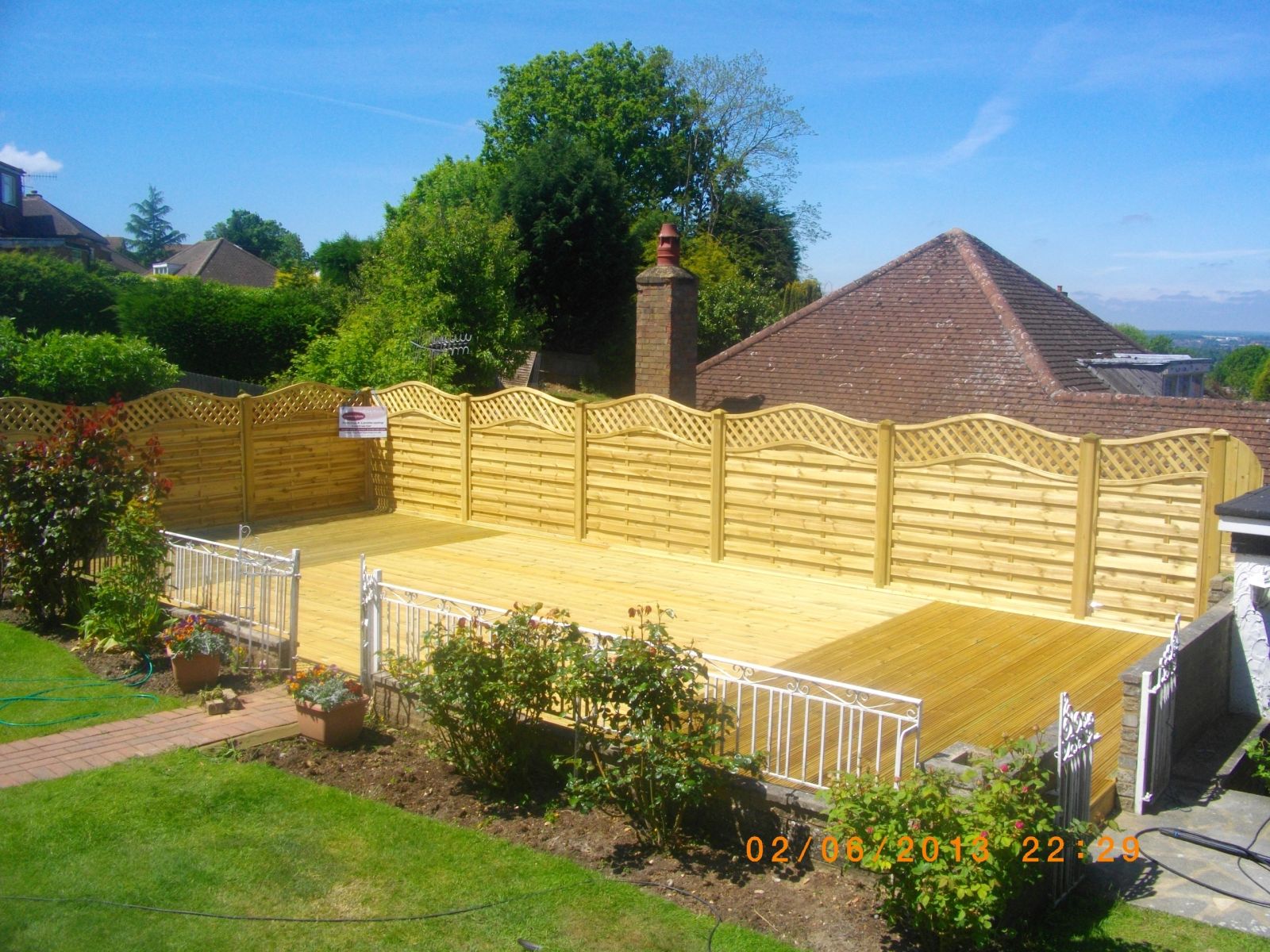
Building guidance generally recommends decking be kept at least 150mm below the house's damp-proof course, since a deck built level with or above the DPC risks bridging it and allowing damp to track into the house wall.
This is a common issue on a sloping plot where the natural ground level near the house is already close to the DPC, leaving very little room to build a deck without breaching that clearance.
Where the clearance genuinely can't be achieved without lowering the deck excessively, a drained gap or a change in construction detail near the house wall is a better solution than ignoring the clearance altogether.
Shared private water sources crossing a boundary
Some older rural properties share a private water supply, such as a well or borehole, with pipework running across one or more boundaries under a recorded easement.
Fencing work that might disturb this kind of shared supply pipe needs particular care, since interrupting it can affect a neighbour's water supply entirely, not just a garden feature.
Checking the title for any recorded private water supply arrangement is worth doing on older rural properties before any boundary groundworks proceed.
Temporary acoustic hoarding for construction sites
A temporary acoustic hoarding, sometimes required around a construction site near housing, uses a similar mass-and-seal principle to a permanent domestic barrier but is built for a fixed duration and easier removal rather than long-term weathering.
These hoardings are usually panelised for quick assembly and disassembly, trading some of the sealing refinement of a permanent build for speed of installation and removal once the works finish.
Protecting a patio surface during fencing work
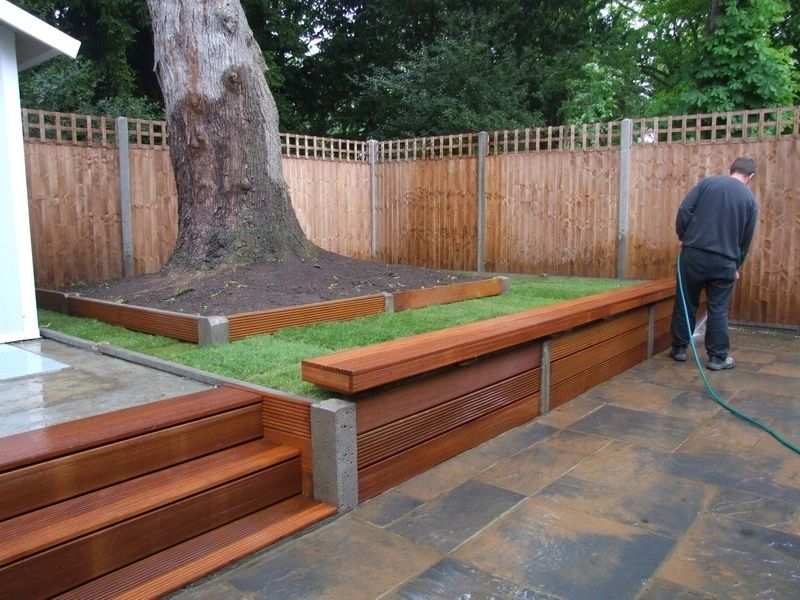
Dragging posts, panels or a wheelbarrow across paving can chip edges or scratch a polished or textured finish, so boards or protective sheeting laid along the route reduce that risk on a patio the client wants kept intact.
Concrete spillage from mixing or haunching is another common cause of permanent staining on natural stone or porous paving, and it sets far harder to remove than it is to prevent with a simple dust sheet under the mixing point.
Where post holes have to be dug close to a patio edge, protecting the adjoining slabs from spoil and tool marks is worth doing before digging starts rather than cleaning up afterwards.
Bitumen paint on buried post bases
A bitumen-based coating applied to the section of a timber post that will sit below ground adds an additional moisture barrier on top of factory preservative treatment, aimed specifically at the zone in most sustained contact with damp soil.
It's a supplementary measure rather than a substitute for proper preservative treatment, since bitumen coating alone doesn't address fungal decay resistance the way a biocide-based preservative does.
The coating is usually stopped a short distance below the eventual ground line, since bitumen exposed to UV above ground degrades and can look unsightly, whereas below ground it's protected from sunlight entirely.
Higher wear on gates serving a shared driveway
A gate serving a driveway shared by more than one household sees substantially more open-close cycles than a private garden gate, which accelerates hinge and latch wear well ahead of the general maintenance interval expected for a single-household gate.
Specifying heavier-duty hinges and a latch mechanism rated for frequent use, rather than standard domestic hardware, is worth the modest extra cost on a shared-access gate given how much more it's actually used.
It's also worth agreeing maintenance responsibility for a shared gate in writing between households, since a gate serving multiple parties doesn't have the same single clear owner a private gate does.
Matching a gate to an existing fence style
A replacement gate looks obviously mismatched if its board profile, height or capping detail doesn't follow the fence either side of it, even when the gate itself is well built.
We match board spacing, rail positions and capping profile to the existing run rather than fitting a stock gate design into a bespoke boundary.