Hit-and-miss fencing for windy plots
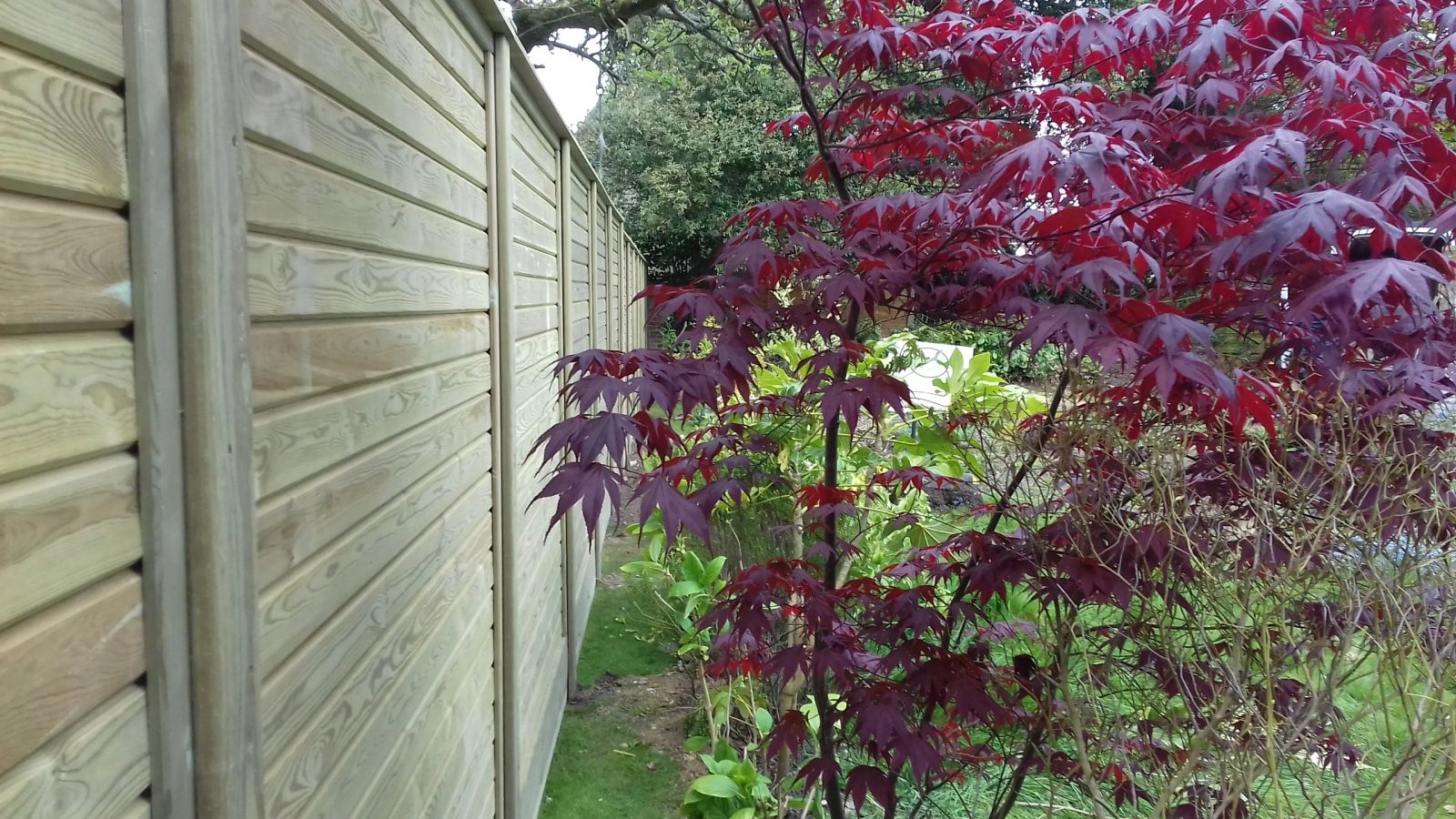
Hit-and-miss fencing alternates boards on either side of the rails so each gap on one face is covered by a board on the other, giving privacy from both sides while leaving narrow gaps through the panel itself.
Those gaps let a proportion of wind pass through rather than loading the whole panel face, which is why it's a common recommendation on exposed boundaries where a solid closeboard run would need heavier posts and shorter bays.
It uses more timber than a single-skin boarded fence for the same run length, so it's priced accordingly, but the reduced wind load can offset that in post and repair costs over time.
When a boundary camera becomes part of a wider dispute
Boundary and fencing disagreements sometimes escalate to include complaints about cameras, lighting or noise, which can broaden a straightforward property dispute into several overlapping issues at once.
Keeping these strands separate in any correspondence — addressing the boundary question and any camera or nuisance concern individually — tends to keep discussions more focused and productive.
Where a dispute has genuinely broadened like this, a mediator or solicitor experienced in neighbour disputes more generally, rather than boundary-only expertise, may be the more useful next step.
Composite thermal expansion
Wood-plastic composite boards expand and contract with temperature considerably more than solid timber, since the polymer content responds more to heat than wood fibre does on its own.
Manufacturers specify a mandatory expansion gap at both board ends and between boards laid end to end, and skipping that gap during installation is one of the most common causes of composite decking or fencing buckling in hot weather.
Dark-coloured composite absorbs more solar heat than lighter shades and expands correspondingly more, so the expansion allowance recommended for a dark board is often greater than for a pale one of the same profile.
Wayleaves for overhead cables crossing a boundary
A wayleave is an agreement, sometimes recorded on the title, allowing a utility company to run cables or equipment across private land, which can include overhead lines crossing directly above a garden boundary.
Fence or gate height near a low-slung overhead cable is worth checking against the clearance the utility company expects, particularly for any structure involving machinery or long materials being lifted into place.
Where an overhead line crosses close to planned fence or gate posts, contacting the relevant utility company for guidance before work starts is the sensible precaution.
Building control interaction with retaining walls
A retaining wall over 1m in height, or one supporting a structure or the stability of a neighbouring building, generally falls within the scope of the Building Regulations even though a simple garden fence of the same height wouldn't, because failure carries a structural safety risk beyond the immediate boundary.
Building control involvement typically means the wall's design needs to demonstrate adequate drainage behind it and sufficient strength to resist the retained ground, often requiring a structural engineer's calculations rather than a standard trade specification.
Retaining structures built without the necessary building control sign-off can create problems on sale of the property, since a buyer's solicitor will often ask for a completion certificate that doesn't exist.
Distance from the noise source
Sound naturally loses energy over distance, so a barrier placed closer to the source rather than close to the receiver tends to perform better for a given height, because it intercepts the sound sooner.
On a boundary where the source is a busy road just beyond the fence line, this favours getting the barrier as close to that boundary as ownership and access allow, rather than setting it back into the garden.
Converted flats and shared bin storage
Houses converted into two or three flats often have a shared bin store or side passage boundary that wasn't part of the original single-dwelling fence layout, and responsibility for repair can be unclear where the freeholder retains the passage but individual flats use it daily.
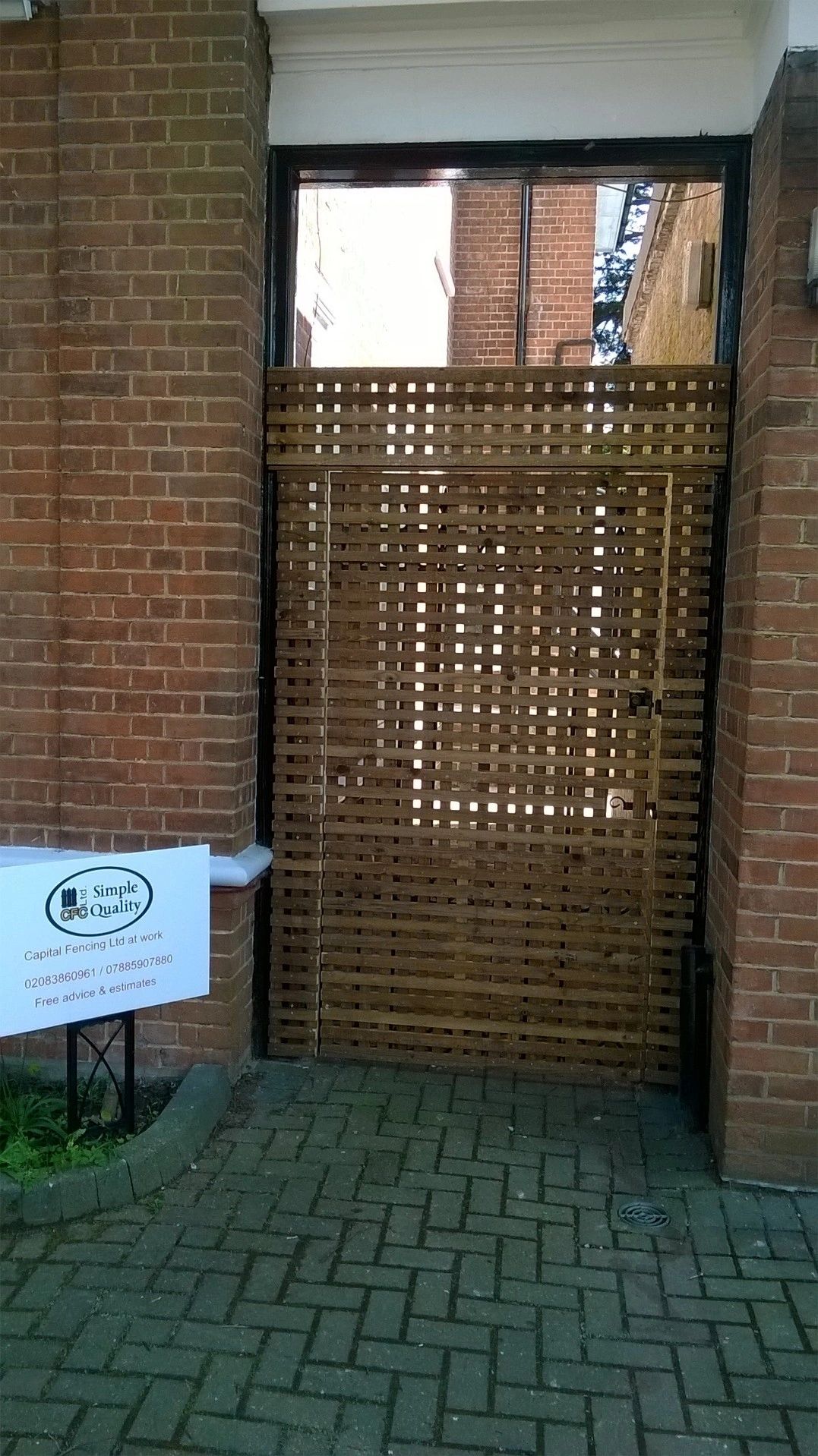
A gate onto a shared bin store needs to be wide enough for wheelie bins to pass without lifting them over a threshold, and a self-closing latch is worth specifying so the gate isn't left open between collections.
Where flats were converted without formal division of the garden, it's worth clarifying in writing which flat is responsible for which section of boundary before starting any replacement work.
Matching a new run to an existing style
Matching an extension or repair to an existing fence starts with identifying the actual system in use — panel type, post type, rail count, board profile — rather than assuming any similarly-priced product from a different range will look consistent alongside it.
Weathered timber and faded composite are both difficult to match exactly with new material, so a visible seam between old and new sections is often unavoidable and worth agreeing with the client at quote stage rather than promising an invisible join.
Where a manufacturer has changed a profile or a colour range since the original was fitted, matching sometimes means re-doing a full run rather than extending it, which is worth flagging before ordering a small top-up quantity.
Overhanging roofline drip lines onto a boundary
A fence running close to a house or outbuilding without gutters, or with a gutter that overshoots during heavy rain, can sit directly under a concentrated drip line that soaks one section of the run far more than the rest.
Over time this shows up as a localised patch of accelerated rot or algae growth that doesn't match the general weathering pattern of the rest of the boundary.
Where this can't be resolved by fixing the guttering itself, a slightly increased offset from the wall or a more resistant board section at that specific point avoids repeat localised failure.